What it will take to create a financially sustainable, zero-emission electric shipping ecosystem
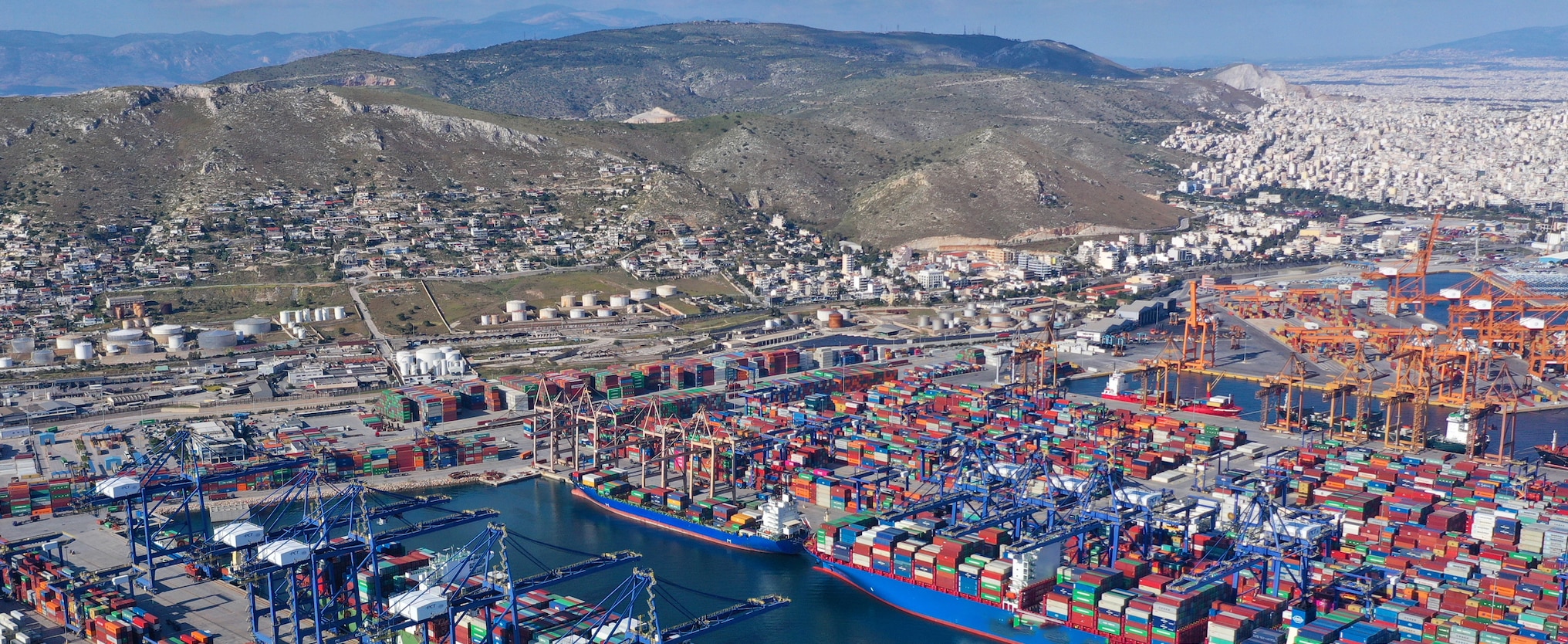
A genuinely zero-emission shipping ecosystem will rely on advanced vessel design and clean energy systems that power the ports they serve. Image: aerial-drone - stock.adobe.com
- After more than two centuries of reliance on fossil fuels, shipping is transitioning to cleaner propulsion systems.
- Advances in vessel technologies, growing regulatory pressure and coordinated climate commitments are accelerating investment in electric and hybrid shipping solutions worldwide.
- With the Annual Meeting in Davos focusing on how to deploy innovation at scale responsibly, we explore the key factors that will drive the creation of a financially sustainable, zero-emission global maritime ecosystem.
The global shipping industry has reached a historic turning point. After more than two centuries of reliance on fossil fuels, shipping has begun to transition towards cleaner propulsion systems as climate commitments tighten and regulatory frameworks take effect.
The International Maritime Organization (IMO) has committed to net-zero greenhouse gas (GHG) shipping emissions by or around 2050. In Europe, regulatory pressure is also increasing. Through its Fit for 55 package, the European Union aims to reduce overall emissions by at least 55% by 2030 and has brought shipping into the EU Emissions Trading System. Under the phase-in schedule, operators will be required to surrender allowances covering 70% of their 2025 emissions in 2026 and 100% of their emissions from 2027 onward.
The market is already responding. Advances in vessel technologies, growing regulatory pressure and coordinated climate commitments are accelerating investment in electric and hybrid shipping solutions worldwide. As a result, the electric ship market is projected to grow from $4.85 billion in 2025 to $18.39 billion by 2032. And with policy frameworks converging globally, we can expect further growth.
In the short term, operators will need to rely on interim solutions, such as offset schemes and onboard carbon capture. But long-term compliance with tightening emissions regulations requires a fundamental shift in how ships are powered.
What will it take to scale electric and zero-emission shipping?
No single technology or policy can decarbonize shipping on its own. Reaching the scale required depends on coordination across the entire value chain, from shipbuilders and port authorities to power providers and policymakers. All of the following must be considered:
Clean propulsion systems
Different vessel types and routes require different technologies. Battery-electric propulsion suits shorter coastal and inland operations, while engines powered by alternative fuels and fuel cells are essential for longer voyages. A balanced portfolio of low- and zero-carbon propulsion options are needed to keep the sector on track.
Safe and high-performance energy storage
Scaling electric shipping requires energy storage solutions that are operationally robust and capable of supporting the power demands of commercial vessels. Energy storage systems (ESS) are central to decarbonizing shipping because batteries determine how far vessels can operate, how quickly they can recharge and how consistently they can perform without fossil fuels.
Retrofittable pathways
New, future-ready vessels will play an important role, but newbuilds alone cannot meet near- or mid-term climate goals. With ships typically operating for 20 to 30 years, retrofitting existing fleets with lower-emission technologies is a practical necessity.
Port-side charging infrastructure
Just as electric vehicles depend on land-based charging networks, electric ships require reliable access to charging or battery-swapping infrastructure. Without it, operators face operational and economic barriers that limit adoption.
Clean energy at the source
Port electrification must be supported by clean energy. Otherwise, emissions that are reduced at sea risk being shifted onshore. A genuinely zero-emission shipping ecosystem will rely on advanced vessel design and clean energy systems that power the ports they serve.
Public-private collaboration
The scale of the transition demands joint action. Governments and industry must work together to reduce risk, align technical and regulatory standards and build shared infrastructure. Collaboration is the only viable path to commercial viability.
The importance of early action
Early adopters play a fundamental role in proving new technologies and business models. While first-mover investments may not offer immediate returns, they're critical to building confidence, lowering risk and enabling broader market uptake.
Why is infrastructure the catalyst for laying the groundwork?
Electrification has already begun with inland and coastal vessels. These routes are shorter and require less onboard energy storage, making them more compatible with technologies available today. Vessel design alone, however, will not deliver meaningful change; infrastructure must advance in parallel.
One of the most significant barriers is the limited availability of port-side charging and clean-energy supply. Early electric-vehicle adoption offers a useful comparison. Where charging networks were reliable and accessible, EV adoption accelerated. The same logic can be applied to shipping.
Developing this infrastructure requires long-term planning and coordinated investment. Ports need to strengthen grid connections, incorporate energy storage and expand access to clean power through either on-site generation or procurement. These steps must come early, as infrastructure enables faster and easier adoption.
Across Europe, multi-port collaborations are already testing approaches to port electrification and renewable energy integration. These projects bring together public authorities, infrastructure operators and technology providers to trial solutions that minimize operational disruption, while laying the groundwork for long-term system change.
As a member of the World Economic Forum’s First Movers Coalition, Hanwha is committed to advancing the decarbonization of shipping through technology development and infrastructure delivery, working closely with partners across the emerging ecosystem.
Companies across Hanwha Group specialize in technologies essential to clean shipping. Hanwha Ocean, a global shipbuilder, is drawing on these group-wide capabilities to develop advanced zero-carbon vessels, supported by innovations such as ammonia gas turbines. In parallel, we are working to integrate advanced energy storage systems and clean-energy solutions into the wider maritime infrastructure, ensuring that vessels and ports can progress together as the ecosystem evolves.
This includes strategies for clean-energy integration and port-side energy storage designed for real-world operating environments. In Europe, we are in discussions with port authorities to pilot a service that provides energy storage systems charged with clean energy and charging stations for vessels. Designed to align with existing port systems, these solutions offer flexible, mobile power for vessels operating on fixed or short-haul routes.
Shipping decarbonization is a complex, long-term undertaking, but with sustained innovation, coordinated infrastructure development and strong public-private collaboration, the industry has a real opportunity to accelerate progress. Companies, ports, governments and technology partners each have a role to play. By aligning efforts today, we can lay the foundations for a zero-emission maritime ecosystem that supports environmental and economic goals.
Don't miss any update on this topic
Create a free account and access your personalized content collection with our latest publications and analyses.
License and Republishing
World Economic Forum articles may be republished in accordance with the Creative Commons Attribution-NonCommercial-NoDerivatives 4.0 International Public License, and in accordance with our Terms of Use.
The views expressed in this article are those of the author alone and not the World Economic Forum.
Stay up to date:
Energy Transition


Forum Stories newsletter
Bringing you weekly curated insights and analysis on the global issues that matter.
More on Supply Chains and TransportationSee all

Laetitia Gardé and Marc Delobelle
February 26, 2026


