Art at the Edge of Change: The Davos 2026 arts and culture programme
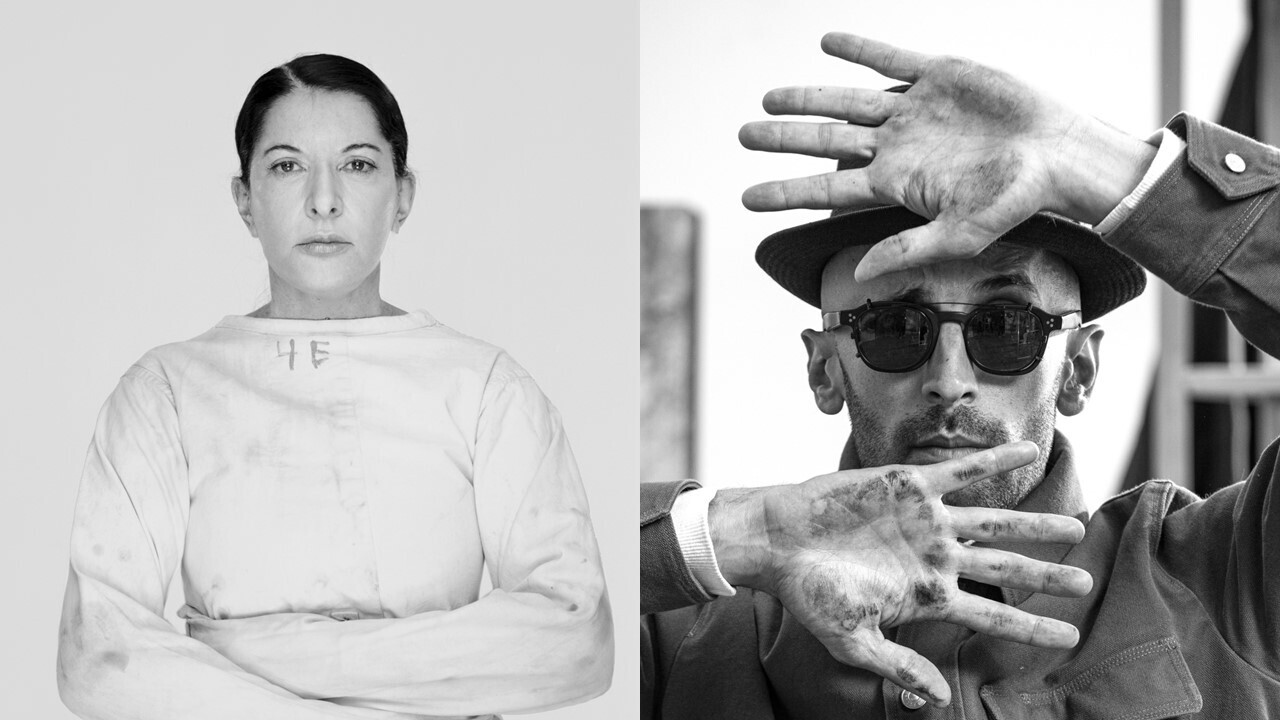
Conceptual and performance artist Marina Ambramovic (left) and photographer and artist JR (right) showcasing contemporary arts and culture Image: Grégoire Machavoine
- In Davos, the arts and culture programme will invite leaders to engage with creativity as a framework for understanding our shared humanity.
- Cultural leaders taking part include Grammy-winning musicians, renowned visual artists, and diverse advocates bridging creativity and impact.
- The World Economic Forum’s Annual Meeting takes place on 19-23 January, under the theme A Spirit of Dialogue.
In a moment marked by global uncertainty, deepening polarization and the rapid acceleration of digital technologies, genuine dialogue has become essential. Each year at the World Economic Forum’s Annual Meeting in Davos, leaders gather to confront urgent global challenges. Yet amid geopolitical debates, economic forecasts and technological breakthroughs, one constant remains central to our collective effort: the arts.
Aligned with this year’s theme, A Spirit of Dialogue, the arts and culture programme invites global leaders to engage with creativity not as ornamentation, but as a vital framework for understanding our shared humanity. Through performance, installation, immersive technology and participatory experience, the programme demonstrates that the arts are among our most powerful tools for fostering empathy, sparking imagination and catalysing meaningful action.
Art reaches where policy papers cannot, allowing us to reflect on who we are, who we wish to become and how we might bridge the divides that shape the 21st century.
”At a time when discourse is flattened into headlines, sound bites and algorithm-shaped opinions, the arts offer space for nuance, ambiguity and emotional resonance. Dialogue, they remind us, is not simply information exchange; it is the meeting of inner worlds. Art reaches where policy papers cannot, allowing us to reflect on who we are, who we wish to become and how we might bridge the divides that shape the 21st century.
Three thematic pillars
This year’s arts and culture programme is built around three thematic pillars: Human Presence in the Digital Age, Tradition and Innovation, and Connection and Collaboration, which guide a curatorial approach balancing intellectual depth and immersive engagement. Each artistic encounter is designed to spark reflection, connection and collective imagination.
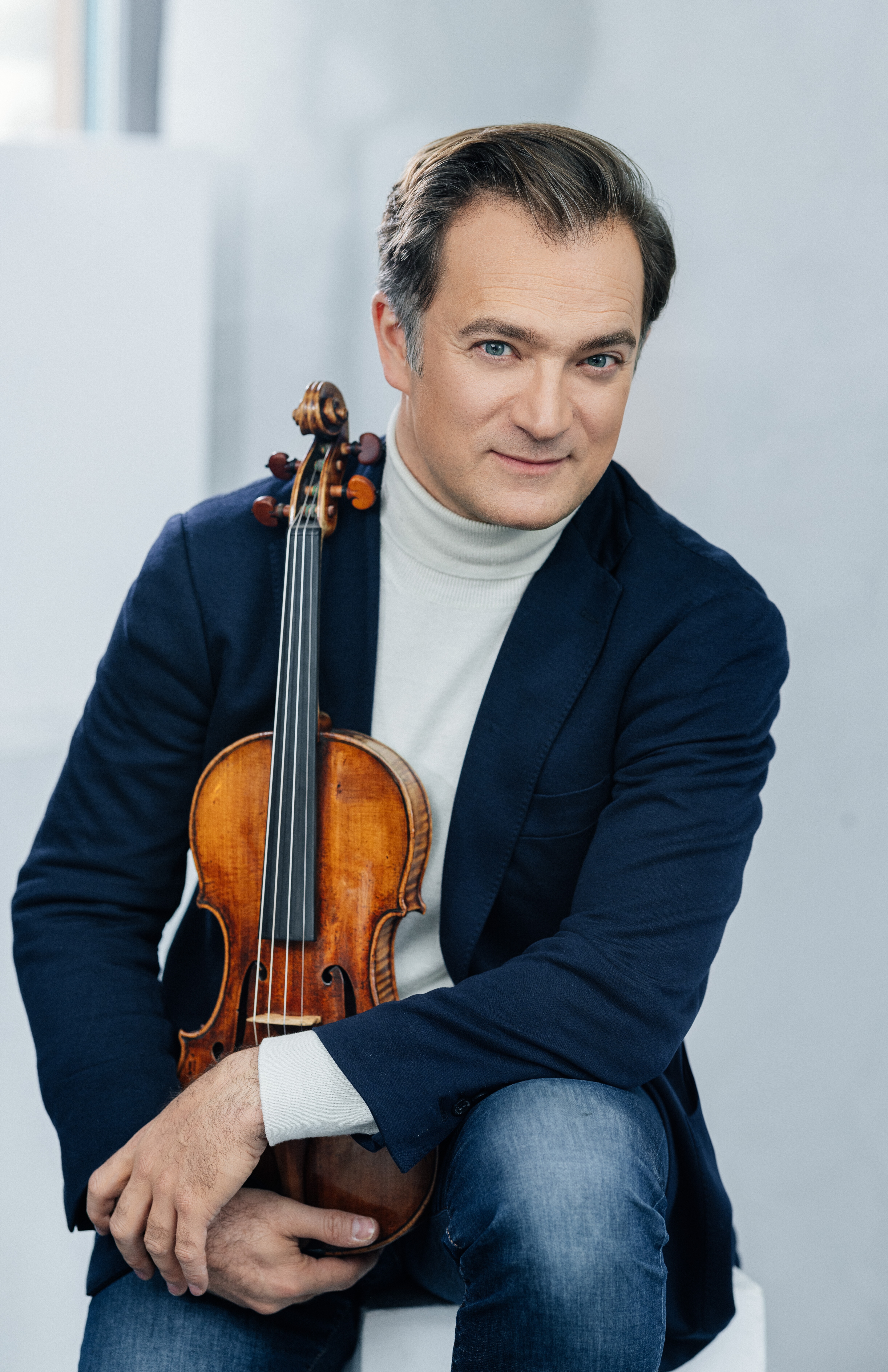
The programme opens with a concert that embodies this intersection of tradition and technology. The Mahler Chamber Orchestra, joined by world-renowned violinist Renaud Capuçon, performs classical repertoire accompanied by an AI-generated visual installation created by artist and technologist Ronen Tanchum. Reacting in real time to the musicians’ performance, the artwork transforms every note into dynamic, evolving imagery, turning the concert into a living dialogue between sound and vision. In this interplay, tradition and innovation do more than coexist; they actively shape one another, illustrating that technology can deepen, rather than diminish, artistic expression.
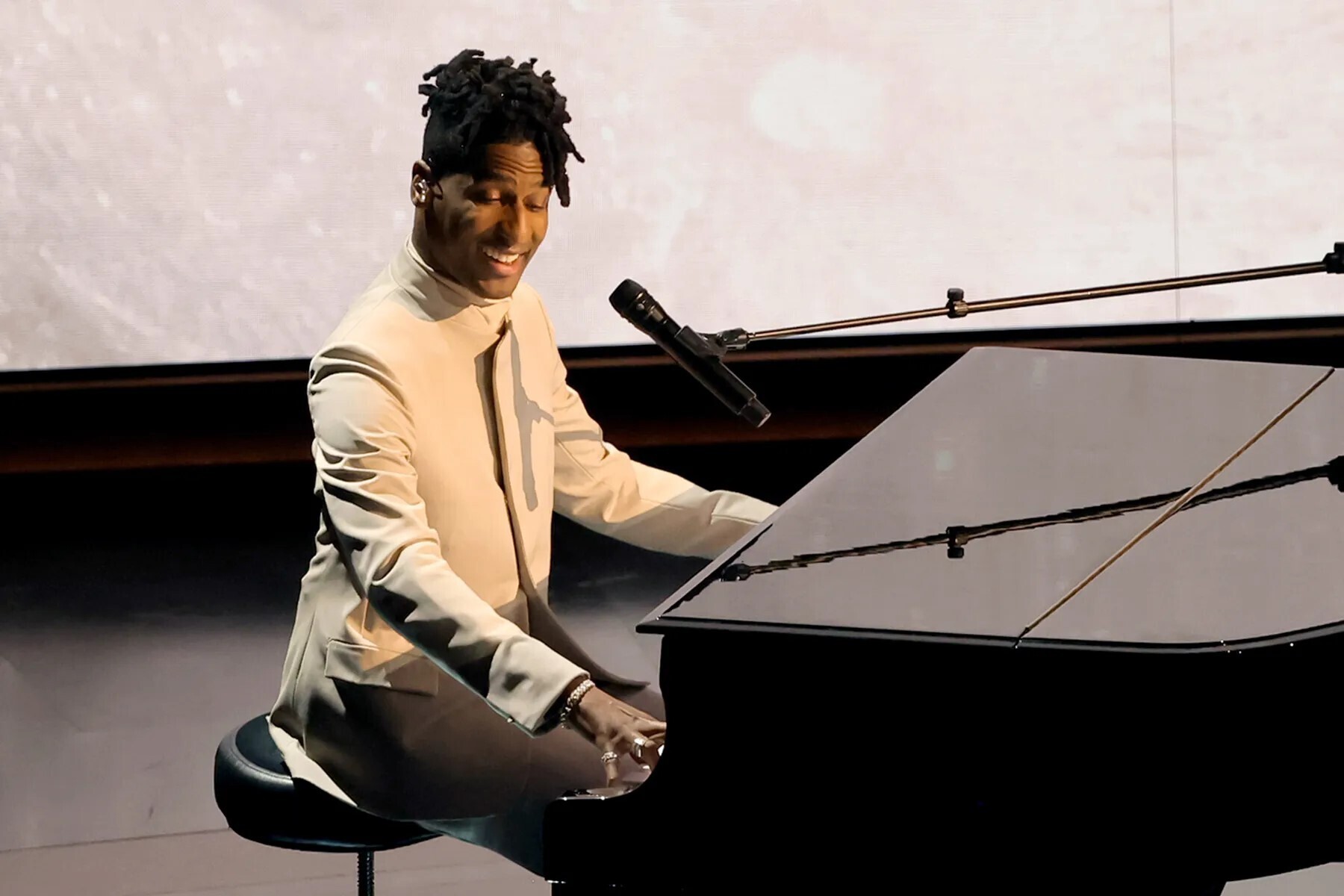
The second half of the concert features multi-Grammy Award-winning artist Jon Batiste, whose genre-blending musicianship exemplifies the power of cultural hybridity. Few performers embody so clearly the idea that music is a universal language. Batiste’s work reminds us that creativity thrives through the interplay of diverse traditions, not through uniformity, and that listening deeply to each other and to the world remains a radical act.
Art as a mirror and bridge
Across the week, artists serve as both mirrors and bridges, reflecting the complexity of our shared world while cultivating connections across difference.
Thijs Biersteker’s installation Forestate, created in collaboration with UNESCO, transforms UNESCO-validated Global Forest Watch data into a visceral, time-based sculpture. Through a choreography of appearing and disappearing leaves, the work gives form to the shifting rhythms of global forest loss and renewal. In an era overwhelmed by statistics, it translates data into feeling, making the cycles of loss and renewal immediate and impossible to overlook. Here, art functions as both witness and warning.
Marina Abramović, appearing at Davos for the first time, introduces a very different form of intervention. The Bus, her mobile installation, is an invitation to slow down intentionally. In a world dominated by acceleration, productivity and distraction, Abramović offers a space to pause, breathe and return to presence. She reminds us that reflection is not the enemy of progress but one of its essential foundations.
Ronen Tanchum’s Human Atmospheres is a Forum-commissioned installation exploring AI as collaborator rather than a distant force. Responding to participants’ movements and proximity, the environment builds a living digital ecosystem shaped by human presence. The work challenges long-held assumptions about the separation of physical and digital worlds, prompting reflection on how technology might enhance rather than erode human connection.
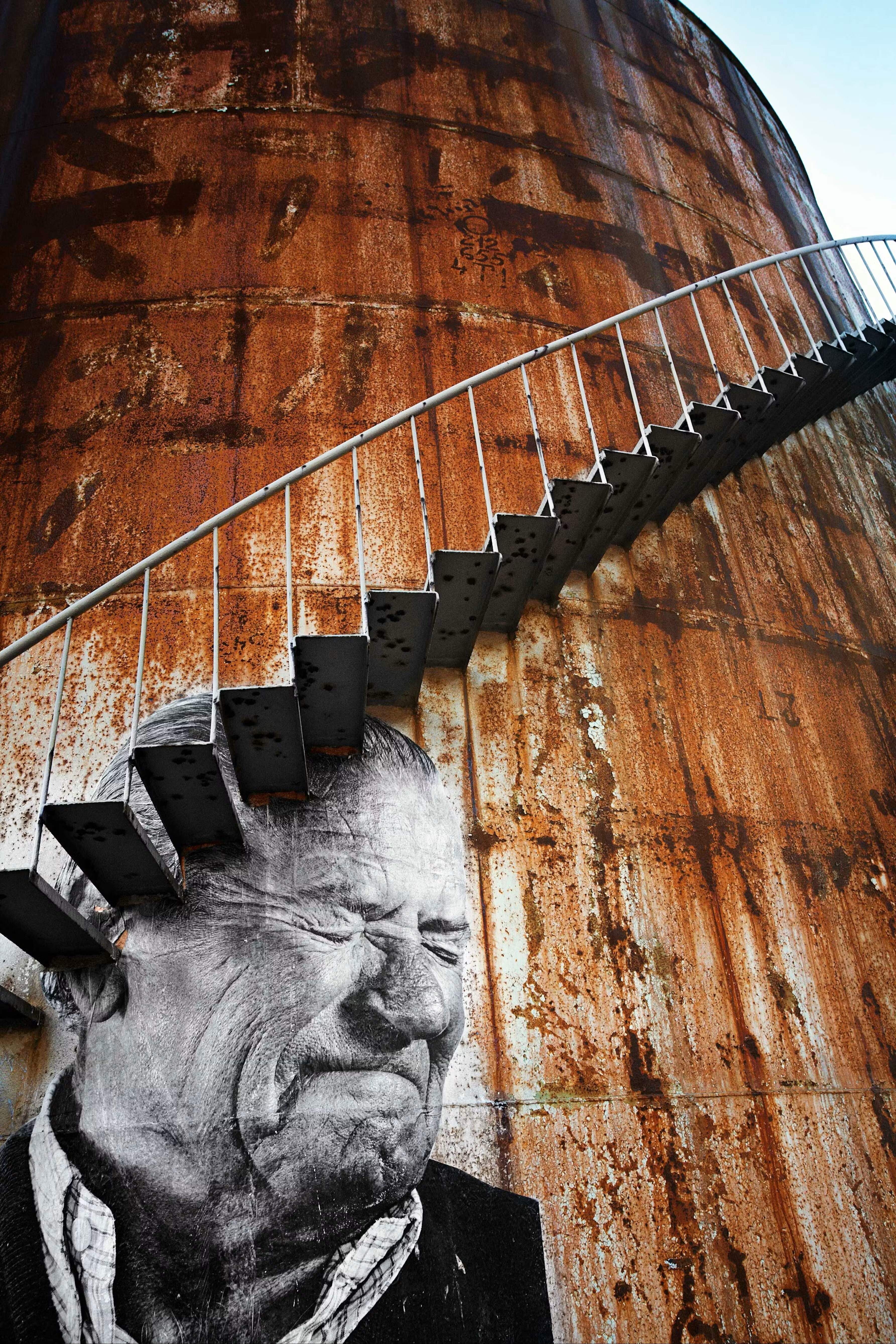
In JR’s Wrinkles of the City, memory takes centre stage. Through monumental portraits of elderly citizens installed on large public surfaces, JR restores visibility to generations too often overlooked. Amid cultures frequently enamoured with youth and novelty, this exhibition honours the individuals who carry our collective histories. It is a reminder that progress without memory is precarious.
More than just artistic excellence
Importantly, the arts and culture programme is not solely an exhibition of artistic excellence. It is a platform for reimagining how culture can shape society and strengthen civic life.
Among this year’s diverse cohort of cultural leaders are Recording Academy CEO Harvey Mason Jr.; writer and advocate Suleika Jaouad; author and activist Katie Piper; and Hiro Iwamoto, the first blind sailor to cross the Pacific Ocean, each exemplifying the intersection of artistry and impact. Their participation, alongside many others, reinforces a central conviction of the programme: that creativity is most powerful when mobilized towards purpose and shared responsibility.
In Davos, where global narratives are drafted and future trajectories are debated, the arts reintroduce the human stakes behind policy and strategy. They challenge us to think differently, feel deeply and imagine boldly. As we navigate a world transformed by digital disruption, ecological crisis and social fragmentation, the arts do not offer escape. They offer orientation. They help turn dialogue into understanding, understanding into empathy and empathy into action.
Within that alchemy lies our greatest hope for building a more connected, thoughtful and resilient world.
Don't miss any update on this topic
Create a free account and access your personalized content collection with our latest publications and analyses.
License and Republishing
World Economic Forum articles may be republished in accordance with the Creative Commons Attribution-NonCommercial-NoDerivatives 4.0 International Public License, and in accordance with our Terms of Use.
The views expressed in this article are those of the author alone and not the World Economic Forum.
Stay up to date:
Arts and Culture


Forum Stories newsletter
Bringing you weekly curated insights and analysis on the global issues that matter.
More on Arts and CultureSee all

Naoko Tochibayashi
February 24, 2026


