What’s your 'dojo'? Cultivating a moral compass in an age of noise
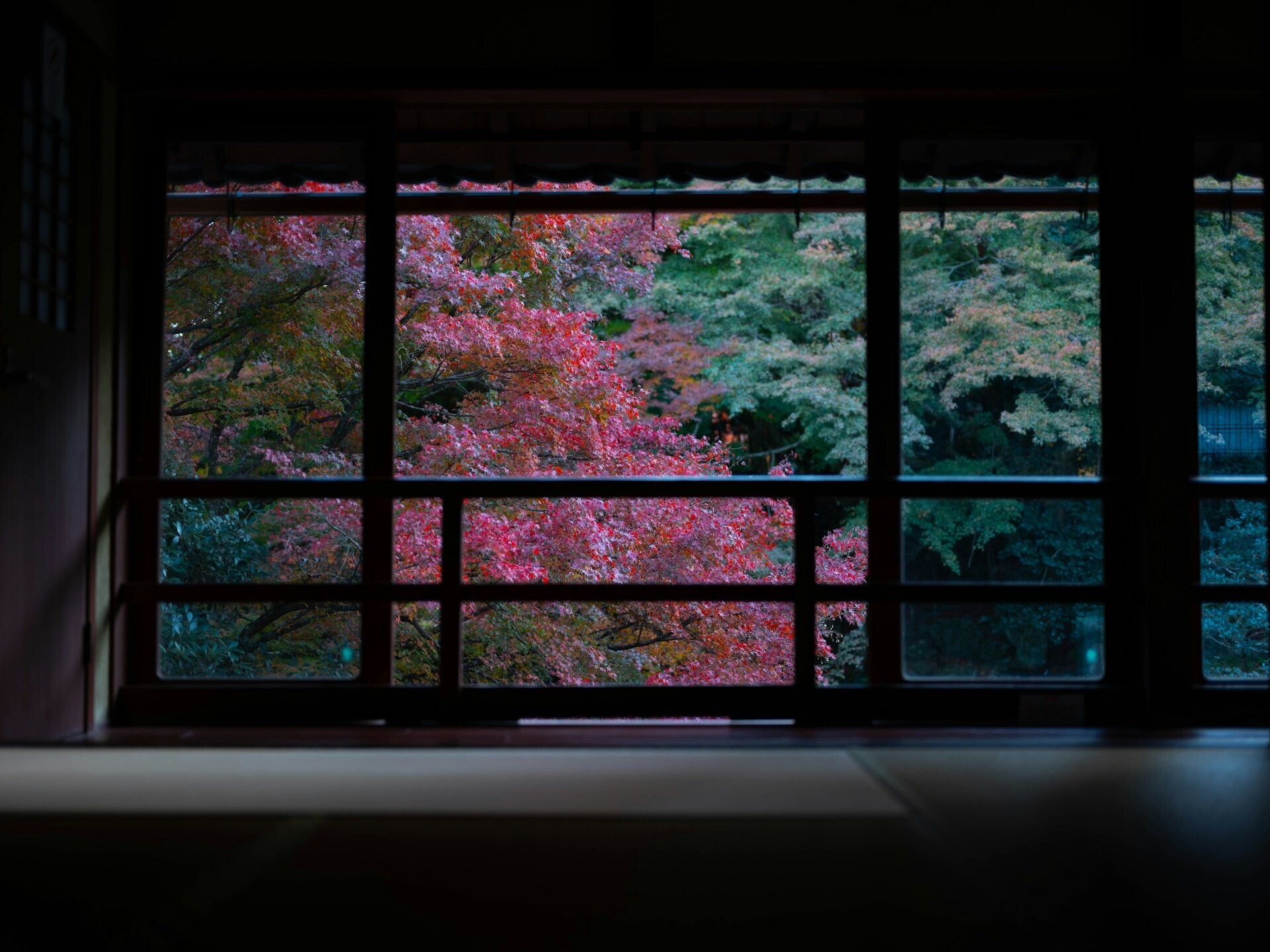
Moral compass is the paramount skill for leaders today. Yet, amid the noise of our age, maintaining this compass has never been harder. Image: Getty Images/ueruko
- Geopolitical, environmental and social crises are challenging the assumptions that have long shaped our notions of leadership.
- For too long, "battlefield" metaphors have dominated business and political parlance; we must shift our paradigm from outer victory to inner mastery.
- Often misunderstood as a gym for combat, a dojo is actually a space for self-transformation – a place to cultivate good habits, practice the art of listening and realign one’s moral compass.
We stand at a critical inflection point. As we gather for the World Economic Forum Annual Meeting 2026 in Davos in "A Spirit of Dialogue", the systems and assumptions that have long shaped our leadership are under unprecedented strain. We face a permacrisis defined by geopolitical fragmentation, ecological stress and widening social divides.
In this chaotic landscape, a recent survey among the Forum’s Young Global Leaders highlighted maintaining a "moral compass" as the paramount skill for leaders today. Yet, amid the noise of our age, maintaining this compass has never been harder.
The shift: From outer victory to inner mastery
For too long, "battlefield" metaphors have dominated business. We speak of "strategy", "capturing" markets and "defeating" rivals. This worldview is inherently zero-sum: for me to win, you must lose. It frames the world as a combat zone where success is built at someone else's expense.
But in an interconnected world defined by interbeing – where our existence is inextricably linked to others, to nature, and to the global economy itself – fighting the "outside" is futile. Because in a web of interbeing, there is no outside. Ultimately, we are inseparably linked to the very systems we try to conquer.
We thus need to shift our paradigm from victory to mastery.
Unlike victory, which looks outward to defeat others, mastery looks inward. The true challenge is not the external rival, but the internal ego. The most disruptive noise is not within the market but within us – our pride, our anxiety and our fear. To make this shift from fighting the world to mastering the self, we need a specific space: a dojo.
Habit, habitat and the inhabitant
Often misunderstood as a gym for combat, "dōjō" literally means "The Place (Jō) of the Way (Dō)" – a space for self-transformation through good habits.
Etymologically, "habit" (our actions) and "habitat" (our environment) share the same root. They are inseparable. Our inner habits create the outer habitat we live in, and conversely, that habitat shapes our inner habits.
In the worldview of interbeing, the "self" is not a fixed entity. The "inhabitant" – who we are – is a dynamic phenomenon emerging from this interplay. If our habitat is designed like a battlefield, we naturally develop habits of aggression and emerge as "soldiers". But if we design it as a dojo, we cultivate habits of stewardship and emerge as "seekers".
Why now? AI as a "karmic amplifier"
This shift is urgent not only because we need to cultivate dialogue to overcome societal cleavages, but because we have entered the age of artificial intelligence. From a Buddhist perspective, AI is not a separate species but "ancestral intelligence" – a massive archive of our past patterns.
If AI represents the accumulation of the past, what is the job of humans? It is not to repeat the patterns of yesterday, but to add new patterns to history. Regardless of "success" or "failure", we must have the courage to explore the unknown and generate new data for the human story today.
AI acts as a karmic amplifier, an idea proposed by Peter Hershock, an Adjunct Senior Fellow at the East-West Center. Trained on human history – our collective karma – algorithms amplify our habits instantly and globally. If our habit is victory (conflict and bias) based on fear, AI will accelerate polarization at a scale we cannot control. If our habit is mastery (wisdom and co-creation), AI becomes a wise companion. We need not bear the burden of a moral compass alone; machines can assist our navigation.
To guide this alliance, we must first govern ourselves. But maintaining such pure intention alone is difficult. We need a container for this practice.
The company as a dojo
This offers a new vision for the corporation, too. In an era where individuals can work freely anywhere, the true value of belonging to an organization is to find a dojo.
The Buddha taught that practice cannot be done alone; having admirable friends who aim for the same North Star is the whole of the path. To sustain the courage to explore the unknown, we need companions who encourage one another. Talented individuals today are no longer moved by financial incentives alone; they seek a shared vector, a community where they can polish their humanity together.
When leaders reframe their companies as dojos – habitats grounded in psychological safety and shared practices like samu (cleaning) – they attract those who wish to move beyond mere profit to the cultivation of wisdom. They build the habitats where the next generation of leaders can grow.
The dojo of listening
In my Buddhist tradition, the temple is defined as a "Dojo of Listening". This redefines the very purpose of our practice. A dojo is not a place to assert one's voice, but a space dedicated entirely to hearing.
In the boardroom, we often listen to debate, to decide, or to win. But in a dojo, we practice mindful listening. We silence our inner noise – the chatter of judgment and ego – to truly hear the polyphony of reality. By listening to the authentic voices of stakeholders, communities, and even the voiceless voices of nature, we move from control to co-creation.
A new report by the Global Future Council on Leadership, Next Generation Leadership for a World in Transformation, explores this idea of moving from control to co-creation as a strategic leadership shift.
A global lab as a leadership dojo
Building on the report’s findings and the need to redesign leadership holistically in view of current and emerging global challenges, the Global Future Council is launching a global leadership lab to explore what must change in how we define, develop and deploy leadership to shape the future we want – for ourselves and for future generations.
This lab will be an open, collaborative and dynamic platform that turns insights into impact. It will create space for ongoing conversations about the future of leadership, curate a shared knowledge base, and test new development tools.
Crucially, it builds on listening and stewardship, helping leaders unlearn the habits of the battlefield and enter the path of internal mastery. By doing so, we align our moral compass with the long now, committing to be good ancestors who care for our shared habitat – this planet – for generations to come.
I ask you: where is your dojo? Where is the space where you can lay down your armour, silence the inner noise and cultivate the habits that care for your habitat? Finding that space is the first step toward becoming the leader our fractured world needs.
Let us leave the battlefield behind and enter the dojo together.
Don't miss any update on this topic
Create a free account and access your personalized content collection with our latest publications and analyses.
License and Republishing
World Economic Forum articles may be republished in accordance with the Creative Commons Attribution-NonCommercial-NoDerivatives 4.0 International Public License, and in accordance with our Terms of Use.
The views expressed in this article are those of the author alone and not the World Economic Forum.
Stay up to date:
Values


Forum Stories newsletter
Bringing you weekly curated insights and analysis on the global issues that matter.
More on LeadershipSee all

Keith E. Ferrazzi and Wendy Smith
April 9, 2026


