Europe's economy isn't collapsing – but let's not downplay the cost of geopolitics
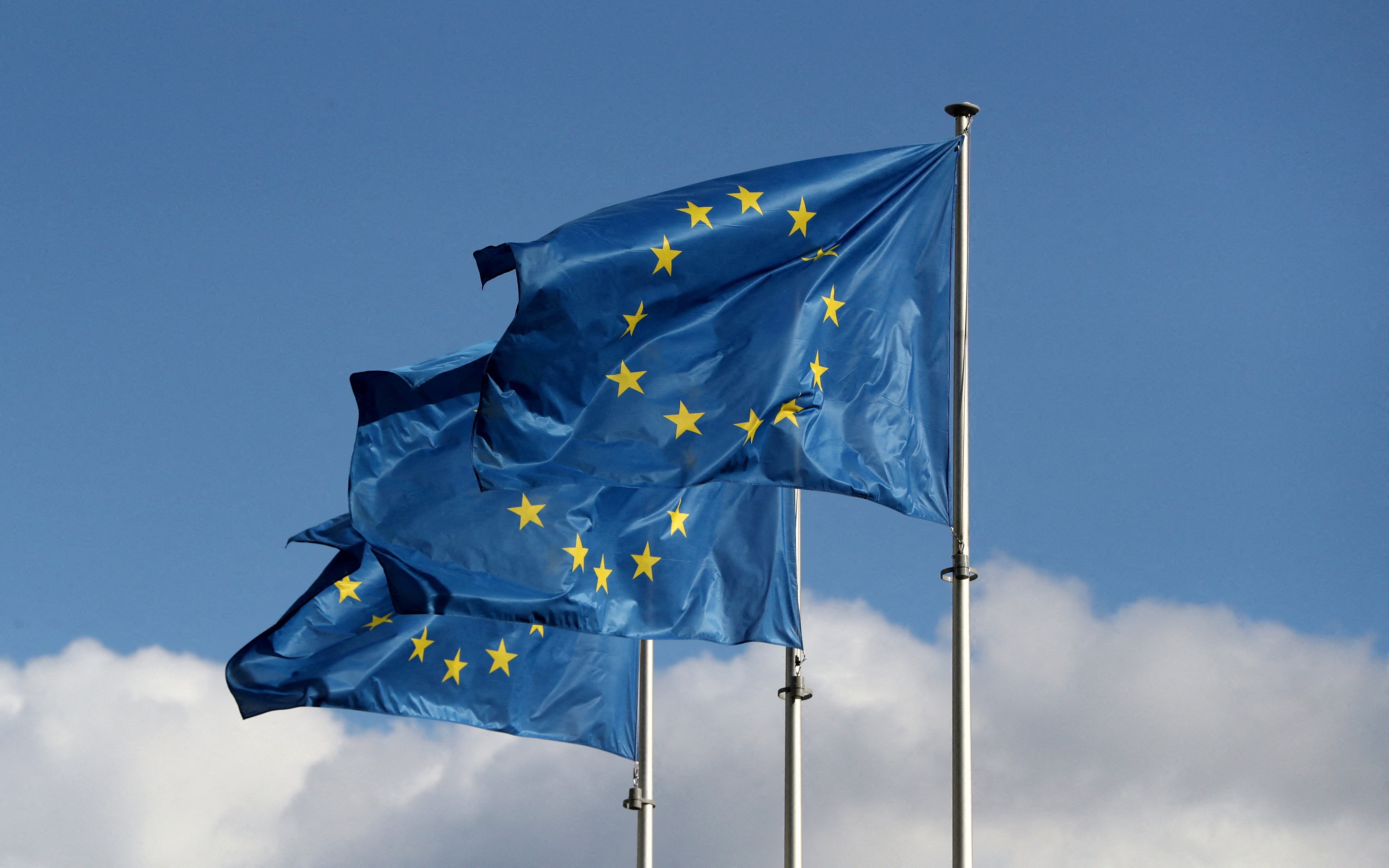
Geopolitics are exerting pressure on Europe's economy. Image: REUTERS/Yves Herman/File Photo
- The EU's economy fared better in 2025 than many had feared.
- But a continued need for the bloc to prioritise resilience is, nonetheless, costing Europe.
- The corporations that call the EU home also pay a price – and they have a key role in the solution, too.
Looking back, 2025 may feel like a year that Europeans can be relieved about. Counter to the ‘peak pessimism on Europe’ at the beginning of the year, Europe avoided a recession, its stocks performed decently and global markets were outright upbeat in the end.
Some headlines even look promising: technology investment is booming, defence budgets are expanding and reshoring creates opportunities in some markets. What’s more, in places where industries suffer, governments are finally hearing corporate concerns.
But beneath these visible gains lies a slower-moving erosion that threatens the foundations of growth. It’s not a good moment to downplay the price of fragmentation. Some of these costs are well-known, while others receive less attention. We should all be familiar with them, as well as with the fact that many of them are likely to rise over time.
What are the economic costs of geopolitical tension?
The familiar set of transmission channels start with trade barriers and the reconfiguration of global value chains. This erodes the efficiency gains from specialization, reducing growth potential. Less foreign direct investment, lower cross-border capital flows and lower labour mobility all have a similar effect: they limit technology transfer and optimal labour and capital allocation, which hurts productivity growth.
Shocks are the obvious short term impact, where supply chain disruptions or commodity price shocks drive up input costs and hit demand, feeding inflation and weakening consumption. Finally, even without any shock actually happening, heightened geopolitical uncertainty increases risk premiums, delays investment decisions and encourages precautionary savings, dragging on aggregate demand in the short term and slowing the build up of productive capacity over time.
But there’s also the costs of building up resilience. Firstly, the increase in defence spending. An arms race is an opportunity for some corporations, but for most of us it simply increases public spending, meaning taxes will go up over time. Also, most defence spending is on personnel, which implies the military is yet another employer, competing for scarce labour.
Another resilience cost is government support to industries and households to shield them from geopolitical tensions. Examples are European government support to dampen the impact of costly energy since the start of the war in Ukraine, while the US government first subsidized and now gives tax credits to incentivize its domestic tech industry. This money may partially be an economic investment, but it also serves to build relative strength. Needless to say that these expenses will crowd out private spending elsewhere, as they imply higher taxes or higher debt burdens.
Corporations face growing geopolitical costs
There’s also the cost of building up corporate resilience. Surveys show corporations are making themselves resilient against shocks. About a quarter (28%) of all corporations indicate they are adjusting, for example by seeking other trade partners or increasing stocks. Other options exist too, like insurance or financial hedging. Obviously, many corporations (38%) see these adjustments leading to higher costs.
Companies will incur resilience costs, insofar as they expect them to pay off. And while we see it occur, it also seems quite limited still. In fact, we do not see much proof of reshoring and we know corporations are looking to reduce their inventories now that interest rates have gone up. Put differently: 28% of companies saying they adjust means 72% are not. This can be an issue from a societal perspective, as higher corporate resilience can be beneficial for the greater good of others – or, put in economists’ jargon: there are positive externalities.
Likely, governments will want to regulate, optimizing their relative position by forcing corporations to become more resilient. There are plenty of examples: South Korea requires supply chain diversification, limiting the dependency corporations can have on one country for some inputs. European banks must ensure digital operational resilience. Data localization laws are getting more common. The increased geopolitical risks are likely to increase these government interventions over time. Brace yourself for ‘government-induced’ resilience to come.
Resources devoted to resilience, ranging from defence to subsidies or corporate interventions, may be rational in today’s world, but they will come at the expense of a focus on growth.
Why corporations matter
In the many conversations that will take place between corporate leaders and policymakers – in Davos and beyond – corporations can advocate for open markets and global cooperation.
They can remind governments that conflicts and building resilience are costly in many ways.
The past year may have brought some relief to Europe’s corporations, but the cost of fragmentation has only just begun and will go up over time. The future demands that corporations lead the charge for globalism – because the price of fragmentation will be far higher.
Don't miss any update on this topic
Create a free account and access your personalized content collection with our latest publications and analyses.
License and Republishing
World Economic Forum articles may be republished in accordance with the Creative Commons Attribution-NonCommercial-NoDerivatives 4.0 International Public License, and in accordance with our Terms of Use.
The views expressed in this article are those of the author alone and not the World Economic Forum.
Stay up to date:
Geopolitics
Related topics:


Forum Stories newsletter
Bringing you weekly curated insights and analysis on the global issues that matter.
More on Geo-Economics and PoliticsSee all

Renée van Heusden
April 6, 2026


