A world in tension: 6 experts on the economic and geopolitical paradoxes to watch in 2026
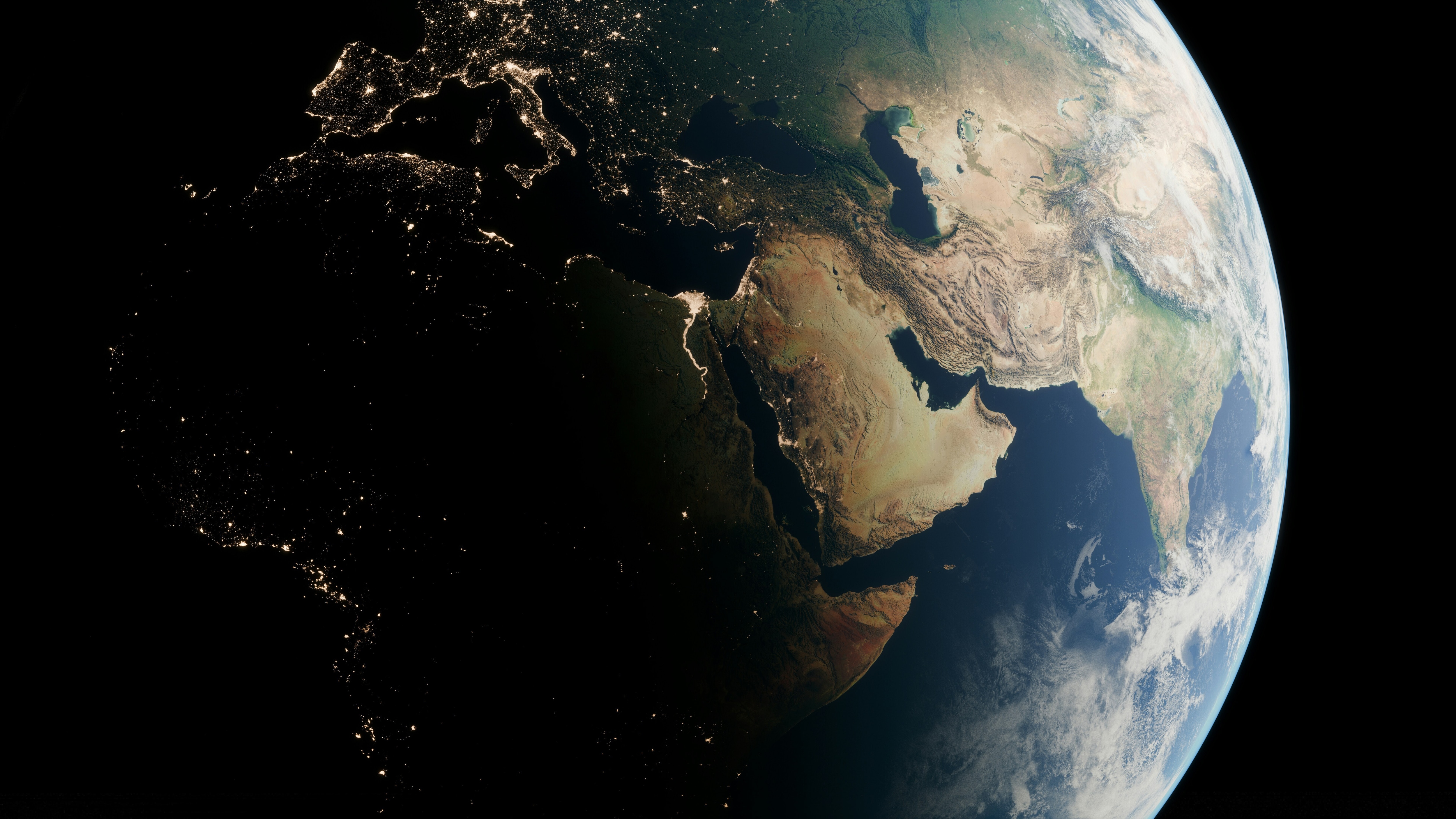
Several paradoxes have emerged across the geopolitical and geo-economic landscape. Image: Unsplash
- As the geopolitical and geo-economic landscape continues to evolve at speed, a series of deepening contradictions has come into sharper focus.
- Ahead of the Forum’s Annual Meeting 2026, we invited six leading experts to reflect on the key paradoxes likely to shape the global outlook in the year ahead.
- Here are their insights.
Today’s global outlook is defined less by clarity than by contradiction, with various forces pulling the global system in often contradictory directions.
"We are operating in the most complex geopolitical environment since 1945," World Economic Forum President and CEO Børge Brende said in a recent interview on the newly released Global Cooperation Barometer 2026.
As long-standing assumptions weaken and power dynamics shift, familiar approaches to economic and geopolitical strategy are increasingly challenged. For leaders, engaging with these paradoxes is central to navigating what comes next.
Ahead of the World Economic Forum Annual Meeting 2026, we asked six leading experts to reflect on the tensions that could shape the year ahead, including the trade-offs, unintended consequences and structural contradictions that may exert an outsized influence on power structures and markets. Their perspectives span issues ranging from Europe’s strategic transformation and demographic change to migration, sanctions and technological dominance, offering a guide to the key dynamics shaping a world that is advancing not in straight lines, but through competing forces that simultaneously drive cooperation and fragmentation.
Mark Leonard, Director, European Council on Foreign Relations, UK
"In the year ahead, look out for three paradoxes that lie at the heart of how Europe is changing, and which cut across geopolitics, economics and domestic policy.
"First, Europe is shifting from a peace project to a war project. The EU was built with the goal of making war between its members unthinkable. But since Russia’s all-out invasion of Ukraine in 2022, most of the energy on integration now comes from security and defence, as the bloc reinvents itself for a post-American age.
"Second, Europe is moving from liberalisation to de-risking. For decades the single market, free trade and openness were treated as goods in themselves. Today, as interdependence is increasingly weaponised, the emphasis is instead on de-risking and diversifying away from the US and China and deepening the single market.
"Third, centrist politics is giving way to post-liberal populism. The so-called new right is on the rise in France, Germany and the UK. Whether it succeeds in taking over Europe will depend on whether centrist leaders can develop a counter-narrative, social base, agenda and communications strategy that allows it to hold its own. How well Europe manages these three tensions will shape not just the coming year, but the next decades."
Dr Rachel Glennerster, President, Center for Global Development, USA
"Immigration policies are being tightened globally, yet wealthy countries have never needed immigration more. Skill shortages threaten the US’s artificial intelligence ambitions, Europe’s energy transition, and affordable, available housing and healthcare. Higher pay and training can help fill specific gaps but with long delays and higher prices—and it won’t solve the macro problem. Young people and migrants generate innovation and growth especially in depressed areas, diversify exports, and pay for pensions (in 2050, 1/3 of Europe’s population will be pensioners). A third of the East Asian miracle likely came simply from having a young population.
"Just when we need energetic young people, we are making it harder for them to come. The US and UK are tightening rules on foreign students despite education being a major export industry, a catalyst for growth in depressed regions, and an attraction for talent. In the US, immigration enforcement efforts target construction sites despite a housing affordability crisis (30% of construction workers are migrants).
"In 2026, look for innovative solutions to the migration paradox such as Global Skills Partnerships for green skills or health migration."
Walter Russell Mead, Distinguished Fellow, Hudson Institute, and Professor, University of Florida, USA
"Three big forces in the politics of OECD countries will help to shape events in 2026 and beyond.
"First, the continuing increase in life expectancy, and the reality that more older people are remaining more vital later in life, means that senior citizens will remain active in politics and business longer than ever before. And in both business and politics, key decisionmakers will increasingly exercise power into their eighties and nineties.
"Second, the demographic shift means that each new generation will be smaller than its predecessors, a shift that inevitably means that older generations will remain politically dominant longer than in the past.
"Third, the accelerating waves of technological and social change associated with the information revolution mean that the life experience of each new generation is dramatically different from those of their parents. Young people are likely to feel increasingly alienated from and frustrated by political and business establishments that seem both out of touch and unshakeable. Technology is both driving gerontocracy and making gerontocracy radically unacceptable to youth. Many young people will respond by embracing radical politics and conspiracy thinking; ageing leaders need to think hard about creating opportunities for the expression and leadership youth craves."
Alexander Gabuev, Director of Carnegie Russia Eurasia Center, Germany
"The side effects of America’s weaponization of its financial and technological primacy are becoming more palpable, and in 2026, the gradual accumulation of quantitative changes may lead to qualitative shifts in the global economy. A key paradox underpins these dynamics: while Western sanctions and export control measures hurt America’s adversaries, those same measures boost their resilience while gradually chipping away at US dominance.
"Russia’s ability to sustain its ugly and costly war against Ukraine is a good example. Putin’s economy has been badly damaged by the avalanche of Western sanctions, but the Kremlin’s war machine still soldiers on — thanks to increasing reliance on Chinese tech, non-Western currencies and crypto, and the fragmentation of energy markets, with a growing share of oil flowing through sanctions-proofed channels. Renewed Western pressure leads to more pain — and then to even more adaptability that further fractures the fabric of the global economy.
"For now, it’s possible to treat the segment of global economic activity beyond Washington’s control as a tumor in an otherwise well-functioning system. But the confluence with looming concerns over the overheated AI sector, the disunity of the West, Washington’s newly discovered taste for foreign policy adventurism, and China’s progress in self-reliance could hasten the end of America’s economic preeminence — with a potential snowball effect as more players rush to hedge their bets."


Dr Jeromin Zettelmeyer, Director, Brussels European and Global Economic Laboratory, Belgium
"The biggest paradox remains the fact that we need global cooperation more than ever to solve the world’s most existential problem – climate change – just at a time when global cooperation has just about disappeared. But you knew that. It was the paradox of 2025. So I will pick two others for 2026, both focused on Europe.
"First, the failure of Europe to come together on rearmament at a time when the threat from Russia is imminent and the US is no longer longer a reliable ally. The gains from pooling procurement, pooling financing and creating a European single market for defence production would be huge. But defence industrial nationalism, particularly in France and Germany, appears unshakable.
"Second, the need to get Europe’s industrial structure to adapt to higher energy costs and catchup by China while also preventing its collapse. The latter is fuelling demand for protection which is anathema to change. Yes, structural change must be orderly. But it must be allowed to happen, in a direction that promotes long-run competitiveness.
"The first paradox is a variation on an old theme: the tension between Europe’s common interests and the parochial interests of member states. The second is a new problem, because the pressure on Europe’s industrial model has never been higher. How EU policy makers deal with these contradictions in 2026 will be worth watching. And we should let them know that we are watching."
Sir Robin Niblett, Distinguished Fellow, Chatham House, UK
"The paradox to watch in the first half of the twenty-first century concerns the big powers’ overlapping spheres of interest.
"For example, China cannot sustain its global export machine without commodity inputs from Latin America and Africa. And its huge investments in both regions will give it continued influence that the US will find impossible to dislodge.
"Russia cannot impose a sphere of influence over eastern and central Europe without undermining European security. Yet, notwithstanding President Trump’s ambivalence, the US will not willingly give up the material benefits that come from its leadership of NATO, such as forward bases and weapons sales. And to Russia’s east, Central Asia is strategically critical to Moscow but economically vital to Beijing.
"In east Asia, the US will not abandon its Pacific allies to Chinese dominance. The security of America’s hemisphere depends on the forward defensive positions the US holds there, including in Japan, South Korea and the Philippines.
"The world is stuck between an eroding US-led international order and potential global disorder. But spheres of influence will not be the solution."
License and Republishing
World Economic Forum articles may be republished in accordance with the Creative Commons Attribution-NonCommercial-NoDerivatives 4.0 International Public License, and in accordance with our Terms of Use.
The views expressed in this article are those of the author alone and not the World Economic Forum.
Contents
Mark Leonard, Director, European Council on Foreign Relations, UKDr Rachel Glennerster, President, Center for Global Development, USAWalter Russell Mead, Distinguished Fellow, Hudson Institute, and Professor, University of Florida, USAAlexander Gabuev, Director of Carnegie Russia Eurasia Center, GermanyDr Jeromin Zettelmeyer, Director, Brussels European and Global Economic Laboratory, BelgiumSir Robin Niblett, Distinguished Fellow, Chatham House, UK
Forum Stories newsletter
Bringing you weekly curated insights and analysis on the global issues that matter.
More on Geo-Economics and PoliticsSee all

Samaila Zubairu
March 3, 2026


