A model of cooperation in a fragmented world
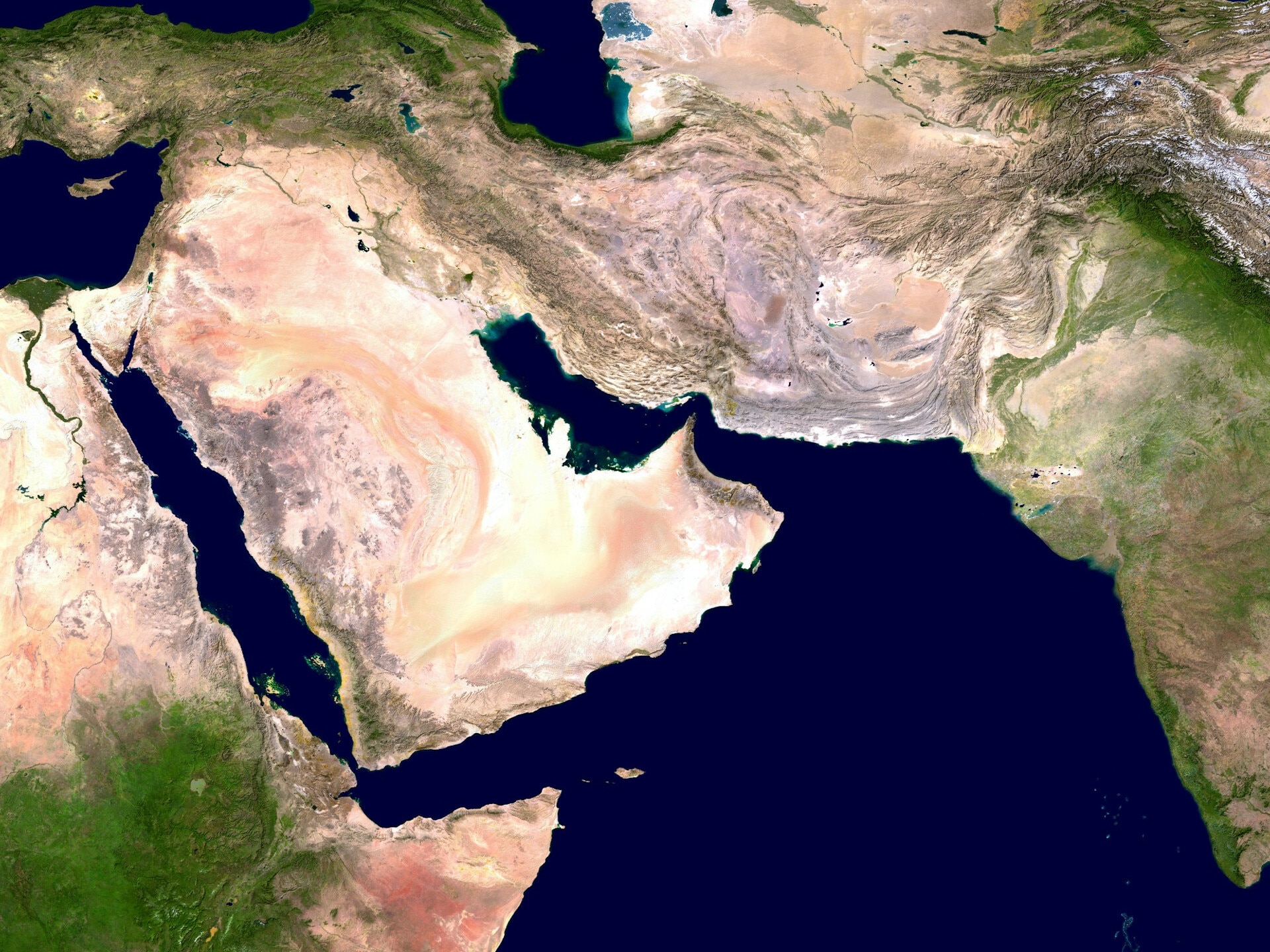
The GCC (Gulf Cooperation Council) stands as a template for cooperation in an increasingly fragmented global economy. Image: USGS
- In Davos, leaders from around the world are coming together for the World Economic Forum Annual Meeting 2026 under the theme ‘A Spirit of Dialogue’.
- The Gulf Cooperation Council (GCC) stands out as an example of regional integration, coordinated capital deployment and shared infrastructure.
- At a time when many nations are pulling apart, the GCC stands as a template for cooperation in an increasingly fragmented global economy, proving that regional unity can be a powerful engine for growth.
At a time when many regions struggle to reconcile national priorities with collective action, the Gulf Cooperation Council (GCC) stands out as an example of regional cooperation. Its model of shared prosperity is anchored in institutional integration, cross-border infrastructure, and coordinated capital deployment. In an increasingly fragmented global economy, the GCC proves that regional unity can be a powerful engine for growth.
Building blocks of integration: from policy frameworks to physical connectivity
Since its establishment in 1981, the GCC has pursued deeper economic integration through institutional frameworks designed to enable cross-border trade, investment and mobility. These frameworks, acting like building blocks of integration, have progressively evolved into practical mechanisms supporting a more unified regional economy.
Have you read?
A major milestone was the implementation of the GCC Customs Union in 2003 – a free trade agreement which standardized customs procedures and introduced a Common External Tariff of 5%, reducing border friction and strengthening the GCC as a single logistics and market space. This was followed by the GCC Common Market, granting citizens national treatment across member states in employment, business, and investment, thereby expanding markets and enabling firms and individuals to operate on a regional scale.
Alongside trade and labour integration, the original GCC framework also envisioned a Monetary Union among participating member states. While the institutional architecture for monetary coordination remains in place, progress toward a full single currency has stalled over time. Divergent national priorities, economic structures, and policy considerations have limited advancement beyond convergence discussions. As a result, the Monetary Union remains an active but narrow-scope initiative, reflecting both the ambition of the GCC’s original integration agenda and the practical constraints of deeper economic unification.
With that said, institutional integration has been reinforced by physical connectivity, including extensive cross-border road networks and causeways, with the planned GCC Railway representing the next phase of integration by lowering logistics costs and strengthening industrial, tourism and supply-chain linkages. Energy interdependence has further anchored cooperation through shared infrastructure such as the GCC Interconnected Electricity Grid, which enhances power resilience, and the Dolphin Energy pipeline, supplying around 2 billion cubic feet of gas per day from Qatar to the UAE and Oman, illustrating how cross-border energy projects underpin long-term regional integration.
Strategic capital: the role of sovereign wealth
While legal frameworks and infrastructure form the backbone of the GCC, the bloc's significant financial reserves have become central instruments of collective strategy to promote regional integration. Its sovereign wealth funds (SWFs) manage over $6 trillion in assets, ranking among the world’s most influential capital pools and increasingly coordinating investments within the region to support diversification, resilience, and strategic alignment.
Cross-border joint ventures, such as those between Oman and Saudi Arabia, Oman and Qatar, and Oman and the UAE, highlight a growing shift toward deploying shared capital across energy, infrastructure, education, healthcare, logistics, and tourism. This reflects a broader transition toward treating the GCC as an integrated capital and development space, reinforcing its reputation as the “funding capital of the world.”
This financial weight is reinforced by geography. Situated at the crossroads of Asia, Europe and Africa, the GCC plays a critical role in global trade and energy flows, with its ports, airlines, and logistics hubs serving as key nodes in global oil, cargo, and passenger networks.
Collectively, the GCC economy, valued at approximately $2.3 trillion, ranks among the world’s largest economic blocs. The region controls around one-third of global proven oil reserves, produces roughly a quarter of global crude oil, and accounts for about 30% of global crude exports. In natural gas, Qatar’s dominance positions the GCC as a key supplier, with the bloc accounting for more than a quarter of global LNG trade.
At the same time, the GCC is actively working to reduce its reliance on hydrocarbons. Initiatives such as dual listings across regional stock exchanges, the proposed unified GCC tourist visa, and region-wide infrastructure projects, including the GCC Railway, reflect efforts to deepen economic integration and unlock non-oil growth. Intra-GCC trade has more than tripled over the past decade, exceeding $70 billion, highlighting the tangible economic gains from regional cooperation.
How the Forum helps leaders make sense of regional, trade and geopolitical shifts
Challenges and the way forward
This impressive economic weight does not mean that the path forward is without friction. Geopolitical rivalries and competing national visions often complicate collective action. Each of the six GCC member states seeks to position itself as a hub, whether in logistics, tourism, finance, or technology, sometimes leading to duplication rather than synergy.
Yet the foundations for deeper collaboration remain strong. Institutional frameworks are well established, capital coordination is expanding, and cross-border infrastructure continues to develop. On paper, the pathway towards deeper integration is clear, centred on execution, regulatory alignment, and scaling regional initiatives from intent to delivery. The GCC’s young, educated, and increasingly globally connected population represents a critical engine for innovation, productivity, and sustainable growth.
The success of the next phase of GCC cooperation will hinge on how effectively member states can align their individual national ambitions with shared collective goals. Whether this leads to deeper institutional integration or maintains the current steady state, the GCC’s experience suggests that cooperation does not have to be absolute to be highly effective. While its final destination remains an open question, the GCC has already shown that regional unity can provide a powerful shield in an increasingly fragmented global system.
Don't miss any update on this topic
Create a free account and access your personalized content collection with our latest publications and analyses.
License and Republishing
World Economic Forum articles may be republished in accordance with the Creative Commons Attribution-NonCommercial-NoDerivatives 4.0 International Public License, and in accordance with our Terms of Use.
The views expressed in this article are those of the author alone and not the World Economic Forum.
Stay up to date:
Global Governance
Related topics:


Forum Stories newsletter
Bringing you weekly curated insights and analysis on the global issues that matter.
More on Economic GrowthSee all

Seham Farouk
July 17, 2026


