Opinion
Reimagining healthcare: how to increase care without increasing costs

AI will help shape digitally empowered healthcare ecosystems with broader access, sustainable economics, and better outcomes. Image: Getty Images
- The world’s health systems were built for a bygone era and the status quo is structurally mismatched to demographic and clinical realities.
- Breakthroughs in foundation models, specialized AI and agentic systems mean AI is now capable of planning and executing multi-step workflows.
- AI gives us the chance to reimagine the future of healthcare, but this depends on connected data, clear standards and smart regulation.
The world’s health systems were built for a bygone age. Much of the architecture we rely on today emerged after World War II. Back then, the population was younger, and illnesses were acute rather than chronic. There was no shortage of medical professionals. These conditions belong to a world that no longer exists.
In 2026, citizens are living longer than any generation before them, but spend more of those extra years in ill health. Non-communicable diseases like cancer and diabetes now account for around three-quarters of global deaths. The number of people aged 60 and over has already passed 1.1 billion – around one in seven people. By 2030, it’s set to reach 1.4 billion.
Yet health systems face a projected shortfall of 11 million workers by the decade’s end. As demand rises and staff numbers fall, patients will face delays in diagnosis and treatment.
It is a gap no country can train its way out of. And with health spending in many advanced economies already above 10% of GDP, fiscal pressures are intensifying.
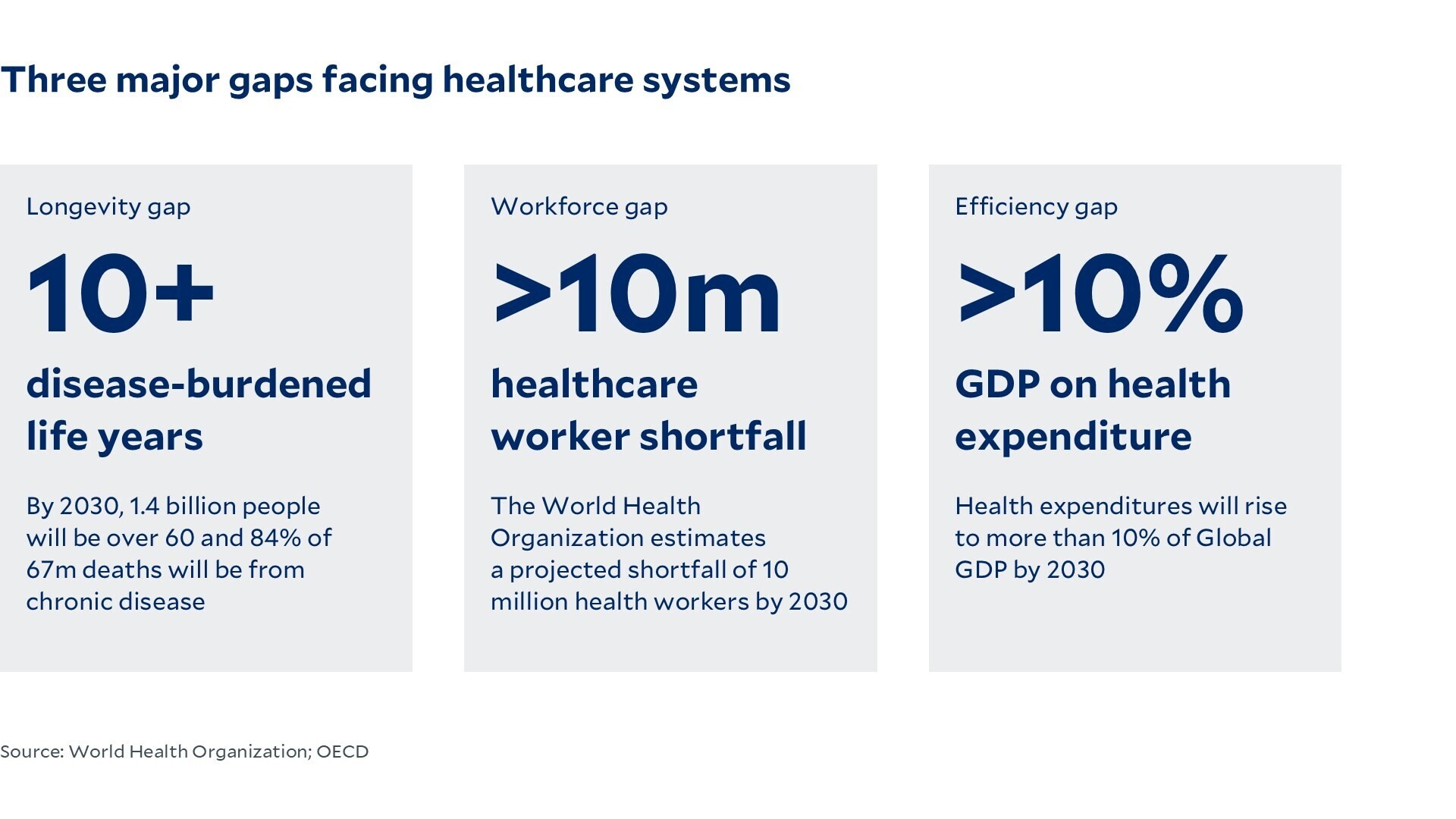
Einstein warned that “we cannot solve problems with the same thinking that created them.” He was right. Running 21st-century demand through a 20th-century operating model is no longer viable. The status quo is structurally mismatched to our demographic and clinical realities.
But just as systems are reaching breaking point, a new class of technology is emerging that can match the scale and complexity of today’s healthcare needs. We are standing at a Promethean moment. Breakthroughs in foundation models, specialized AI and agentic systems mean AI is now capable of planning and executing multi-step workflows. Whether through faster documentation and smarter triage or more efficient logistics.
These tools can expand capacity without expanding headcount. They have the power to grow care without growing costs. Above all, they return time to teams – the scarcest resource in a labour-short system.
Four ways to a transformation
The following are four ways that AI can help deliver that shift:
1. From workforce scarcity to capacity
On average, clinicians deal with around three hours of paperwork per day. Administrative burdens drain time and energy from the frontline. One example of how AI can tackle that is AI-powered ambient listening. A JAMA Network Open study found that ambient AI cut note-writing’s mental load by almost half and eased the sense of working under pressure. It also helped clinicians shift their attention back to patients: the share who said they could give patients their undivided attention rose from 58% before using AI to 93% after using it. We are seeing the same pattern in our clinics in Spain, where ambient listening and AI-supported documentation reduce cognitive load and help clinicians reinvest that time and energy back into patient care. As I often say: free 20% of clinicians’ time, and you effectively return thousands of full-time equivalents to patient care, all without adding a single unit of labour.
2. Turning healthcare into a talent magnet
Healthcare offers something very few sectors can: clear purpose. It deals in outcomes that are universally understood: people’s health and, at times, survival. AI is strengthening that purpose. It removes avoidable friction and accelerates everyday decisions. That gives clinicians more time for their core work: making informed clinical decisions and delivering care.
This aligns with what the next generation is looking for. Surveys from Deloitte and McKinsey show that Gen-Z workers value meaningful, purpose-driven work, and modern, flexible workplaces. They want technology that supports their judgment, not systems that slow them down. And the cohort that follows them – Gen-Alpha – will expect that support to be even more seamless. When AI removes administrative load and restores time for direct care, the job feels closer to why they entered medicine in the first place.
In a global competition for talent, this becomes a strategic advantage. AI helps make healthcare a sector where skilled people want to work, stay and build their careers.
3. From reactive care to preventative care
Earlier detection of severe conditions and chronic diseases is one of the biggest opportunities in global health. Many major conditions show signs long before people feel unwell. These early signals are often too subtle for traditional methods to catch in time.
When clinicians have connected, high-quality data, AI can spot the onset of heart failure, kidney decline or cancer months before symptoms appear. One example is colon cancer. A recent meta-analysis found that AI-assisted colonoscopy improves detection of precancerous polyps by around 20%. Spotting these polyps earlier means simpler treatment, higher survival and lower cost.
But early detection only works when data is connected. In far too many systems, important information still sits in separate places – or “data islands”: scans, lab tests and hospital records. Our Spanish hospital network is already changing this. It has built a digital patient platform with more than 8 million users that brings these streams together: patients get all the information they need, and clinicians can see the patient’s data in one place, in real time. This gives teams a clearer picture of what is changing in a patient’s health and makes earlier intervention possible.
Earlier risk detection steers patients to the right care sooner and helps prevent avoidable hospital admissions. Patients stay healthier and systems spend less. A healthier population is not only a clinical goal; it is an economic one. Productivity, participation and long-term fiscal stability all depend on it.
4. Making care more equitable
The next frontier is access. Today, far too many people live in a “care lottery”. Geography still dictates the care people receive. The WHO estimates that 4.5 billion people lack access to essential health services. That’s a gap no modern system should accept. But trends in global innovation show how quickly that could change.
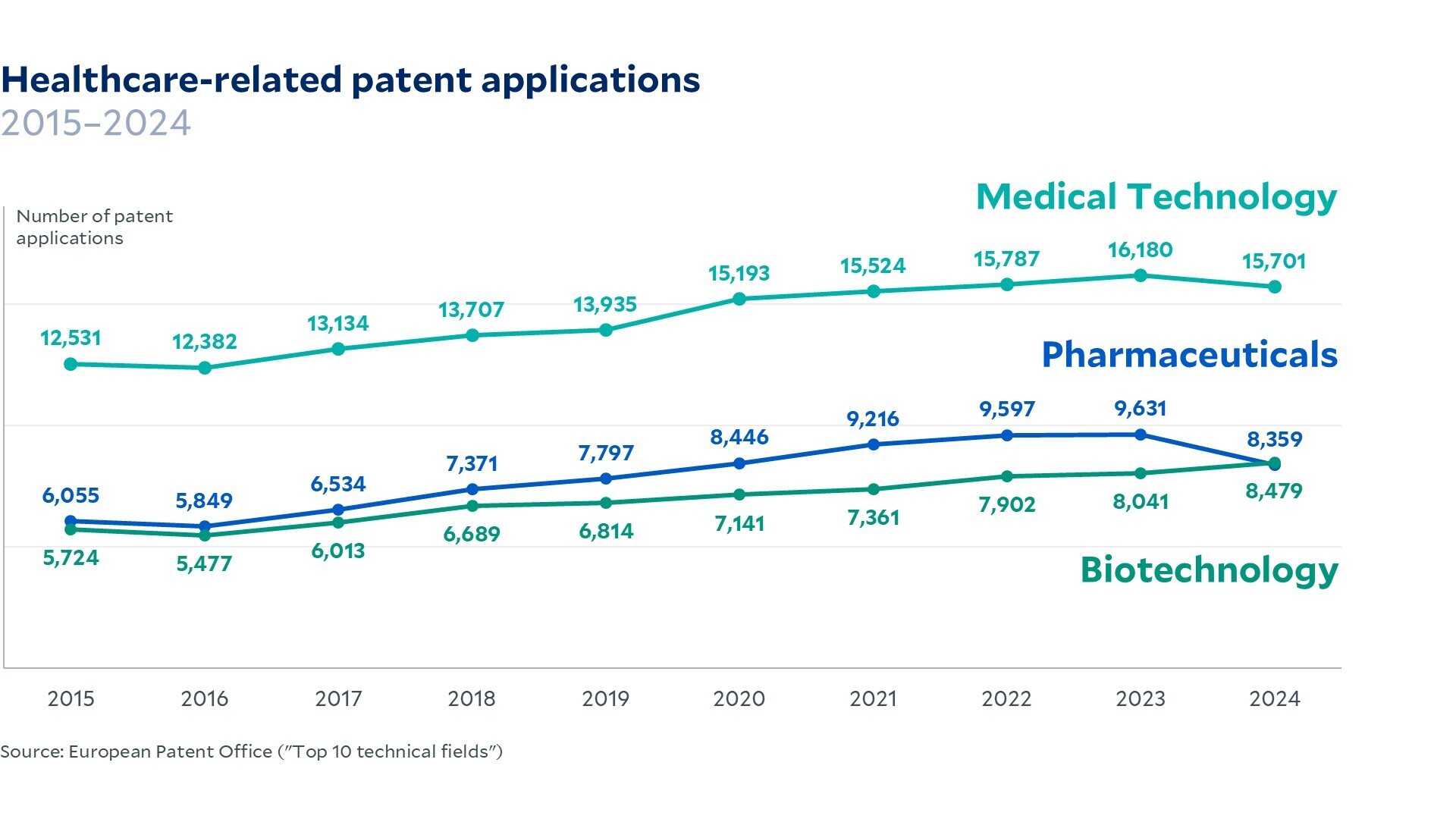
At the European Patent Office, medical technology, biotechnology and pharmaceuticals are now among the ten most active technology fields. Patent applications for these fields have grown significantly over the past decade. Many of these advances underpin AI in healthcare, from digital diagnostics to continuous monitoring. When applied responsibly, innovation can turn today’s care lottery into genuinely equitable access for all – especially hard-to-reach communities.
How the Forum helps leaders strengthen health systems through collaboration
Reimagining healthcare
AI gives us the chance to reimagine the future of healthcare. As foundation models and agentic systems advance, they will help shape digitally empowered healthcare ecosystems with broader access, sustainable economics, and better outcomes. But this depends on connected data, clear standards, and smart regulation.
And one thing must remain constant: humans must have the final say. The future of care is not humans versus machines; it is humans plus machines.
Don't miss any update on this topic
Create a free account and access your personalized content collection with our latest publications and analyses.
License and Republishing
World Economic Forum articles may be republished in accordance with the Creative Commons Attribution-NonCommercial-NoDerivatives 4.0 International Public License, and in accordance with our Terms of Use.
The views expressed in this article are those of the author alone and not the World Economic Forum.
Stay up to date:
Artificial Intelligence-Facilitated Healthcare
Related topics:

Forum Stories newsletter
Bringing you weekly curated insights and analysis on the global issues that matter.