How can we design social robots in the most ethical and equitable way?
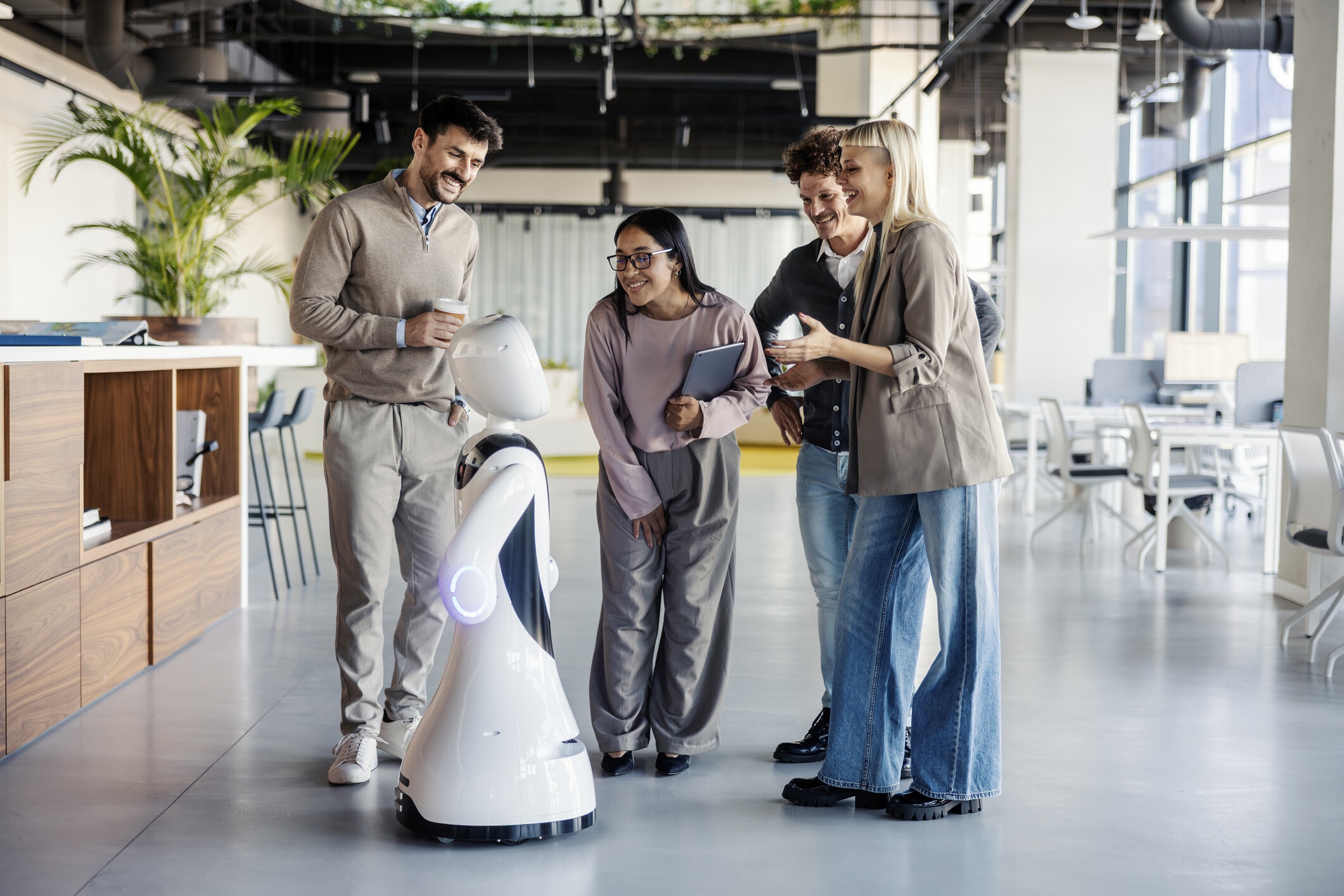
Will the public accept social robots? Image: Getty Images
- As social robots become more prolific, we must consider how their design can ensure public acceptance and progress without compromising ethics.
- The C4IR UAE and the Dubai Future Labs explore public perceptions of social robots and identify key pathways for more ethical design and deployment.
- The World Economic Forum provides an impartial platform for business to make sense of new technologies and drive responsible adoption and application.
Social robots are no longer just science fiction curiosities; they are increasingly present in everyday spaces, from hospitals and classrooms to shops and living rooms.
Unlike the industrial machines hidden away on factory floors, these robots are designed to communicate, collaborate and respond to people through speech, gestures and expressive behaviours that feel genuinely social.
They sit at the intersection of robotics, cognitive science and social psychology, aiming to bridge the gap between technological capability and human emotional connection.
And while they seem cutting-edge, they entered the human imagination centuries ago. Their use was bolstered during the COVID-19 pandemic when hospitals, care homes, airports and shopping centres used robots to support infection control, maintain physical distance and alleviate isolation.
As social robots expand across healthcare, education, hospitality and domestic life, the core question is no longer whether humans and robots will interact but how to design these interactions so they remain ethical and meaningful, and so that robots are socially aware.
What do the public think about social robots?
One survey of over 1,000 Dubai residents, conducted by Dubai Future Labs, revealed how respondents perceive social robots in public spaces. The study examined attitudes toward service and avatar robots across public settings such as shopping malls, airports, hotels, museums, hospitals and transport hubs.
The responses showed that overall acceptance was high. Physical, embodied robots were viewed more positively than digital or screen-based avatars, underscoring the importance of physical presence in social interaction.
Robots with anthropomorphic yet clearly robotic appearances were preferred to cartoonish, highly human-like, or animal-inspired designs. Notably, Emirati respondents showed higher acceptance of android-like designs than expatriate participants, highlighting potential cultural differences in acceptance.
Acceptance also varied by environment. Shopping malls, transport stations and other commercial venues were considered the most suitable locations for social robots. In contrast, contexts involving vulnerable groups, such as hospitals, dental clinics and educational settings, elicited greater caution.
Participants valued robots most for information provision, guidance and multilingual support. Tasks requiring emotional sensitivity, such as handling complaints or providing entertainment, were considered less appropriate and were generally preferred to remain human-led.
Overall, the survey showed greater public acceptance of useful and anthropomorphic robots.
What 3 things are key to designing social robots?
Social robots are moving from a speculative future to lived reality but their success will depend on how well they perform functions useful to society. Dubai’s large-scale survey shows that when robots are designed and deployed with clear, practical value and cultural alignment, public acceptance can be both high and nuanced.
Looking ahead, three promising priorities can be taken now.
1. Local social norms should reflect in robot design
The design of social robots must reflect the social values and norms of the communities they serve. As robots enter shared public spaces, their behaviours, communication styles and levels of expressiveness should be intentionally crafted to align with local expectations of respect, courtesy and cultural appropriateness.
2. Evolving robot design should allow for public feedback
Because emerging technologies improve through iteration, continuous feedback loops will be essential. Systematically gathering public input, testing robots in real-world contexts and feeding insights back into design and deployment cycles will help ensure that social robots remain useful, trusted and responsive to evolving needs.
3. Regulation should allow progress with guardrails
Forward-looking governance can provide the foundation for responsible innovation. The European Union AI Act’s risk-based approach, Japan’s human-centred coexistence strategy and Singapore’s operational AI governance model, are models of how regulation can enable progress while safeguarding transparency, accountability and public trust.
How the Forum helps leaders make sense of AI and collaborate on responsible innovation
What challenges still remain when designing social robots?
The conversation about how humans and social robots will interact, even if not new, is becoming more urgent as technologies advance and are applied. Yet many questions remain unanswered and are important for the responsible integration of this technology.
What aspects of human identity do we want to keep distinctly human? How can societies ensure that robots are introduced in ways that are most valuable to economies and society? In multicultural contexts, how can we determine which social norms to respect, reflect and include?
And finally, which governance and legal frameworks will be needed to enable bold experimentation and innovation while safeguarding rights, dignity and public trust?
As large language models and other forms of generative AI increasingly shape the design and behaviour of social robots, it also becomes essential to identify and mitigate embedded biases that may affect their fairness, inclusivity and social acceptance.
An equitable society doesn’t mean progress isn’t possible. However, it does hinge on the impact and sentiments of those at the sharp end of innovation. We aim to engage with partners worldwide to ensure such innovation is possible.
Don't miss any update on this topic
Create a free account and access your personalized content collection with our latest publications and analyses.
License and Republishing
World Economic Forum articles may be republished in accordance with the Creative Commons Attribution-NonCommercial-NoDerivatives 4.0 International Public License, and in accordance with our Terms of Use.
The views expressed in this article are those of the author alone and not the World Economic Forum.
Stay up to date:
Artificial Intelligence


Forum Stories newsletter
Bringing you weekly curated insights and analysis on the global issues that matter.
More on Technological InnovationSee all

Tejpreet S Chopra and Ayushi Sarna
February 27, 2026


