It's time for a humanitarian efficiency revolution. Here's how
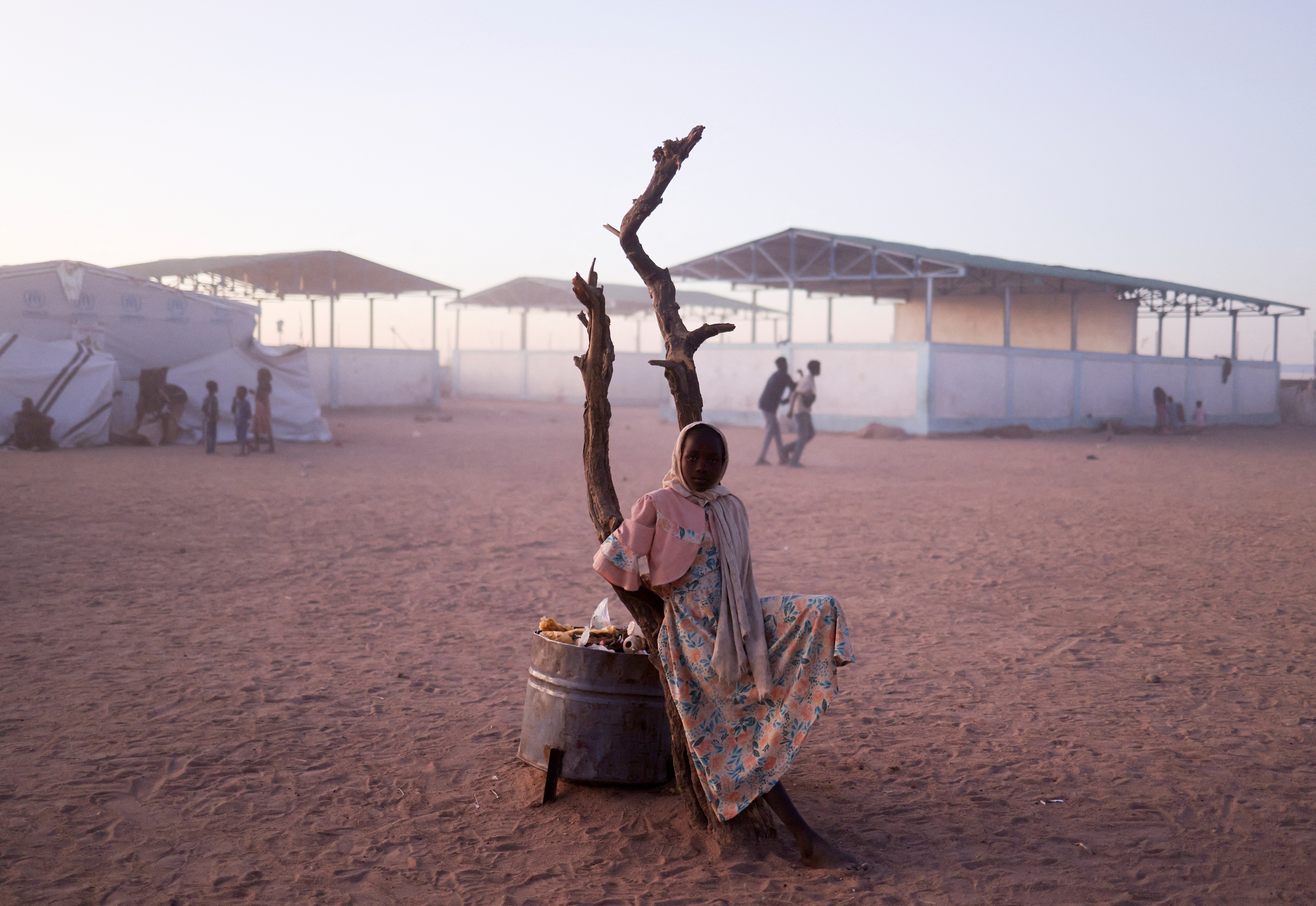
Satellite imagery, climate models and AI-driven risk mapping can help facilitate early humanitarian action. Image: REUTERS/Amr Abdallah Dalsh
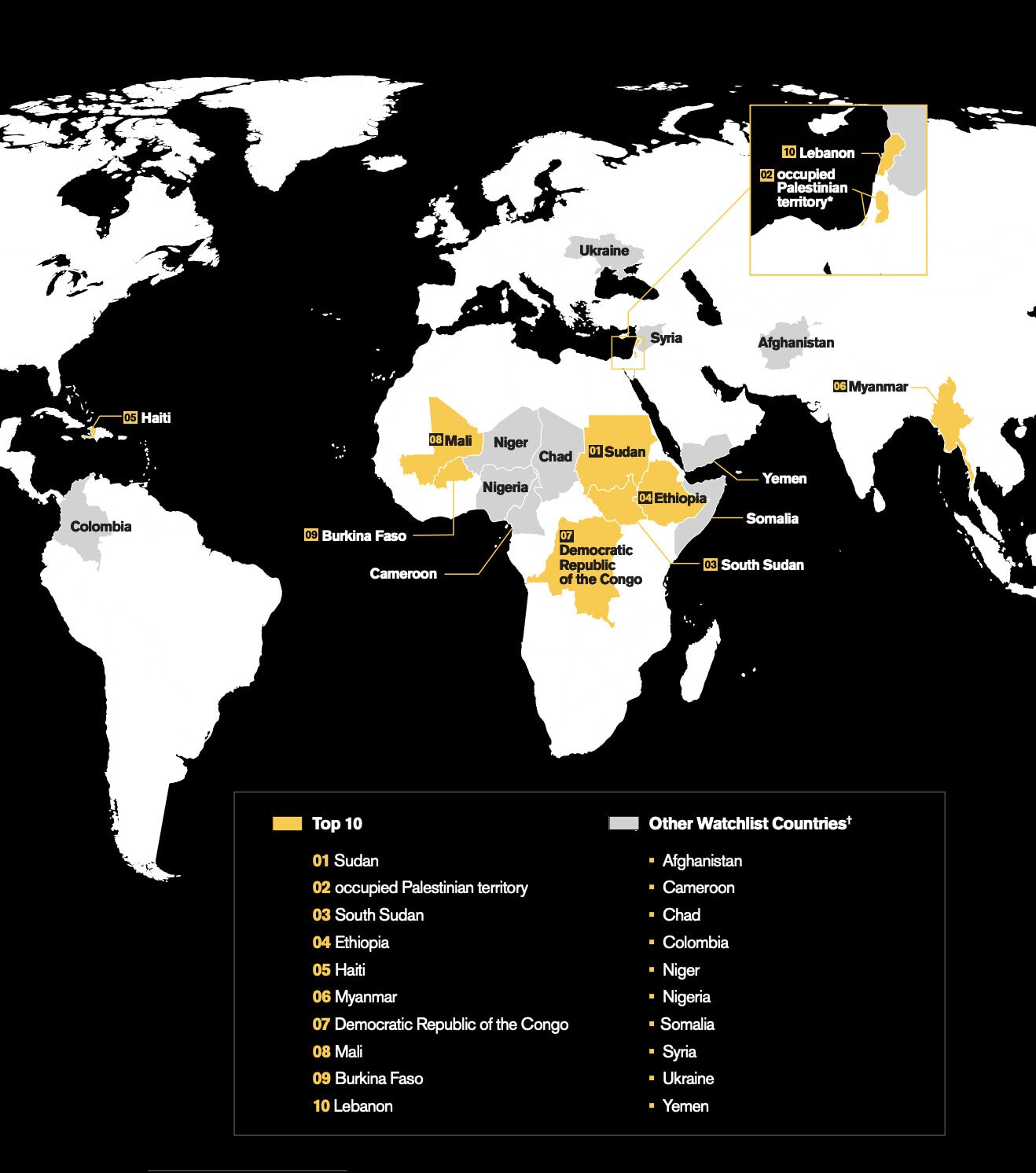
- The International Rescue Committee’s 2026 Emergency Watchlist warns of a world entering a “New World Disorder”.
- Nearly 240 million people will require humanitarian aid in 2026, yet global funding has fallen by more than half. How do we deliver more protection with fewer resources, in harder places, under greater risk?
- It's time for the humanitarian sector to work smarter with the help of new tools, new ways of financing its work and private sector support.
We live in a world where technological progress is speeding up, yet political and humanitarian safeguards are deteriorating even faster. The International Rescue Committee’s 2026 Emergency Watchlist warns of a world entering what we call a “New World Disorder”, defined by more risk and a declining global capacity to manage it.
Shifting alliances and transactional deal-making have led to a world of many leaders with no leadership. The American economist Charles Kindleberger highlighted what happens when a system lacks leadership: when no actor sustains the global system, all suffer, and the most vulnerable inevitably suffer most.
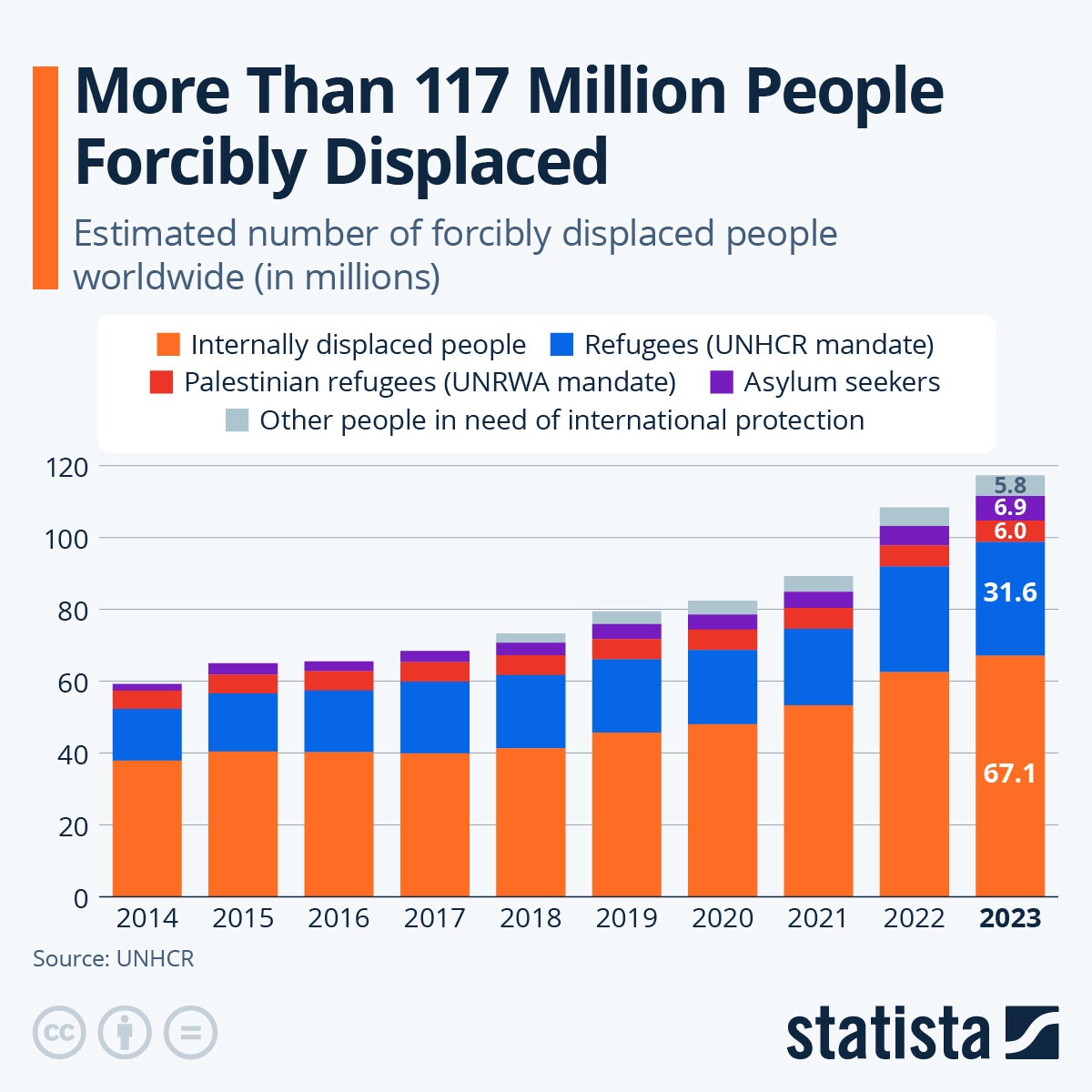
The numbers tell their own story: nearly 240 million people will require humanitarian aid in 2026, yet global funding has fallen by more than half. Conflicts are more numerous than at any point since the Second World War. Six countries face catastrophic hunger, and more than 117 million people are forcibly displaced. Sudan, topping the Emergency Watchlist for the third consecutive year, is now the largest humanitarian crisis ever recorded – not an outlier, but an avatar of the disorder spreading across regions.
Despite these realities, donors are withdrawing at an astonishing rate. In 2025 alone, USAID cancelled 83% of its humanitarian programmes. Major bilateral donors, including Germany, France and the UK, have also cut support. This is not just a gap; it is a dangerous divergence. It also forces a defining question: how do we deliver more protection with fewer resources, in harder places, under greater risk? The answer must be nothing less than a humanitarian revolution in efficiency.
We know what works: cash assistance, simplified malnutrition treatment, immunization and anticipatory climate action are consistently cost-effective and transformative. Our challenge is how to focus resources on these solutions which we know are effective.
Here’s how:
1. Delivering smarter: tech, AI and the power of forecasting
In our work at the IRC, and in the work of our partners, we’re beginning to see the humanitarian sector work smarter and take advantage of new tools to do it.
- Predictive analytics: we can no longer afford a model that waits for crises to strike. Across Somalia and Nigeria, IRC teams are using satellite imagery, climate models and AI-driven risk mapping to forecast floods and droughts and position supplies, staff and community alerts in advance. Early action of this kind is proven to deliver up to a 7:1 return on investment compared to traditional reactive responses.
- Using AI, texting and the web for crisis coordination: in conflict zones where authorities are fragmented or inaccessible, digital tools are becoming the backbone of humanitarian coordination. These digital tools can help frontline responders understand population movement, supply chain deficiencies and the immediate challenges facing communities. Mobile-based data collection is hastening service delivery in remote or restricted areas.
These tools already exist, but their uptake is uneven, their funding insufficient and their potential largely untapped.
2. Innovative finance: unlocking capital for fragile contexts
A humanitarian efficiency revolution must be matched with a financial one – and with new ways of financing our work. We will keep pointing out to governments the folly of their aid cuts, but we also need to embrace new ways of raising finance.
Parametric insurance offers rapid, pre-agreed payouts when triggers such as rainfall thresholds or seismic events are met. For fragile states, where bureaucratic delays can cost lives, this model provides speed, transparency and value for money. Yet, premiums remain prohibitively high without donor-backed support.
Alternatively, consider debt-for-climate and health swaps. Many crisis-affected states are crushed by debt burdens that eliminate fiscal space for climate adaptation or public health investment. Debt swaps allow repayments to be redirected into resilience infrastructure – a critical tool for countries excluded from traditional climate finance.
3. A call to action: the private sector as innovation partner
The question is not only how much money is available, but how it is spent. Only a quarter of global aid reaches fragile and conflict-affected states, even though they host more than 80% of humanitarian need. This can be solved.
The IRC calls for 60% of Official Development Assistance to go to fragile states, with 30% specifically to countries on the 2026 Emergency Watchlist. We call for direct financing to civil society and local responders, who are often best positioned to deliver under conflict conditions, and we urge flexible, multi-year funding that allows adaptation as crises evolve.
Lastly, we call on the private sector to be our innovation partner. The humanitarian sector does not need only money; it needs capabilities. The private sector has tools that can expedite impact at scale on everything from AI models, data platforms and payment systems to climate risk analytics and satellite and connectivity infrastructure.
Partnerships must move beyond philanthropy toward co-designed projects, risk-sharing mechanisms and long-term collaborations that strengthen crisis response systems.
From breakdown to breakthrough
The New World Disorder is no longer a forecast – it has arrived. But even as systems falter, we are not powerless. We can build a humanitarian model that is smarter, faster and more efficient; one that harnesses innovation to deliver protection where it is needed most.
The challenge now is collective: for governments, civil society and the private sector to form a new coalition of purpose, grounded not in the assumptions of the post-war order but in the realities of today. Not out of charity, but out of enlightened self-interest – because disorder is contagious and stability is a shared good.
What we choose to do next will determine whether we meet this moment with vision or retreat from it.
Don't miss any update on this topic
Create a free account and access your personalized content collection with our latest publications and analyses.
License and Republishing
World Economic Forum articles may be republished in accordance with the Creative Commons Attribution-NonCommercial-NoDerivatives 4.0 International Public License, and in accordance with our Terms of Use.
The views expressed in this article are those of the author alone and not the World Economic Forum.
Stay up to date:
Humanitarian Action
Related topics:


Forum Stories newsletter
Bringing you weekly curated insights and analysis on the global issues that matter.
More on Global RisksSee all

Eric Usher
February 24, 2026


