Why smart cities must become integrated urban ecosystems
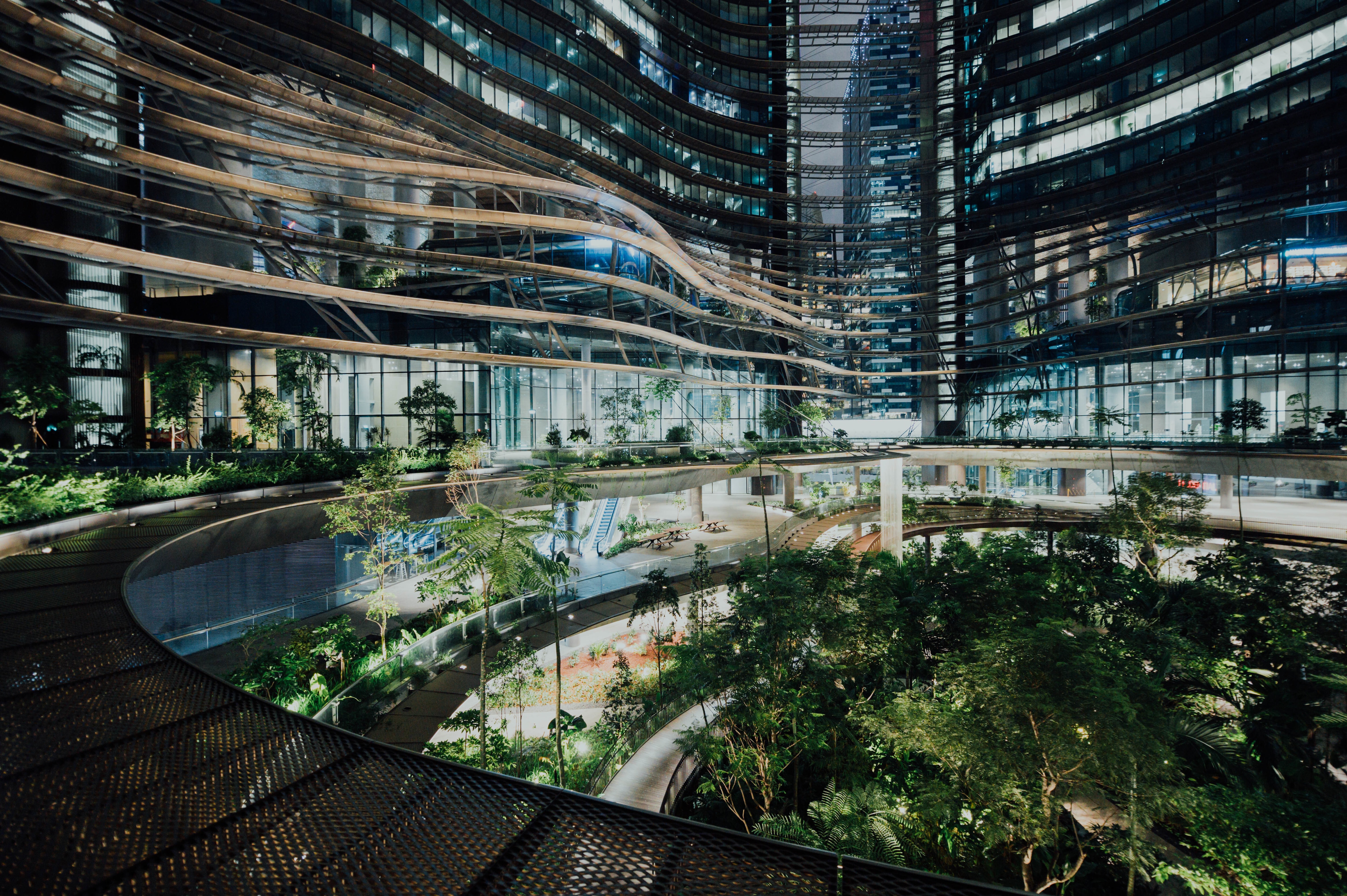
Smart Cities are now at the centre of humanity’s social, economic and environmental future. Image: chuttersnap/Freepik
- Nearly half of the world's population lives in urban areas, with nearly 4 billion people calling cities home.
- As urban populations continue to grow, cities face challenges such as ageing infrastructure and rising demand for energy.
- Innovation and collaboration are key to building integrated smart cities for a more sustainable and connected world.
The future of cities depends on the reinvention of how we envision, build and operate communities. We are embracing that responsibility with optimism and a firm belief that integrated smart cities can create a more sustainable and connected world.
Cities across the world are going through a period of profound transformation. According to the United Nations, approximately 45% of the global population lives in urban areas in 2025, with nearly 4 billion people calling cities home.
This represents an extraordinary shift from just decades ago. Cities are now at the centre of humanity’s social, economic and environmental future. As urban populations continue to grow, cities face mounting challenges, including ageing infrastructure, rapidly rising demand for energy, and ever-changing human expectations for digital connectivity and an increased quality of life.
As a result, smart cities have naturally become an important focal point for many sectors, but discussions still remain dominated by technology companies. While digital platforms, internet of things (IoT) devices and AI are all essential components of urban innovation, they alone cannot constitute the complex machine that is the modern city.
Smart cities rely on interplay of multiple systems
Urban environments inevitably rely on the interplay of infrastructure, energy, buildings, mobility and water management – systems that must be conceived, built and operated with precision and long-term stewardship. This is why we, at GS E&C, believe that the future of smart cities requires not only technological innovation, but also the deep engineering, construction and operational expertise that firms like ours have been refining for decades.
The construction industry is at an inflection point, as well. The traditional EPC model – design, build and hand over – no longer aligns with how modern cities function or what today’s society demands. Buildings and infrastructure now generate continuous data.
For example, housing systems interact dynamically with energy and environmental conditions, and people increasingly expect personalized services embedded throughout their daily lives. The boundary between digital and physical systems has blurred, transforming cities into networks that change and evolve in real time.
This convergence reveals a fundamental strategic direction for us. Construction firms must evolve into long-term service providers. The future of urban development lies not in isolated projects, but in integrated ecosystems that require continuous operation and innovation through reinvention.
Urgent need to reshape how urban systems impact environment
The need for this shift is underscored by an urgent global reality. According to the United Nations Environment Programme (UNEP), the construction sector consumes 34% of global energy and accounts for 37% of global carbon dioxide (CO₂) emissions.
Operational emissions from buildings alone reached nearly 9.8 billion tons of CO₂ in 2023. This means that everything in this industry, from the materials we use to the way we operate buildings and infrastructure, is imperative to addressing climate change.
Cities occupy just a small fraction of Earth’s land mass, yet their energy use and emissions will determine the trajectory of the whole planet. Firms like ours have a responsibility – and simultaneously, an extraordinary opportunity – to reshape how urban systems impact the environment.
This evolution is the foundation of our strategic transformation. We aim to shift from a project-based general contractor to a total service provider capable of integrating planning, construction, technology and long-term operation. Our goal is to create urban environments that are not only more efficient and sustainable, but also more connected and resilient.
Integrated vision redefines how smart cities work
To guide this transition, GS E&C developed Life Weaver, the company's integrated vision for smart cities. Life Weaver is more than just a technological blueprint; it is a new philosophy for how cities should function.
It rests on five principles: harmonized flow of energy, mobility and data; innovation emerging from urban challenges; invisible technology that enhances human desires and creativity; ecological co-evolution with natural systems; and integrated experiences that dissolve the boundaries between services and spaces.
These principles redefine what a city can be – an adaptive ecosystem that is both sustainable and intuitive. Life Weaver envisions urban environments where energy circulates cleanly and efficiently, mobility networks reduce friction and services anticipate the needs of the residents. Technology becomes a seamless backdrop, empowering people without overwhelming them.
To make this vision a reality, we are working on building the capabilities required for operating smart cities. Our Zero Energy City frameworks integrate renewable power generation, energy storage systems and energy prosumers – who produce and consume their own energy – to achieve net zero.
Meanwhile, our smart home and IoT platforms create secure and connected living environments that are capable of automation and personalization. We will work to advance digital twins, data platforms and cybersecurity infrastructures to ensure that cities can be well managed as coherent, intelligent systems.
Our investment arm plays a critical role in this picture, as well. We collaborate with startups in AI, robotics, renewable energy and advanced materials to accelerate innovation. Partnerships with leading academic institutions, including Korea Advanced Institute of Science and Technology (KAIST), enable us to study, test and deploy new solutions in real environments.
Why smart cities must improve human experience
Yet, at the heart of our vision remains people. The ultimate goal of smart cities must be to improve human experience. Smart cities should reduce energy costs, enhance safety, create cleaner environments and shorten commutes. They should enable healthy lifestyles, support vulnerable populations and foster a greater sense of community. They need to be inclusive places where technology adapts to the lives of people – not the other way around.
As cities become the primary setting of global life – accounting for nearly half of the world population and over 80% of global GDP according to the International Energy Agency (IEA) – their success will define our collective future. This is why transformation towards integrated smart cities matters. It is not simply technological innovation, but rather, an imperative for society.
What is the World Economic Forum doing to promote sustainable urban development?
No single sector can accomplish this alone. Smart cities require collaboration across construction, technology, energy, mobility, academia, the public sector and governments. GS E&C is committed to leading through such partnerships and redefining what it means to build – not just for today, but for future generations as well.
The future of cities depends on the reinvention of how we envision, build and operate communities. We are embracing that responsibility with optimism and a firm belief that integrated smart cities can create a more sustainable and connected world.
Don't miss any update on this topic
Create a free account and access your personalized content collection with our latest publications and analyses.
License and Republishing
World Economic Forum articles may be republished in accordance with the Creative Commons Attribution-NonCommercial-NoDerivatives 4.0 International Public License, and in accordance with our Terms of Use.
The views expressed in this article are those of the author alone and not the World Economic Forum.
Stay up to date:
Cities and Urbanization


Forum Stories newsletter
Bringing you weekly curated insights and analysis on the global issues that matter.
More on Built Environment and InfrastructureSee all

Lin O’Grady and Alice Charles
April 7, 2026


