Opinion
The new shape of global cooperation
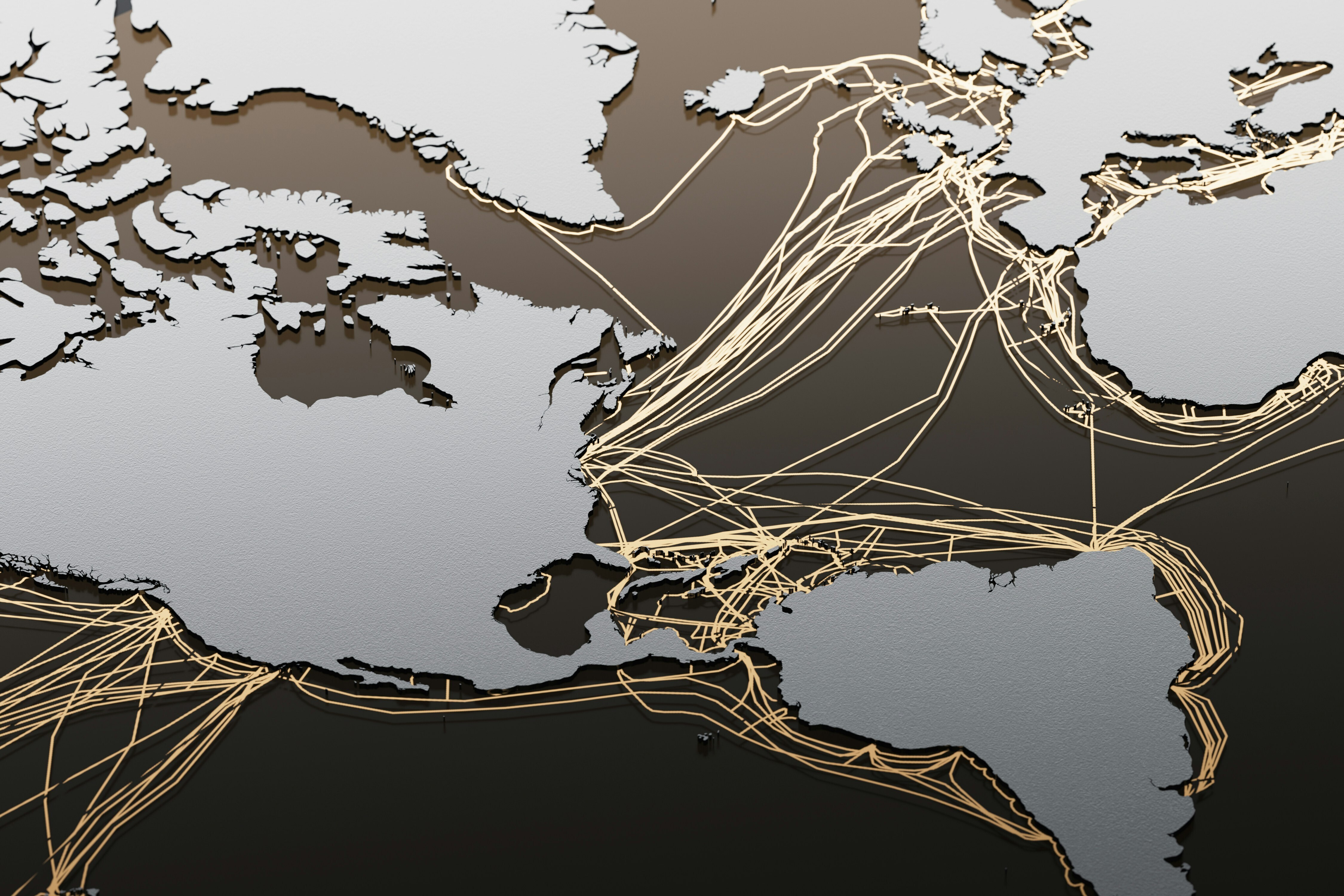
Rising trade barriers and geopolitical tension make the job of multilateralism and global cooperation harder. Image: Unsplash
- Multilateralism continues to be under pressure.
- The newly released Global Cooperation Barometer 2026 measures the ebbs and flows of our global connections.
- Navigating a new era requires leaders who are clear-eyed about the need for cooperation and agile enough to adapt it to the moment.
Questions about multilateralism have grown louder in the past year—and the start of 2026 has done nothing to quell them. Rising trade barriers and geopolitical tension make the job of multilateralism harder. Some even say that multilateralism is in crisis. But what do the numbers say—and how do we separate signal from noise?
The Global Cooperation Barometer, now in its third edition, uses 41 metrics spanning five domains—trade and capital, innovation and technology, climate and natural capital, health and wellness, and peace and security—to measure the ebbs and flows of our global connections.
From multilateralism to minilateralism
This year’s report finds that multilateralism is indeed waning. Metrics that reflect multilateral cooperation have fallen by more than 20% since 2019. But cooperation has continued to advance where flexible, smaller groupings can act on common interests to achieve pragmatic goals. “Mini” might become the new “multi," or at the very least complement it, as such groupings are helping get things done.
Several metrics rose—notably flows of digital services, greenfield foreign direct investment, and climate finance—as governments and businesses found common ground in smaller groups. Many of these new minilateral agreements involve trade. While trade tensions are rising, the fact remains that trade volumes rose in 2024 and 2025, though not as fast as the global economy. We’re seeing a realignment, not a retreat.
What’s true for trade is also true for most domains of cooperation. At the highest level, global cooperation held steady amid upheaval. Many metrics remain above pre-pandemic levels, and four of the five domains show positive momentum in at least a few areas.
In trade and capital, services and some capital flows rose, particularly among aligned economies. Cooperation in innovation and technology grew quickly, driven by a race to unlock growth. Trade in IT goods and services grew more than 5% in 2024, while international bandwidth surged by more than 25% year-on-year, and is now four times larger than in 2019.
In climate and natural capital, cooperation grew where sustainability, affordability, and security goals coincided. In the past 18 months, the world installed more solar capacity than in the previous three years combined. While China led the charge, accounting for two-thirds of additions, other Global South economies stepped up. India added the second-most solar in 2024, more than double 2023, and 2025 looks even higher.
Cooperation even held steady in health and wellness, despite the severe pressure on multilateral assistance for health.
The outlier is peace and security, where the metrics are moving in the opposite direction. Every tracked metric has fallen below pre-pandemic levels. In the past two years, conflicts escalated, the number of displaced people rose, and multilateral mechanisms struggled.
What leaders can—and should—do
The goals of cooperation—a stronger economy, better and healthier lives, a more peaceful world—are global. But of course, tensions across countries are rising. To realize our shared goals, leaders need to be pragmatic about finding new, complementary ways to cooperate that can succeed if multilateralism falters.
We see three actions:
- Go on offense. Leaders can anticipate shifts and move proactively to “re-map” international engagement, for example by investing in fast-growing corridors or participating in the emerging industrialization wave in some economies. Governments can engage with the minilateral groups arising in their regions and beyond.
- Strengthen resilience. Organizations need capabilities suited to an era of continuous disruption. Our recent survey finds that 84% of companies say they are unprepared for current and future disruptions, and collaboration is often the missing ingredient in turning resilience plans into action. This requires both a strategy and technology designed for resilience, with purpose-built teams to lead them. Companies might create cross-functional foresight teams that maintain a live view of new trade agreements and industrial policies, emerging technologies, and other sources of disruption; and upgraded corporate-affairs functions that can engage public institutions effectively and act quickly when opportunities arise.
- Match the cooperation format to the issue. Organizations will need to find new forums to cooperate, including private-private and public-private partnerships. For example, the Resiliency Consortium, convened by McKinsey and the World Economic Forum, brings together businesses’ agility, the public sector’s long-term views, and multilateral development banks’ ability to mobilize private capital.
The real question isn’t whether to work together, but how. Navigating a new era requires leaders who are clear-eyed about the need for cooperation and agile enough to adapt it to the moment. In that sense, the most radical move may be the simplest: leaders must first talk—and listen—to find common ground.
Don't miss any update on this topic
Create a free account and access your personalized content collection with our latest publications and analyses.
License and Republishing
World Economic Forum articles may be republished in accordance with the Creative Commons Attribution-NonCommercial-NoDerivatives 4.0 International Public License, and in accordance with our Terms of Use.
The views expressed in this article are those of the author alone and not the World Economic Forum.
Stay up to date:
Global Cooperation


Forum Stories newsletter
Bringing you weekly curated insights and analysis on the global issues that matter.
More on Global CooperationSee all

Alireza Haghighi and Khalid Alaamer
February 24, 2026


