Opinion
The rise – or return – of geoeconomics and the implications for growth
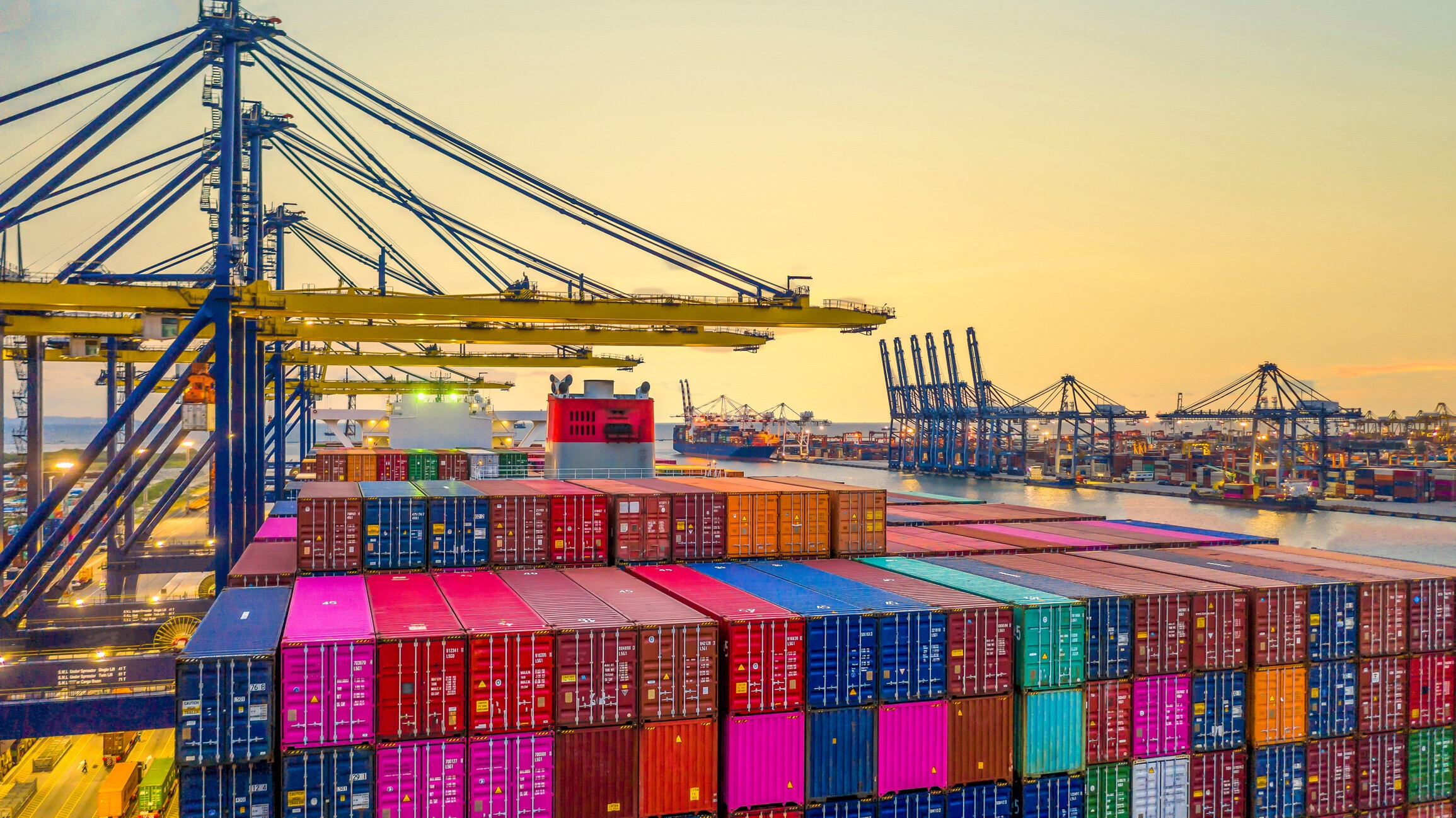
What does the shift towards geoeconomics mean for growth? Image: Getty Images
- Geoeconomics was previously seen as something old-fashioned.
- Today, however, the shift towards geoeconomics has intensified – and it is proving to be contagious.
- This shift might not last, but business leaders, investors and policymakers need to recognize the new reality.
In recent decades, the name Albert Hirschman has not featured prominently in university economic courses. No wonder: the German-Jewish economist, who fled to America in the 1930s, studied how major states used their political power and leverage in the interwar years for geopolitical conflict, i.e. engaged in so-called geoeconomics.
In the years after World War II – when Hirschmann’s first book was published – this theme was deemed unfashionable. After all, in the Bretton Woods era, the focus was on economic collaboration, not brutal competition, to spark growth, at least among Western allies. And when the neoliberal economic revolution started in the 1980s, economists embraced the idea that free markets could operate outside political power games – and globalization could bind the global economy together.
Geoeconomics was seen as something old-fashioned and/or mostly found just in emerging economies, not developed ones; so much so that an International Monetary Fund paper in 2019 called industrial policy the “policy that shall not be named.”
How times change. With the reelection of US President Donald Trump, in November 2024, Hirschman’s shadow has reemerged, as the US has increasingly used foreign trade and other economic tools to bolster its “national power”. Economics is no longer seen as a separate sphere of activity which can be insulated from politics, tech, military and cultural issues – but a tool to advance political power.
What does this mean for growth?
Some officials insist that it was ever thus, i.e. that geoeconomics never really went away. They’re partly right: during the Cold War, dominant powers such as America did sometimes use “free” markets to advance their power – and emerging markets and Global South nations suffered the consequences. Moreover, when China entered the World Trade Organization in 2001, it often behaved in a mercantilist manner.
However, the second Trump administration has intensified the zeitgeist shift towards geoeconomics. And this is proving to be contagious, since other countries are starting to respond with geoeconomic strategies – just as they did in the 1930s.
So, what does this mean for growth? There are five key points to note:
1. There is a rising sense of zero-sum competition. Thus, we are moving from an era where the policy-making zeitgeist was about absolute welfare (i.e. whether countries are becoming richer than they were before) to relative welfare (i.e. whether countries are becoming richer than their rivals).
2. Within this increasingly competitive zeitgeist, hegemonic power matters. More specifically, as a group of economists linked to Stanford, Columbia and Chicago have pointed out, one of the most effective ways to make sense of the global geopolitical order today is to analyze it through the prism of competition for hegemony between the US and China.
Most notably, China currently wields hegemonic power in many manufacturing spheres today, due to its control of key supply chain nodes (say, around rare earth minerals) – and the US is now seeking to challenge that. America has hegemonic power in finance, because the dollars is the global reserve currency – and China’s leaders want to challenge that, too. Tech hegemony is still being contested. And since neither the US nor China seems likely to destroy each other’s hegemony soon, this contest will run and run.
3. This landscape leaves smaller nations newly vulnerable to coercion. For a while free-market economists used to assume that modern digital, trade and financial networks would democratize growth and power, in reality – as writers such as Edward Fishman or Henry Farrell have noted – hegemons are actually using these networks as a tool of “viral” control. That means that smaller countries need to reduce their vulnerabilities, if possible, by diversifying economic relationships, fostering self-reliance, where possible, and seeking alliances.
4. State intervention is rising. Many emerging markets countries have practiced industrial policies for decades, albeit often critiqued by bodies such as the IMF. But developed countries are deploying more industrial policies too, even under more right-wing governments, outstripping their use in emerging markets, as shown in recent IMF data.
5. Companies and investors need to think about stakeholderism. That might sound odd given that when America’s Business Roundtable embraced stakeholderism – to replace shareholder primacy – back in 2019, this was initially linked to environment, social and governance (ESG) goals, which are now in retreat.
However, the attacks on ESG principles does not mean that shareholder primacy has returned in America, or elsewhere; instead, companies are grappling with a different set of stakeholders, such as national security interests, right-wing cultural values and populist “main street” demands. The C-suite ignores that at their peril.
How the Forum helps leaders make sense of regional, trade and geopolitical shifts
Fleeting?
This zeitgeist shift towards geoeconomics might not last. It is possible that some non-American countries, say, will try to combat geoeconomics by fostering a more collaborative vision, a so-called liberal “Coalition of the Willing”. It is also possible that a policy shift could occur in the US or elsewhere if there is a sharp economic slowdown. Protectionism already seems to be undermining growth prospects.
But it would seem foolish to expect to see a return to the neoliberal order, or collaborative Bretton Woods spirit, anytime soon; or at least not while US-China rivalry is afoot, and numerous conflicts are bubbling on the world stage, exacerbated by climate change, tech shifts and soaring debt.
So, business leaders, investors and policymakers need to recognize the new realities, find ways to salvage some positive outcomes from this shift towards rising government intervention, national rivalry, popular interests and localization. The alternative path of ugly geoeconomics is frightening; just look at the 1930s period, and the slide into militarism, that Hirschmann studied.
Don't miss any update on this topic
Create a free account and access your personalized content collection with our latest publications and analyses.
License and Republishing
World Economic Forum articles may be republished in accordance with the Creative Commons Attribution-NonCommercial-NoDerivatives 4.0 International Public License, and in accordance with our Terms of Use.
The views expressed in this article are those of the author alone and not the World Economic Forum.
Stay up to date:
Geo-economics
Related topics:


Forum Stories newsletter
Bringing you weekly curated insights and analysis on the global issues that matter.
More on Economic GrowthSee all

Samaila Zubairu
March 3, 2026


