These leaders are shaping the transition to clean fuels
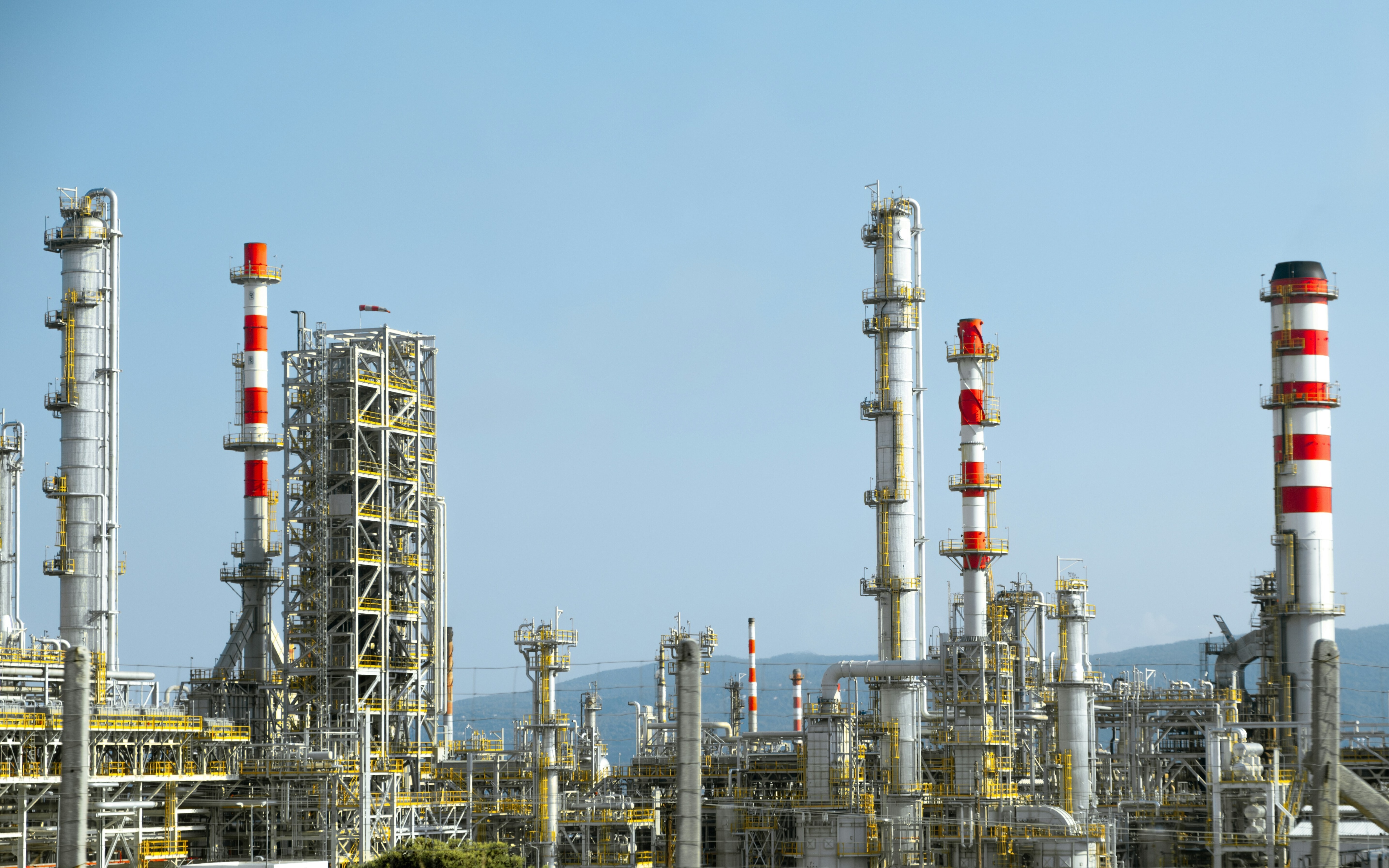
Clean fuels play a vital role in addressing the energy trilemma by providing secure, affordable and cleaner sources of energy. Image: Christian Harb/Unsplash
Roberto Bocca
Head, Centre for Energy and Materials; Member of the Executive Committee, World Economic Forum- Scaling clean fuels will be central to industry and transport in the coming decades.
- Clean fuel projects are moving from pilots to industrial scale, proving that innovation and collaboration can deliver real impact, yet progress remains too slow.
- A World Economic Forum white paper shows how business, finance and policy can turn ambition into investable projects and scale the market.
Clean fuels play a vital role in addressing the energy trilemma by providing secure, affordable and cleaner sources of energy. They offer pathways to make hard-to-abate sectors such as transport, industry and parts of power and heat generation cleaner, while simultaneously enabling competitiveness and driving innovation across the energy system.
Building on the momentum of the Belém 4x pledge, clean fuels are poised to scale and deliver tangible economic and social benefits. They can create two to three times more jobs than conventional fuels (particularly in rural areas) while reducing fossil fuel import dependence by 5-15% through domestic biofuels production. With fuels expected to meet 40-55% of global energy demand by 2050, scaling clean-fuel supply is essential to secure affordable energy and industrial competitiveness. Mobilizing the $100 billion in annual investment needed by 2030 can unlock this potential.
As the World Economic Forum's Future of Clean Fuels initiative marks its one-year milestone with the release of its white paper and digital playbook, members of the initiative’s steering committee share below how collaboration between business, policy and finance is already turning ambition into action – and what lessons can guide the next phase of scale-up.
1. Industrial innovation is proving that different clean fuels can scale
J.J.Imaz, Chief Executive Officer, Repsol
Industrial innovation is proving that clean fuels can scale and deliver real impact. Across Europe, companies are investing in technologies that turn ambition into reality, creating new value chains, reducing emissions and strengthening energy security. From biofuels to e-fuels, these initiatives show that clean fuels are not just a future promise, but a present solution. Repsol is at the forefront of this transformation, driving projects that demonstrate how low-carbon fuels can be produced at an industrial scale while supporting competitiveness and quality jobs.
"At Repsol, we believe clean fuels are indispensable for the energy transition. They not only reduce emissions, but also strengthen Europe’s energy security, industrial competitiveness and quality jobs. This is why we are investing across all pathways. Biofuels are already a reality and we are producing 250,000 tons per year in our Cartagena plant. We have approved the Final Investment decision of Ecoplanta, which will convert municipal solid waste into 240,000 tons of renewable methanol, cutting millions of tons of CO₂ emissions. We are building a demo-plant with a production capacity of 8,000 litres per day of synthetic fuels that will be located in the port of Bilbao.
Clean fuels are a real alternative for road transport, maritime, aviation and industry and they can scale using existing assets while creating new value chains. There is no single solution: biofuels, e-fuels and other low-carbon fuels all have a role to play.
Technological neutrality is key: let science and competitiveness decide the winners, not policy. For example, cars running exclusively on sustainable fuels can reduce emissions beyond 2035 and should be recognized in EU framework. By building the market, technology and infrastructure today, we ensure that Europe remains competitive and that the transition is both sustainable and realistic."
2. Clean fuels can help reduce emissions using existing infrastructure and established value chains
Hans Olav Raen, Chief Executive Officer, Yara Clean Ammonia
Clean fuels can be integrated to today’s industrial and energy infrastructure, rather than replacing it entirely, which reduces costs and accelerates adoption.
"To scale clean fuels, we need real projects delivering real molecules, and we are proving that it can be done. In Porsgrunn (Norway), we now operate one of Europe’s largest renewable-hydrogen-based ammonia facilities, showing how industry, policy and technology can work together to decarbonize hard-to-abate sectors. At the same time, we are building a major carbon capture and storage facility at our Sluiskil plant in the Netherlands, which will be operational in 2026 and further reduce emissions from one of Europe’s largest fertilizer and ammonia hubs. But a single plant, or even two, is not enough. What we need next is coordinated global demand, clear certification frameworks, and accelerated investments in logistics and bunkering so clean fuels can move from pilot to global market. We can build this system together."
3. Scaling clean fuels can only be done through more collaboration and investment
Hans Kobler, Founder and Chief Executive Officer, Energy Impact Partners
Investments into clean fuels projects face a unique set of challenges and market risks, given that the value chains are complex, interdependent and often spanning multiple feedstocks. Global clean fuel ambitions require annual investments in production to quadruple from $25 billion per year today to $100 billion per year by 2030. Unlocking that scale depends on aligning investors, industry and policy-makers to share risk and build confidence in new value chains.
“At Energy Impact Partners, we are advancing the future of energy by bringing together incumbents, innovators and capital to find and scale innovative energy solutions. Clean fuels have a critical role to play in decarbonizing the global economy. Together with our partners, we invested in companies such as Electric Hydrogen, constructing one of the largest electrolyzers in the US or Metafuels, new sustainable aviation fuel pathways."
Cate Hight, Partner Energy & Sustainability, Bain & Company
“At Bain & Company, we work with leading companies and investors to advance their clean-fuels ambitions. Our experience shows that those who succeed in clean fuels are often disruptive thinkers, exploring new business models and investment strategies to balance risk and reward. Because these markets and projects differ from conventional commodities, we work with clients to develop resilient commercial plans, build strategic partnerships, manage capital and risk with discipline and shape flexible operating models. These elements are essential to navigating the uncertainty and unlocking viable project economics in clean fuels.”
4. Accelerating innovation in first-of-a-kind projects will be critical
Vicki Hollub, President and Chief Executive Officer, Occidental
Scaling low carbon fuels will rely on investing in scalable feedstock pathways today. In the US, Occidental’s first commercial Direct Air Capture (DAC) project – named STRATOS – is designed to capture up to 500,000 tonnes of CO2 annually, once fully operational. The captured carbon can create value in several ways, including combing the atmospheric CO2 with clean hydrogen to produce synthetic low carbon transportation fuels, like Sustainable Aviation Fuel. Occidental can also leverage 50+ years of experience safely and securely using carbon dioxide (CO₂) in Enhanced Oil Recovery (EOR) operations, which injects CO₂ into depleted hydrocarbon reservoirs to encourage flow, unlocking previously inaccessible hydrocarbons. When paired with CO₂ from carbon capture solutions, like Direct Air Capture (DAC), CCS-EOR can enable low-carbon fuels while using existing sites more efficiently.
“When we think about addressing emissions, we need to be firm in low-carbon performance and flexible in approach so we can achieve reductions at an accelerated pace and meaningful scale. Our team has used CO₂ for enhanced oil recovery for over 50 years, which can store more CO2 underground than what is emitted during the product’s lifecycle. It's low-carbon fuel technology that works and is compatible with today’s infrastructure and value chain.
Moreover, we believe that innovative technologies, like DAC, will be instrumental in shaping the future energy landscape. STRATOS is a major first-of-a-kind energy infrastructure project, offering a valuable example of how industry can turn excess carbon into value and fuel a lower-carbon future. Our teams at Carbon Engineering continue to innovate the process so that advancements that drive costs down and make the technology more accessible can be introduced at scale.”
5. Policy is a catalyst for developing the clean fuels market
Policy will be a critical lever in developing the clean fuels market, particularly given the current cost premium compared with conventional fuels. As illustrated in our Playbook of Solutions, Brazil has shown how integrated measures ranging from blending mandates to carbon credit trading – under its RenovaBio programme – can stimulate private investment, create jobs and strengthen energy security. By advancing the Belém 4x pledge, Brazil is taking a leading role in promoting clean fuels globally and demonstrating how coherent national strategies can turn ambition into tangible market growth.
The way forward
From Europe to Brazil, these case studies show that scaling clean fuels is already underway, but progress must accelerate. The next step is to extend this momentum through coordinated investment, supportive policy and cross-sector collaboration. The Future of Clean Fuels initiative aims to accelerate this transition – explore our white paper and digital playbook to see how leading projects are already turning ambition into action.
License and Republishing
World Economic Forum articles may be republished in accordance with the Creative Commons Attribution-NonCommercial-NoDerivatives 4.0 International Public License, and in accordance with our Terms of Use.
The views expressed in this article are those of the author alone and not the World Economic Forum.
Contents
1. Industrial innovation is proving that different clean fuels can scale2. Clean fuels can help reduce emissions using existing infrastructure and established value chains3. Scaling clean fuels can only be done through more collaboration and investment4. Accelerating innovation in first-of-a-kind projects will be critical5. Policy is a catalyst for developing the clean fuels marketThe way forward
Forum Stories newsletter
Bringing you weekly curated insights and analysis on the global issues that matter.
More on Energy TransitionSee all

Namit Agarwal
February 25, 2026


