Why water is the catalyst for the next wave of global growth
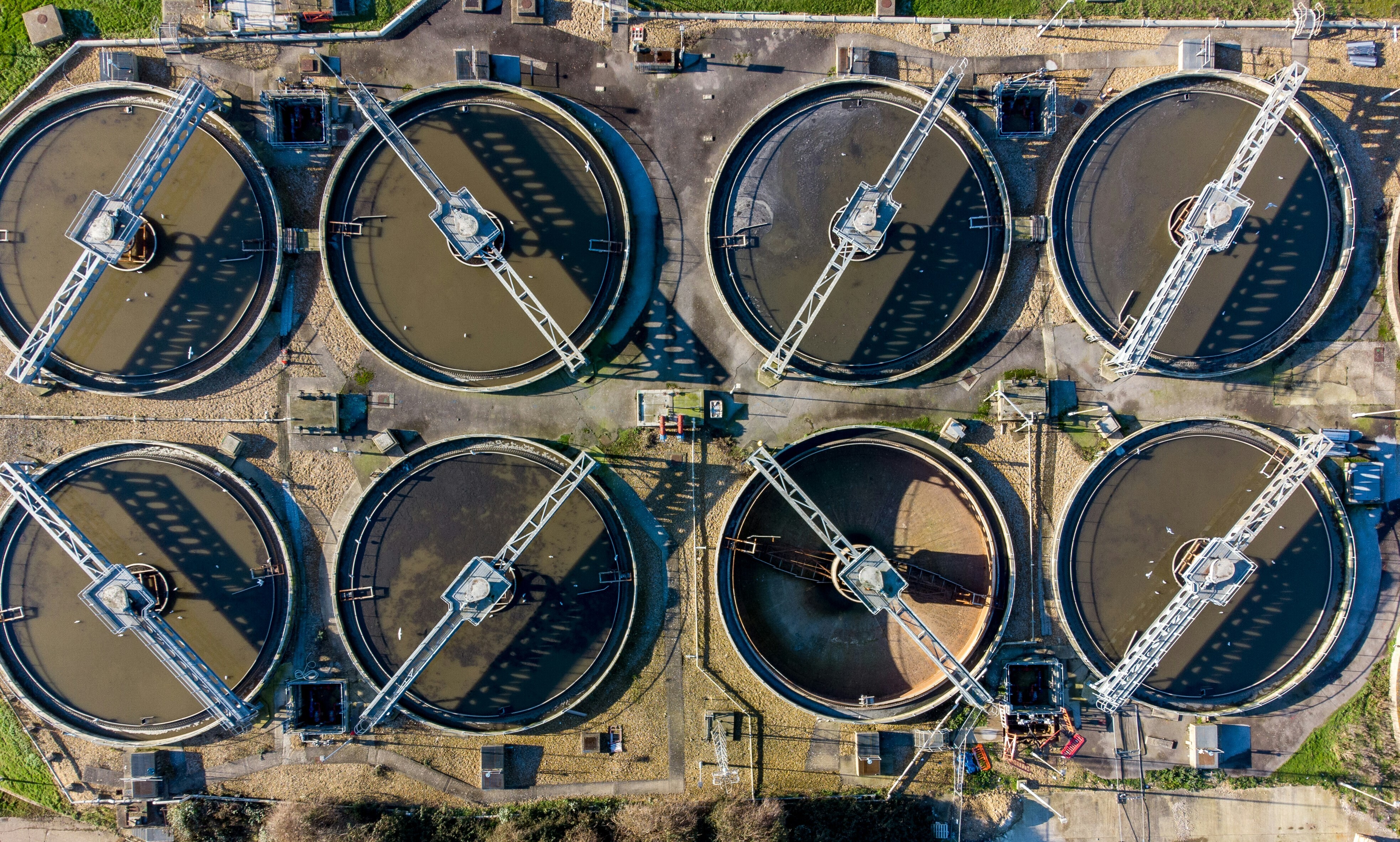
Investment in water and sanitation infrastructure is far below what is needed to meet current and future demands Image: Bob Brewer/Unsplash
- Water infrastructure is key to human development and climate resilience, but its socioeconomic value as an enabler of growth is often underappreciated.
- Investment in water and sanitation infrastructure averages €41 per capita annually – far below what is needed to meet current and future demands.
- New insight report, Bridging the €6.5 Trillion Water Infrastructure Gap: A Playbook, outlines how water infrastructure can become a catalyst for sustainable growth and resilience through coherent policy, innovative finance and collaboration.
With coherent policy, innovative finance and a shared commitment to collaboration, the global community can transform water infrastructure from a constraint into the new main catalyst for sustainable growth and resilience.
Water infrastructure lies at the core of human development and climate resilience. While its essential role in safeguarding public health is widely acknowledged by governments and international organizations, its socioeconomic value as an enabler of growth, employment and security remains markedly underappreciated.
Despite its essential nature, investment in water and sanitation infrastructure averages just €41 ($48) per capita annually – far below what is needed to meet current and future demands.
Moreover, while other infrastructure sectors, such as energy and digital, have made significant progress in mobilizing private capital, water has struggled to attract comparable investment flows, leaving a persistent gap between needs and actual expenditures.
In an era marked by geopolitical uncertainty, climate disruption and constrained public budgets, closing the gap in water infrastructure presents a unique opportunity to stimulate inclusive economic development, creating jobs and securing long-term resilience.
Neglecting water infrastructure poses risks to development and resilience
The persistent underinvestment in water infrastructure can no longer be deferred.
Global water systems are under mounting pressure from demographic growth, rapid urbanization and ever-intensifying climate change, resulting in inequitable infrastructure access, weak resilience, slow technological progress and limited uptake of circular water solutions, with undeniable consequences.
Lack of basic infrastructure exacerbates global inequalities, as more than 2 billion people still lack reliable access to clean water and over 3 billion are deprived of basic sanitation services.
Ageing and outdated infrastructure undermine long-term resilience, with 4 billion people already living under chronic water stress. These vulnerabilities are further compounded by underinvested systems, as water distribution networks lose an average of 30% of supply globally. Technological progress has also lagged, with just 1% of global climate-tech investment directed toward water solutions.
Water circularity, too, remains largely untapped. Wastewater reuse accounts for just 12% of municipal freshwater withdrawals worldwide, leaving significant potential unexploited, particularly in metropolitan and industrial areas.
Water infrastructure gap represents a €6.5 trillion investment opportunity
In response to these growing challenges, the World Economic Forum, in collaboration with the University of Cambridge and Acea, recently published the insight report, Bridging the €6.5 Trillion Water Infrastructure Gap: A Playbook.
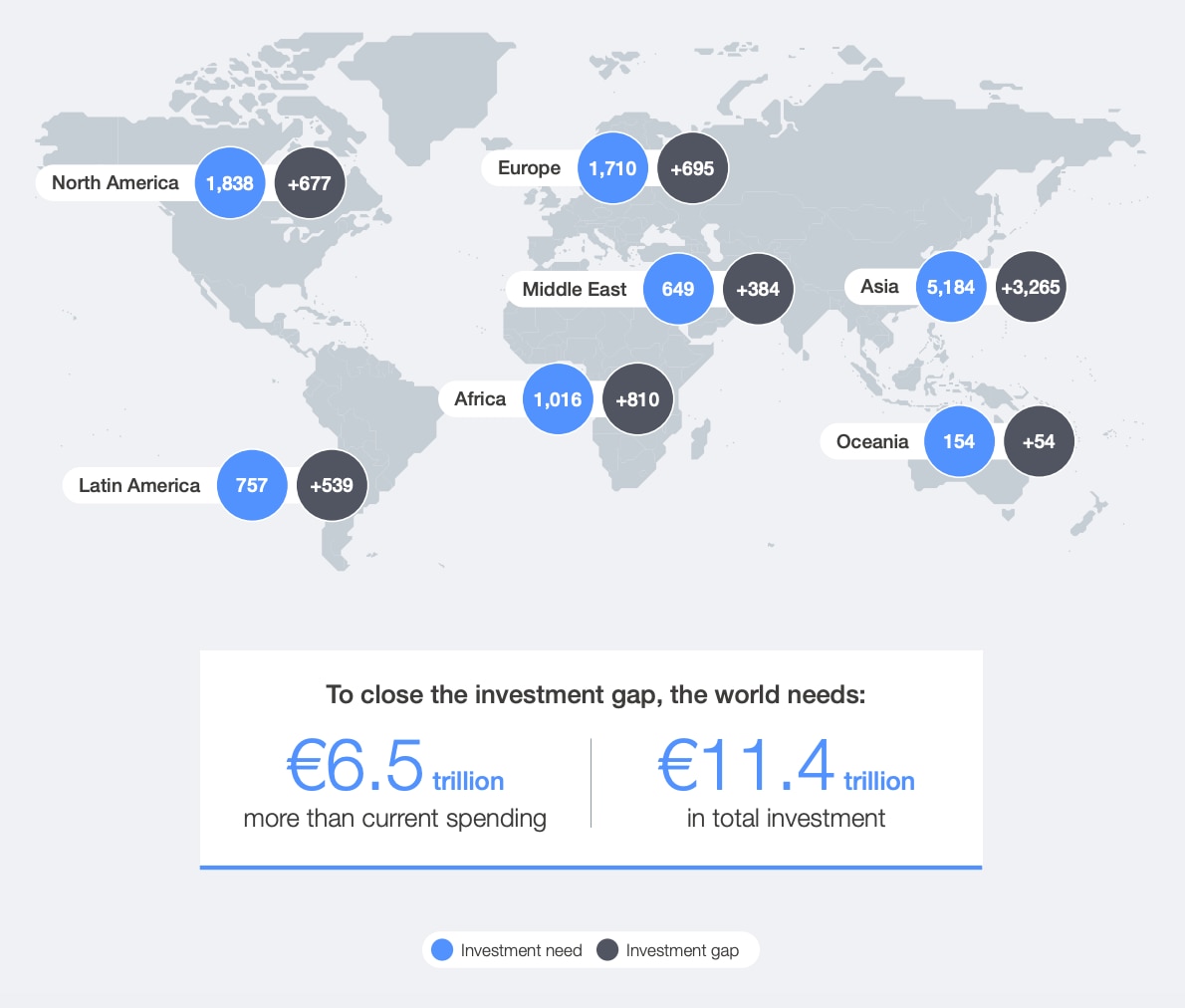
The paper estimates that €11.4 trillion ($13.2 trillion) in investment will be needed by 2040 to ensure equitable access, climate-resilient infrastructure and accelerated uptake of circular and digital water solutions. Based on current trajectories, the global investment gap amounts to €6.5 trillion – equivalent to about €435 billion per year.
The infrastructure gap should not be perceived as a financial burden; rather, it represents a strategic opportunity to generate long-term value for global societies. The paper demonstrates that for every euro invested, global economies can gain €1.30 in gross value added (GVA), a proxy for the gross domestic product (GDP), and 31.8 jobs per €1 million. Hence, closing the €6.5 trillion gap can unlock a potential €8.4 trillion growth in GDP and the creation of 206 million jobs.
These high multipliers result from the ripple effect generated by the extensive and complex value chains activated by water infrastructure investments. Building a water treatment plant or an aqueduct involves a wide ecosystem of stakeholders, from utilities to contractors to technology providers and professional services, and engages a broad range of skilled labour across engineering, construction and maintenance.
Water infrastructure also enables productivity gains across most water-dependent sectors, including agriculture, manufacturing and energy. Ultimately, water multipliers are comparable to, and often exceed, those of other infrastructure sectors, such as energy, transport and telecommunications, confirming water's critical role as a systemic enabler of resilient and inclusive economic growth.
Beyond their economic multipliers, water infrastructure investments deliver significant social and environmental benefits. They support small and medium-sized enterprises, promote equitable growth by stimulating employment in low- and middle-income regions, foster innovation across technologies, including the internet of things, artificial intelligence and robotics, and enhance environmental outcomes through circular approaches such as wastewater reuse and resource recovery.
Unlocking water’s full potential requires unified efforts across the global ecosystem
The World Economic Forum white paper also showcases 27 best practices implemented across the water ecosystem, demonstrating that proven solutions are available: what is needed is a coordinated effort to scale them effectively.
Unlocking the full potential of water will require a renewed spirit of ecosystem collaboration involving all stakeholders: policymakers, industry leaders, financiers, and even citizens should act in concert to elevate water on the global agenda.
With coherent policy, innovative finance, and a shared commitment to collaboration, the global community can transform water infrastructure from a constraint into the new main catalyst for sustainable growth and resilience.
Don't miss any update on this topic
Create a free account and access your personalized content collection with our latest publications and analyses.
License and Republishing
World Economic Forum articles may be republished in accordance with the Creative Commons Attribution-NonCommercial-NoDerivatives 4.0 International Public License, and in accordance with our Terms of Use.
The views expressed in this article are those of the author alone and not the World Economic Forum.
Stay up to date:
Infrastructure


Forum Stories newsletter
Bringing you weekly curated insights and analysis on the global issues that matter.
More on Food, Water and Clean AirSee all

Moattar Samim
February 21, 2026


