We asked leaders at Davos 2026, how can we cooperate in a more contested geopolitical world? Here's what they said
Deep dive
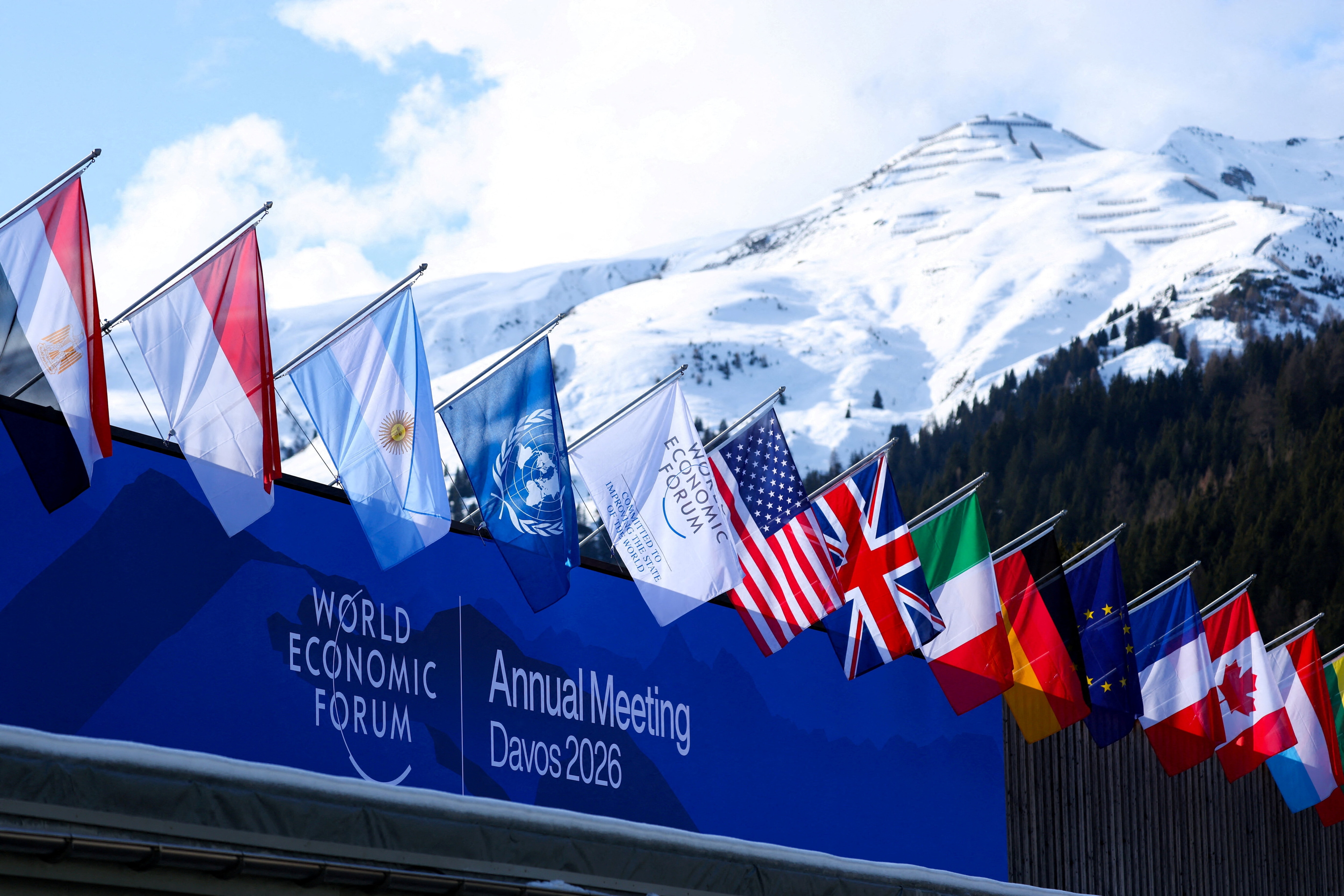
The future of global cooperation and multilateralism in today's fractured world was a major topic of discussion in Davos. Image: REUTERS/Denis Balibouse
- The World Economic Forum's 56th Annual Meeting was held at a pivotal moment for global cooperation.
- Over 60 heads of state and government attended the gathering.
- The future of global cooperation and multilateralism in today's fractured world was a major topic of discussion in Davos.
At this year’s World Economic Forum Annual Meeting in Davos, Switzerland, the future of multilateralism came into sharp focus as hundreds of political leaders, heads of state and business executives gathered to explore how cooperation can continue in today’s contested world.
Several leaders spoke publicly about their vision for the future. US President Donald Trump, for instance, renewed calls for an “America First” approach while European Commission President Ursula von der Leyen called for an “independent Europe”. Meanwhile, “strategic autonomy” was the goal for leaders such as France’s Emmanuel Macron and Canada’s Mark Carney.
These visions share a common thread: wariness about global integration at a time when traditional multilateralism and collective action is being questioned and, in certain cases, abandoned.
Have you read?
We asked leaders at Davos 2026, how can we build prosperity within planetary boundaries? Here's what they said
We asked leaders at Davos 2026, how can we better invest in people? Here's what they said
We asked leaders at Davos 2026, how can we unlock new sources of economic growth? Here's what they said
We asked leaders at Davos 2026, how can we deploy innovation and technology at scale and responsibly? Here's what they said
With geoeconomic confrontation ranked as the top global risk for 2026, leaders often framed interdependence not as a stabilizing force, but as a vulnerability. Yet by quantitative measures, the global system remains tightly interconnected. Global trade flows at enormous scale, with more than 70% of trade happening through World Trade Organization frameworks. Furthermore, cross-border capital flows have increased continually since 2022 and issues ranging from mitigating the climate crisis to data governance remain transnational.
Against this backdrop, some leaders in Davos rallied behind multilateralism and economic cooperation.
“We should firmly safeguard multilateralism and make the international economic and trade order more just and equitable,” said Vice-Premier of the People’s Republic of China, He Lifeng, adding that “the multilateral trading system now faces the most serious challenges in years.”
Yet it was apparent throughout the Annual Meeting that confidence in the multilateral system has been rattled.
Today, tariffs have become commonplace instruments of statecraft and export controls now operate in parallel with diplomacy. Meanwhile, sanctions and financial chokepoints provide political leverage rather than last resorts. Even as multilateral institutions continue their work, the confidence that once surrounded them has thinned and the idea that a universal set of rules could reconcile economic integration with political stability now feels less like a governing framework than a relic of a past era.
Amid these changes, the question that leaders at Davos 2026 grappled with, often implicitly, was: What kind of cooperation emerges if the old system frays?
New forms of cooperation
Several leaders, including Canadian Prime Minister Mark Carney, noted in stark terms that traditional forms of collective governance and multilateralism have significantly weakened.
“The old order is not coming back,” Carney said in a special address.
Many leaders also observed that while multilateralism has been diminished, global cooperation is merely shifting rather than collapsing. That shift was also noted the World Economic Forum’s Global Cooperation Barometer 2026, which was released ahead of the Annual Meeting and noted that cooperation today is “more bespoke, more interest-based and, most importantly, still present.”
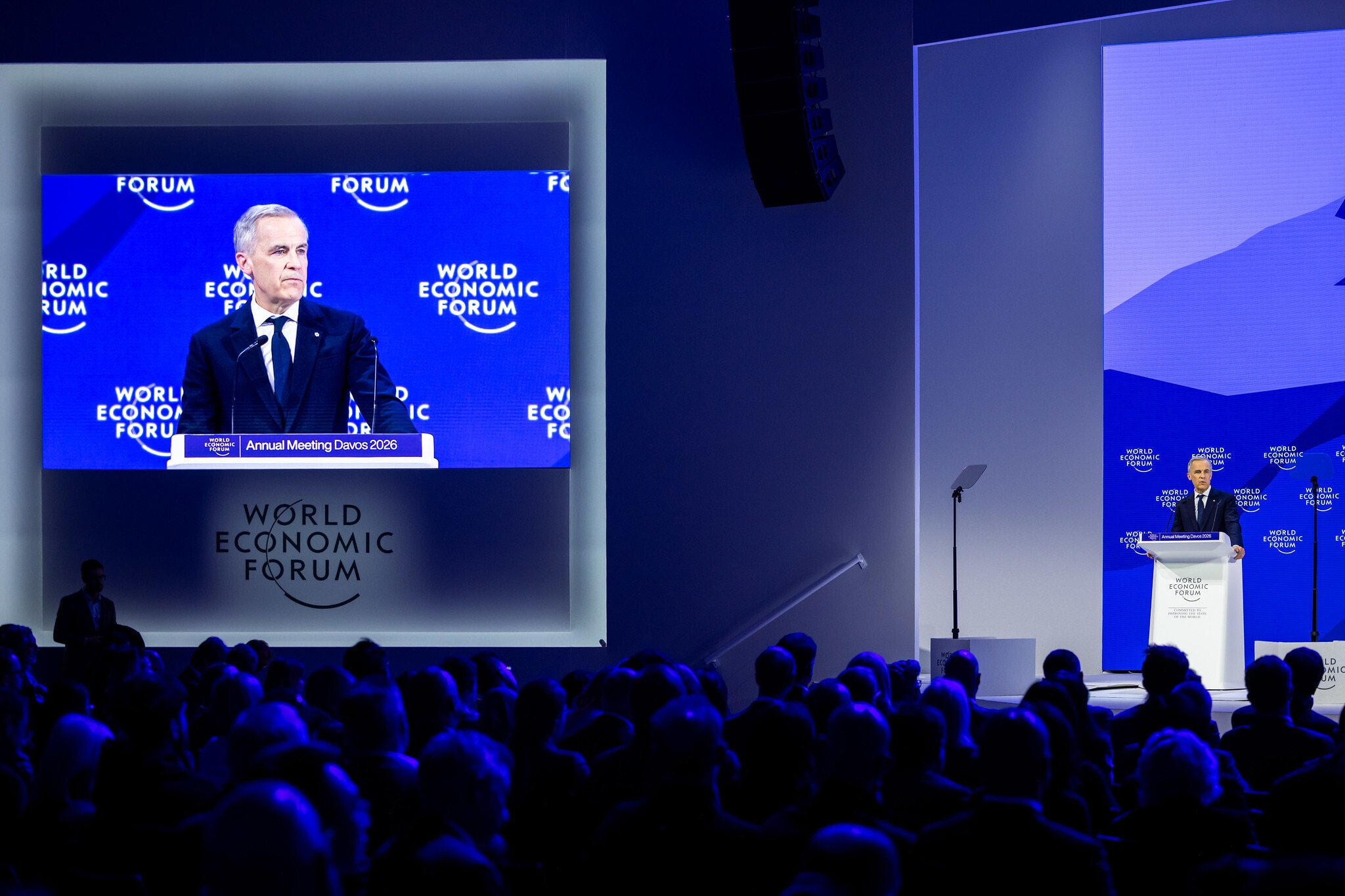
Several leaders in Davos gestured toward new organizing principles.
So-called value-based realism, for example, was the model proposed by President of Finland Alexander Stubb. In this framing, leaders understand that shared norms matter but also acknowledge the challenges of navigating power asymmetries and security trade-offs. Others have suggested that “minilateralism“ or “flexible multilateralism” might offer more useful frameworks.
Common among these approaches was their focus on smaller groupings that are more issue-specific and time-bound. Observers in Davos noted that such forms of cooperation are proliferating precisely because they promise speed and alignment where large institutions stall.
As the Cooperation Barometer noted, global multilateralism anchored in international institutions has largely declined, but “cooperation through alternative, often flexible and purpose-built coalitions has continued.”

Bilateral trade agreements, for instance, have accelerated by over 50% as compared to the last decade, World Trade Organization Director-General Ngozi Okonjo Iweala noted in Davos. Furthermore, pacts like the Minerals Security Partnership have brought together countries to coordinate critical mineral supply chains.
“Despite all the uncertainties that we talk about, trade has been largely resilient,” Okonjo-Iweala said.
Ad hoc arrangements largely privilege mutual self-interest over global norms, and functionality over formality. They can move relatively quickly on specific issues, such as climate finance, supply-chain security or technology standards and can be well-suited to tasks such as harmonizing technical standards, creating commercial contracts and building shared infrastructure.
We believe the trade integration, when done fairly, is not a threat to sovereignty
”Such flexibility has benefits, but it also raises risks. Coalitions of the willing, for instance, cannot enforce decision-making or ensure compliance and ad hoc cooperation could prove less enduring, transparent and inclusive. Moreover, such agreements depend on political configurations that can fracture with new election cycles or political crises.
Navigating the shift – or 'rupture'
Today, leaders must operate in a murky in-between that follows the erosion of a familiar system but exists before any stable system has emerged to replace it. As Carney put it, “we are in the midst of a rupture, not a transition.”
So what can leaders do to position their organization not only to weather upheaval but to thrive?
First, leaders in Davos noted that national security has become as much a business priority as a political matter. Formerly, geopolitics functioned as an externality that affected firms primarily during crises. But in today’s world, it represents a daily pressure that shapes business operations.
Firms are expected to internalize geopolitical risk, and states increasingly rely on private actors to execute strategic goals. After all, companies still do much of the work of building and maintaining physical networks, from undersea cables to critical minerals trade to scientific research exchange.

Second, adapting to a post-multilateral order will carry new costs as bolstering resilience can be expensive. Building redundancy into power grids, for example, requires materials, capital investments and labour. The same applies to health infrastructure and data centres. Demand for copper alone will double by 2035 relative to today, with a 30% shortfall based on known supplies.
Whereas efficiency once served as a north star for multinational corporations, today’s geopolitical risks might require prioritizing security, such as building national data infrastructures or friend-shoring supply chains, over reducing costs.
Finally, even as new cooperation formats proliferate, they remain largely anchored in inherited systems—legal doctrines, diplomatic conventions and technical standards, among others—that predate today’s fragmentation. In other words, the future is not being built from scratch.
Consider “digital embassies”, which are arrangements allowing countries to host sensitive data abroad while retaining legal sovereignty. Such a framework requires innovative technical architecture but also depends on longstanding norms about sovereignty and diplomacy rooted in post-WWII multilateralism.
The costs of fragmentation
One of the greatest risks of fragmentation stems from a key distinction between today’s breakthrough technologies and those that powered early 20th century globalization.
Electrification, internal combustion and assembly-line manufacturing transformed economies by diffusing within national boundaries. Today, innovations often require international inputs and coordination to reach their potential.
Developing a frontier AI model, for instance, can cost more than a billion dollars and requires troves of data for training. When countries refuse to coordinate, technologies cannot diffuse easily, data becomes difficult to compile and high upfront costs cannot be amortized over large customer bases. These limitations could hobble the potentially transformative impacts of innovation.
“The development of AI, the gain of productivity that we hope for, is difficult to reconcile with fragmentation in terms of standards, licensing [and] access,” European Central Bank President Christine Lagarde said in Davos. “I would contend that this can only be remedied by a degree of cooperation.”
Moreover, the retreat from multilateralism carries real consequences for people caught between fragmenting blocs.
Comfort Ero, President and CEO of International Crisis Group, described “a rise in wars and 60 conflicts, live conflicts—behind Ukraine, behind Gaza, and I would even say beyond Sudan as well—that are bubbling away.... If you don’t deal evenly with human suffering and pain, then you’re going to get this trust deficit.”
This trust deficit can have material effects, Ero said, noting that it leads to “questions about the legitimacy of multilateralism, not just by the United Nations, but even within the European Union and other multilateral entities.”
Looking ahead
While Davos 2026 did not see the rise of a singular vision for future global system, it did capture shaken confidence in the existing institutions and examined new pathways for global cooperation.
What replaces the old system is unlikely to be seamless. Instead, cooperation’s new forms will likely be narrower, more conditional and routed through new institutions and actors.
The task ahead is not to resurrect a vanished era, nor to celebrate fragmentation. It is to manage interdependence in its changing forms, continuing to facilitate cooperation while realizing that it is no longer frictionless or guaranteed.
That may result in a riskier, more uncertain world. But it is, nonetheless, the one today’s leaders face.



License and Republishing
World Economic Forum articles may be republished in accordance with the Creative Commons Attribution-NonCommercial-NoDerivatives 4.0 International Public License, and in accordance with our Terms of Use.
The views expressed in this article are those of the author alone and not the World Economic Forum.

Forum Stories newsletter
Bringing you weekly curated insights and analysis on the global issues that matter.
More on Global CooperationSee all

Shoko Noda
March 9, 2026


