What Africa’s social enterprises tell us about Africa’s next decade, and how public and private leaders should respond
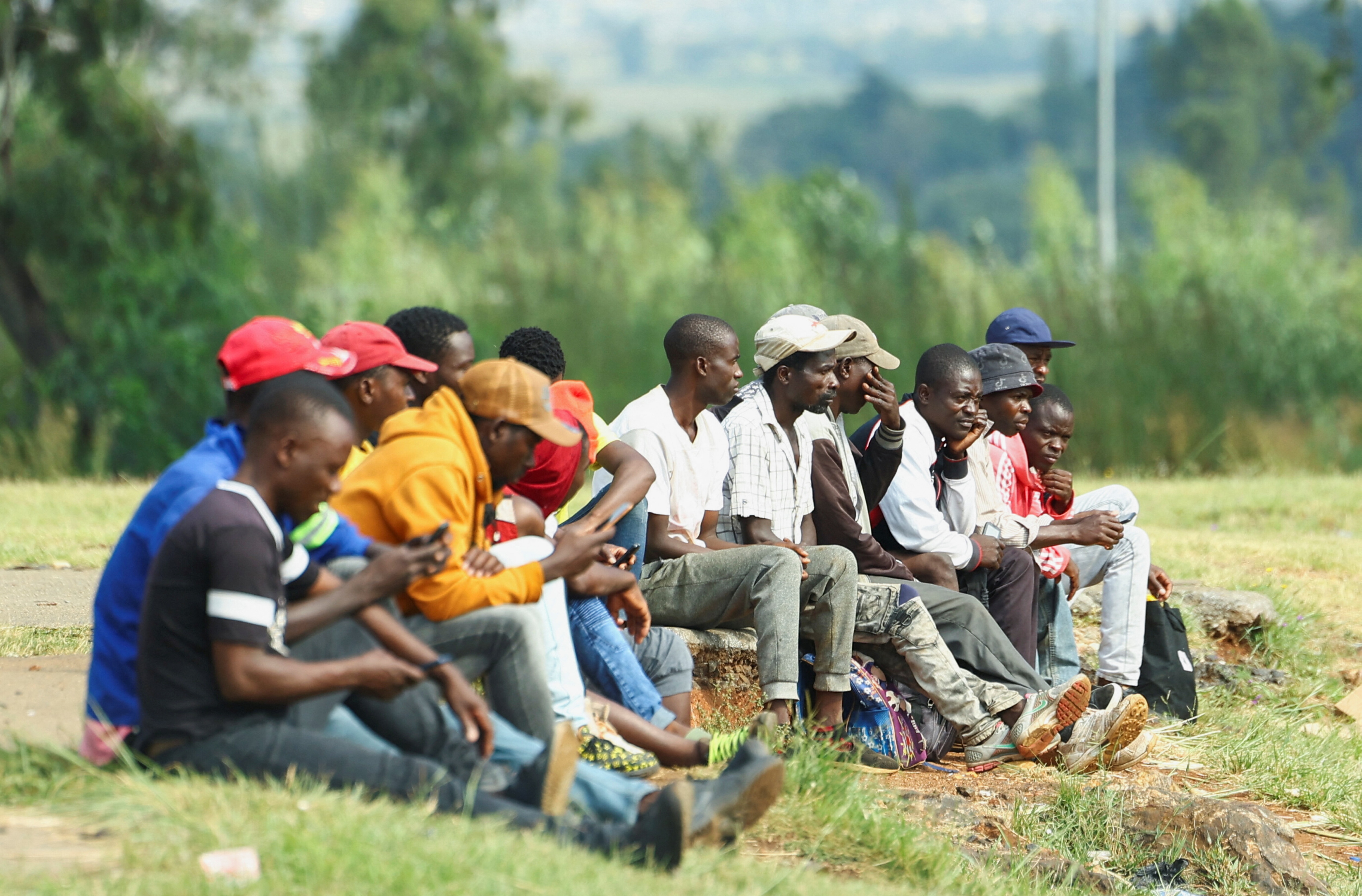
Social enterprises are central to Africa's economic future Image: REUTERS/Siphiwe Sibeko
Emmanouil Raptopoulos
Global President Customer Success- APAC, EMEA & MEE and Member of the Extended Board SAP SE, SAP EMEA- Social enterprises are already central to Africa’s economic future, playing a major role in employment, youth inclusion, women’s leadership and regional value chains.
- Unlocking the full impact of social enterprises require systemic support, with governments, corporations and development institutions integrating them into core economic strategies.
- For 56 years, the World Economic Forum has connected private, public and non-governmental stakeholders and the next generation to make sense of global challenges and move the world forward.
As public- and private-sector leaders gather in Davos, Switzerland, for the World Economic Forum Annual Meeting 2026, they will grapple with five defining questions: how to cooperate in a more contested world; unlock new sources of growth; invest more effectively in people; deploy innovation responsibly at scale; and sustain prosperity within planetary boundaries.
With the launch of a new Forum report, The State of Social Enterprise: Unlocking Inclusive Growth, Jobs and Development in Africa, fresh data emerges on social enterprises across Africa that speaks directly to these questions, informing the continent’s path over the next decade.
Global evidence now shows social enterprises are no longer peripheral. Worldwide, an estimated 10 million social enterprises generate around $2 trillion in revenue each year and create nearly 200 million jobs. Around one in two are led by women, compared to roughly one in five conventional firms.
The African chapter of this story is disproportionately important. The State of Social Enterprise report estimates there are 2.18 million social enterprises across Africa, almost 20% of the global total. Together, they generate at least $96 billion in annual revenue – about 3.2% of Africa’s gross domestic product (GDP) – and create at least 12 million jobs.
Africa’s youth bulge and the future of work
Discussions in Davos will inevitably address the labour shock caused by artificial intelligence (AI) and automation, expected to affect more than a fifth of jobs worldwide.
Meanwhile, around 1.2 billion young people in the Global South will reach working age over the next decade, competing for about 420 million new jobs, while close to 800 million young adults lack a clear route to secure livelihoods.
Nowhere is this more acute than in Africa, where 10-12 million young Africans enter the labour market each year but only about 3 million formal jobs are created. Nearly one in two people born between now and 2060 and about 70% of new labour market entrants globally, will be African.
Against the backdrop of rapid technological change, the central question is not only about growth but about the kinds of jobs being created and for whom. The new data suggests social enterprises are already part of the answer.
Across the African sample, more than one in three social enterprises are led by people under 35 and 91% employ young people.
They are concentrated in sectors most in need of inclusive jobs and resilience – education and skills, agriculture and food systems and health – with hiring patterns that support women, youth and workers in rural and informal settings.
Social enterprises are close to communities, understand informal markets and can prototype new models with women and youth smallholders.
”Why social enterprises matter
The African Continental Free Trade Area (AfCFTA) aims to create a single market of around 1.3 billion people with a combined GDP of $3.4 trillion, building regional value chains and jobs across 55 countries. It is one of the most important structural levers for new growth and integration to be discussed at the Annual Meeting.
Yet in many trade and industrial strategies, social enterprises are invisible. The report shows that around 17% of Africa’s employers are social enterprises, bridging informal and formal economies. Many are already exporting, integrating small producers into regional supply chains or digitizing value chains.
As AfCFTA implementation advances – across areas such as the Digital Trade Protocol and the Protocol on Women and Youth – there is a risk of overlooking this critical lever if social enterprises remain peripheral to the discussion.
Recognizing them as core actors in building regional markets, particularly in sectors such as agriculture, renewable energy and digital services, would better align the agreement’s ambitions on trade, jobs and inclusion with how value is created on the ground.
Innovation and inclusion in practice
The 2026 agenda emphasises “deploying innovation at scale, responsibly” and aligning growth with climate and nature goals.
Sommalife, founded by Ghanaian social entrepreneur Christina Gyisun, exemplifies this, using digital tools to transform the shea and agroforestry value chain in northern Ghana.
Its platform connects tens of thousands of female smallholder farmers to higher-value markets, finance and climate-smart practices, sustaining livelihoods while rewarding the protection and restoration of shea trees, a critical commodity within Ghana that has been under threat, as communities burn it for firewood.
Yellowwoods, a South African investment group led by social innovator Nicola Galombik, uses its portfolio in financial services, restaurants and eco-tourism to drive inclusion and sustainability.
Yellowwoods has incubated social ventures such as Harambee Youth Employment Accelerator and built multi-sector partnerships in digital skills, youth employment, impact sourcing, nature-based carbon and financial inclusion, enabling large businesses to work with social innovators to scale solutions for underserved markets.
How companies can work with social enterprises
These experiences point to a different way of doing business in Africa. Social enterprises are close to communities, understand informal markets and can prototype new models with women and youth smallholders.
Corporate groups bring capital, infrastructure, risk tools and brand reach across diverse portfolios.
When these capabilities are combined – for example, by developing financial, risk and market-access solutions for farmers – companies can build viable markets around people who are usually treated only as aid beneficiaries.
The Forum’s Corporate Social Innovation Compass offers one roadmap for this shift but the essential change for corporations is mindset: treating social enterprises as strategic partners in product design, distribution, sourcing and workforce strategies.
What happens next depends on whether ecosystem actors choose to treat social enterprises as marginal projects or as central partners in Africa’s next chapter of inclusive growth and sustainable development.
”Rethinking public policy with social enterprises
Public policy needs a similar shift – recognizing social enterprises as part of the economic backbone of development.
Regionally, the African Union’s 10-Year Strategy on the Social and Solidarity Economy already signals that social enterprises, cooperatives and other actors are integral to Africa’s pathway to inclusive and resilient economies.
The priority now is implementation: weaving these actors into national development plans, industrial and SME strategies, employment policies and climate and nature plans, supported by data systems that track their jobs, revenue and impact.
South Africa’s G20 Presidency has also elevated this agenda by including social and impact economy actors at the newly formed G20 Social Summit. Now, the G20 Social and Impact Economy Coalition offers a way to keep this topic in the G20 beyond a single presidency.
In 2026, international development institutions face a significant funding crisis, while social enterprises are already delivering livelihoods, basic services and resilience. That’s why it is essential to mainstream them into national development strategies and programmes.
National governments can unlock impact by formally recognizing social enterprises in law, regulation and public procurement, a path already being taken by countries including Morocco, Senegal, Tunisia, Cameroon, Djibouti and Cape Verde.
5 cross-cutting priorities for action in 2026
The report highlights five cross-cutting priorities and detailed recommendations that call for coordinated action among public, private and non-governmental sectors:
- Build enabling ecosystems – by strengthening policies, legal recognition and the physical and digital infrastructure social enterprises rely on.
- Unlock capital at scale – by closing persistent funding gaps through better-aligned, blended and impact-linked finance.
- Invest in people and skills – by expanding entrepreneurship development, staff training and digital inclusion.
- Foster partnerships for scale – by using public-private partnerships and regional cooperation to extend reach and impact.
- Strengthen data and evidence – by supporting harmonized mapping, monitoring and data collection to inform more innovative policies and investment.
The headline numbers are striking but it is the shifts behind those numbers that show what is really at stake.
What happens next depends on whether ecosystem actors choose to treat social enterprises as marginal projects or as central partners in Africa’s next chapter of inclusive growth and sustainable development.
Don't miss any update on this topic
Create a free account and access your personalized content collection with our latest publications and analyses.
License and Republishing
World Economic Forum articles may be republished in accordance with the Creative Commons Attribution-NonCommercial-NoDerivatives 4.0 International Public License, and in accordance with our Terms of Use.
The views expressed in this article are those of the author alone and not the World Economic Forum.
Stay up to date:
Social Innovation
Related topics:


Forum Stories newsletter
Bringing you weekly curated insights and analysis on the global issues that matter.
More on Social InnovationSee all

Huda Al Hashimi and Badr Jafar
January 20, 2026


