Are rising carbon prices a sign of success - or a warning?
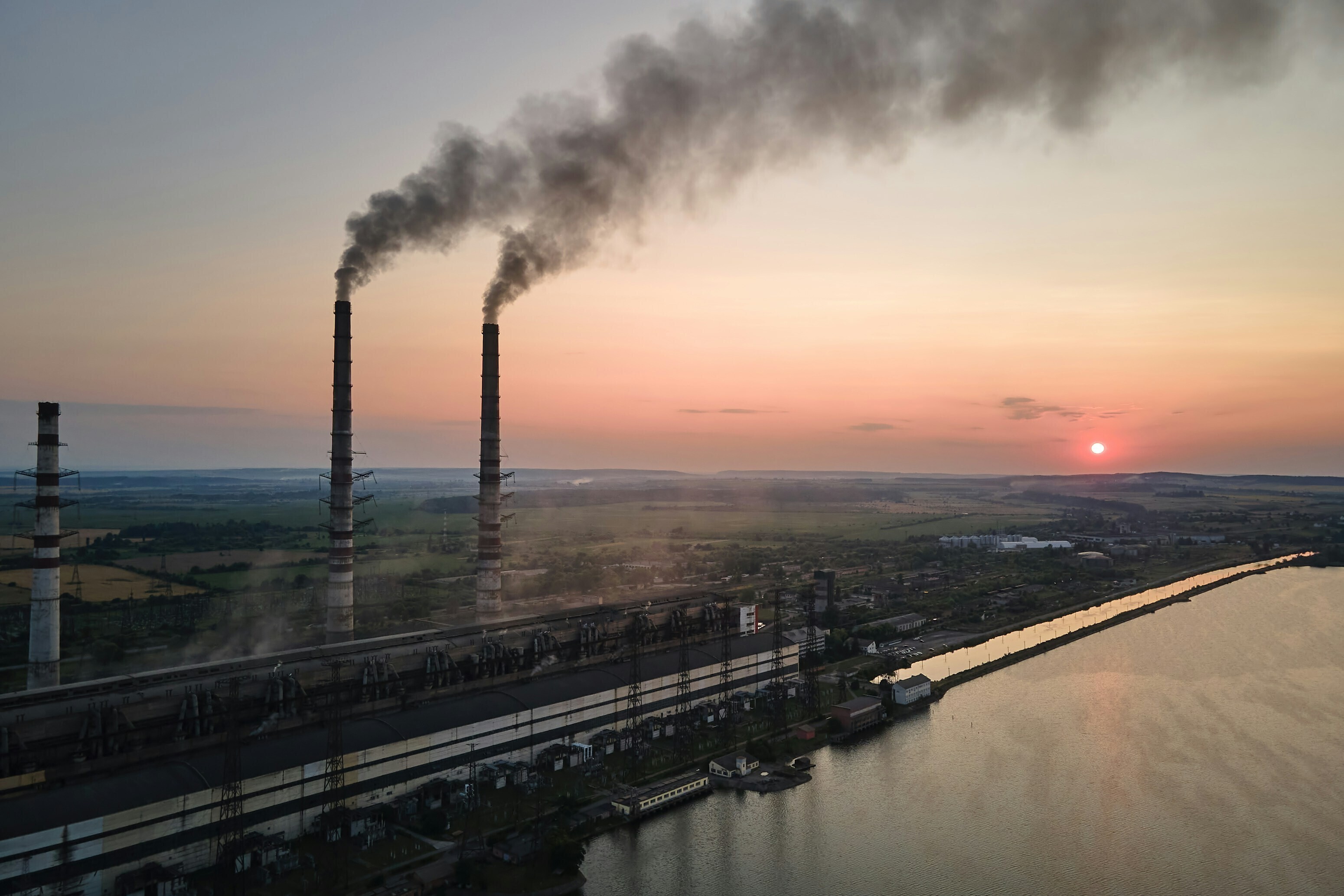
Higher carbon prices raise capital and deter carbon emissions but carry risks Image: Unsplash/Getty
- Higher EU carbon prices, following the capping of carbon permits, seem to indicate a functioning system towards decarbonization.
- Unlike voluntary carbon markets or blended finance schemes, regulated carbon markets send clear, economy-wide price signals that can rapidly mobilize private capital for governments to use.
- If the EU carbon market risks becoming overly financialized, it risks unsustainable price hikes, which could undermine confidence and weaken the credibility of the climate policy itself.
Hedge fund-driven increases in EU carbon prices are a double-edged sword.
The price of permits to emit carbon in the European Union’s (EU) Emissions Trading System looks set to climb above the €100 level in 2026 for the first time since early 2023.
Higher EU carbon prices are inevitably attracting criticism from representatives of affected industries, who will need to deal with the increased costs, as well as many who mistake high prices as a bug, not a feature of the system.
But if EU carbon prices continue to rise – as they were designed to – the more important story lies in two deeper dynamics: the power of clear market signals to mobilize investment and the risks when a policy-driven market becomes increasingly financialized – driven more by trading and speculation than by emissions reduction and real-economy outcomes.
The power of a clear market signal
Higher carbon prices create a powerful incentive to cut emissions, so the new high for EU carbon permits should, on the surface, be a welcome sign that the system is working.
The World Bank, drawing on work by Joseph Stiglitz and Nicholas Stern, has long argued that a global carbon price in the $50-100 range is needed to drive serious investment in climate solutions. Yet in 2025, only about 3% of carbon pricing systems worldwide delivered prices at recommended levels.
As the world’s largest carbon pricing system, the European Trading System matters; even more so in 2026 as its Carbon Border Adjustment Mechanism comes fully into force. The new system will place a carbon price on certain imported goods, meaning companies that trade with the EU will also have to account for the bloc’s carbon costs.
Speculative capital's role in driving up the forecast price demonstrates the power of a clear market signal. In this case, that signal is the imminent tightening of permit supply for carbon emissions in the EU, making them scarcer and more valuable.
Investors, anticipating this scarcity and confident that EU climate policy will remain strong, are helping to drive prices higher, reinforcing the incentive to cut emissions.
Contrast this with traditional climate finance initiatives such as voluntary carbon markets or blended finance commitments, which, with exceptions, have historically overpromised and underdelivered.
The risks of excessive speculation
All too often, there has been a mismatch between what investors prefer (bankable, low-risk mitigation projects) and what vulnerable countries need, such as adaptation and resilience programmes and loss-and-damage funding.
The result is a system that is well-intentioned but insufficient in practice, still struggling to align financial incentives with planetary necessity.
Carbon pricing itself does not necessarily deliver financing for climate outcomes. That depends on how governments choose to spend the revenue raised but its power in aligning market signals to mobilize private capital is unmatched.
That power raises a question, however, about whether speculative capital should be allowed to pile into regulatory carbon permit markets at all. What happens when markets designed to deliver outcomes for societies and economies as a whole become financialized to generate profits for investors?
The experience of other commodity and financial markets shows how quickly excessive speculation can overwhelm fundamentals.
During the 2007-08 food price spike, for example, large inflows into commodity index funds helped push wheat and other staples far beyond levels justified by supply and demand, amplifying volatility and contributing to real-world hardship.
The 2020 collapse of West Texas Intermediate crude oil into negative territory revealed a similar fragility: when financial players were forced to unwind positions into a market with constrained storage, futures prices detached violently from physical reality.
In 2022, the London Metal Exchange’s nickel market suffered a historic short squeeze that drove prices up more than 250% in two days, prompting the exchange to cancel trades and triggering a crisis of confidence in the benchmark itself.
These episodes illustrate a common pattern: when speculative flows become large relative to underlying physical activity, markets can behave in ways that are destabilizing and ultimately damaging to the credibility of the price signal.
To be clear, this has not yet happened to the EU carbon market but it is not immune to these dynamics.
Why predictable prices matter
Although the European Trading System was designed as a policy instrument rather than a financial asset class, rising participation by hedge funds and other speculators risks shifting the centre of gravity away from bona fide market participants and toward actors whose incentives are not aligned with decarbonization.
To be most effective, carbon pricing systems need steady, predictable prices.
While speculators may argue that financialization creates market liquidity that smooths price changes, the extent of carbon emissions across industrials, utilities and airlines ensures companies in those sectors alone will maintain more than adequate demand for permits for the foreseeable future.
The lesson from wheat, oil and nickel is not that speculation must be eliminated but that unchecked financialization can distort prices, undermine confidence and force regulators into reactive interventions.
Such volatility could weaken the credibility of the EU carbon price signal, discourage long-term decarbonization investment and risk fuelling political backlash against carbon pricing itself. A market intended to guide Europe’s energy transition cannot afford that kind of instability.
Climate policy cannot be left to the market alone
In short, climate policy should not be hostage to the risk appetite of financial actors whose incentives are unrelated to emissions reduction.
Despite the continued growth of finance for climate and nature, trying to build an economic case for climate action without robust, well-regulated carbon pricing is like fighting a battle with one arm.
Effective carbon pricing should complement, not replace, other climate-finance efforts. Its ability to send strong, economy-wide signals that incentivize investment and shift behaviour is simply too powerful to overlook as a policy tool, far beyond the EU.
But in welcoming higher carbon prices that provide clear market signals to accelerate the energy transition, we must also guard against unnecessary financialization and speculation.
Don't miss any update on this topic
Create a free account and access your personalized content collection with our latest publications and analyses.
License and Republishing
World Economic Forum articles may be republished in accordance with the Creative Commons Attribution-NonCommercial-NoDerivatives 4.0 International Public License, and in accordance with our Terms of Use.
The views expressed in this article are those of the author alone and not the World Economic Forum.
Stay up to date:
Energy Transition
Related topics:


Forum Stories newsletter
Bringing you weekly curated insights and analysis on the global issues that matter.
More on Climate Action and Waste Reduction See all

Jean Chrysostome Ngabitsinze
March 30, 2026


