How the new Corruption Perceptions Index reframes business strategy

The Corruption Perceptions Index highlights leadership and government failures Image: Getty Images/iStockphoto
- The majority of countries are failing to keep corruption under control, risking further destabilization of the level playing field for businesses, according to the latest Corruption Perceptions Index.
- Weakened leadership and eroding trust in institutions — including in established democracies — are increasing uncertainty, distorting competition and reshaping the strategic environment for companies.
- Those that embed integrity and responsible governance into strategy are better positioned to manage risk, maintain trust and contribute — through collective action — to more stable societies and markets.
Our organization's 2025 Corruption Perceptions Index was published earlier this month at a moment of geopolitical, economic and technological disruption. It offers a useful, forward-looking risk signal for businesses; as a perceptions-based index of public-sector corruption, it does not measure actual corruption incidents – but is widely used as a proxy.
More than two-thirds of countries – 122 out of 180 – score under 50 on a scale from 0 (highly corrupt) to 100 (very clean). The number of countries scoring above 80 has shrunk from 12 a decade ago to just five this year. Corruption risks are becoming more deeply embedded in how societies and markets function.
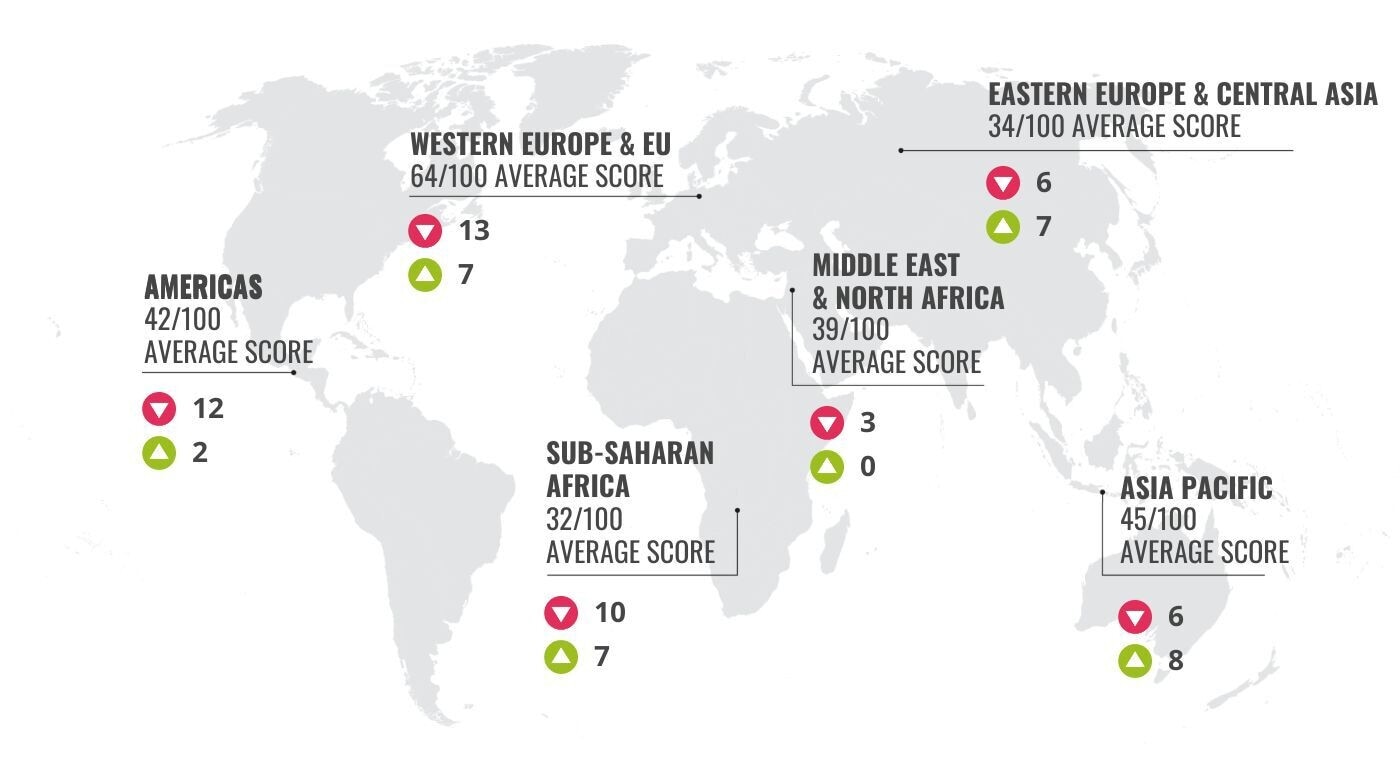
The latest Index data also points to slippage in some higher-scoring democracies over time, suggesting governance pressures are not confined to fragile contexts. Countries such as the United States (64), Canada (75), and the United Kingdom (70), as well as other parts of Europe, show downward trends, for example.
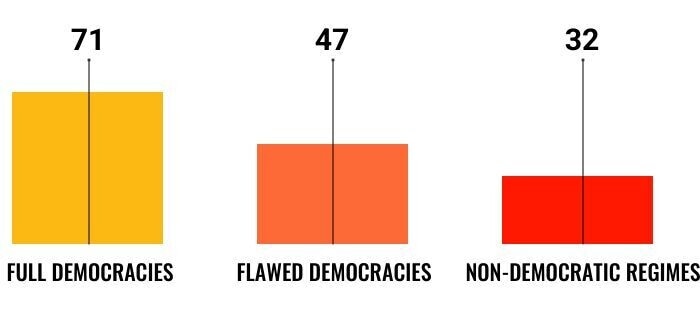
While the Corruption Perceptions Index measures perceptions of public-sector corruption, its implications for business are direct. Public-sector integrity shapes the conditions under which companies operate and interact with authorities. When leadership weakens and institutions erode, risks of bribery, collusion and preferential treatment increase, enforcement becomes uneven and regulatory decisions grow less predictable. This distorts competition and undermines market confidence.
After years of incremental policy progress, companies face the risk of deeper distortions in an already uneven playing field, where short-term gains give way to greater long-term exposure.
Three trends reshaping the operating environment
The latest Corruption Perceptions Index points to three trends that business leaders need to understand as interacting forces shaping risk and resilience.
1. From predictable rules to discretionary power
Across regions, the Corruption Perceptions Index 2025 highlights patterns of concentrated power and weakened checks and balances. When this happens, the rule of law weakens and the balance between formal rules and informal networks shifts.
For companies, this changes the nature of risk. Laws may still exist, but how and when they are applied becomes less predictable. Policy volatility increases, long-term planning becomes harder and compliance alone no longer provides full protection.
Yet, decline is not inevitable. In countries where civic space and independent institutions are defended, progress remains possible. Ukraine (36), for example, shows how sustained civic engagement can help safeguard specialized anti-corruption institutions, underscoring that reform remains possible even in challenging environments.
2. Rising civic pressure and declining trust
The Index also reflects growing public frustration about corruption, combined with restrictions on freedoms of expression, association and assembly. In several countries, youth-led protests have targeted public spending and procurement practices, demanding greater accountability to ensure public money serves the public interest.
Research analysis often finds that constraints on media freedom and civic space correlate with higher corruption risks, creating a feedback loop in which weakened scrutiny enables graft, further erodes democratic accountability and, ultimately, destabilizes markets.
For businesses, this means the social licence to operate becomes more contested and reputational risks can materialize quickly. Investors and lenders are integrating governance indicators more systematically into capital allocation decisions, while talent markets — especially among younger professionals — are increasingly value-driven.
Youth confidence in the future, a vibrant civil society and independent journalism are not peripheral issues; they are guarantors of open societies and prerequisites for stable markets and long-term value creation. For companies, this means corruption can no longer be treated as a side issue. It should sit at the heart of strategy.
3. From compliance to leadership integrity
Taken together, these trends point to a third shift: integrity is no longer primarily a compliance function, but a leadership capability.
The Corruption Perceptions Index 2025 reinforces that corruption risks are systemic, shaped by incentives, culture and governance — both public and private. Companies that rely solely on rules and controls are more exposed where institutions weaken. Those that embed integrity into leadership decisions and incentives are better positioned to navigate volatility and protect trust.
Three ways business leaders can turn corruption risk into resilience
Against this backdrop, the Index offers real-world guidance for boards and senior executives seeking to translate governance risk into strategic resilience.
1. Leverage corruption analysis to inform risk awareness and responsible engagement
For multinational enterprises, the Corruption Perceptions Index and other independent corruption or risk assessments should be treated as strategic context. They help identify trends in governance conditions that may affect how companies structure operations, partnerships and controls. A country experiencing persistent institutional decline and an increase in corruption risks may require enhanced due diligence, stronger local compliance safeguards or more careful partner selection.
Boards can combine Corruption Perceptions Index trends and independent expert analysis with internal data — incident reports, audit findings and whistleblowing trends — to identify where business models are most exposed, where additional safeguards are needed and where collective action may be warranted.
2. Lead on integrity inside the organization
Leadership decisions on growth targets, intermediaries and incentives are, in practice, integrity decisions. Evaluating leaders solely on financial performance risks encouraging behaviour that conflicts with stated values.
Linking remuneration and promotion to the quality of controls, the handling of red flags and the willingness to walk away from high-risk deals signals that integrity is part of performance, not a constraint on it.
3. Act collectively to address corruption and stabilize markets
No company can address systemic corruption alone. Transparency International’s experience across the globe reinforces the importance of collective action — through sector and collective action initiatives, SME capacity-building and engagement with civil society — to reduce first-mover disadvantage and strengthen the market conditions on which companies depend.
Across the European Union, Integrity Pacts have demonstrated how independent monitoring of public contracts can improve transparency and strengthen trust in procurement markets. For SMEs, proportionate measures and collective support can make a material difference without requiring large compliance infrastructures. The joint Transparency International and World Economic Forum Business Integrity Toolkit for SMEs provides a practical framework for how SMEs can move beyond compliance to embed integrity across their operations.
Moving towards integrity-driven leadership
The central message of the Corruption Perceptions Index 2025 for businesses is not simply that corruption remains widespread. It is that leadership — public and private — will determine whether current trends deepen or begin to reverse.
As attention focuses on rankings and score changes, business leaders face a more important question: in a more contested world, what kind of leadership are we practising within our own organizations and value chains?
Companies that answer with clear standards, aligned incentives and credible collective action will be better placed to manage risk and help stabilize the markets they rely on.
Don't miss any update on this topic
Create a free account and access your personalized content collection with our latest publications and analyses.
License and Republishing
World Economic Forum articles may be republished in accordance with the Creative Commons Attribution-NonCommercial-NoDerivatives 4.0 International Public License, and in accordance with our Terms of Use.
The views expressed in this article are those of the author alone and not the World Economic Forum.
Stay up to date:
Corruption


Forum Stories newsletter
Bringing you weekly curated insights and analysis on the global issues that matter.


