The New Champions Awards: the businesses transforming systems for a more resilient future
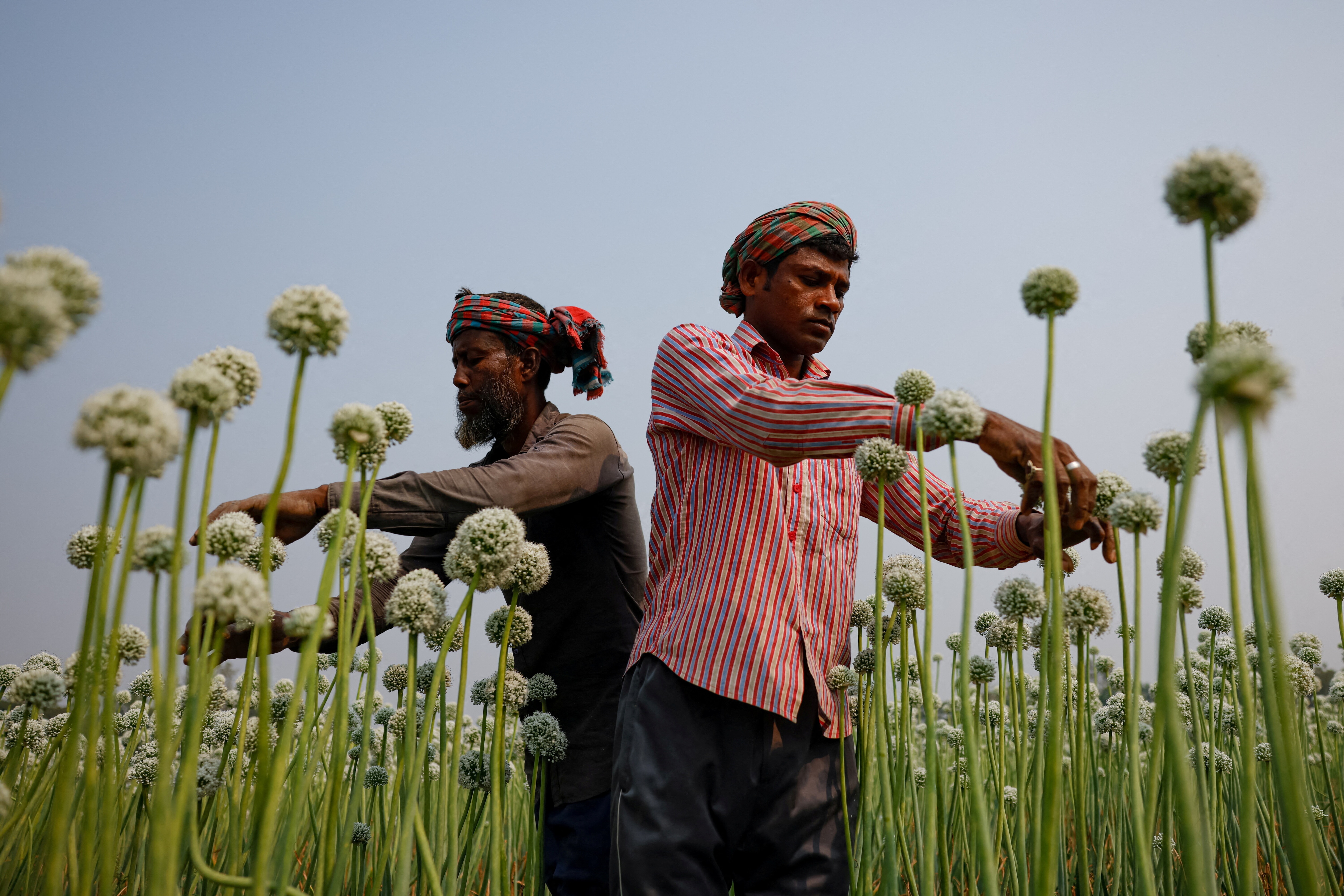
Bangladeshi farmers are benefitting from crop insurance through one of this year's New Champions Award winners. Image: Reuters/Mohammad Ponir Hossain
- The adaptability of small- and medium-sized enterprises will be crucial for building resilience as global risks increase.
- The New Champions Awards highlight companies achieving system-level change, not just isolated breakthroughs.
- This year's winners showcase how leadership will increasingly be defined by responsibility, partnership and long-term impact.
Small- and medium-sized enterprises (SMEs) account for about 90% of businesses worldwide and more than half of global employment, giving them a decisive role in shaping economic resilience and innovation. Their ability to adapt and respond is increasingly central to how societies navigate periods of uncertainty.
That role has become more visible as climate shocks destabilize livelihoods, health systems struggle to deliver equitable care, and AI accelerates energy demand. Access to education and economic opportunity also remains uneven across regions and generations, reinforcing the need for practical, scalable solutions.
The New Champions Community brings together high-growth, purpose-driven companies that are responding to this moment with practical, scalable solutions. From strengthening health systems and reimagining energy infrastructure to protecting livelihoods and expanding access to education, these organizations demonstrate how mid-sized businesses can deliver outsized impact.
Celebrated in Geneva in November 2025, the New Champions Awards highlight companies whose leadership is translating innovation into measurable, system-level change. As these award-winners represent the community in the year ahead, their work offers insight into how businesses can contribute to resilience and long-term stability in an increasingly complex global environment.
The New Champions Awards recognize exceptional contributions across four areas critical to long-term resilience: Governance and Leadership for Global Challenges, Technological Disruption and Responsible Innovation, Innovation and Inclusive Sustainable Growth, and the Community Choice Award.
Selected for their originality, impact and potential to scale, this year’s awardees show how businesses can serve as a stabilizing force and a driver of progress at a time when trust and institutions are under pressure.
Award for Excellence in Governance and Leadership for Global Challenges
What sets Xenco Medical apart is its decision to embed innovation directly within public health systems, rather than operating alongside them. Its approach to women’s cancer care in Kenya focuses not only on technology, but on strengthening institutional capacity and governance structures that allow early detection and treatment to function effectively at scale.
Women’s cancers, particularly breast and cervical cancer, remain among the leading causes of death in Kenya, accounting for nearly one-third of all new cancer cases. Weak referral systems, limited diagnostic capacity and inequitable access to care have long delayed diagnosis and treatment.
Working alongside Kenya’s Ministry of Health and global partners, including the Global Alliance for Women’s Health, Xenco Medical led the Afya Dada Project, a national initiative aligned with Kenya’s National Cancer Control Strategy. The programme advances surgical training, deploys advanced medical technologies and empowers more than 100,000 community health workers to improve early detection and referral pathways.
As Jason Haider, CEO of Xenco Medical, notes: “Leadership in medical technology should transcend a single innovation. At its best, it is an act of service, making healthcare truly accessible, sustainable and patient-centred.” By aligning innovation with public health governance, the Afya Dada Project demonstrates how system-level collaboration can translate policy ambition into measurable outcomes.
Award for Excellence in Technological Disruption and Responsible Innovation
ChargeScape’s innovation lies in treating electric vehicles not only as a mode of transport, but as distributed energy storage that can support the wider grid. By fundamentally rethinking the role EVs can play, the company is positioning parked vehicles as flexible assets that store renewable power and release it when demand surges.
The rapid expansion of AI has driven explosive growth in data centres, placing increasing pressure on energy systems and driving up electricity costs. In regions such as California, meeting this demand without accelerating emissions has become a defining challenge for the digital economy.
In partnership with Nissan Automotive and Silicon Valley Power, ChargeScape launched a pioneering pilot that uses proprietary EV AI™ software to charge electric vehicles with solar power during the day and discharge stored energy to data centres at night. In practical terms, this means EV batteries are used not only for mobility, but as grid-connected storage capable of balancing supply and demand.
“ChargeScape is addressing one of the defining challenges of our time by fundamentally rethinking the role that electric vehicles can play,” said CEO Joseph Vellone.
By enabling EV batteries to store excess renewable energy and release it when demand peaks, the solution reduces emissions, lowers costs and strengthens grid stability. As the first publicly announced pilot to use electric vehicle batteries to power data centres, the initiative demonstrates how responsible innovation can unlock new value from existing infrastructure.
Award for Excellence in Innovation and Inclusive Sustainable Growth
Green Delta Insurance’s approach stands out for removing the cost, complexity and trust barriers that have historically excluded smallholder farmers from crop insurance.
Farmers in Bangladesh face intensifying climate risks, from floods and heatwaves to prolonged droughts that threaten both food security and livelihoods. Conventional crop insurance models often failed to provide protection, constrained by high costs, slow claims processes and limited trust.
To address these issues, Green Delta Insurance launched the Weather Index Crop Insurance. In order to eliminate the need for individual field inspections and drastically cut down on delays and administrative expenses, the product uses temperature and rainfall data to initiate automated payouts when predetermined thresholds are reached.
Green Delta distributes the insurance through banks, microfinance organizations and suppliers of agricultural inputs in order to increase accessibility. Insurance is bundled with seasonal loans or input packages like seeds and fertilizer, rather than requiring farmers to buy it separately. This eliminates the need for extra paperwork and upfront complexity, and allows farmers to obtain protection at the same time they obtain credit or buy supplies. Because insured farmers are less likely to default following climate shocks, financial institutions also gain.
More than 1.6 million farmers, 24% of whom are women, have been insured by the program since its inception, indirectly helping about 7 million people in more than 30 districts. The model has assisted farmers in replanting, avoiding distress migration and continuing to be economically active after climate events, with payouts totalling BDT225 million (Bangladeshi taka).
The project shows how parametric insurance can provide financial inclusion and climate resilience at scale when backed by digital tools and solid partnerships.
Community Choice Award
Selected by the New Champions Community, Regent Global is recognized for its global impact on young people, education access and social mobility across more than 120 countries and territories.
The organization has long focused on designing flexible programmes that enable education to fit around life, including evening and modular study options for working adults, through its flagship institution, Regent College London. Beyond formal degrees, Regent also supports non-formal learning initiatives such as Public Learn, an open-access online platform providing free courses from leading global providers, and the Thinking into Character programme, which focuses on mindset, leadership and personal development. The goal of these programmes is to increase access to knowledge and skills outside of the conventional academic system.
Support for the Duke of Edinburgh's International Award is another example of Regent Global's leadership. Regent Global has helped to guarantee that young people around the world will continue to have access to non-formal education by serving as the programme's long-term sustainability guide.
This support ensures that future generations can acquire the self-assurance, abilities and purpose necessary to positively impact their communities, as the International Award provides substantial global social value every year.
In addition to the award recipients, several organizations received honourable mentions for their contributions across sectors. These include Annan Capital Partners and the African Fashion Foundation for advancing Africa’s creative industries; AgroAmerica for community-based nutrition innovation; Becquer Energy for regional solar manufacturing; Cyberpedia and FreeBalance for digital governance and accountability; ILUNION Hotels for disability-inclusive employment; and So-Young for increasing access to healthcare.
Advancing leadership that delivers impact
Taken together, the New Champions Awards winners point to a more systems-oriented model of leadership for the decade ahead. Rather than pursuing isolated breakthroughs, they embed innovation within public institutions, energy infrastructure, financial systems and education networks to deliver change that endures.
As global risks intersect and intensify, this approach will matter increasingly. The New Champions Community highlights how mid-sized enterprises can move beyond incremental improvement to strengthen the foundations on which economies and societies depend. In doing so, these companies show that leadership in the next decade will be defined less by scale alone and more by responsibility, partnership and long-term impact.
Don't miss any update on this topic
Create a free account and access your personalized content collection with our latest publications and analyses.
License and Republishing
World Economic Forum articles may be republished in accordance with the Creative Commons Attribution-NonCommercial-NoDerivatives 4.0 International Public License, and in accordance with our Terms of Use.
The views expressed in this article are those of the author alone and not the World Economic Forum.
Related topics:

Forum Stories newsletter
Bringing you weekly curated insights and analysis on the global issues that matter.
More on BusinessSee all

Temidayo Akenroye and Hushneara Begum
April 10, 2026


