How policy, culture and mindset are key to shaping India’s water future
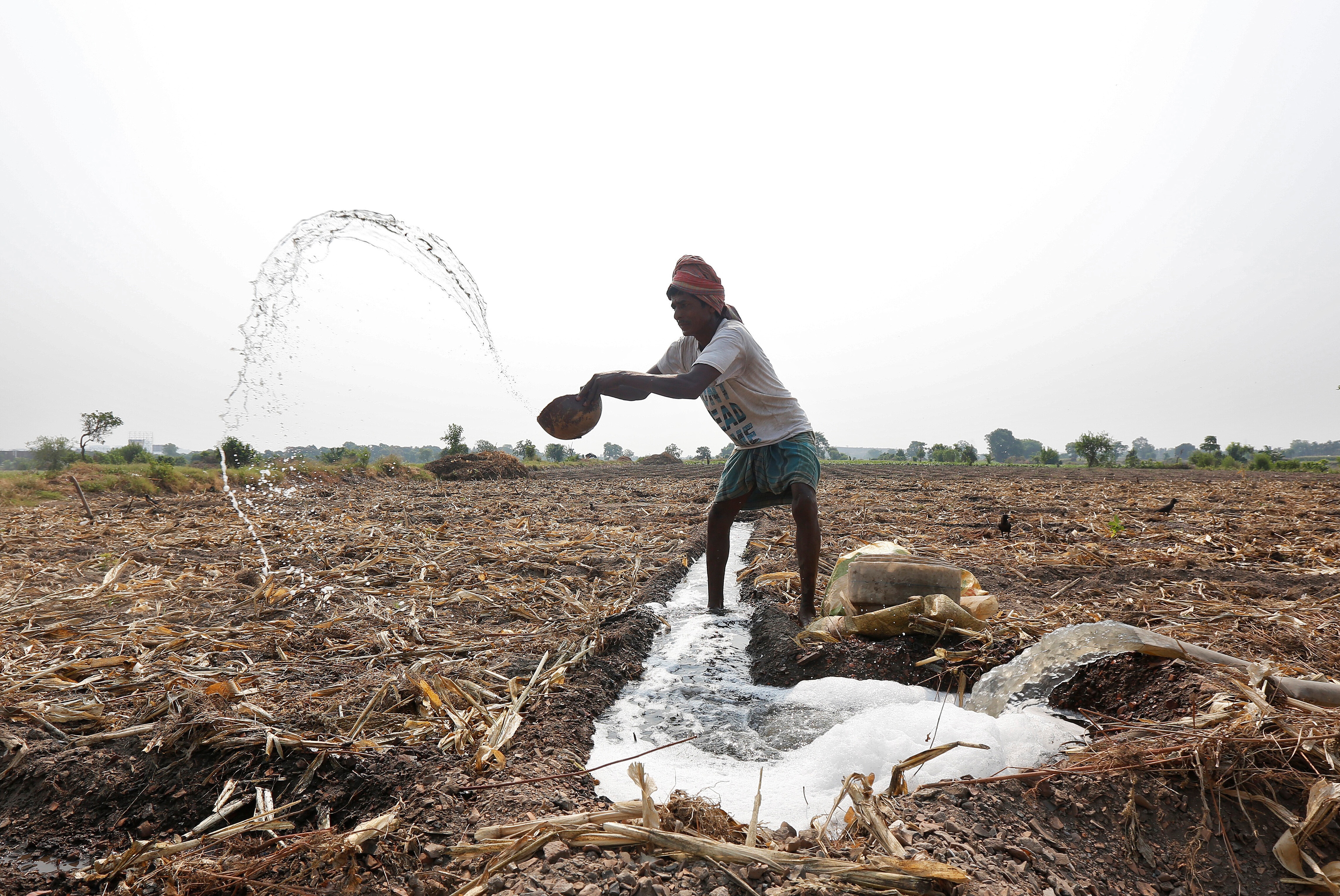
India holds nearly 18% of the world’s population but has access to only about 4% of global freshwater resources. Image: Reuters/Rupak De Chowdhuri
- India's water systems are under significant strain, but engineering solutions must be paired with institutional, behavioural and cultural approaches.
- The country holds nearly 18% of the world’s population but has access to only about 4% of global freshwater resources, so solutions are needed.
- Infrastructure alone cannot stabilize India's water future; experience shows it must be paired with institutional, behavioural and cultural approaches.
India’s water systems are under significant strain and the national response has often centred on building more physical assets. Treatment plants, transmission pipelines and the gradual expansion of desalination capacity are a major part of ongoing investment.
These assets are important. Yet experience over the past decade shows that infrastructure on its own cannot stabilize the country’s water future.
India holds nearly 18% of the world’s population but has access to only about 4% of global freshwater resources. Urban distribution losses remain high, with estimates indicating that 40-50% of piped water never reaches consumers because of leakage and inefficiencies, according to the Indian Institute of Human Settlements.
National assessments also warn that water demand in India may be double the available supply by 2030. Agriculture continues to consume close to 80% of national freshwater withdrawals, and groundwater depletion has been recorded across nearly 70% of districts.
Climate variability has made monsoon rainfall less predictable, with several regions experiencing cycles of drought followed by intense rainfall. Governance remains fragmented across departments, while community practices have not always kept pace with environmental change.
All of these pressures indicate that engineering solutions must be paired with institutional, behavioural and cultural approaches.
A broader view of water security has therefore taken shape within Indian policy circles. Public institutions, research bodies and community organizations recognize that long-term resilience depends on governance, behavioural change and community participation, working in tandem with technology. Infrastructure performs best when supported by policy clarity and active public engagement.
Policy as the foundation of India’s water future
Several states have demonstrated that coherent policy can reshape outcomes. Maharashtra’s Jalyukt Shivar programme, implemented in drought-prone regions of western India, is a significant example.
The initiative revived thousands of small water bodies, restored drainage channels and strengthened watershed development across rural areas.
Evaluation reports show improvements in groundwater levels and storage capacity in several programme villages. These results were achieved through administrative coordination and community mobilization rather than advanced technology.
Agriculture offers another illustration of the influence of policy direction. The adoption of drip irrigation in states such as Maharashtra, Gujarat and Tamil Nadu has increased due to subsidies and field-level advisory services under schemes like the Pradhan Mantri Krishi Sinchai Yojana.
Farmers who had relied on flood irrigation shifted to more efficient methods through steady communication, farm demonstrations and accessible financing.
Urban policy has moved along similar lines. Several states and cities require rainwater harvesting in new buildings based on national guidelines. Some urban centres have encouraged large industrial users to reuse treated wastewater, easing pressure on municipal networks.
Institutional coordination also plays a role. Water responsibilities in India span multiple departments, and this often slows implementation. States that created unified water authorities or streamlined approval processes have achieved faster and more reliable outcomes. Administrative clarity often determines whether infrastructure investments translate into dependable service.
Culture and behavioural change key to adjusting water use
India’s long history of community-managed water systems provides important context. Stepwells in Rajasthan, ancient tanks in Karnataka, storage ponds in Gujarat and community-managed canals in southern India existed for centuries because residents treated them as shared assets. Research demonstrates how these systems maintained local balances through collective maintenance and regulation.
Recent community-led efforts show how these traditions can reinforce modern governance. In Bengaluru, citizen groups have been central to restoring polluted and encroached lakes. Partnerships with municipal agencies and research institutions have produced improvements in water quality and local ecosystems.
In Pune, a large city in western India, neighbourhood groups have experimented with water budgeting to manage daily consumption. Schools in Chennai have introduced water-awareness programmes that explain rainfall patterns, groundwater recharge and urban supply challenges.
These initiatives strengthen public understanding and stewardship, complementing rather than replacing government systems.
Behavioural change often produces gradual but meaningful gains. Ahmedabad and Surat in western India, for example, have implemented conservation campaigns encouraging households to adjust water use. Residents adopted practices like greywater reuse, timely leak repair and reduced non-essential consumption, contributing to measurable improvements in municipal demand.
In rural areas, training farmers in efficient irrigation practices can significantly reduce groundwater stress. Demonstrations showing how much water is lost through over-watering have encouraged farmers to revise watering schedules. Evaluations of national and state programmes show that when such practices spread across large areas, groundwater conditions improve noticeably.
Integrating systems and people
Organizations in the water sector increasingly combine technical solutions with community engagement and policy alignment.
At HCL Foundation, several programmes focus on improving local water management by piloting decentralized treatment technologies, supporting innovators working on practical water solutions and collaborating with local governments to build reliable operations and maintenance systems.
Many programmes include awareness efforts that help communities understand conservation needs and the importance of maintaining shared infrastructure. The goal is to create an environment where technical interventions are supported by institutions and sustained by local participation.
India’s water future will depend on how effectively these layers work together. Physical systems can move, treat and store water. Governance determines how those systems operate. Communities influence whether conservation practices endure. Individuals shape overall demand through daily habits.
Progress will emerge from steady improvements in each of these areas, supported by infrastructure that is maintained well and used with care.
Long-term water security will not be defined by a single breakthrough. It will be shaped by consistent policy, renewed attention to community practices that once sustained water systems and gradual behavioural change. Infrastructure will remain essential, but its value will rise when institutions and citizens participate actively in managing and protecting this shared resource.
Don't miss any update on this topic
Create a free account and access your personalized content collection with our latest publications and analyses.
License and Republishing
World Economic Forum articles may be republished in accordance with the Creative Commons Attribution-NonCommercial-NoDerivatives 4.0 International Public License, and in accordance with our Terms of Use.
The views expressed in this article are those of the author alone and not the World Economic Forum.
Stay up to date:
Sustainable Development


Forum Stories newsletter
Bringing you weekly curated insights and analysis on the global issues that matter.
More on Food, Water and Clean AirSee all

Duncan Wood
March 22, 2026


