'Resilience is in all of us' – Katie Piper on how surviving an acid attack has shaped her
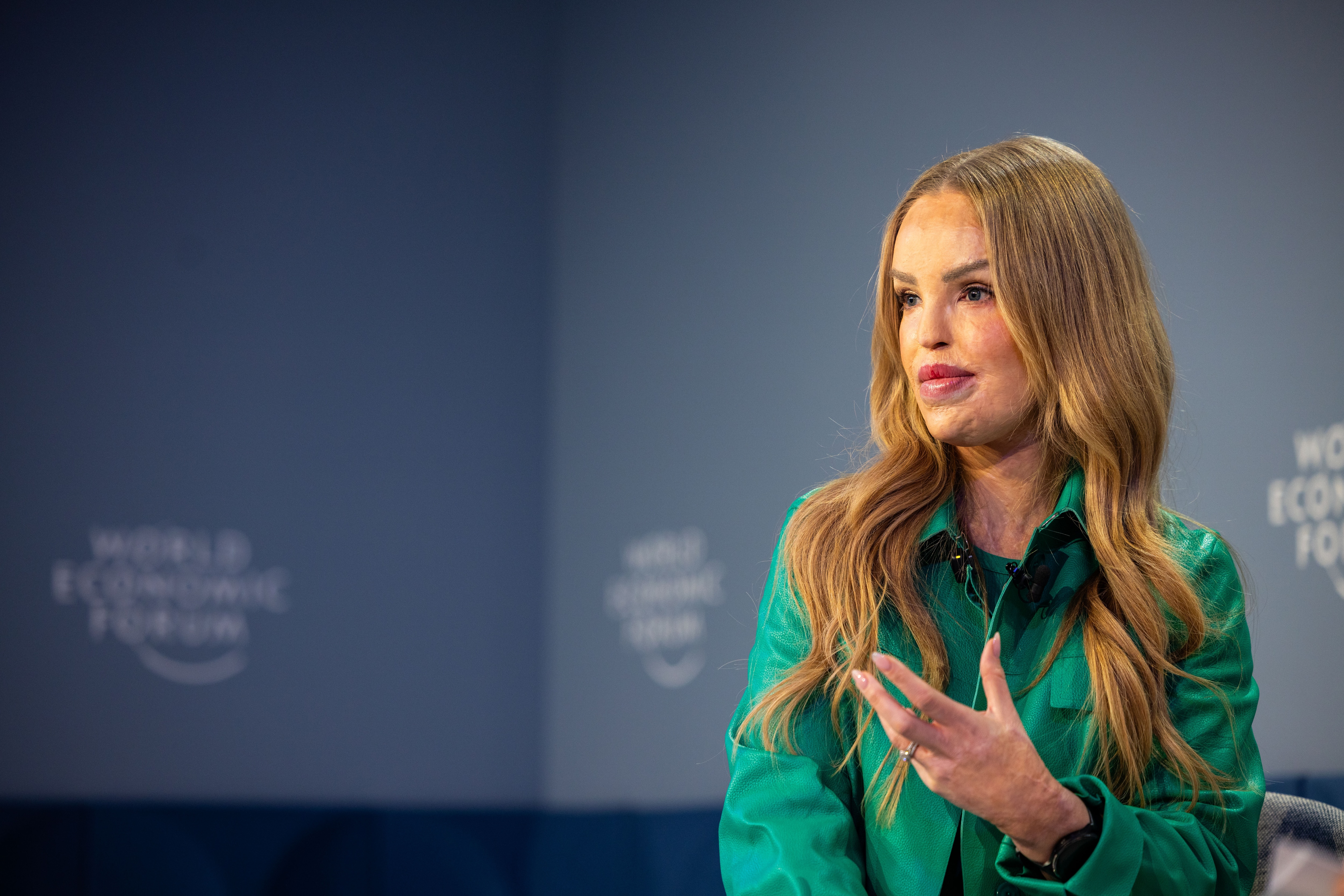
“My story is one of survival and hope.” Image: World Economic Forum/Ciaran McCrickard
- Katie Piper was attacked with acid on a London street in 2008, experiencing life-changing burns and injuries.
- She spoke at the World Economic Forum’s Annual Meeting in Davos, sharing her story of resilience, hope and the power of the human spirit.
- She believes her message should resonate with leaders as well, through the importance of kindness, empathy and diversity.
Katie Piper was just 24 years old when a man was paid to throw acid in her face on a North London street in 2008.
He'd been hired by another man whom Piper had rejected in the early stages of dating: "His response to that rejection was to sexually assault me, to rape me, to imprison me in a room, and then two days later to hire a hitman to throw sulfuric acid into my face."
As shocking as her story is, Piper told the World Economic Forum's Annual Meeting in Davos this year, it's "not a story of misery."
"My story is one of survival and hope".
Resilience, trauma and kindness
Acid attacks are rising in the UK. Data released last year showed a rise in corrosive substance attacks, with 498 physical incidents recorded in 2024, up from 454 in 2023.
Piper, who is known around the world as an advocate and author, told the audience she wanted to use the Annual Meeting as a platform to demonstrate the power of resilience.
“Stories of adversity, trauma, resilience are essential when we’re focusing on global progress,” she told Davos. “Often when we think about leadership, we think of policy, we think finance, but actually what my story illustrates is that empathy and kindness and diversity are as critical in leadership as finance and policy.”
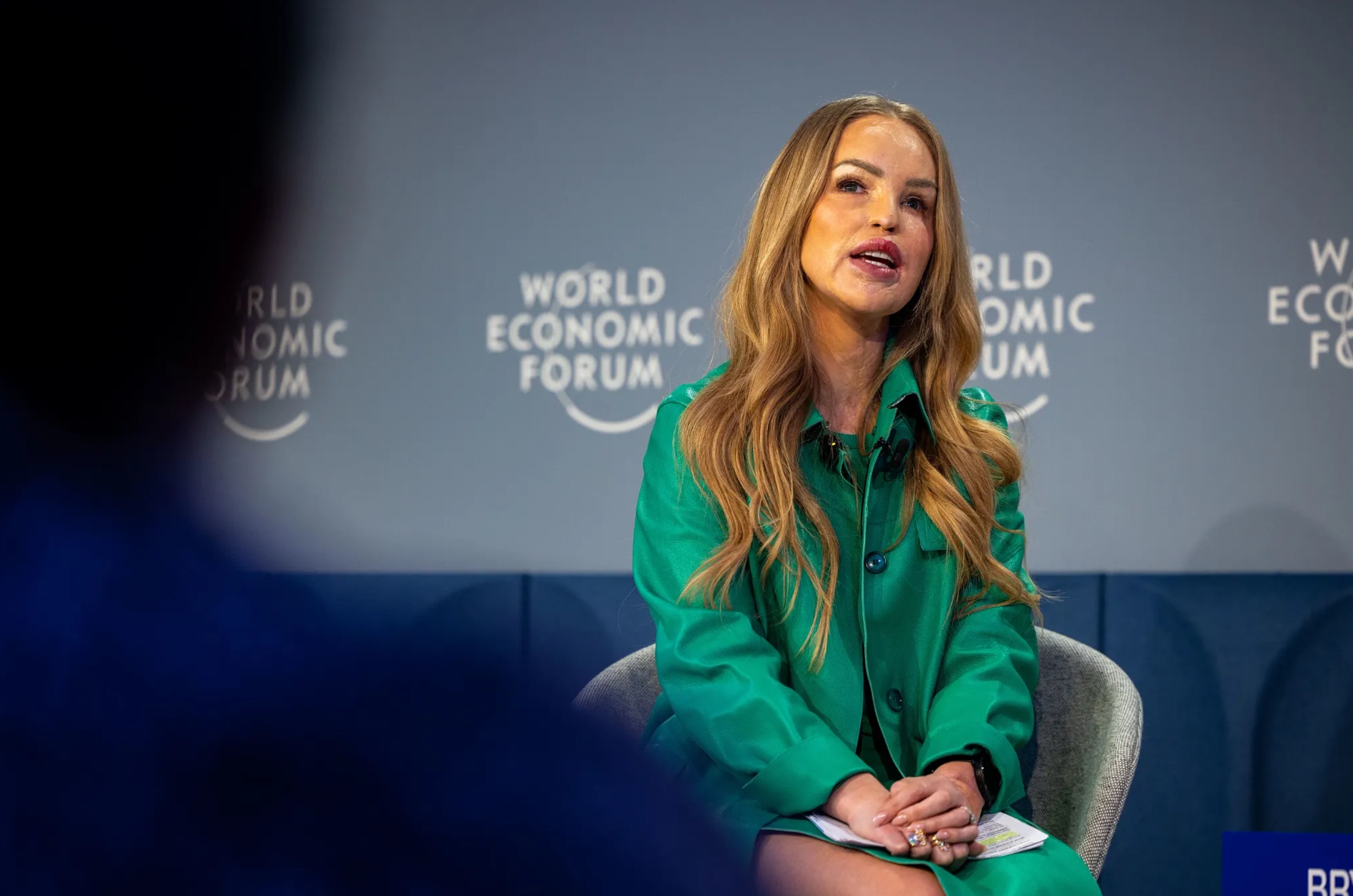
Trauma happens to all of us, to varying degrees, Piper explained, but "it needn’t be a life sentence". It’s not what happens to you in life that will go on to define you, she said, “It’s what you choose to do afterwards."
Piper says she later realized she’d "been given a gift" on the day of her attack – a perspective on the human spirit that is rare for someone so young, shaped by exploring what it means to face death through the experiences of those with terminal illness.
“It’s not the gift of not dying, it’s the gift to be able to go into the future and come back and live differently and live intentionally,” she explained. “It built a character into me that I don’t know I would ever have tapped into.”
Sharing her story to inspire others
Since the attack, Piper has told her story all around the world, drawn out of a desire to "open up a more honest conversation around recovery". In particular, she believes her message resonates with women in general, not just those who have been subjected to acid attacks.
Nearly one in three women worldwide has been subjected to physical and/or sexual violence, according to the World Health Organization, while data from UN Women reveals that three in five murders of women globally are committed by intimate partners or family members.
The World Economic Forum’s Global Gender Gap report also includes the prevalence of gender violence in a lifetime as an indicator within its wider health and survival indicator.
After her 2009 documentary, 'Katie, My Beautiful Face', was released, Piper discovered she’d created a community of women who had suffered trauma, such as gender-based violence.
“All of a sudden, there was this mutual understanding, and I realized, actually, this happens to all of us,” she told Davos.
Helping other burns victims
Through her foundation, now in its fifteenth year, Piper also provides specific support for burn survivors. She gives significant credit to the UK's National Health Service for its acute, life-saving care, but stresses that life-long care is needed.
After her attack, “people would leave the lift because they would think I was contagious”, she said, explaining why long-term emotional and physical support is vital.
Her foundation supports men and women who’ve suffered burns, for example many male survivors are injured while at work on oil rigs or as electricians. “The thing about burns is that it’s not a sort of treatment and you’re patched up and on your way. It’s forever,” she said.
The survivors of the Crans-Montana fire in Switzerland on 1 January 2026 will need this support as well, she added at Davos. Talking about a social media message she released after the fire, she explained, “I wanted to give this universal message to those survivors and their family that this isn’t the end.”
(The quotes have been lightly edited for clarity.)
Watch the full session: 'Scars of Survival: How I Rebuilt My Life'
License and Republishing
World Economic Forum articles may be republished in accordance with the Creative Commons Attribution-NonCommercial-NoDerivatives 4.0 International Public License, and in accordance with our Terms of Use.
The views expressed in this article are those of the author alone and not the World Economic Forum.

Forum Stories newsletter
Bringing you weekly curated insights and analysis on the global issues that matter.


