Why the rules-based global economy has a just-in-case option: Stockpiling
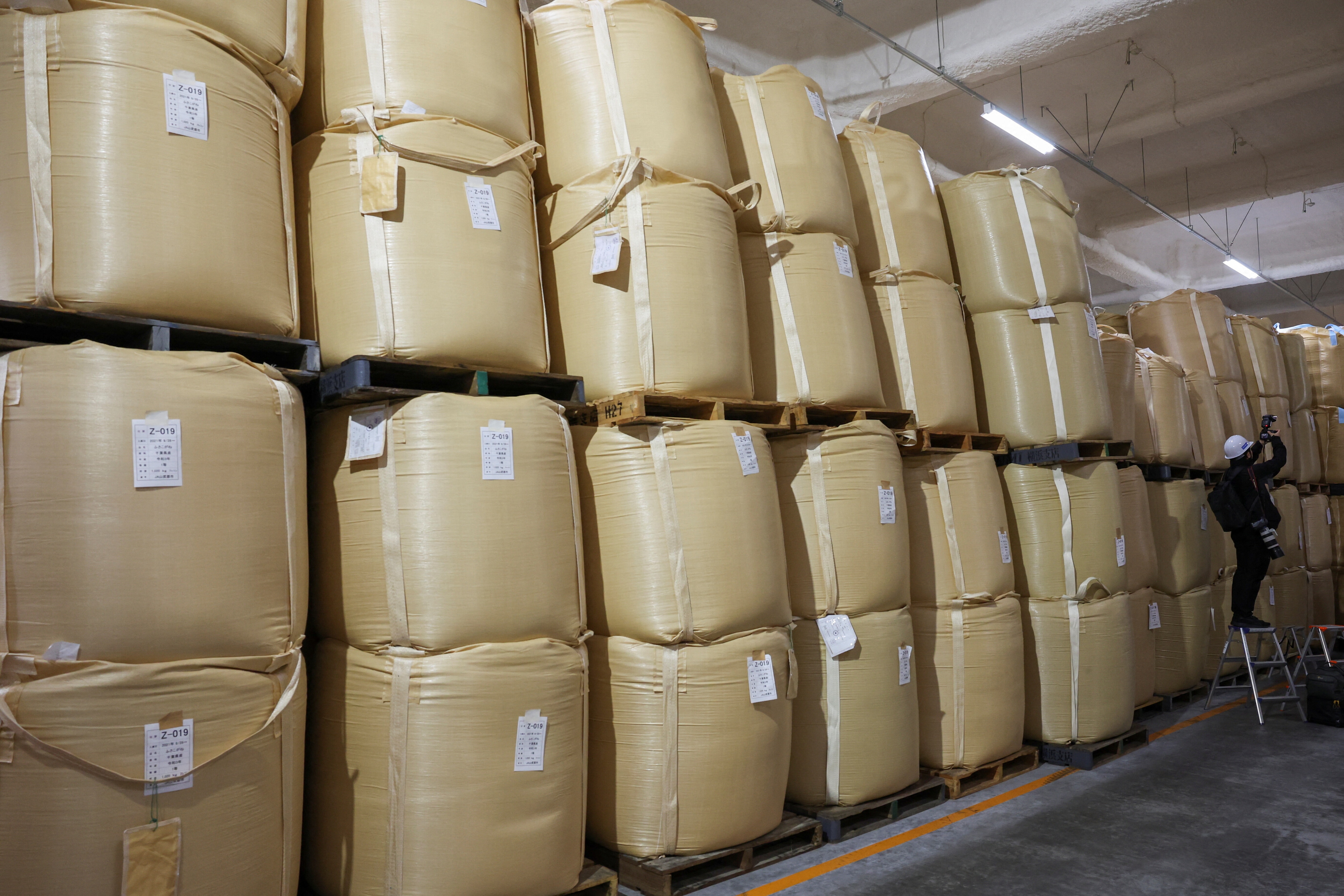
Whether it's critical minerals or rice, modern economies have an age-old habit of hoarding with a purpose. Image: REUTERS/Kim Kyung-Hoon
- Plans for a new US strategic stockpile of critical minerals come as trade tensions have worsened.
- Rational hoarding may be standard for modern economies, but the age-old practice tends to become more prevalent in times of uncertainty.
As far as benign-sounding code names go, it was a pretty good one.
“Operation Fish” had little to do with ocean-based protein and everything to do with survival. As war broke out in 1939, the scheme saw Britain furtively ship its gold reserves to Canada for safekeeping. The largest transfer of physical wealth in history kept the nation in what would ultimately be a successful fight.
Gold is one of the most timeless things countries can amass. It secures an ability to trade, prop up a currency, and weather upheaval. But the sheer variety of strategic stockpiles extends far beyond the yellow metal.
The newest is the $12 billion critical minerals stockpile recently unveiled in the US, and the oldest might be the grain stores maintained in ancient Egypt – hypothetically useful if faced with a Biblical plague.
In between, there’s been everything from a strategic pork reserve in China to a maple syrup reserve in Canada. Switzerland coordinates the stockpiling of enough food to feed everyone in the country for up to four months, though it’s considered extending that to a year. Japan stockpiles about a million metric tons of rice; the reserve was tapped recently due to extreme heat-induced price surges and panic buying.
For participants in a global economy at least nominally governed by the rule of law and a mutual interest in relative stability, we’ve got a lot of stuff stashed in hidey-holes.
Behavioral economists see a link between individual stockpiling and perceived threats. The same thing might be applied to economies – making it a potentially useful measure of volatility.
“We’re doing everything,” is how US President Donald Trump described the selection of the contents of Operation Vault. The critical minerals stockpile will likely include potash needed for fertilizer (and food), and aluminum necessary for phones, computers, planes, and buildings.
Ever heard of rhodium? If the US suddenly found itself without regular imports from South Africa of the critical mineral crucial for modern cars, according to a government estimate, it would punch a $64 billion hole in the nation’s economy. How about samarium? A dearth of imports of the rare earth needed for defence technologies from China – not an unthinkable scenario – could subtract another $4.5 billion.
Into the vault they go.
It’s been suggested that the new, mostly-publicly-funded US critical minerals reserve seems like a Chinese way of doing things. Greater self-sufficiency through government largesse.
But America and the wider world have their own traditions of stockpiling, with a broad mix of things tucked under mattresses. The US has more experience with stockpiling oil, for example. It and several other countries started making a habit of doing that after their once-reliable sources of supply ran dry in the 1970s.
There’s an even longer history of amassing strategic gold reserves – another lesson learned through abrupt scarcity. Much of America’s gold stash is kept at Fort Knox in Kentucky (really, it’s there), alongside other deep-storage facilities in West Point, New York and Denver, Colorado.
Dimming the allure of stocking up
Gold is a mineral that seems about as critical as any other lately. Prices for the historically reliable store of wealth have increased as global trade tensions and general economic anxieties mount.
Central banks around the world can’t seem to acquire enough of it. Net purchases hit a record in the midst of the pandemic, and emerging markets in particular have continued stocking up. China’s central bank is in the midst a gold-buying “spree.” In Poland, situated along a relatively active geopolitical fault line, the share of foreign exchange reserves accounted for by gold is nearly a third – up from less than a fifth as recently as 2024.
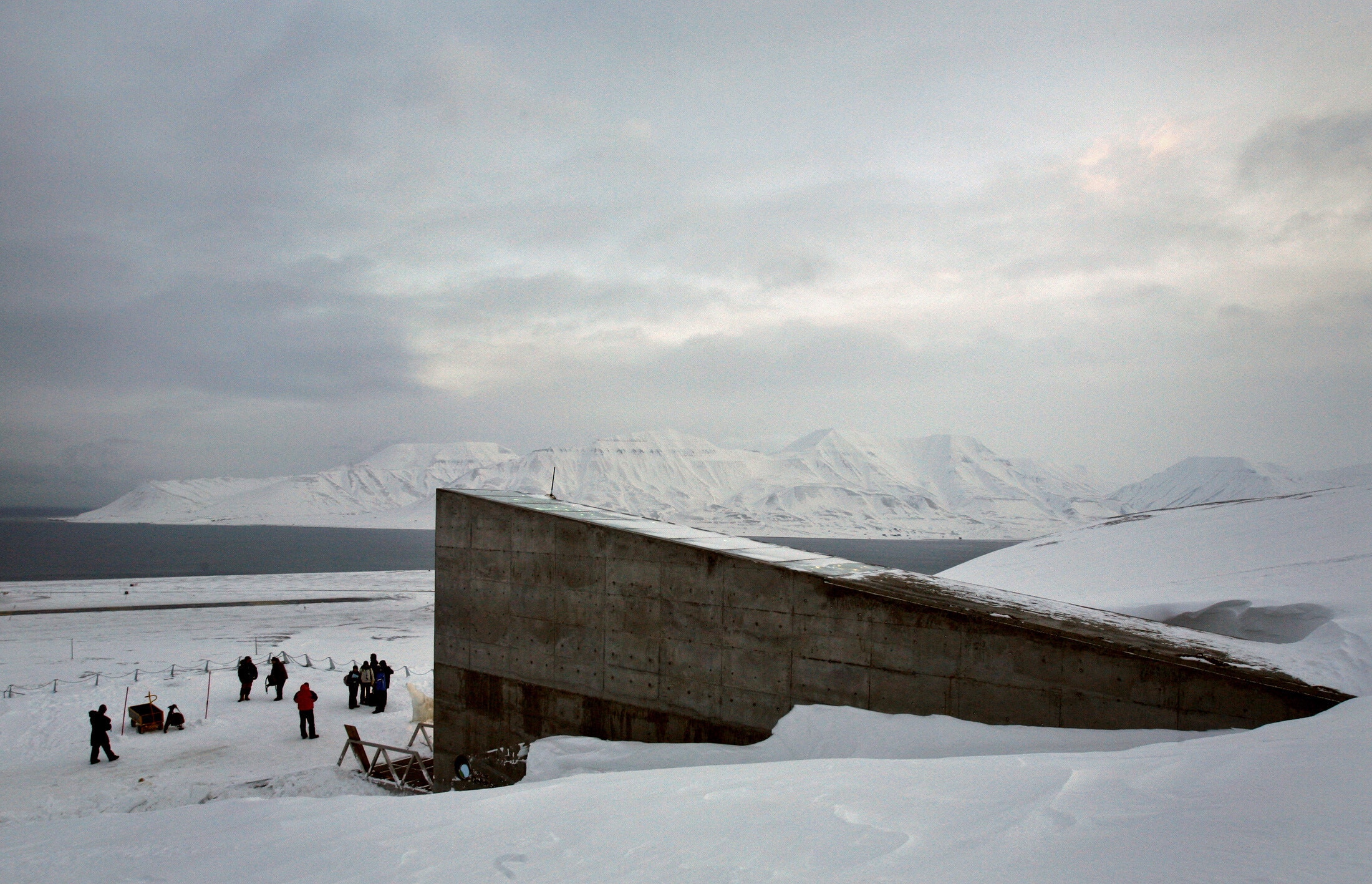
Other types of booty being carted into vaults can feel just about as fundamental. As the reality of the fast-moving digital era set in more than a decade ago, researchers deposited tools for future generations to decipher inevitably redundant storage formats deep in the Swiss Alps. Norway has built a massive seed vault on a remote island, as a means to help ensure food security in a warming world.
The goods aren’t always necessarily locked in storage. Greenland touts the fact that it has 10% of the world’s freshwater reserves lodged in an ice sheet accumulated over millennia – a stockpile melting into fjords and the Greenland Sea in an increasingly thirsty world.
Canada’s maple syrup reserve was securely locked up, until it wasn’t for a period between 2011 and 2012 when it was robbed (the plot’s mastermind was later sentenced to eight years in prison).
China’s pork reserve is held at dozens of government storehouses around the country, as well at privately-run facilities. In a country that accounts for a large portion of humanity’s pork consumption, actively managing the reserve can at least theoretically help policy-makers keep prices steady.
One of the most obvious questions about stockpiling: does it work?
In the case of Britain’s temporarily transferred gold supply, the answer is probably “yes.” Safeguarding its reserves by secreting them across the Atlantic helped the country endure a war and then position itself for recovery.
Other countries didn’t have to look so far afield to secure their gold as the war heated up. Switzerland shifted its reserves to a mountain vault, a cautionary measure that helped keep the country’s economy humming and set it up for a post-war boom.
Stockpiles might work, but it would probably be more constructive to focus on ways to dim their appeal.
Building them up can be a rational undertaking. At a certain point, it can also be a sign that it’s time to double down on efforts to cooperate and grease the wheels of global commerce.
After all, they aren’t always impregnable.
The dollar might be one of the most enviable stockpiles in the world. It’s not invariably stored in a vault, but as long as it’s lodged in enough balance sheets in significant numbers around the world, its magnetism is maintained and the US can lean on that to keep its own borrowing costs low, buy things on the cheap, and sidestep currency crises.
Lately, the lustre of this particular stockpile has waned. As the value of the dollar falters, the allure of things like gold has increased. Bigger picture, a global monetary system built on faith that the dollar will abide seems less tenable in a fragmenting world.
When you rely heavily on so many others to help maintain your stockpile, you can’t just spirit it away to Canada for protection.
License and Republishing
World Economic Forum articles may be republished in accordance with the Creative Commons Attribution-NonCommercial-NoDerivatives 4.0 International Public License, and in accordance with our Terms of Use.
The views expressed in this article are those of the author alone and not the World Economic Forum.
Related topics:

Forum Stories newsletter
Bringing you weekly curated insights and analysis on the global issues that matter.
More on Geo-Economics and PoliticsSee all

Ralitza Naydenova and Jack Barrie
March 31, 2026