What the Winter Olympics could mean for northern Italy’s economy
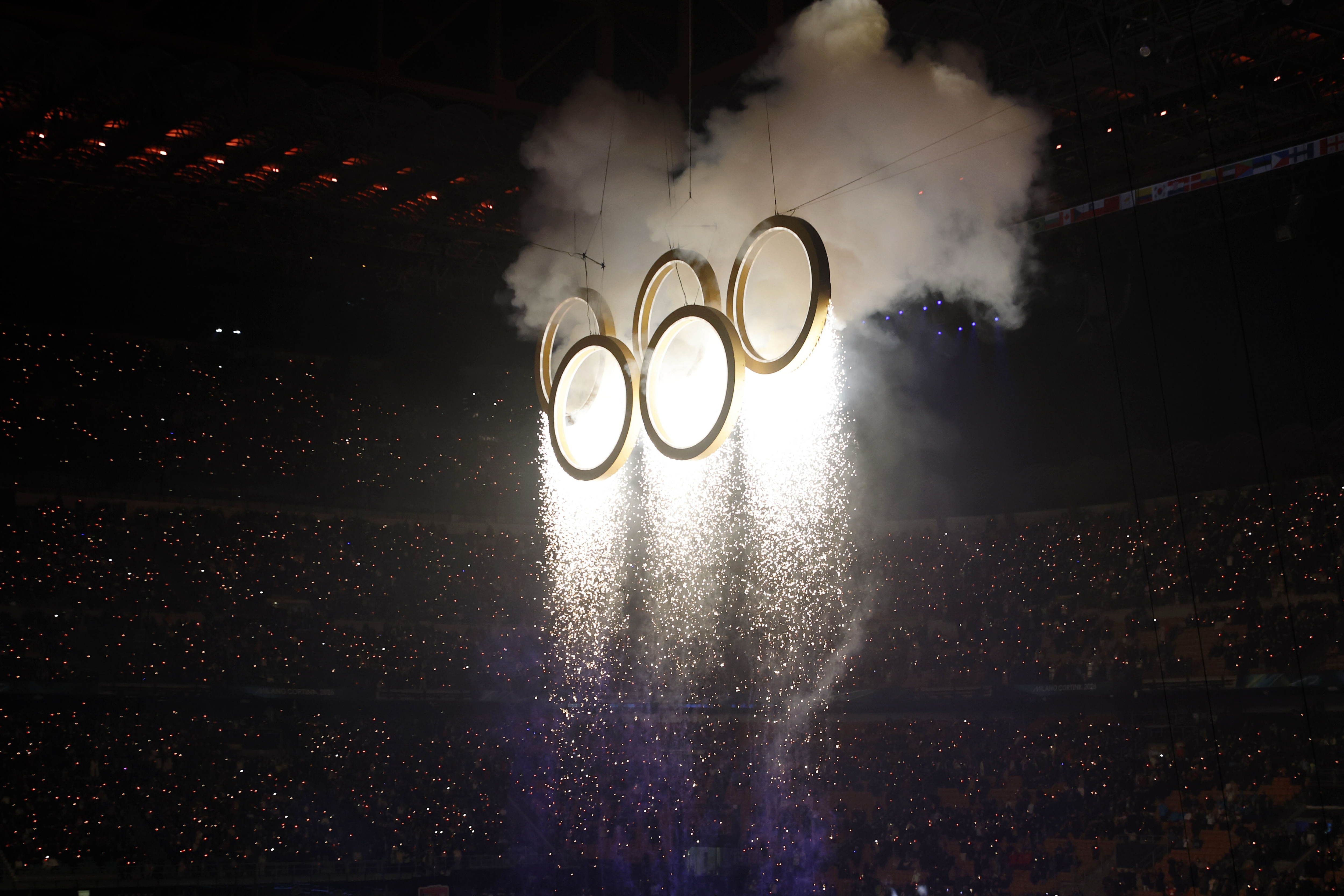
What are the economic benefits for Italy as it hosts the Winter Olympics? Image: Geoff Burke-Imagn Images
- The Milano-Cortina 2026 Winter Olympics could bring economic, social and environmental boosts to urban and rural areas across northern Italy.
- One forecast suggests benefits could exceed $6 billion, but the history of legacy impacts from previous Games is mixed.
- A World Economic Forum report shows travel and tourism is a major contributor to global GDP, but environmental risks and tension between local populations and visitors need to be carefully managed.
The Winter Olympics are in town.
Well, actually several towns across northern Italy, with the two main competition sites some 400 kilometres apart. The International Olympic Committee (IOC) says this is the ‘most widespread Games in Olympic history’.
But what happens when the show moves on and the athletes are gone? For organizers of the Milano-Cortina Games, the hope is that this dispersed model will bring long-term benefits to communities across the region.
Infrastructure investments for the future
Cortina d’Ampezzo and Milan, sites of two cauldrons lit during the Games’ opening ceremony, are several hundred kilometres apart in northern Italy, posing logistical challenges, particularly for ensuring smooth transportation between sites.
However, Economy Minister Giancarlo Giorgetti believes the investments in regional infrastructure for the Games have accelerated improvements that were required across the region. Reuters reported on Giorgetti’s remarks ahead of the Games: "Big events are an opportunity for major mobilization on infrastructure. They are also an excuse to address problems that otherwise would not be tackled with the speed that is required, and that allow us to achieve results."
According to Transport Minister Matteo Salvini, some $4.1 billion has been invested ahead of the Games.
Banca Ifis, an Italian financial and banking group, estimates a value of approximately $6.26 billion, with around $3.55 billion attributable to the legacy value of enhanced sporting venues and civil infrastructure.
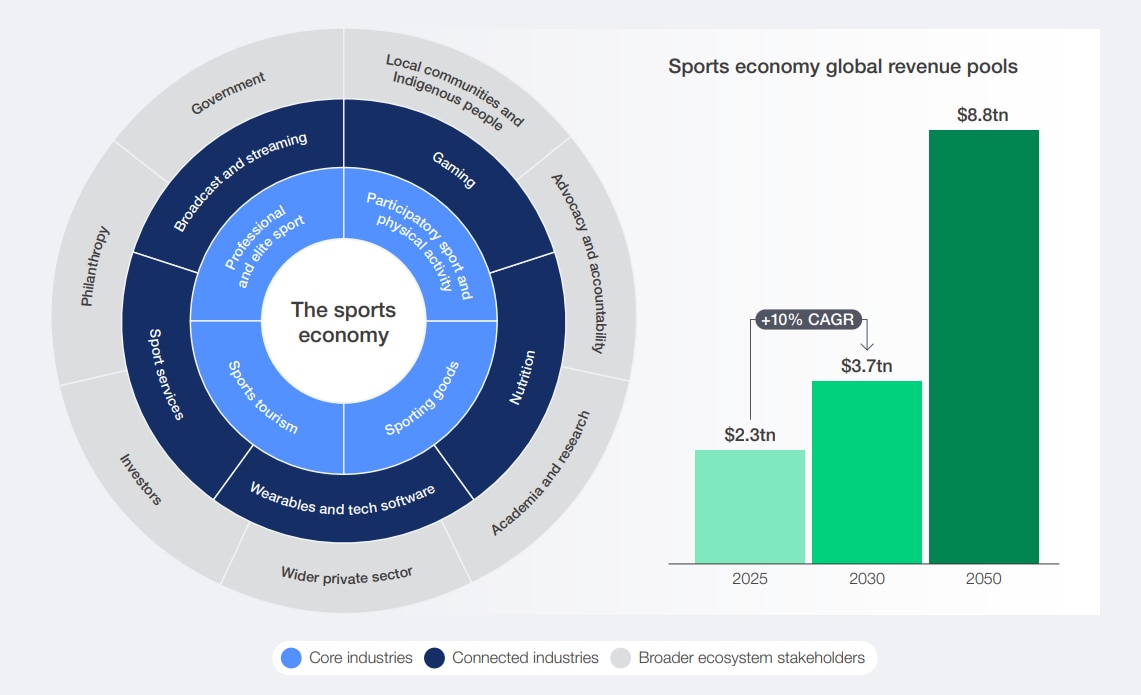
The World Economic Forum’s Sports for People and Planet report also highlights the economic potential of the global sports economy, which is already worth some $2.3 trillion and is forecast to reach $8.8 trillion by mid-century. Sports tourism is a key driver cited by the Forum as contributing to this growth.
As well as transport, organizers say they’re investing in mountain electricity distribution systems, healthcare centres and boosting energy efficiency and waste reduction in existing venues.
The Games’ Impact 2026 initiative is also designed to provide greater access to the event’s economic opportunities for social, micro, small and medium businesses in the region. The initiative says its legacy will be empowering disadvantaged communities, promoting sustainable and ethical practices and supporting local economic development.
However, after the Paris Summer Olympics in 2024, the French Court of Auditors estimated the Games boosted economic growth by just 0.07 percentage points that year, so any forecasted economic benefits of Milano-Cortina 2026 are, at this point, just that: a forecast.
A sustainable Olympics?
The Winter Olympics hope to bring economic and social benefits to city and mountain regions alike. The Porta Romana Olympic Village, in Milan, will become student housing after the Games and, alongside the Santagiulia Arena, will help boost two districts of the city, say organizers.
The Olympic Village is built on an abandoned railway yard and will offer 1,700 beds for students after the Games, as well as retail and public spaces.
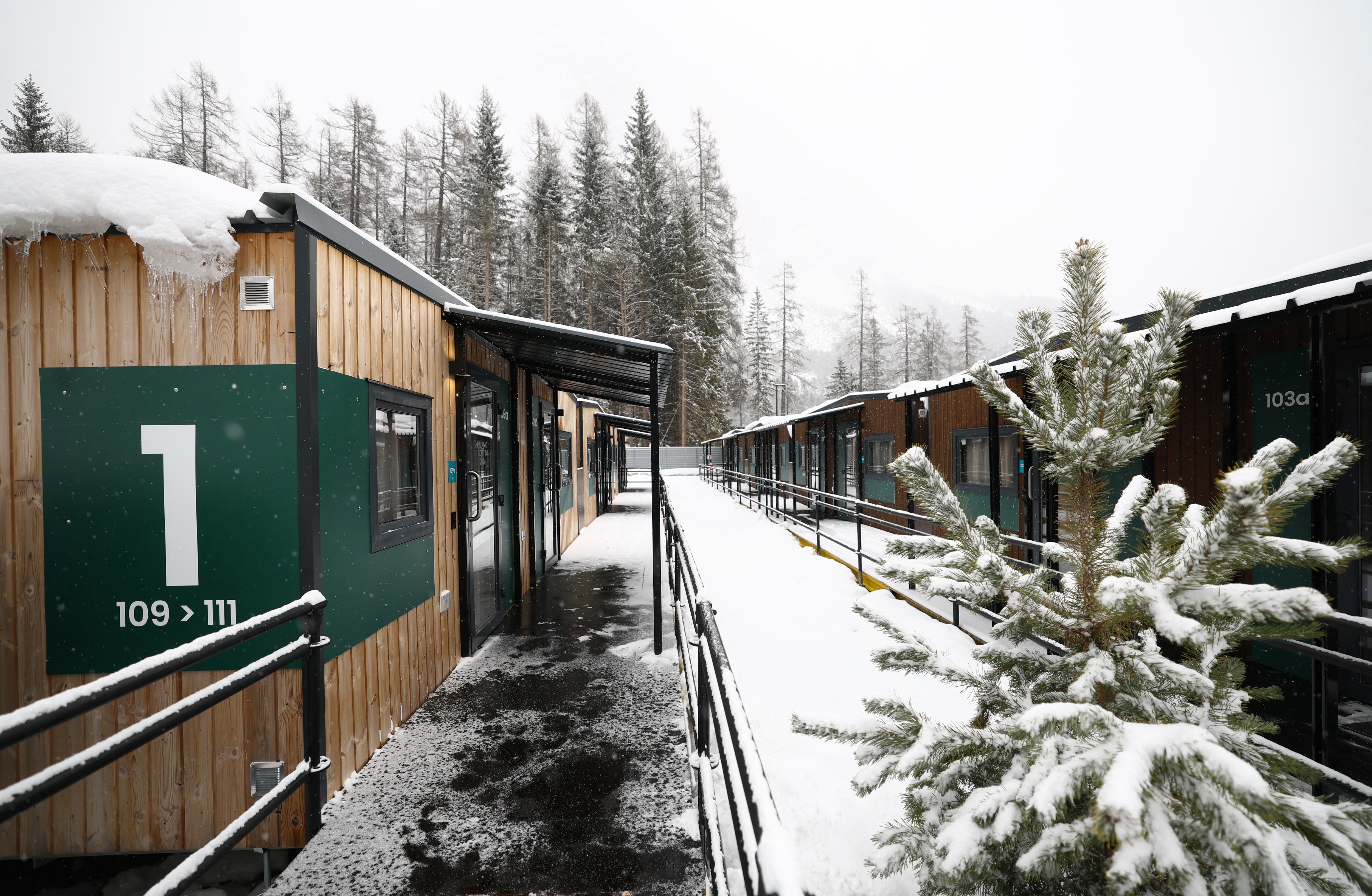
In Cortina d’Ampezzo, a temporary village has been constructed, with the land returned to open, public space after the Games. Meanwhile, in Livigno, three traditional Alpine lodges have been renovated and adapted, and will be returned to the local hospitality industry after the Olympics conclude.
However, some environmentalists have criticized the impact of the Games on the mountain regions, with trees felled to make way for new venues, as well as concreting for car parks, roads and other infrastructure. There has also been criticism of the need to produce artificial snow, with an estimated 84.8 million cubic feet of water drawn from Alpine rivers and streams for snow-making.
Research from previous Games also suggests that local benefits can be fleeting. One study, conducted after London 2012, cautioned that “the data points to patterns of gentrification and migration, suggesting the original local community may have been left out of the equation”.
A 2016 paper published in the Journal of Economic Perspectives warned that the Olympics "result in positive net benefits only under very specific and unusual circumstances". However, an OECD report published last year suggests that Paris 2024 offers lessons on good practice and innovation for future Games.
How is the World Economic Forum promoting sustainable and inclusive mobility systems?
Boosting tourism while protecting nature
By the mid-2030s, travel and tourism is expected to contribute $16 trillion to global GDP, according to the World Economic Forum’s Travel and Tourism at a Turning Point: Principles for Transformative Growth report.
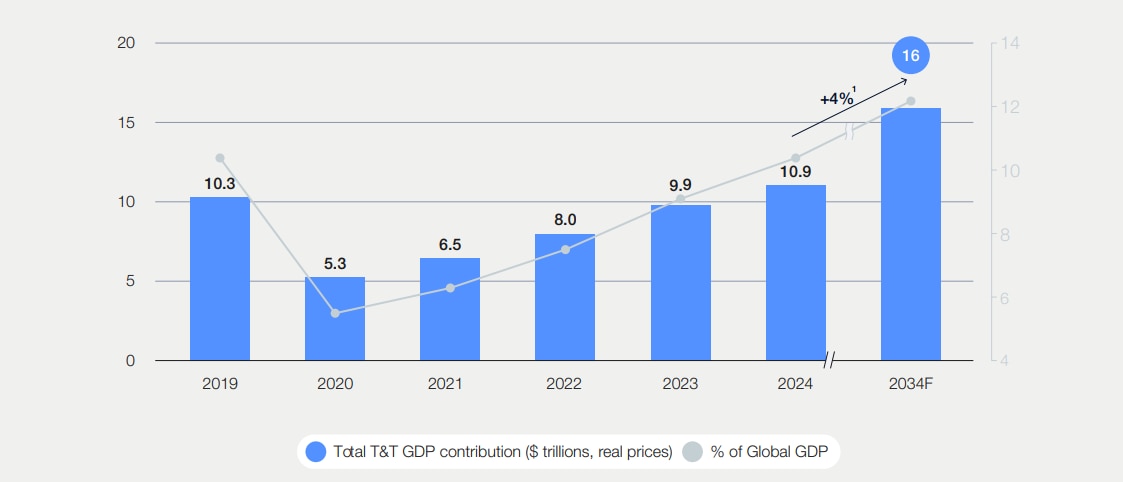
However, this growth is not without challenges, including friction between visitors and residents, and the pressure tourism and travel puts on natural systems.
The report cautions that visitor-to-resident ratios could rise by at least 50%. This is reflected in some reactions to the longer-term legacy of the Games.
While the economic boost of tourist spending in the next 12-18 months could be worth $1.4 billion, local communities are warning of the risks of overtourism.
Although Cortina previously hosted the 1956 Winter Olympics, when its long-term impact on tourism was welcomed by many, mountain tourism has already tripled in Italy over the past decade, according to Reuters. In part, this increase is driven by influencers and social media, say campaigners. One think tank suggests that the Games could attract an additional 9 million visitors to the five hosting provinces over the rest of this decade.
The Forum’s Travel & Tourism report calls on careful policy management to handle issues such as congestion and overcrowding - and also a change in narrative from ‘restriction to redistribution’, directing people to less-visited areas.
License and Republishing
World Economic Forum articles may be republished in accordance with the Creative Commons Attribution-NonCommercial-NoDerivatives 4.0 International Public License, and in accordance with our Terms of Use.
The views expressed in this article are those of the author alone and not the World Economic Forum.

Forum Stories newsletter
Bringing you weekly curated insights and analysis on the global issues that matter.


