Do young people choose careers the economy can’t sustain?

Young people are choosing passion careers over those that practically serve the economy in Latvia Image: Unsplash/Vitaly Gariev
- Young people in Latvia are gravitating towards careers that are highly visible and passion-driven, while strategically critical sectors attract low interest.
- With very limited access to professional career counselling and scarce work-experience opportunities, students rely heavily on parents, peers and perceptions rather than data to inform their choices.
- Despite artificial intelligence’s growing impact on work, it is largely absent from school career conversations, leaving young people underprepared for entry-level disruption and future opportunities.
Across the world, governments, employers and educators are grappling with the same question: how do we prepare young people for a labour market that is being reshaped simultaneously by artificial intelligence (AI), demographic change, geopolitical instability and the green transition?
New findings from the Latvian Education Accelerator, part of the World Economic Forum’s Accelerators Network, offer a revealing snapshot of how these global forces are already playing out at the national level and why career education has become a strategic issue.
Based on a nationally representative survey of nearly 5,000 secondary-school students (ages 15-19) conducted in late 2024 and late 2025, the data points to four converging trends that should concern policy-makers well beyond Latvia.
4 survey trends around early career choices in Latvia
1. Career aspirations are increasingly misaligned with economic demand
Across the first two years of the survey, the data points to a clear and persistent misalignment between young people’s career aspirations and the structure of the economy, with early signs that this gap may be widening.
Interest in entrepreneurship, finance, economics and information communications technology (ICT) remains lower than expected given their central role in productivity and competitiveness in the AI era and has declined compared to the previous year.
At the same time, interest continues to concentrate in creative industries, sports and beauty services – sectors that play an important social and cultural role but account for a relatively small share of gross domestic product and employment.
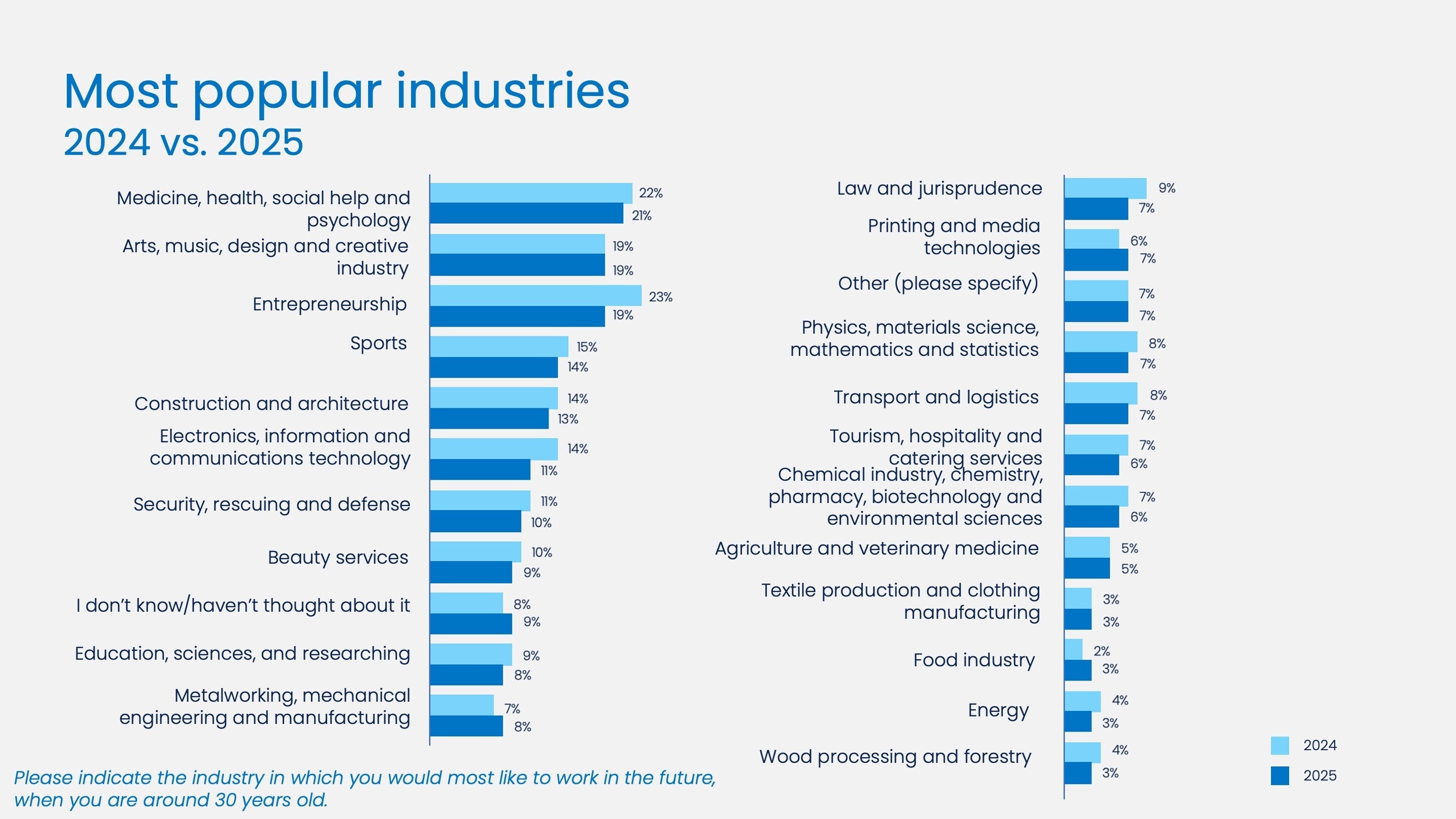
Strategically critical fields such as energy, transport, logistics and manufacturing attract consistently low interest among students, despite being foundational to energy security, supply-chain resilience and industrial competitiveness.
This is not a criticism of young people’s values or creativity. It is a structural signal: aspirations are increasingly shaped by visibility and narratives rather than by labour-market signals. Influencers are rarely engineers or electricians; entrepreneurs seldom receive awards on prime-time television.
Over time, this gap between aspiration and opportunity becomes an economic risk.
2. Limited access to professional career guidance
As career choices become more complex, access to professional guidance varies significantly across countries.
In Latvia, only 17% of students report having had an individual conversation with a career counsellor at school, compared to over 55% across Organisation for Economic Co-operation and Development member countries, where such guidance often begins before the age of 15.
This contrast highlights how uneven access to career support can shape the quality of young people’s decisions at a critical stage of their lives.
Instead, young people rely primarily on parents and peers. While these networks are invaluable, they are rarely equipped with up-to-date information about skills demand, emerging occupations or technological disruption.
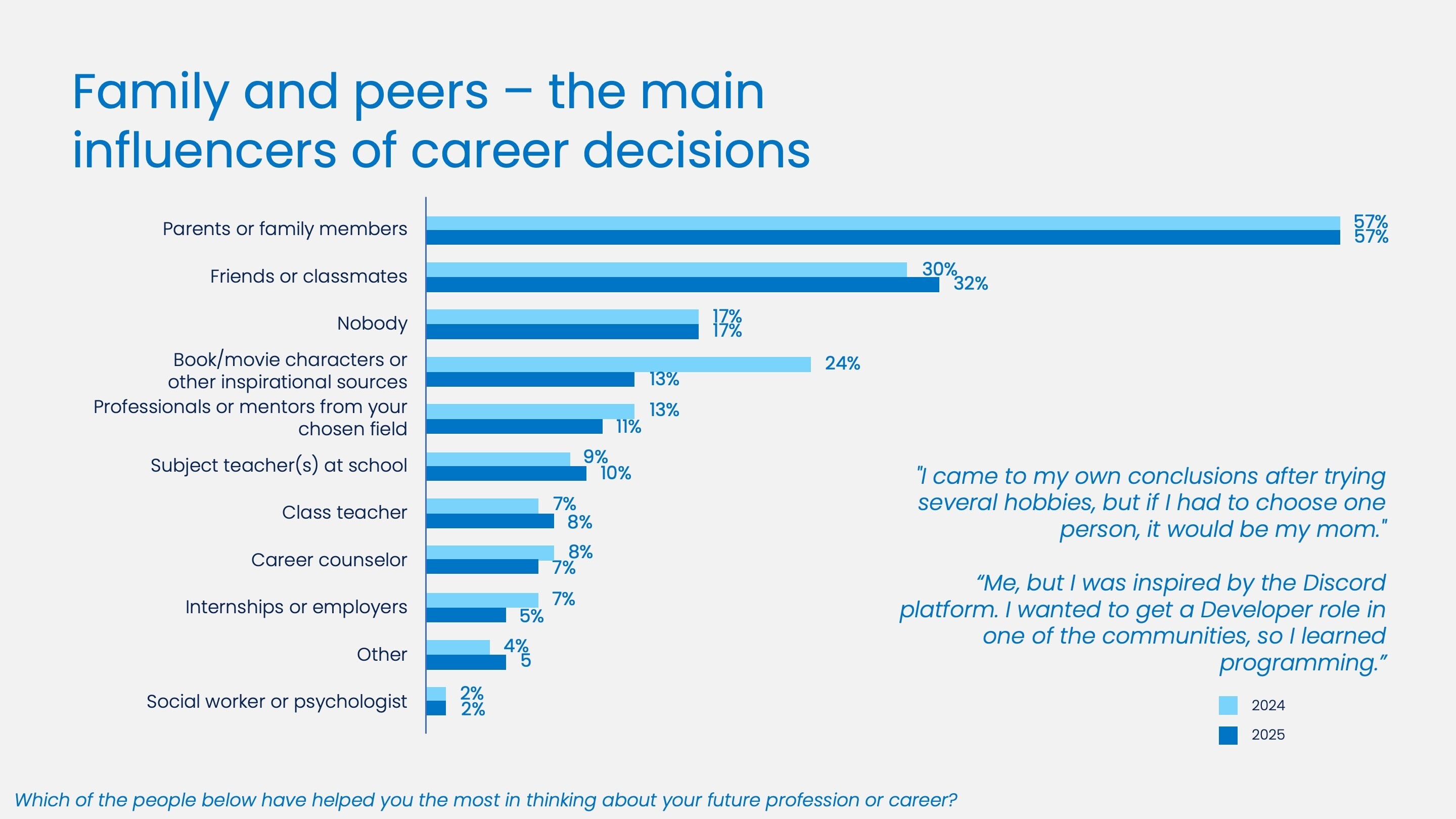
The result is not a lack of ambition but decision-making based on perceptions rather than data, which is a pattern that increases the likelihood of mismatches, later re-training or disengagement from the labour market.
3. The AI conversation is largely absent from schools
AI is transforming tasks, entry-level roles and skill requirements across almost all sectors. Yet the survey shows that only 8% of students have more than occasional discussions at school about how AI is likely to change work and professions.
Most students intuitively understand that AI will matter. What they lack is clarity about which skills will become more valuable, which roles will evolve and how to position themselves in a technology-rich economy.
Without structured dialogue, AI becomes a source of anxiety rather than agency. This matters particularly for young people, whose first steps into the labour market are often the most exposed to automation and task redesign.
4. Demand for work experience exceeds supply
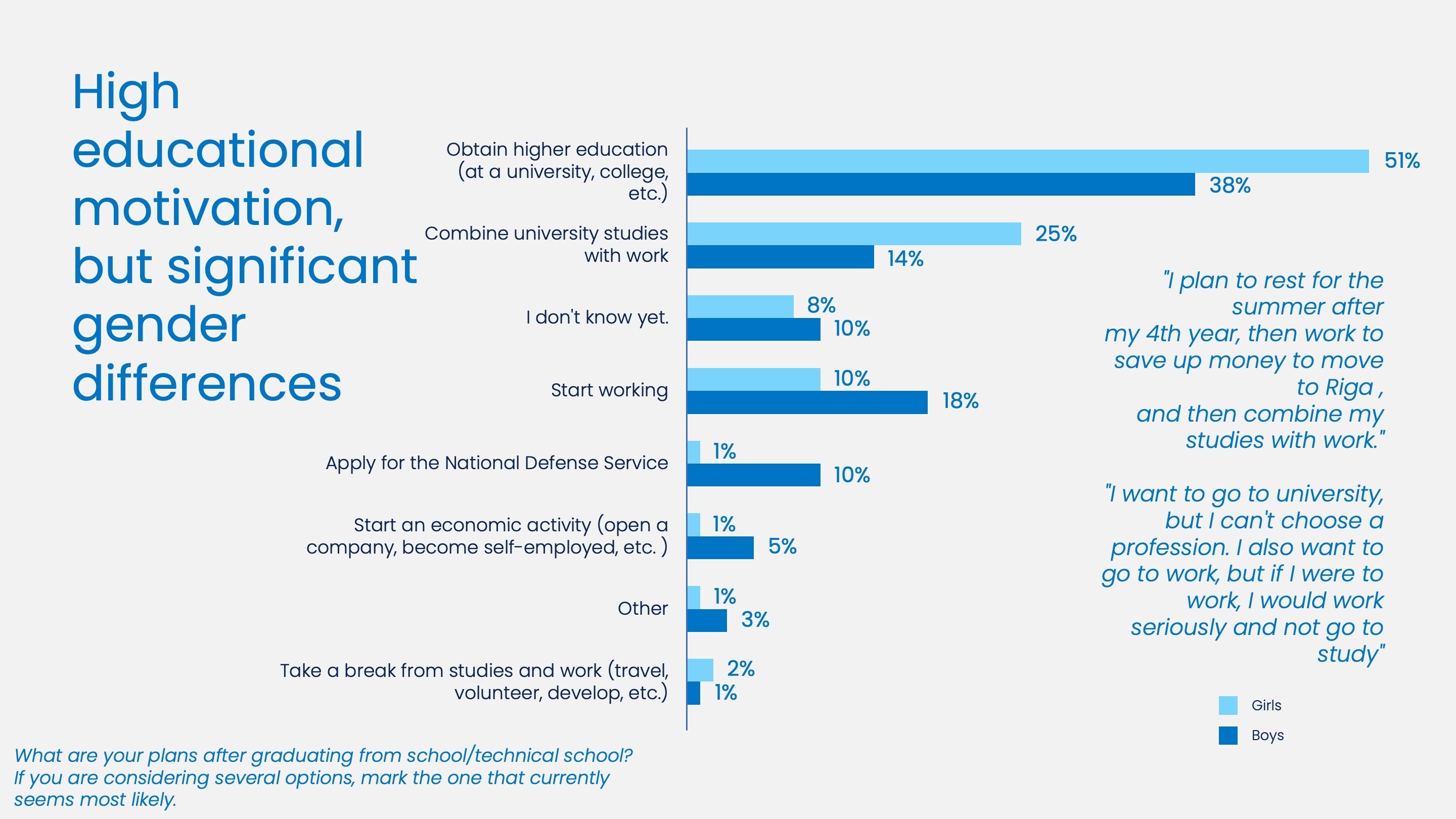
Young people are eager to engage with the world of work early. Yet nearly half of students who sought a summer internship or job were unable to secure one, primarily because employers offered few placements.
This is a missed opportunity. Early work experience is one of the most effective ways to translate abstract career ideas into concrete understanding, especially for sectors that suffer from low visibility but high strategic importance.
Why this matters now
These findings arrive as global discussions increasingly frame skills as a cornerstone of economic resilience and security.
The Forum’s Future of Jobs Report 2025 consistently shows that technological change will both displace and create roles but that skills adaptability is the decisive variable. At the same time, geopolitical fragmentation, defence needs and energy transitions are placing renewed emphasis on industrial capacity, logistics and technical expertise.
If young people systematically opt out of these fields due to limited exposure and guidance rather than informed choice, countries risk long-term capacity gaps that cannot be quickly closed.
From aspirations to alignment
The Latvian experience also points to practical, scalable responses:
- Career education must start earlier and happen more often. One-off interventions late in secondary school are insufficient in a fast-changing labour market.
- Career guidance should be treated as infrastructure, not an optional add-on. Access to trained counsellors, labour-market data and employer engagement must be systematic.
- AI literacy should become a normal part of career conversations to help students understand how technology reshapes tasks, value creation and human skills.
- Employers have a role to play. Even a small increase in internships or summer jobs per company can have an outsized impact for young people and talent pipelines in undersupplied sectors.
Reframing choice through purpose
A useful lens here comes from the Japanese concept of “ikigai,” often described as the intersection between what a person enjoys, what they are good at, what society needs and what can sustain a livelihood.
The survey suggests that many young people have a strong sense of the first dimension regarding their passion but far less support in exploring the others. Rebalancing this does not mean discouraging creativity or sport. These are vital spaces for physical, emotional and cognitive development but are less often foundations for professions.
Helping young people see how their interests can connect to broader economic and social needs doesn’t mean they must narrow their choice, it is about making their choices sustainable.
Don't miss any update on this topic
Create a free account and access your personalized content collection with our latest publications and analyses.
License and Republishing
World Economic Forum articles may be republished in accordance with the Creative Commons Attribution-NonCommercial-NoDerivatives 4.0 International Public License, and in accordance with our Terms of Use.
The views expressed in this article are those of the author alone and not the World Economic Forum.
Related topics:

Forum Stories newsletter
Bringing you weekly curated insights and analysis on the global issues that matter.
More on Jobs and the Future of WorkSee all

Clementina Colombo and Rafaela Valencia-Dongo Q.
April 1, 2026


