Digital product passports: When does transparency truly matter for circular products?

Digital product passports impose higher supply chain transparency on circular products. Image: REUTERS/Stephane Mahe
- Circular products are often subject to higher transparency requirements via digital product passports than linear ones, risking the creation of new barriers.
- Information alone does not enable circularity. Physical infrastructure, skills and regional capacity remain the primary constraints in many value chains.
- Decision-makers can use a new strategic framework to determine when transparency creates value and when a lighter-touch approach is more effective.
Have we raised the burden of proof to an impossibly high level for circular products? Consider a smartphone made entirely from virgin materials. Its production spans 200 suppliers across 43 countries on six continents.
To be placed on the market, the manufacturer is not required to disclose its full bill of materials, a detailed chain of custody or a digital log of every assembly step.
Now consider that same phone being repaired or refurbished. Suddenly, far more documentation is expected, even though the circular process may involve only one local repair or a handful of regional steps.
This imbalance is becoming more pronounced under new regulations, including the European Union’s Ecodesign for Sustainable Products Regulation, and the introduction of digital product passports for sectors such as batteries, electronics and textiles.
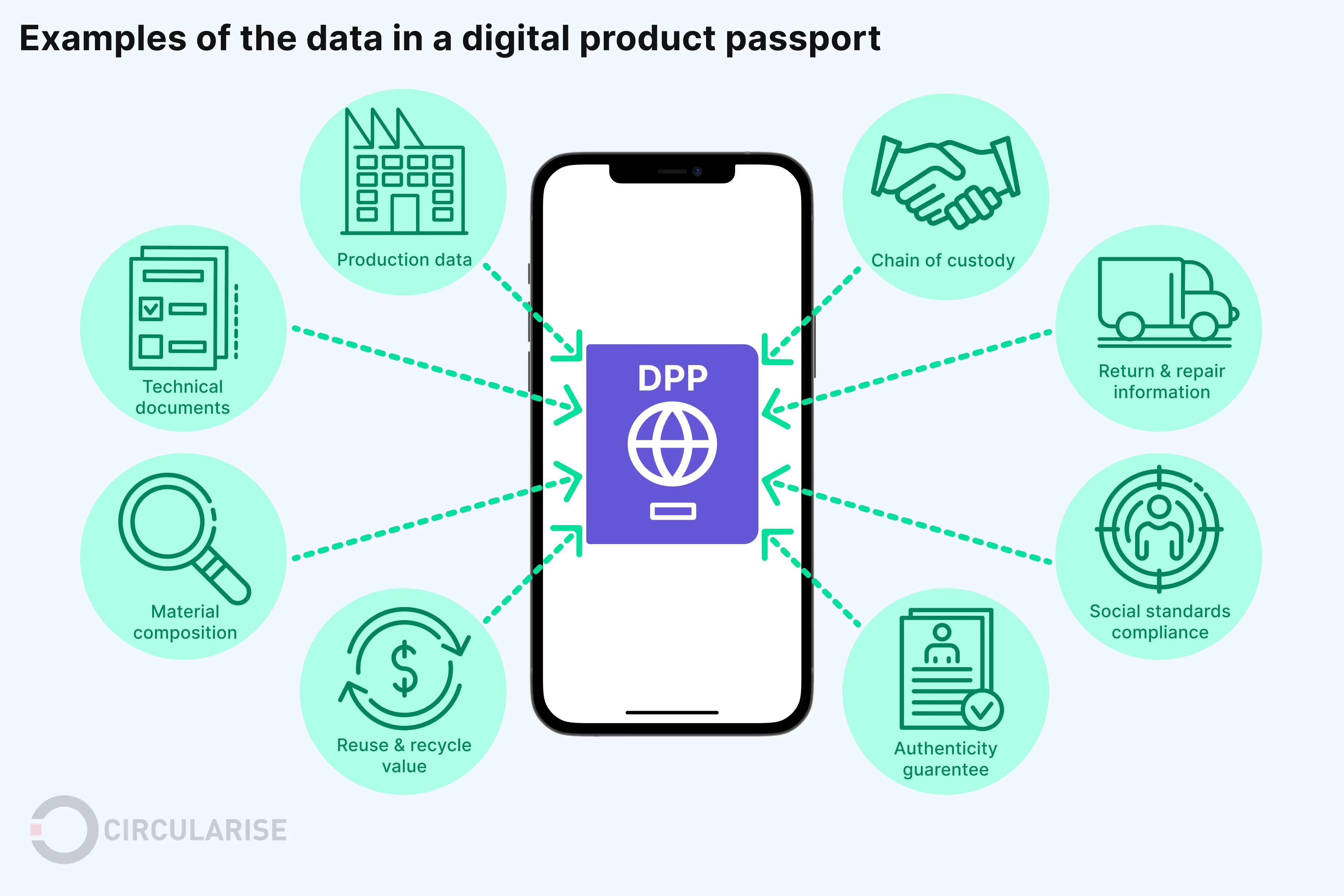
Digital product passports are intended to store and share information about a product: what it is made of, how it was produced and how it has been handled over time.
This asymmetry raises an important question: are transparency requirements becoming a barrier rather than an enabler of circularity?
When transparency becomes the wrong bottleneck
While many assume that a lack of information hinders circularity, it does not, in itself, repair products, remanufacture components or recover materials at scale.
In many sectors, the binding constraints are physical and operational, with circular value chains worldwide facing:
- Limited repair and remanufacturing infrastructure.
- Shortages of trained technicians.
- Inconsistent access to affordable spare parts.
- Insufficient volumes of high-quality secondary materials.
- Fragmented collection and reverse-logistics network.
Focusing too heavily on perfecting product-level data systems risks diverting attention and investment away from the infrastructure that actually makes circular systems work: workshops, tooling, training and regional capacity.
The real question is when we need data
This is an argument for proportionality rather than against transparency. There are differing information needs depending on the function, e.g., for repair, recycling, as a consumer or as a component. We should, therefore, be asking: under which operational circumstances does what level of transparency unlock circular outcomes?”
Based on real-world operations, five recurring situations provide the answer.
A 5-point transparency framework for circular products
1. When liability changes hands, full transparency matters
When an aircraft component is refurbished or a medical device remanufactured, liability transfers between parties. The audit trail for compliance is an operational necessity given the severity of the consequences.
The digital product passport creates an unbroken chain of accountability, reducing risk and enabling root-cause analysis, allowing original equipment manufacturers to engage third-party partners in circular strategies without opening up unmanageable liability exposure.
2. When networks need to coordinate, status matters more than history
When a product enters a repair network spanning multiple regional facilities, the key questions are practical: where is there capacity, who has the right parts and should this unit be repaired, refurbished or harvested for components? In these cases, complete material history is less important than operational status and routing intelligence.
The right level of transparency allows regional networks to act as coordinated systems rather than isolated facilities, ensuring products flow to where they can generate the highest value.
3. When repair expertise varies, targeted information unlocks speed
In some repair environments, information already travels with the product. A small physical marker on a component may tell an experienced technician how many repair cycles it has undergone – no digital system required.
As circular systems scale, however, targeted information such as repair history, common failure modes or replaced parts can significantly accelerate diagnosis and reduce errors. Repair becomes economically viable at scale when technicians have decision-relevant information, not exhaustive documentation.
4. When end-of-life decisions depend on materials, composition is key
For recyclers and material recovery facilities, how a product was used matters far less than what it is made of. Mixed electronics or textiles are difficult to process when the material composition is unknown or unreliable.
Accurate, accessible composition data reduces uncertainty, improves processing efficiency, and enables recyclers to enter into volume contracts. Individual product histories are unnecessary; material truth is what matters.
5. When speed and volume dominate, tracking can destroy value
High-volume, low-value product flows, such as fast consumer returns, move too quickly for item-level tracking to make sense. When the cost of documentation exceeds the value it creates, aggregate data is sufficient: return volumes, failure categories and trend signals.
In these circumstances, attempting full traceability slows operations and diverts resources away from building the repair infrastructure and workforce needed to sustain circular flows.
From data frameworks to circular infrastructure
Taken together, these five situations form a simple framework: match transparency to the decision it is meant to enable.
Full digital product passports are critical where liability, safety and compliance demand them. Lighter-touch data sharing works better where coordination and routing are the real challenges. Material information is essential at the end of a product’s life. In high-velocity systems, restricting information creates more value than documenting it.
There is no one-size-fits-all solution and that is precisely the point. Circularity will not be unlocked by information alone but the data is a key enabler for decision-making and implementation.
The guiding question for policymakers, companies and investors should therefore be simple: will this information change an operational decision? If yes, invest in transparency. If the answer is uncertain, invest in the systems that enable circular decision-making in the first place.
Don't miss any update on this topic
Create a free account and access your personalized content collection with our latest publications and analyses.
License and Republishing
World Economic Forum articles may be republished in accordance with the Creative Commons Attribution-NonCommercial-NoDerivatives 4.0 International Public License, and in accordance with our Terms of Use.
The views expressed in this article are those of the author alone and not the World Economic Forum.
Stay up to date:
Circular Economy


Forum Stories newsletter
Bringing you weekly curated insights and analysis on the global issues that matter.
More on Circular EconomySee all

Yun B. Choi and Kijune Kim
January 7, 2026