Another conflict, another reminder of the fragility of the world’s food supply
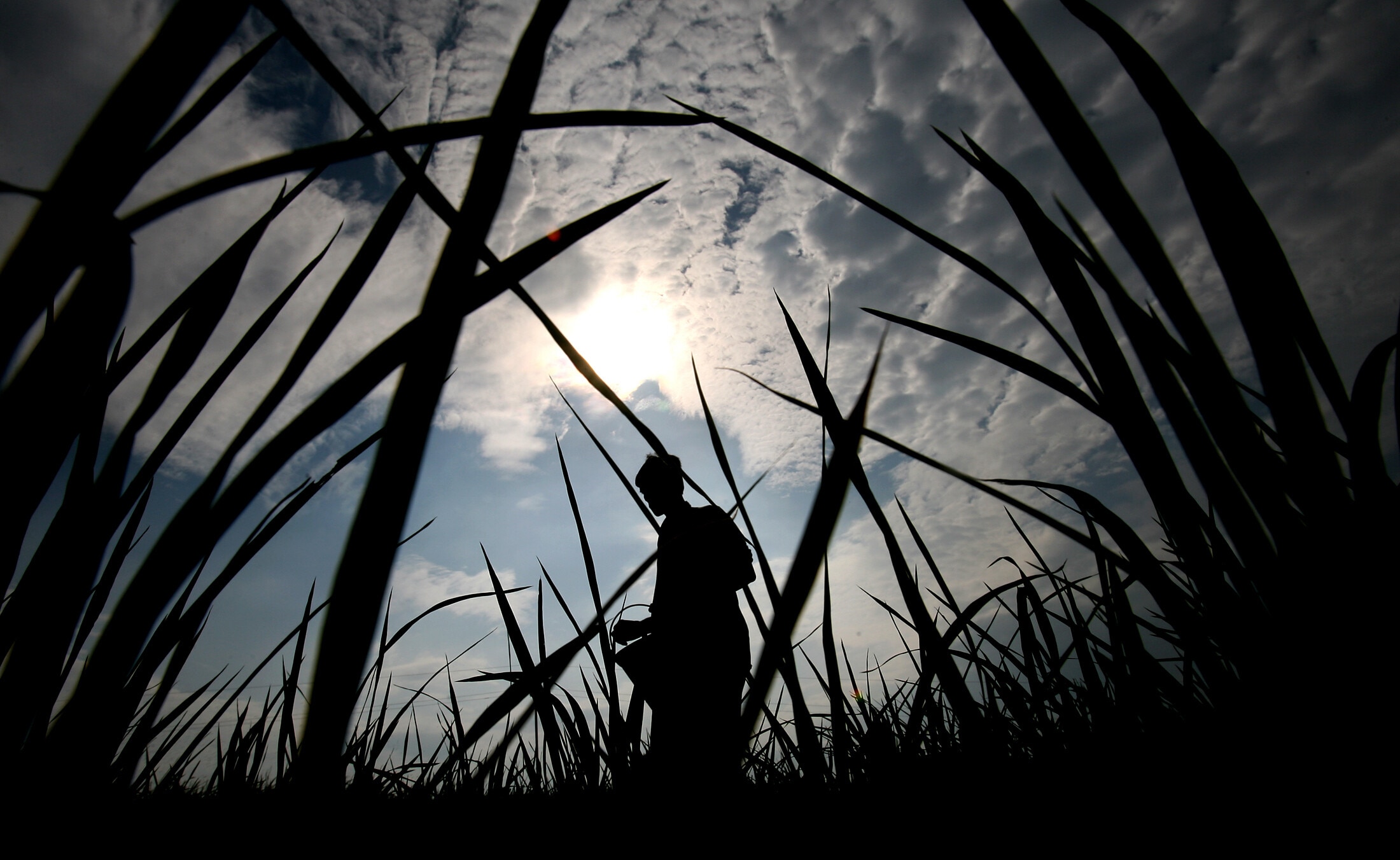
A farmer sprinkles urea on his field. Supply shocks like the current conflict in the Middle East expose the fragility of fertilizer supply. Image: REUTERS/Adnan Abidi
- The conflict in the Middle East has delivered another reminder that basic supplies needed to keep the world fed are remarkably vulnerable.
- Continued disruption to fertilizer exports from the region risks higher food prices and even hunger. Will any lessons from the latest supply panic stick?
The average person naturally produces at least 26 grammes every day, yet we often don’t have enough of it. Describing urea can feel like composing a Zen koan.
As a means to keep much of the world fed, urea’s value is not abstract. It’s a byproduct of protein digestion, but also something long manufactured in labs and on factory floors – mostly as fertilizer to be sprinkled onto fields in the form of white, odourless pellets.
The many people who rely on urea don’t tend to think about where it comes from. Until they have to.
Much of the world’s supply normally flows through the Strait of Hormuz, a vital trade artery recently emptied out by the conflict shaking the Middle East. India buys more than 40% of its urea from the region, and is now keeping a close eye on its stockpiles. Australia depends on the UAE, Qatar, and Saudi Arabia for more than half of its urea. Those three countries are also among the top suppliers to the US; soon after the war began, prices for urea arriving via New Orleans jumped 17%. The cost of a binding contract to buy it at a future date has increased by 35% in the past two weeks.
It’s not just shipping that’s been disrupted. Qatar was forced to halt production at one of the world’s biggest urea plants last week, in the midst of what is planting season in much of the world. As of 2022, Qatar’s exports of synthetic nitrogen fertilizers including urea were keeping nearly 43 million people fed in the US, Brazil, and India alone, according to Lorenzo Rosa, a principal investigator at the Carnegie Institution for Science.
This is yet another clarifying moment, Rosa said, with echoes of the fertilizer supply shock triggered by Russia’s invasion of Ukraine four years ago. “Honestly, I think it's worse,” he said of the current situation. It’s difficult to predict how things will unfold, but safe to say that prolonged shortages and higher food prices could have dramatic results.
There’s a simple reason why so much fertilizer comes from one part of the world, according to Rosa: “Cheap, abundant natural gas.”
Urea may be a natural byproduct, but it accumulates in the wrong places, like cities. In any case, it’s insufficient for the global population. “We need synthetic fertilizer production to feed 8 billion people,” Rosa said. The method for doing that dates back more than a century.
The Haber-Bosch process earned a Nobel Prize in 1918, but didn’t really come into widespread use until a couple of decades later. It’s an energy-intensive way of using a fossil fuel like natural gas to synthesize ammonia, which can then be used to make fertilizers like urea – pellets packed with nitrogen that are often churned out in the Middle East, loaded onto ships, and sailed through a narrow, 33-kilometre-wide strait before being spread on rice paddies in Asia or injected into Iowa cornfields.
Rosa acknowledged the irony in relying on innovation from an era when more people travelled by horse than car to underpin our food supply. The geographical mismatch it’s helped to create between manufacturing and demand makes for striking vulnerability – and times like this call the entire system into question, he said.
Oil disruption and rising gas prices may have captured much of the war-related media attention so far, but fertilizer is in many ways at least as vital. Even people with electric cars need to eat.
Fertilizer access has always been a non-negotiable.
Russia’s war waged on Ukraine hasn’t stopped the US and the European Union from buying large amounts of Russian urea, even as they hit the country’s other products with sanctions. Urea has also been carved out of tariffs imposed by the US.
China, traditionally one of the world’s biggest suppliers, banned urea exports in 2024 to steady prices for local farmers and bolster its own food security. When that contributed to shortages in India, there were protests. False rumours of a shipment’s arrival by truck in Telangana reportedly sent farmers scurrying in vain.
Australia, Indonesia, and South Korea have all endured their own urea shortages in recent years.
A German chemist’s discovery in 1828 that urea could be cooked up in a lab actually marked a major turning point for science. It was the end of the era of vitalism – the belief that something organic couldn’t be artificially reproduced.
Most urea is now made far from Germany, because natural gas has become so expensive in much of Europe. Instead, the bulk comes not just from the Middle East but also other fossil fuel-endowed places like Canada and the US.
That imbalance has spurred efforts to create a fertilizer system more sustainable in terms of both access and climate impact.
Rosa said decentralized production that deploys “Haber-Bosch 2.0,” a revamped ammonia-making process that can use renewable energy in place of natural gas, tends to draw more interest during periods of supply shock. This one probably won’t be any different, he said.
When the US passed the Inflation Reduction Act in 2022, the tax credits and subsidies it made available suddenly made the economics of distributed green fertilizer production work – in a country where facilities have been historically clustered around natural gas resources. That is, until the legislation was later sledgehammered. “A lot of projects were popping up,” Rosa said, “and now they are all basically stopped.”
But other countries, motivated by the ugly price spikes for fertilizer and food experienced when shipments have dried up in the past, have made real progress on 21st-century versions of production. India, which has blown past its own renewable energy targets, has made significant policy changes that could deploy that relatively cheap energy to make more green fertilizer locally. Brazil is ramping up its own related efforts.
In some ways, it’s nothing new.
In its earliest days, Rosa said, the Haber-Bosch process was put to work in Norway, where a power station opened in 1911 was turning out fertilizer made with abundant local hydropower. In the 1980s, as natural-gas fuelled production ramped up elsewhere, the Norwegian station was partly converted into a museum.
“It’s like cars, in the beginning they were electric,” Rosa said, referring to the earliest, battery-powered automobiles. “Then they went to gas power.”
It’s only when supply chains break that the easiest, cheapest ways of making and acquiring things suddenly become inconvenient enough to prompt a rethink.
There have been recent signs of a desire to dial down the conflict in the Middle East before lasting damage is done to global food security. Whenever it may end, it’s unclear how long the lessons imparted by this latest fertilizer scare will endure.
Don't miss any update on this topic
Create a free account and access your personalized content collection with our latest publications and analyses.
License and Republishing
World Economic Forum articles may be republished in accordance with the Creative Commons Attribution-NonCommercial-NoDerivatives 4.0 International Public License, and in accordance with our Terms of Use.
The views expressed in this article are those of the author alone and not the World Economic Forum.
Related topics:

Forum Stories newsletter
Bringing you weekly curated insights and analysis on the global issues that matter.
More on Geo-Economics and PoliticsSee all

Samaila Zubairu
March 3, 2026


