How buildings can start solving energy security as power demands surge
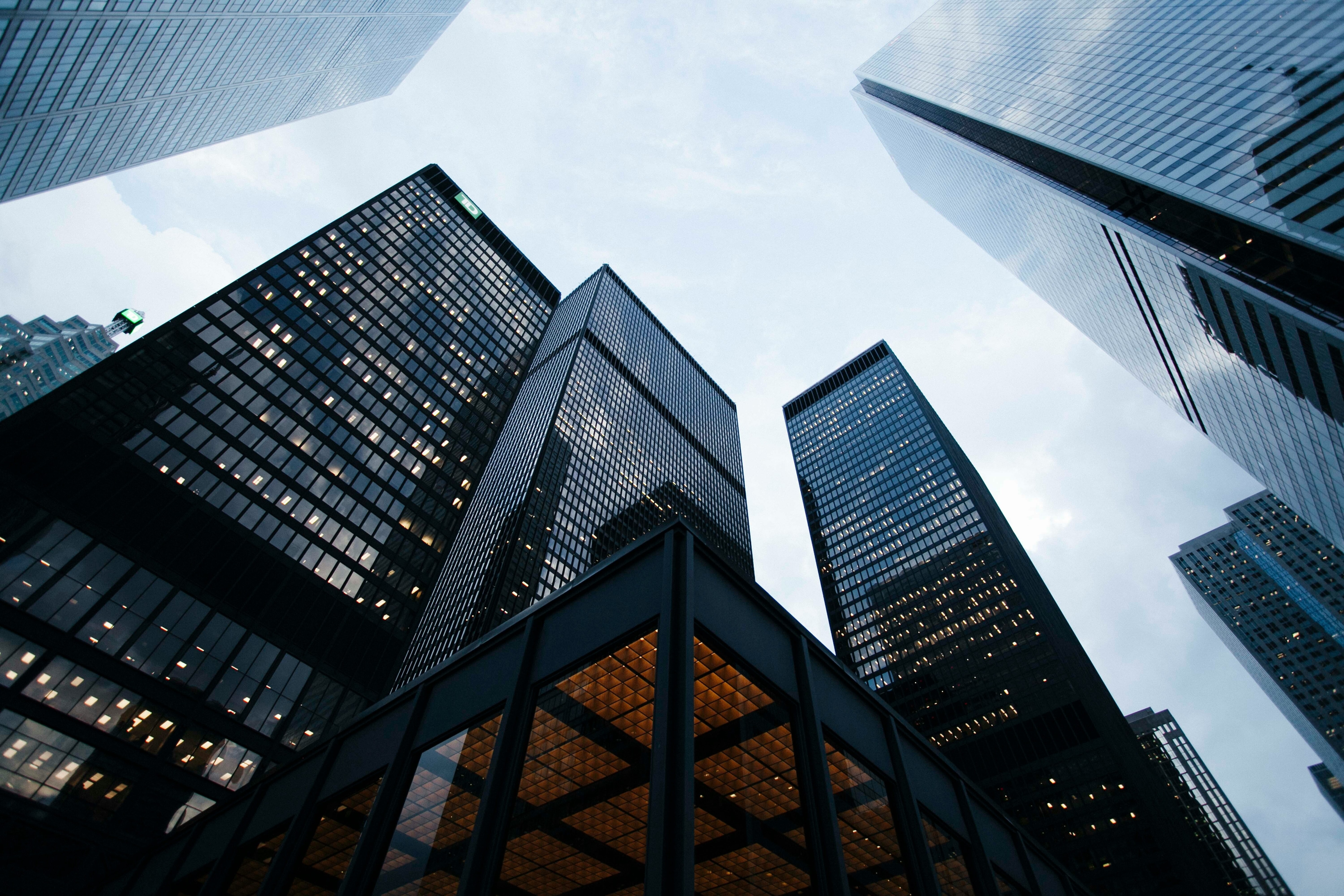
Efficiency retrofits help improve energy security for businesses in the long term Image: Unsplash/Sean Pollock
- The traditional role of buildings as energy consumers is changing amid rising supply disruptions, surging demand, and more volatile pricing.
- Retrofitting measures and artificial intelligence-driven building management systems can improve energy efficiency and lead to significant cost savings while supporting longer-term resilience.
- Distributed energy technologies, such as on-site solar, battery storage and microgrids, enable buildings to improve resilience, reduce costs and even supply power back to the grid.
Energy security and its implications for business as usual have landed at the feet of executives. The energy distribution model spanning the built environment for more than a century is breaking down.
Traditionally, energy has flowed in one set direction – from power plants through transmission lines to the buildings where we work and live. Within this linear model, commercial and residential buildings are largely passive energy consumers, quietly drawing power and paying bills to keep the lights on.
That era is ending. Cracks are appearing in energy systems worldwide and in some places, the lights are literally starting to flicker. After decades of relative stability, energy demand is now soaring at an unprecedented pace as more power-hungry data centres come online and manufacturing becomes increasingly automated and electricity-intensive.
Energy upheaval is a growing business challenge, as power volatility introduces new risks to operations and budgets.
”Growing energy appetite
Electrification is transforming everything from delivery trucks to building operations. Take electric vehicle (EV) charging: as logistics fleets go electric and more EVs charge out-of-home, unmanaged charging infrastructure can more than triple a site's peak power demand.
Energy infrastructure built for yesterday's lighter loads is buckling under this pressure. Upgrading transmission lines and expanding utility-scale grid capacity requires significant investment while facing multi-year equipment delays that have become the norm rather than the exception across major markets.
Meanwhile, clean energy is rolling out at a record pace, with lower costs and faster deployment times driving uptake even as political support wavers in some regions. However, this buildout varies geographically, creating fundamental mismatches between where new renewable power comes online and where electricity demand is highest.
The result: a more volatile and expensive energy landscape. Electricity prices across major economies have surged in recent years, ending a long period of relative predictability that many businesses had come to rely on.
JLL research highlights that across six major markets, industrial power prices rose by approximately 18% between 2019 and 2024, compared with just 4% growth in the preceding five-year period.
Real estate feels the strain
This energy upheaval is a growing business challenge, as power volatility introduces new risks to operations and budgets, especially for mission-critical facilities such as research laboratories, manufacturing plants and data centres. According to Prologis' 2026 Supply Chain Outlook, nearly 90% of companies experienced some form of energy disruption in the past year.
Against this backdrop, many organizations are fundamentally rethinking their energy strategies across their real estate portfolios. As reliable, clean and affordable power becomes a business imperative, they’re asking how they can better manage volatile energy costs in the short-term and improve their energy security in the longer-term.
One key step in any plan is to reduce energy use through measures such as retrofitting. With energy accounting for roughly one-third of operating costs, JLL research estimates that light-to-medium retrofits can achieve 10-40% energy savings, with artificial intelligence solutions offering even greater savings.
In a world where energy security can no longer be taken for granted, the coming years will see the emergence of a fundamentally different relationship between real estate and energy.
”Restoring energy back
However, true energy resilience requires a more fundamental rethinking of how buildings relate to power systems.
The solution involves flipping the traditional energy model on its head. Instead of buildings passively consuming energy from distant sources, they're actively participating in generating, storing and managing power much closer to where it's used.
Distributed energy technologies are making this transformation possible. On-site solar panels, sophisticated battery storage systems and building-scale microgrids are addressing reliability and cost volatility at the point of greatest stress.
As technology advances rapidly and costs continue to fall, these decentralized resources can maintain critical operations during grid outages, smooth the intermittency of renewable power and even provide energy back to the broader grid when needed.
The shift is already happening
Recent projects are already demonstrating this shift. The new Terminal One at New York's John F. Kennedy International Airport is implementing one of the largest airport microgrids in the country, combining solar generation with advanced storage systems.
In California, Valley Children's Healthcare is deploying one of the most sophisticated hospital microgrids to ensure clean, resilient power for life-critical medical operations.
Furthermore, as buildings get smarter, modern energy management platforms now integrate on-site generation, battery storage, building systems and EV charging infrastructure into a single intelligent control layer.
This allows facility operators to manage peak demand, shift loads to off-peak hours and prioritize lower-cost or lower-carbon power sources by the hour and by location, optimizing the entire energy system rather than managing components in isolation.
Addressing energy anxiety
In a world where energy security can no longer be taken for granted, the coming years will see the emergence of a fundamentally different relationship between real estate and energy.
According to Prologis, nine in 10 of survey respondents indicate they would pay a premium for sites with reliable energy infrastructure. Energy-efficient, electrified buildings powered by clean and reliable energy that offer improved operating performance are increasingly viewed as sources of competitive advantage.
It’s already a reality for the advanced manufacturing industry. In the key Silicon Valley market, our research reveals that buildings with high-power capabilities are commanding 49% higher rents on average compared to other leases signed in the past three years. Even against brand-new buildings i.e. those delivered within the last three years, high-power spaces still pull in 33% more rent.
In comparison, new construction alone has delivered an average rent premium of just 11% over the rest of the market.
The built environment is no longer at the edge of the energy transition but at the very centre. Buildings are one of the most flexible and underused tools we have for fixing energy challenges. Through retrofitting and resilience measures that are implementable today, we can create the energy security that modern businesses need.
Don't miss any update on this topic
Create a free account and access your personalized content collection with our latest publications and analyses.
License and Republishing
World Economic Forum articles may be republished in accordance with the Creative Commons Attribution-NonCommercial-NoDerivatives 4.0 International Public License, and in accordance with our Terms of Use.
The views expressed in this article are those of the author alone and not the World Economic Forum.
Stay up to date:
Buildings
Related topics:


Forum Stories newsletter
Bringing you weekly curated insights and analysis on the global issues that matter.
More on Built Environment and InfrastructureSee all

Jeff Merritt and Vivian Brady-Phillips
February 27, 2026


