3 lessons on the energy transition in an age of crisis
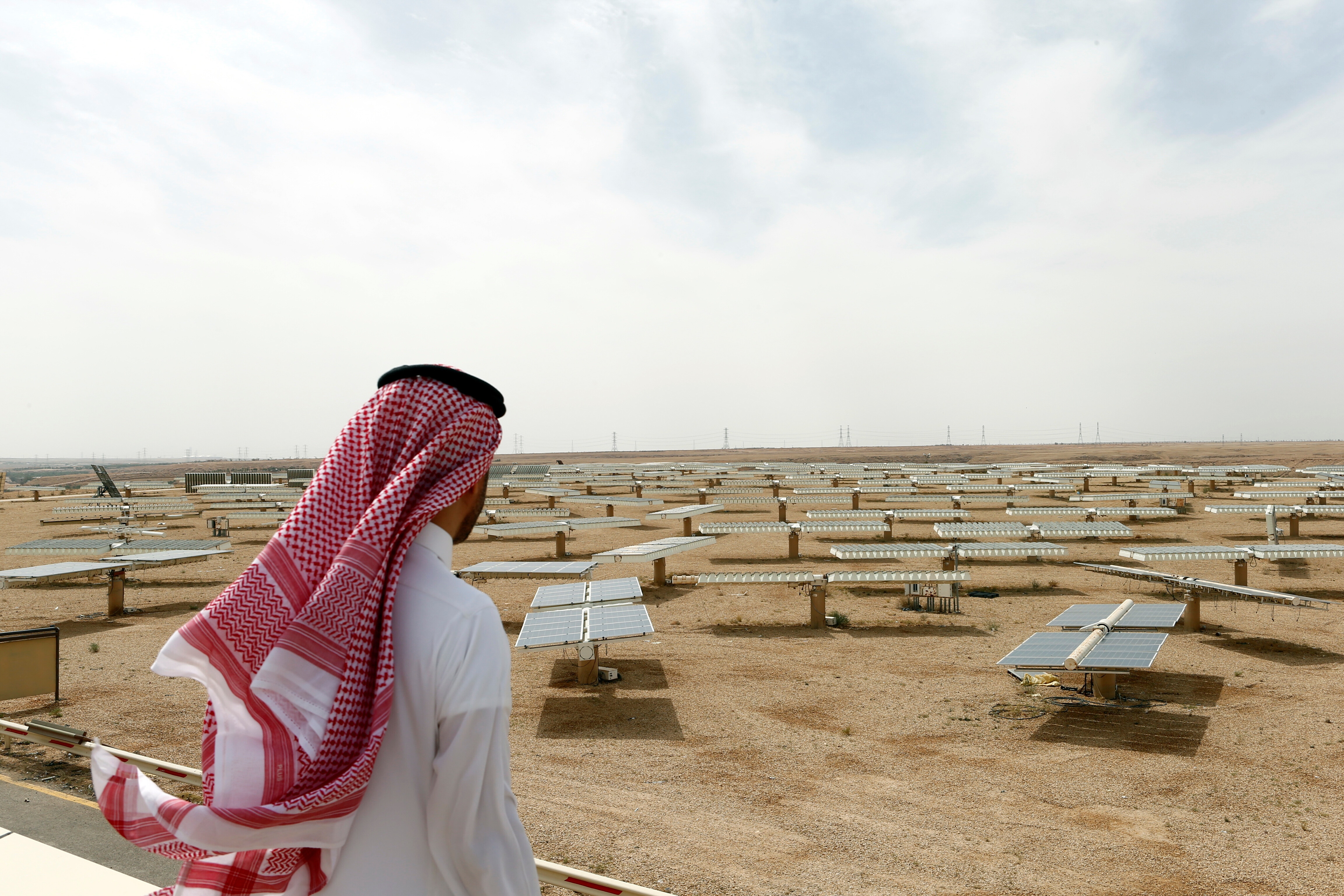
COVID-19, Russia's invasion of Ukraine and the war in the Middle East has stress-tested the global energy system. Image: REUTERS/Faisal Al Nasser
- Numerous crises have revealed how the global energy system is impacted by geopolitical shocks and fragmentation.
- These shocks do not signal a failure of the energy transition, but rather highlight the need to confront its fundamental constraints and manage them effectively.
- The challenge now is to design energy systems that are resilient to shocks and aligned with regional realities.
In early 2022, Jason Bordoff and Meghan O’Sullivan cautioned in a Foreign Affairs article titled ‘Green Upheaval’ that “talk of a smooth transition to clean energy is fanciful,” adding that “the process will be messy at best”.
Four years and three crises later – COVID-19, Russia’s invasion of Ukraine and the current war in the Middle East – and that warning reads less like foresight and more like a diagnosis. Each crisis has stress-tested the global energy system and revealed a central truth: the energy transition is not unfolding in a vacuum of climate ambition, but in a world shaped by geopolitical shocks, economic fragmentation and competing national priorities.
Beyond immediate price pressures, recent crises have exposed a deeper structural challenge: the risk that the energy transition exacerbates existing inequalities, both within and between countries.
Higher energy costs disproportionately affect lower-income households, while fiscal responses to shield consumers vary widely across regions. At the global level, developing economies – already facing constrained fiscal space – are being asked to accelerate their transition while expanding energy access and supporting economic growth.
These shocks do not signal a failure of the energy transition, but rather highlight the need to confront its fundamental constraints and manage them more effectively.
Energy security and affordability key to fighting climate change
The first and defining lesson of recent years is that climate ambition cannot be sustained without addressing energy security and affordability.
COVID-19 exposed the fragility of investment cycles and supply-demand balances. In 2022, the war in Ukraine triggered a full-scale energy security crisis, particularly in Europe, driving unprecedented natural gas price spikes. The war in the Middle East continues to reinforce the geopolitical premium embedded in global energy markets.
The World Economic Forum’s Fostering Effective Energy Transition 2024 report reflected this shift: countries that maintained balanced progress across the energy trilemma – security, affordability and sustainability – proved the most resilient.
Where this balance broke down, political consensus quickly faltered. Several European countries temporarily reverted to coal to safeguard supply, governments expanded fossil fuel subsidies to cushion price shocks, and public resistance to rising transition costs intensified.
As Bordoff and O’Sullivan anticipated, if climate policies are perceived to undermine reliability or affordability, “the transition will slow”.
One systemic transition narrative, multiple realities
If the eras of Paris Agreement, the Glasgow Climate Pact and the UAE Consensus were defined by convergence, the current phase of the energy transition is marked by growing divergence. The ongoing crisis in the Middle East already shows differentiated market impacts, with broader global consequences likely if tensions persist.
Regional gas price benchmarks illustrate this clearly. US Henry Hub prices have fallen back below $3/MMBtu, while European and Asian benchmarks remain structurally elevated at $18-20/MMBtu – underscoring that today’s energy crisis is not global, but profoundly regional.
Over the past year, gas markets have shifted from relative convergence to renewed divergence. In mid-2025, price spreads were comparatively tight, but the winter of 2025/26 triggered a sharp divergence, with Europe and Asia experiencing significant price spikes while US prices remained more moderate.
This reflects a persistent structural gap: the United States benefits from domestic supply advantages, while Europe and Asia remain more exposed to external shocks, with Asia typically sustaining a premium.
These dynamics illustrate a layering of crises with gradual market tightening through 2025 following post-COVID normalization giving way to a winter surge driven by security concerns, weather conditions and geopolitics – followed by only a partial correction that has not restored convergence.
This divergence reflects deeper structural differences in resource endowment, market design, system resilience and geopolitical exposure.
From global supply chains to strategic control
The third lesson is perhaps the most consequential: the energy transition is not only transforming energy systems, but reshaping globalization itself. COVID-19 exposed the fragility of highly optimized supply chains, and successive crises have accelerated a shift from efficiency towards resilience and, increasingly, strategic control.
The transition depends on complex global value chains, spanning critical minerals – such as lithium, cobalt and rare earths – but also new technologies. As the ‘Green Upheaval’ article in Foreign Affairs underscored, control over these supply chains is becoming a new source of geopolitical power, with China holding a dominant position across both mining and processing.
In response, governments are acting with growing urgency. The US and the European Union are deploying industrial policy at scale, while “friend-shoring” and “de-risking” strategies are gaining traction alongside efforts to secure access to key resources through stockpiling and bilateral partnerships.
Yet this shift introduces a fundamental tension. The energy transition requires global scale, open markets and deep interconnection, but geopolitical realities are pushing in the opposite direction, towards regionalization and fragmentation. What is emerging is not necessarily a full retreat from globalization, but a more managed form of interdependence, where resilience and security increasingly outweigh efficiency.
From crisis mode to strategic realignment
The three crises mentioned have not derailed the energy transition, but they have fundamentally reshaped it. What was once conceived as a linear, globally coordinated shift is now unfolding as a fragmented, crisis-driven transformation defined by trade-offs, divergence and strategic competition. As Bordoff and O’Sullivan warned, the energy transition will not eliminate geopolitics; it will redefine it.
The challenge ahead is not only to accelerate the transition, but to manage its inherent instability: to design energy systems that are not only clean, but resilient to shocks, aligned with regional realities and capable of sustaining public support.
Critically, this also requires ensuring that the costs and benefits of the transition are distributed more equitably, both within and across countries, as perceptions of unfairness will continue to risk undermining its political and social viability.
Without this, the greatest risk is not that the energy transition becomes more complex, but that it slows or stalls altogether.
Don't miss any update on this topic
Create a free account and access your personalized content collection with our latest publications and analyses.
License and Republishing
World Economic Forum articles may be republished in accordance with the Creative Commons Attribution-NonCommercial-NoDerivatives 4.0 International Public License, and in accordance with our Terms of Use.
The views expressed in this article are those of the author alone and not the World Economic Forum.
Stay up to date:
Energy Transition
Related topics:


Forum Stories newsletter
Bringing you weekly curated insights and analysis on the global issues that matter.
More on Energy TransitionSee all

Ifeanyi Chukwudi
April 3, 2026


