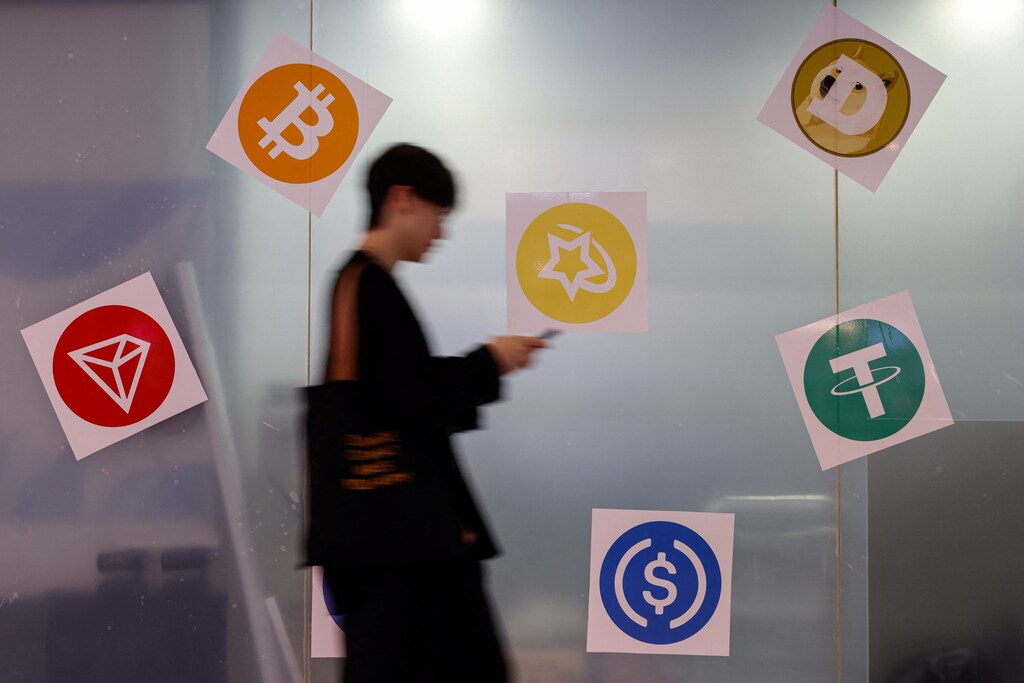
Digital assets such as cryptocurrencies are becoming increasingly commonplace, making them one of the fastest-growing asset classes.
Retail transactions using digital assets rose by over 125% between January and September 2025, compared to the same period in 2024.
Open and informed conversations about digital assets can help improve public understanding, reduce misinformation and empower people to make better financial decisions.
April is Financial Literacy Month in many parts of the world, and serves as a reminder that understanding money today means understanding where finance is going.
Digital assets such as cryptocurrencies are one of the fastest-growing asset classes; related global retail transactions increased by more than 125% between January and September 2025 compared with the same period in 2024.
Institutional actors are also accelerating their involvement. As regulatory clarity improves worldwide, major financial organizations are adopting blockchain technology, moving real-world assets onchain, and settling transactions using digital currency.
What you need to know about digital assets
Despite the World Economic Forum’s 2024 Global Retail Investor Outlook showing that individual investors feel more confident understanding cryptocurrencies than stocks and bonds, it remains critical to encourage open conversations about digital assets and personal finance, especially related to aspects of the asset class that are often misunderstood or overlooked.
Here are five things you need to know before interacting with digital assets.
1. Digital assets are not limited to just cryptocurrencies
While cryptocurrencies like bitcoin and ether may dominate headlines, they represent only a fraction of the total number of digital assets in existence. These are some of the many digital assets available:
Tokenized real-world assets: digital tokens that represent legal or economic claims on real-world assets (such as real estate, bonds, or bank deposits) on a blockchain. Examples: tokenized bonds, JPM Coin, Pax Gold
Cryptocurrencies: tokens that serve as money-like instruments, including as a medium of exchange, store of value, or unit of account. To date, however, much of their usage has been driven by speculative trading. Examples: Bitcoin, Ether, Dogecoin
Stablecoins: a type of cryptocurrency pegged to the value of a reference asset, typically a fiat currency (most commonly the US dollar). Examples: USDC, USDT
Utility tokens: a type of cryptocurrency designed to grant users access to a specific product or service within an onchain ecosystem, such as a decentralized application (dApp) or video game – typically used to pay for services, unlock features, or participate in activities within the platform. Examples: Filecoin, Chainlink
Non-fungible tokens (NFTs): unique digital tokens stored on a blockchain that represent ownership of a specific digital or physical asset. Examples: Bored Ape Yacht Club, NBA Top Shot
2. Digital assets derive their underlying value from a variety of sources
Some digital assets are backed by a real-world asset. For example, stablecoins are typically backed by reserves such as short-term US treasuries and cash. Tokenized assets are designed to track the market price of their underlying asset.
Some digital assets do not have a real-world backing. Tokens that are limited in supply may derive value from their programmed scarcity. Cryptocurrencies with uncapped supply, however, often derive their value from market demand and community sentiment, making their price movements less predictable.
Notably, cryptocurrencies without underlying real-world backing account for the vast majority (approximately 88%) of the digital asset market.

3. Digital assets are volatile, but the volatility is becoming increasingly structural
Despite various arguments positioning cryptocurrencies as a hedge against inflation and a method of diversifying away from equities, evidence suggests otherwise. A 2023 International Monetary Fund (IMF) report found that cryptocurrency prices are highly correlated. In fact, the authors conclude that 80% of the fluctuations in crypto prices can be attributed to a single unifying trend (“crypto factor”), whether it be a significant slump or boom.
By comparison, only about 20% of movements in global equity prices can be explained by a similarly measured single trend. This suggests that cryptocurrency markets tend to move more synchronously than equities, potentially contributing to more pronounced market-wide swings.
Indeed, cryptocurrencies remain significantly more volatile than equity markets. Although bitcoin’s volatility has declined over time, its rolling volatility of daily returns is still approximately twice that of the Nasdaq-100.
The IMF report further finds that cryptocurrencies and equities have become increasingly correlated, particularly after 2020. This can be attributed to the growing participation of institutional crypto investors who are also heavily exposed to equities, increasing the linkage between the two markets.
Furthermore, both cryptocurrencies and equities are impacted by US monetary policy. For example, monetary tightening by the US Federal Reserve is correlated with a decline in both the cryptocurrency and equity markets.
4. Digital assets rely on various infrastructures, and it is important to understand the difference
Digital assets can be listed on various platforms, each containing their own fee structures and custody methods. A user’s choice of platform affects fees, access to assets and the degree of control they retain over their holdings.
Centralized exchange: a trading platform hosted by a single company. The platform typically holds custody of users’ assets, allowing them to access their accounts with a username and password. Centralized exchanges are also connected to banking systems, allowing users to exchange fiat currency for cryptocurrencies directly on the platform. Centralized exchanges typically charge users a fee to conduct transactions. Examples: Coinbase, Binance
Decentralized exchange: a trading platform that allows users to exchange digital assets directly from their own wallets using smart contracts. Users maintain control of their assets and are responsible for safeguarding their private keys. Most decentralized exchanges do not offer direct fiat-to-crypto transactions. Decentralized exchanges may charge a small fee to conduct transactions, depending on the underlying blockchain protocol employed. Examples: Uniswap, PancakeSwap
5. Digital assets introduce the risk of fraud and scams, but this risk can be mitigated through literacy and due diligence
Significant incidents involving primarily cryptocurrencies, such as FTX, Terra Luna, and various rug-pull scams involving celebrities, have tarnished the reputation of digital assets among individual users.
Frauds may involve excessive promotion on social media for unbacked assets (for example, Squid Game Token), unclear developer organizational structures (for example, OneCoin) or corporate fraud or mismanagement (for example, FTX), among others. However, certain features of blockchain technology, such as publicly verifiable ledgers, can mitigate some of these risks by enabling traceability of funds and continuous auditability.
Various government agencies offer resources on how to avoid scams involving digital assets, including the US Federal Trade Commission, the EU Securities and Markets Authority, and the Hong Kong Monetary Authority.
Understanding digital assets empowers people to make financial decisions
It is worth reiterating that although cryptocurrencies typically carry the most risk among digital assets, they represent only a small part of the broader ecosystem.
In fact, the application of blockchain technology to traditional finance (for example, tokenization of assets, onchain settlement) offers numerous benefits, including near instant settlement, lower transaction fees, and greater transparency. These use cases carry different risks and should not be conflated with the volatility of crypto markets.
Despite the growing popularity of digital assets, not all types are suitable for certain risk profiles. Furthermore, regulation of digital assets is an ongoing process, and consumer protection is not yet fully guaranteed in some jurisdictions.
As such, it is critical to conduct due diligence on a digital asset and understand one’s local regulatory environment before interacting with digital assets. Open and informed conversations about digital assets can help improve public understanding, reduce misinformation and empower individuals to make better financial decisions.