How war is reshaping the global economy – 4 chief economists explain
- Conflict in the Middle East is exacerbating an already uncertain economic environment.
- Energy, food and financial markets worldwide are being negatively impacted.
- What do leading economists expect and how can businesses navigate an increasingly turbulent landscape?
The ongoing war in the Middle East is rapidly emerging as an unprecedented shock to the global economy, sending tremors through energy markets, supply chains and financial systems already strained by years of volatility.
As governments and businesses scramble to adapt and assess the fallout, the conflict is reshaping economic expectations in ways that could reverberate for years. The impact on inflation and cost of living could impact people everywhere via fuels, food and energy, but also shortages of products that depend on these things.
So, one month into the conflict, how has the global economic outlook changed? And what will be the implications for energy supply, food systems, financial markets and people?
Four leading chief economists examine those questions and provide insights into what's next for the global economy.
Risk of a 'Covid-scale' economic contraction
While humanitarian aspects remain top of mind, economists seem aligned that the nature of the economic fallout of the war in Iran could be "unprecedented".
They agree that much is still unclear and many potential impacts of the crisis are yet to emerge, but suggest the possibility of "covid levels of economic shutdown" in the event of a protracted war.
Oil flows through the Strait of Hormuz have been significantly disrupted, prices have surged and fuel shortages are hitting Asia. They see the severity of the situation likely to crystallize as the crisis spreads from East to West. If it continues longer-term, it could become the largest disruption to the global economy in recent memory, they warn.
“At some point, given the scale of disruption, we’re not just looking at a price impact, it’s that you don’t have the molecules, so that is demand destruction,” Saad Rahim from Trafigura, says. If the current level of disruption continues, he adds, “we are looking at something I don’t think we have seen before.”
'A very vulnerable place': multiplying factors
Chief economists stress that factors could multiply as the situation continues. It is no longer just about the extent of the global energy shock, but also how quickly that could turn into a food shock, and how the physical disruption could affect people globally.
“We’re in a very vulnerable place,” notes Standard Chartered’s Razia Khan. “We could just be one or two shocks away from something even more significant taking place.”
If the conflict and related disruption become more drawn out, it could significantly impact food production towards the end of this year and for 2027, says Maximo Torero from the Food and Agriculture Organization (FAO) of the United Nations.
The impact stems in part from the fact that the Gulf region is central to global fertilizer supply, both as a producer and a key trade route. If a fertilizer shock hits key exporting countries such as Brazil or India, this could lower yields and availability of important crops including wheat and rice. This would impact prices and drive food inflation, which would in turn accelerate overall inflation.
“The situation is very complex, and the impacts in the market could last a year or more until we can resolve the situation,” says Torero.
'A Darwinian moment': resilience is vital
The knock-on effects could touch many other areas of the global economy too, with a level of impact similar to what the world saw during COVID-19, say economists.
Moreover, existing concerns, including those highlighted in the January 2026 Chief Economists’ Outlook like debt crises and an expected decline in AI-related stocks, could be exacerbated. A third of the world’s helium, for example, used in technologies from semiconductors to MRIs is transported through the Strait of Hormuz.
Everything from chemicals to healthcare and construction will be affected, Allianz’s
Ludovic Subran says. “It’s going to be a very Darwinian moment for a lot of sectors.”
So, with the impacts mounting, how should businesses and policymakers respond?
“Resilience has been exposed,” Khan says. Economists agree this could lead to a switch in how countries view longer-term security and increase the focus on resilient supply chains and contingency planning. A need to rely on fewer oil and gas imports could also accelerate sustainable energy investment and the energy transition.
In January, at the launch of the latest Chief Economists’ Outlook, the World Economic Forum’s Saadia Zahidi noted that “governments and companies will have to navigate an uncertain near-term environment with agility while continuing to build resilience and invest in the long-term fundamentals of growth.”
The levels of uncertainty may have multiplied since, but for leading economists, the need to build sound fundamentals endures.
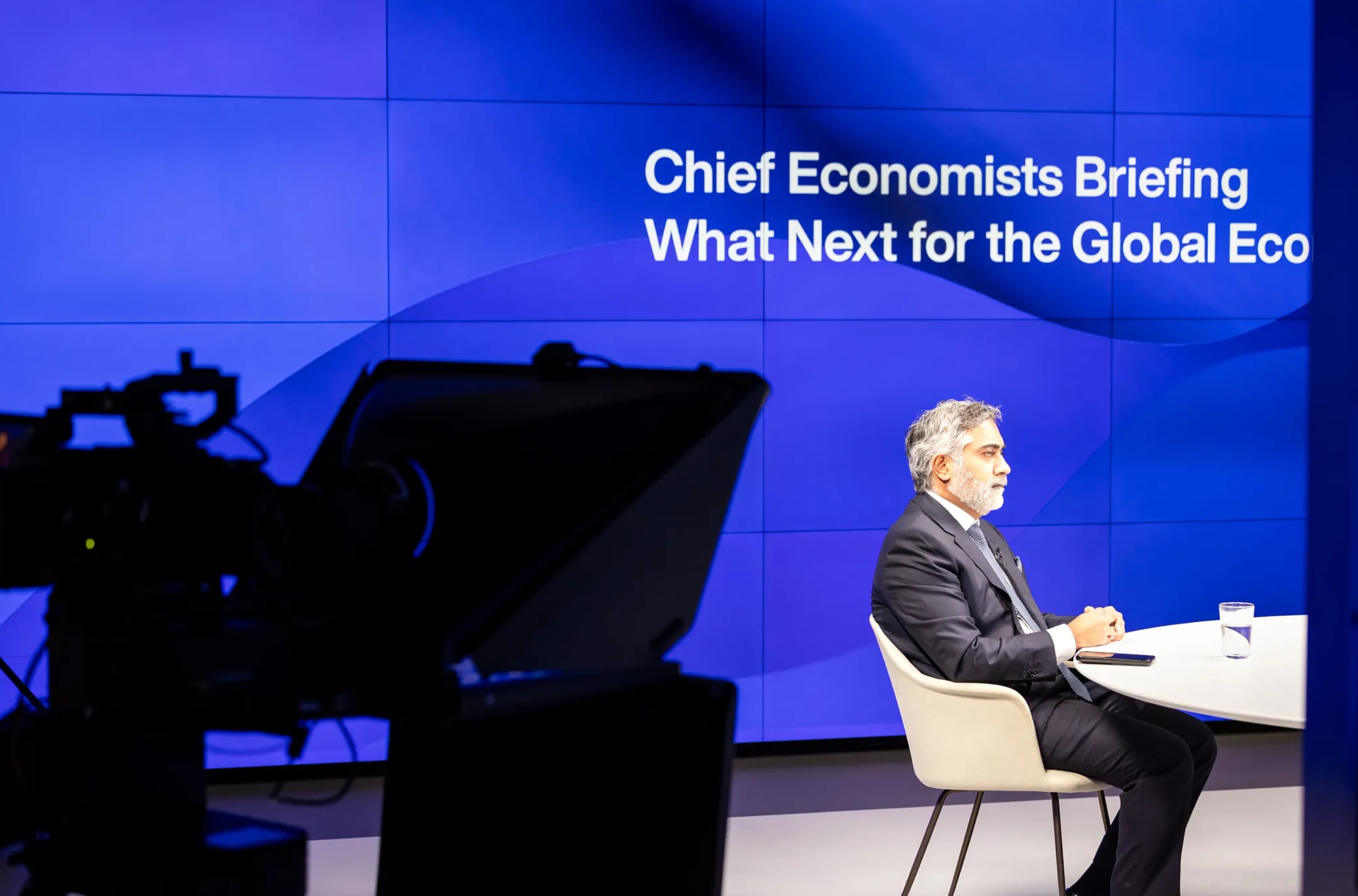
The special briefing was moderated by Forum Managing Director Saadia Zahidi and included Saad Rahim, Chief Economist, Trafigura; Razia Khan, Chief Economist & Head of Research, Middle East & Africa, Standard Chartered Bank; Maximo Torero, Chief Economist, Food and Agriculture Organization (FAO) of the United Nations; and Ludovic Subran, Chief Investment Officer of Allianz.
Don't miss any update on this topic
Create a free account and access your personalized content collection with our latest publications and analyses.
License and Republishing
World Economic Forum articles may be republished in accordance with the Creative Commons Attribution-NonCommercial-NoDerivatives 4.0 International Public License, and in accordance with our Terms of Use.
The views expressed in this article are those of the author alone and not the World Economic Forum.
Stay up to date:
Global Risks


Forum Stories newsletter
Bringing you weekly curated insights and analysis on the global issues that matter.


