Risk management, renewables and a rocky road ahead: IMF-World Bank 2026 Spring Meetings takeaways
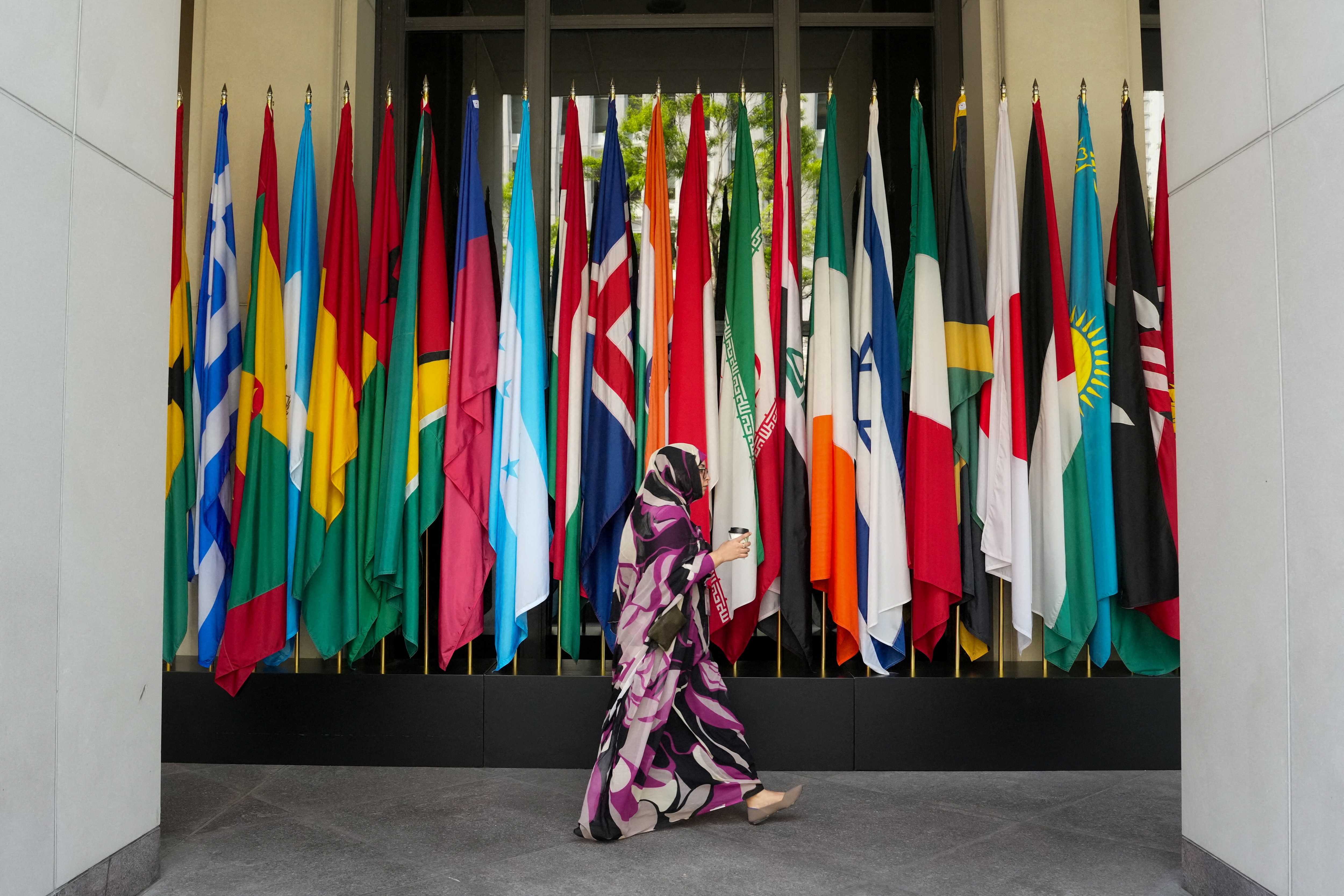
A major topic of conversation at this year's Spring Meetings: The relative speed at which businesses have been able to adapt to risk. Image: REUTERS/Ken Cedeno
Alem Tedeneke
Media Lead, Canada, Latin America and Sustainable Development Goals, World Economic Forum- The gap between how quickly businesses and public institutions have been able to adapt to global risk was a major topic at last week's IMF-World Bank 2026 Spring Meetings.
- Energy and supply chain shocks are exerting particular pressure on low- and middle-income countries.
- With the Middle East crisis reducing their scope to cushion disruption, multilateral institutions will be further tested over the coming months.
Ahead of this year’s IMF-World Bank Spring Meetings in Washington, D.C., a pattern had been emerging. As the fallout from the war in the Middle East moved through energy markets and supply chains, corporate earnings reports signaled that companies were not just absorbing the shock – many were adjusting in real time, rerouting and repricing risk at a speed that would have been difficult to imagine during previous crises.
It raised a question that came up repeatedly at the event. If companies are recalibrating this quickly, what does that mean for the institutions tasked with managing risk at a systemic level, and for the countries that do not have the same room to adapt?
What emerged over the course of the week was the identification of a widening gap between how private actors are able to respond to disruption and how public institutions are being stretched to keep up.
How has the economic discourse changed since 2025?
This year’s meetings felt different from a year ago. In 2025, the main concern was trade fragmentation and the downstream effects of US tariff policy. The global economy had only just begun stabilizing from those pressures when an escalation of conflict in the Middle East introduced a new layer of disruption through energy markets and supply chains.
The mood inside the meetings last week mirrored that uncertainty. Conversations moved from concern over a worsening growth outlook to moments of cautious optimism as conditions appeared to stabilize, only for that optimism to fade again as tensions persisted. It was a microcosm of the broader condition. Disruption is no longer just something to manage around. It is increasingly becoming the baseline.
The IMF’s latest outlook reflects that uncertainty, with global GDP growth this year now expected to slip to a more adverse scenario of about 3.1%. The impacts are unevenly distributed. Higher import costs for fuel, fertilizer and food risk compounding already elevated debt burdens in many low- and middle-income countries. In some cases, households there spend up to two-thirds of their income on food, leaving them particularly exposed to price shocks.
The consequences are already visible at the country level. As Lesotho’s Finance Minister, Adelaide Matlanyane, put it during a panel of African ministers: “For small, open and vulnerable economies like Lesotho, these shocks have presented extraordinary pressures on the fiscals, on prices and on everything.”
The scale of exposure is already significant. The World Food Programme has warned that up to 45 million people could be pushed into acute hunger if current conditions persist, as rising energy prices feed directly into food costs through transportation and fertilizer.
This is where the narrative of corporate agility becomes more complicated. The companies demonstrating the greatest flexibility tend to be those with diversified supply chains, pricing power and access to capital. The ability to respond depends on having options, and those options are not equally available to all countries. Not all companies are benefitting either. In some sectors, disruption continues to translate into losses, while in others volatility itself is driving gains, raising separate questions about how risk is distributed across the system.
Multilateral institutions under pressure
A consistent theme across the week was the erosion of economic and fiscal buffers. IMF Managing Director Kristalina Georgieva warned that many countries are less prepared to respond to a major downturn than in previous cycles.
The supply-driven nature of this crisis creates a particular challenge. Beyond preparing to provide financial support to the countries hit hardest, there are real limits to what policy tools can do to address the underlying drivers of the shock. Financial transfers can cushion a demand shock. They cannot reopen a strait or stabilize energy supply chains.
What made this week’s discussions particularly pointed was a contradiction that sat beneath most of them. The same conflict creating the most urgent case for expanded multilateral response is also being used to justify narrowing the mandate of the institutions best placed to respond; more need, less remit. The IMF’s own forecasts were already being overtaken by events before the meetings had closed. This is not a failure of analysis. It is a signal of how fast conditions are moving.
“The World Bank and IMF have shown that they can adapt as global demands evolve, but the question is whether they can continue to do so at the pace this environment requires. Ultimately, the level of ambition and firepower available to them will depend on the choices of their shareholders. Bangkok [the IMF-World Bank’s 2026 Annual Meeting] will be an important moment to demonstrate this, including by drawing on lessons from how private actors are managing risk and building resilience in real time,” said James Purcell, Deputy Head of International Organizations and Humanitarian Agenda at the World Economic Forum.
Renewables as insurance policy
One of the more noticeable shifts at this year's meetings was not just in the substance of policy discussions but in how those discussions are framed.
The case for renewable energy is increasingly being made in terms of resilience rather than climate ambition. When energy shocks affect inflation, food security and fiscal stability at the same time, moving away from fossil fuel dependence starts to look less like a long-term environmental goal and more like a practical near-term decision.
For policy-makers facing rising import bills, renewables as a form of insurance land differently than renewables as an obligation. That shift is already influencing how financing decisions are approached and may prove more durable as economic pressures persist.
The commitments announced during the week signal that the global financial system can still mobilize in response to crisis. The IMF and World Bank together pledged up to $150 billion in new financing support for countries most affected by the energy shock.
There is also a growing recognition of the limits. Financial mechanisms can provide support and buy time, they cannot resolve the geopolitical conditions driving disruption. As Saudi Arabian Finance Minister Mohammed Al-Jadaan noted towards the close of the meetings, confidence in the outlook remains tied to whether energy flows stabilize, underscoring how closely economic recovery is linked to conditions that no institution can control.
The implication is not just that risks are increasing, but that they are being managed at different speeds. Markets are adjusting in real time. Institutions and governments are not always able to.
The companies forced to get better at managing risk are not the same thing as countries running out of fiscal space. That gap is precisely where institutions like the IMF and World Bank were designed to operate.
The question now is whether they can rise to the challenge as shocks become more frequent and more complex.
Don't miss any update on this topic
Create a free account and access your personalized content collection with our latest publications and analyses.
License and Republishing
World Economic Forum articles may be republished in accordance with the Creative Commons Attribution-NonCommercial-NoDerivatives 4.0 International Public License, and in accordance with our Terms of Use.
The views expressed in this article are those of the author alone and not the World Economic Forum.

Forum Stories newsletter
Bringing you weekly curated insights and analysis on the global issues that matter.
More on Economic GrowthSee all

Nii Simmonds
August 10, 2026


