Why stablecoins are becoming a geopolitical issue
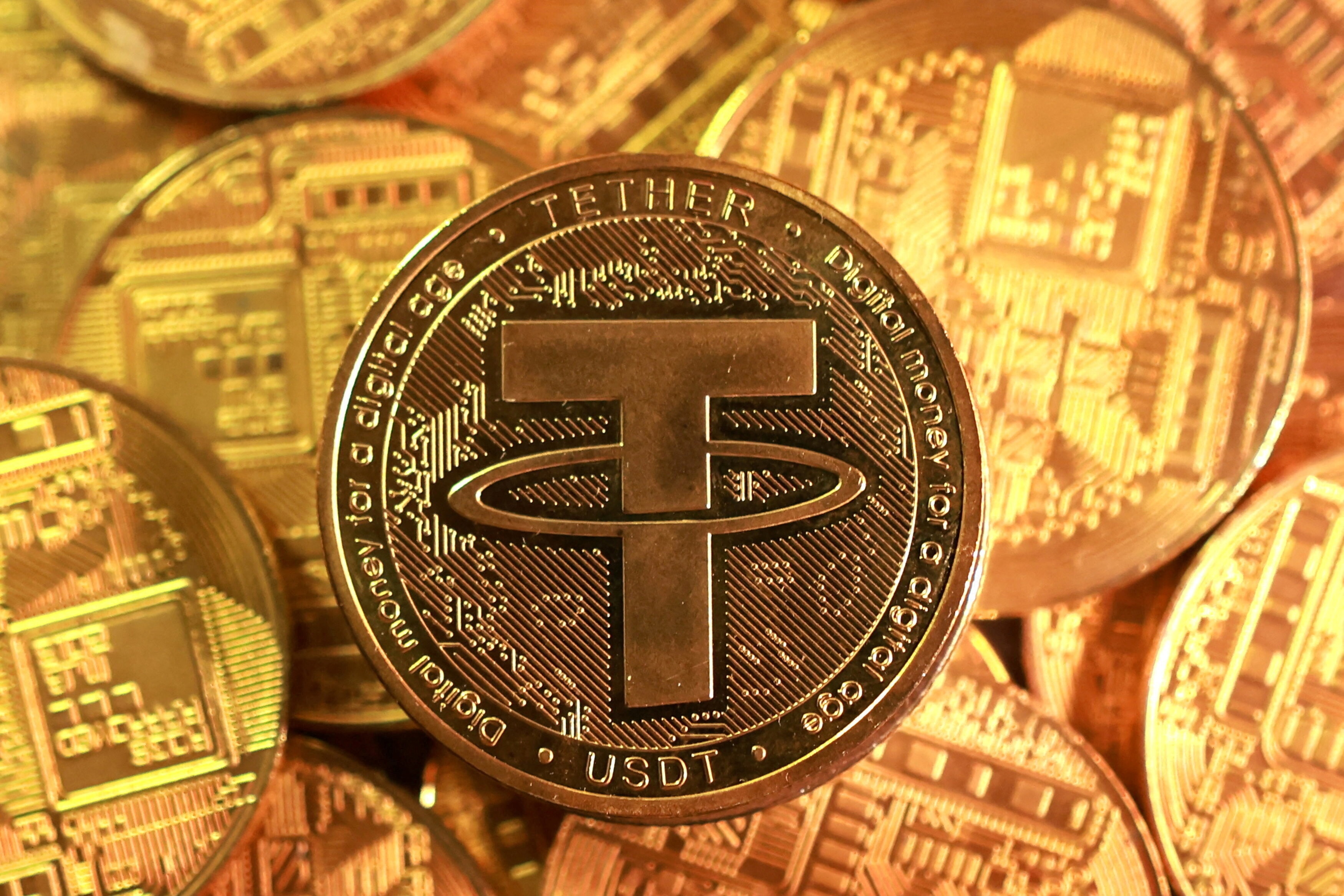
The global cap of all stablecoins now exceeds $300 billion. Image: REUTERS/Dado Ruvic/Illustration
Kanan Mammadov
MPA Candidate in International Finance and Economic Policy, School of International and Public Affairs (SIPA), Columbia University- Stablecoins' global market cap exceeds $300 billion, and they have been getting more attention from policymakers.
- At a time of geopolitical upheaval, stablecoins are also playing a growing role in the international financial system.
- Regulation is therefore growing, and is increasingly seen through a strategic lens.
As geopolitical fragmentation reshapes the global economy, stablecoins are moving into a new category of importance. They are still part of the digital asset universe, but their significance now reaches far beyond crypto markets.
Stablecoins increasingly touch cross-border payments, the international role of the dollar, the resilience of financial infrastructure and the policy autonomy of states. That combination has turned them into a geopolitical issue; they exist at the intersection of technology, money and power now meet.
Most people think of stablecoins as digital assets pegged one-to-one to the US dollar and backed by Treasury bills sitting in a bank account somewhere. That covers most of the overall stablecoin market cap, but it doesn’t define them all. Well over a hundred stablecoins are now in circulation, and the definition itself of stablecoin continues to be debated.
How are stablecoins connected to geopolitics?
Scale matters here. Stablecoins’ combined market capitalization is over $300 billion and they already support transaction volumes measured in the tens of trillions – though, crucially, this figure includes automated transactions too, meaning their usage as a normal payment method is far lower. Nonetheless, once an instrument reaches that size, questions of governance, currency power and systemic impact become unavoidable.
The currency composition of the market adds another layer of international relevance. Most major stablecoins are pegged to the US dollar, which means their spread can extend the dollar’s reach through new digital channels. In that sense, stablecoins are not only payment tools. They are also part of the evolving infrastructure of international monetary influence. If digital transactions increasingly rely on dollar-linked tokens, then dollar power may become more deeply embedded in the architecture of digital finance itself.
A crucial part of the reason they’re gaining in popularity is practical. Cross-border payments remain expensive, slow and fragmented, especially for businesses and households operating across jurisdictions with uneven banking access. Stablecoin-based systems have gained traction because they promise faster settlement and lower friction. More than 98% of transactions on one major stablecoin-based platform settle in under 60 minutes, compared with two to five business days in the legacy foreign exchange market. That same platform now processes over $45 billion in annualized payment volume. Those figures suggest that stablecoins are gaining relevance in a core area of international economic life rather than remaining on the margins of finance.
That matters especially outside the major financial centers. In countries facing inflation, tight capital controls, weak banking access or low confidence in domestic currencies, stablecoins can become attractive as both a payment tool and a store of value. Yet the same process can intensify currency substitution, weaken monetary policy transmission and expand the role of foreign currencies in domestic economic life. Because stablecoins are digital, portable and transnational, they can make it easier for people and firms to shift away from national currencies toward foreign ones. For policymakers in emerging and fragile economies, that is not a narrow technology question. It goes to the heart of monetary sovereignty.
This is one reason stablecoins now sit at the intersection of efficiency and vulnerability. They can reduce friction in cross-border money movement and widen access to dollar liquidity. At the same time, they can reduce the policy space available to countries that are already economically exposed. Their geopolitical significance comes from that tension. They promise useful infrastructure, yet they can also redistribute monetary influence in ways that favor the issuers of dominant currencies and constrain weaker states.
Regulation as a strategic issue
Regulation is therefore becoming a strategic issue in its own right. The US adopted the GENIUS Act in 2025, creating a federal framework for payment stablecoins and requiring them to be backed by liquid assets such as US dollars and short-term Treasury bills, with monthly disclosure of reserve composition. That matters because it gives a major power the opportunity to shape the standards of a rapidly expanding segment of digital finance. As legal frameworks begin to solidify in some jurisdictions, the politics of standard-setting will become more important.
Yet global rulemaking remains uneven. There are still significant gaps and inconsistencies in the implementation of crypto and stablecoin regulation across jurisdictions, even as the market itself operates across borders. That creates room for regulatory arbitrage, uneven risk management and new forms of financial dependency. It also means that stablecoins are becoming part of a larger contest over who writes the rules for digital finance and whose regulatory model gains international influence.
Stablecoins and the global political context
The broader political context makes all this more urgent. States are rethinking supply chains, sanctions exposure, payment channels and strategic autonomy. In that environment, the infrastructure through which money moves becomes more than a technical matter. Stablecoins offer a glimpse of how monetary power may evolve in a world where finance is increasingly digital, cross-border and contested. Their rise raises questions that go well beyond investor interest: which currency anchors digital transactions, whose rules govern settlement, and how much room states retain to defend their own monetary authority.
Stablecoins are becoming a geopolitical issue because they sit where technology, money and power now meet. They can improve the speed and reach of global payments, but they can also deepen the influence of dominant currencies and complicate the choices of smaller states. The next contest in international political economy will involve trade, tariffs and industrial policy, yet it will also involve the digital rails through which value travels. Stablecoins have become part of that story, and that is why they matter now.
Don't miss any update on this topic
Create a free account and access your personalized content collection with our latest publications and analyses.
License and Republishing
World Economic Forum articles may be republished in accordance with the Creative Commons Attribution-NonCommercial-NoDerivatives 4.0 International Public License, and in accordance with our Terms of Use.
The views expressed in this article are those of the author alone and not the World Economic Forum.
Stay up to date:
Blockchain


Forum Stories newsletter
Bringing you weekly curated insights and analysis on the global issues that matter.
More on Financial and Monetary SystemsSee all

Matthew Blake
April 2, 2026


