Live updates
Southeast Asia: Latest analysis, insights and developments from the World Economic Forum
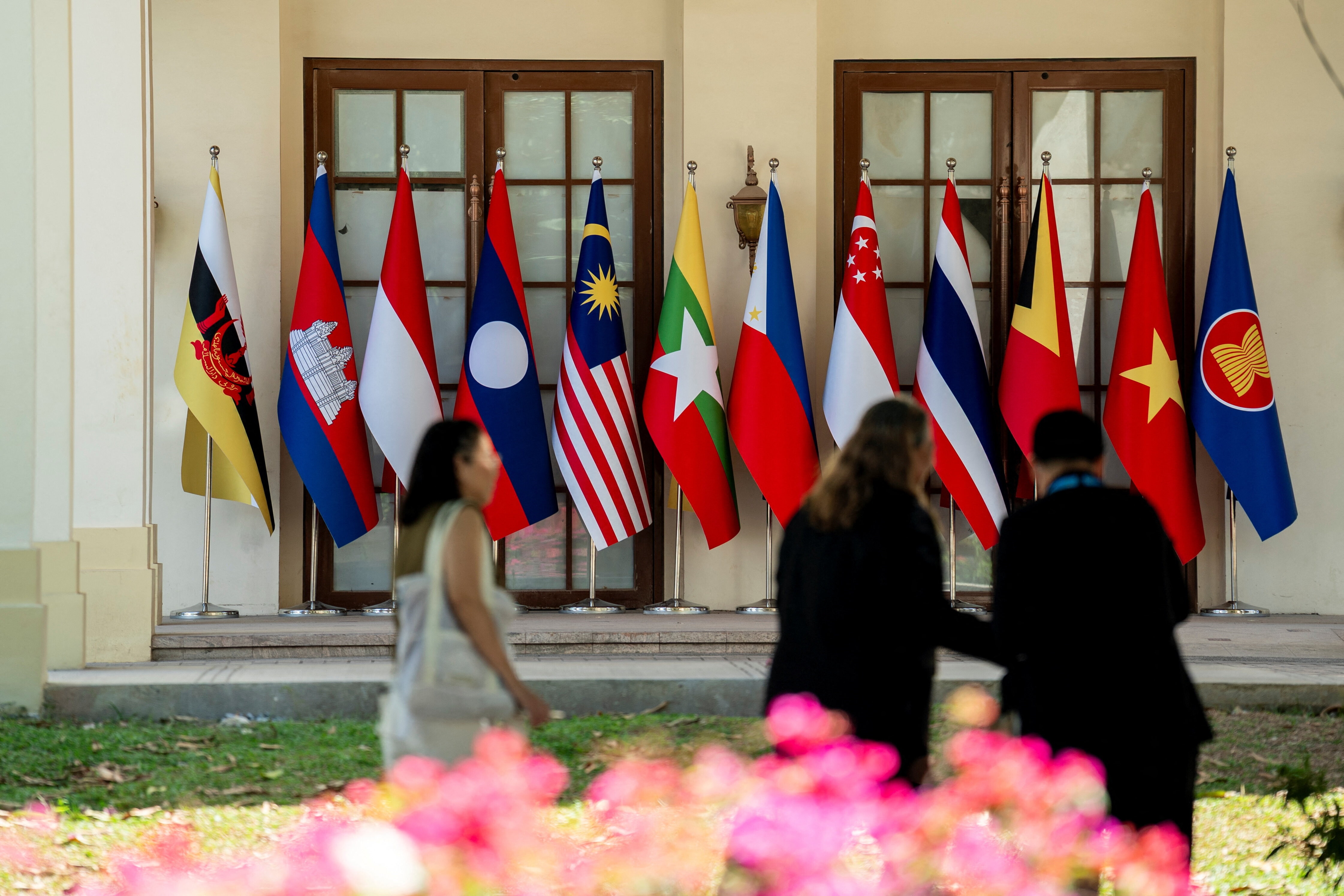
This tracker curates the latest insights, data and analysis from and on the region.
REUTERS/Lisa Marie David
Forum live blog team
Keep up with the latest insights, data and analysis from and on the region
What's shaping Southeast Asia right now? Drawing on the World Economic Forum's network of leaders and experts, this tracker curates the latest insights, data and analysis from and on the region to help make sense of the news.
ASEAN's energy demand is surging. Can industrial clusters hold the answer?
Southeast Asia hosts some of the world's most significant manufacturing clusters: electronics in Malaysia, Singapore and Viet Nam, automotive and chemicals in Thailand and an emerging electric vehicle battery value chain in Indonesia.
Those clusters could serve as coordination mechanisms — allowing co-located companies to share infrastructure, align on clean-energy procurement and pursue the energy transition at a scale individual firms cannot reach alone.
ASEAN is now the world's fourth-largest energy consumer and nearly 80% of its supply still comes from fossil fuels.
Southeast Asia's risks are converging and hitting each country differently
Economic pressure, geopolitical rivalry and technological disruption are reshaping Southeast Asia simultaneously, but their effects vary sharply across the region's ten economies.
Business leaders rank geoeconomic confrontation significantly higher than the global average, reflecting how directly the region sits at the intersection of competing powers.
Meanwhile, AI investment is accelerating unevenly: nearly half of large firms have begun scaling AI, while adoption among small and medium-sized enterprises, which employ most of the region's workers, stands at around 15% even in Singapore.
ASEAN's resilience record: From $2.5 trillion to $4.3 trillion in a decade
ASEAN's combined GDP grew from $2.5 trillion in 2015 to $4.3 trillion in 2025, while merchandise trade nearly doubled and foreign direct investment more than doubled. That record, built across repeated shocks (financial crises, a pandemic, and now a fractured global trade environment), reflects a consistent regional instinct to turn disruption into deeper integration.
The Asian Development Bank projects the region will grow 4.6% in 2026.
Keep up with the latest insights, data and analysis from and on the region
What's shaping Southeast Asia right now? Drawing on the World Economic Forum's network of leaders and experts, this tracker curates the latest insights, data and analysis from and on the region to help make sense of the news.
License and Republishing
World Economic Forum articles may be republished in accordance with the Creative Commons Attribution-NonCommercial-NoDerivatives 4.0 International Public License, and in accordance with our Terms of Use.
The views expressed in this article are those of the author alone and not the World Economic Forum.

Forum Stories newsletter
Bringing you weekly curated insights and analysis on the global issues that matter.