Why the future of robots is serving humans, not just imitating them
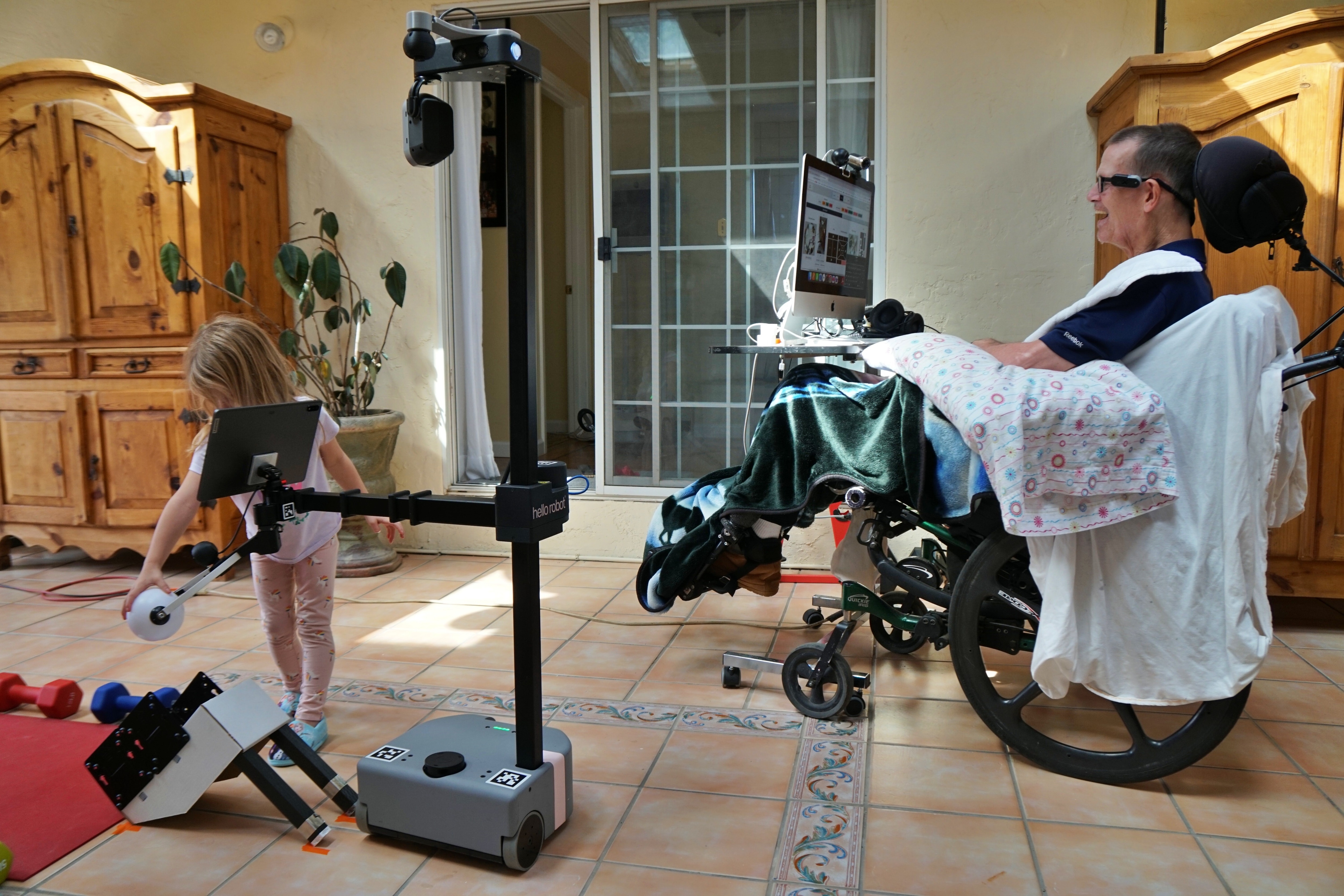
The Stretch assistive robot helps Henry Evans play with his granddaughter. Image: Hello Robot
- The real promise of physical AI is not robots moving like humans, it's that they can help humans live more independent and meaningful lives.
- Assistive robotics such as the Stretch robot have helped people like Henry Evans strengthen real-world relationships in a way not previously possible.
- The robots that ultimately succeed may not be the most spectacular; they may be the ones that people quietly welcome into their daily lives.
When Henry Evans’ young granddaughter gave his robot a nickname, she didn’t call it “the robot”, she called it Papa Wheelie.
After a severe stroke left Henry with profound paralysis, everyday interactions with his family became difficult. The introduction of a Stretch assistive robot gave him something much more valuable than the ability to pick up objects or manipulate his environment: it gave him new ways to engage with the people he loves.
Through Stretch, he could play with his granddaughter, share experiences and participate more fully in family life. To her, the machine wasn’t technology. It was simply another way to spend time with her grandfather.
That story illustrates something the robotics industry too often forgets. The real promise of physical AI is not that robots can move like humans. It is that they can help humans live more connected, independent and meaningful lives.
Robot videos capture headlines with increasingly impressive demonstrations of running, dancing or other acrobatics, but you’re unlikely to see people in those videos. Robot videos without people often reveal robots designed without people in mind.
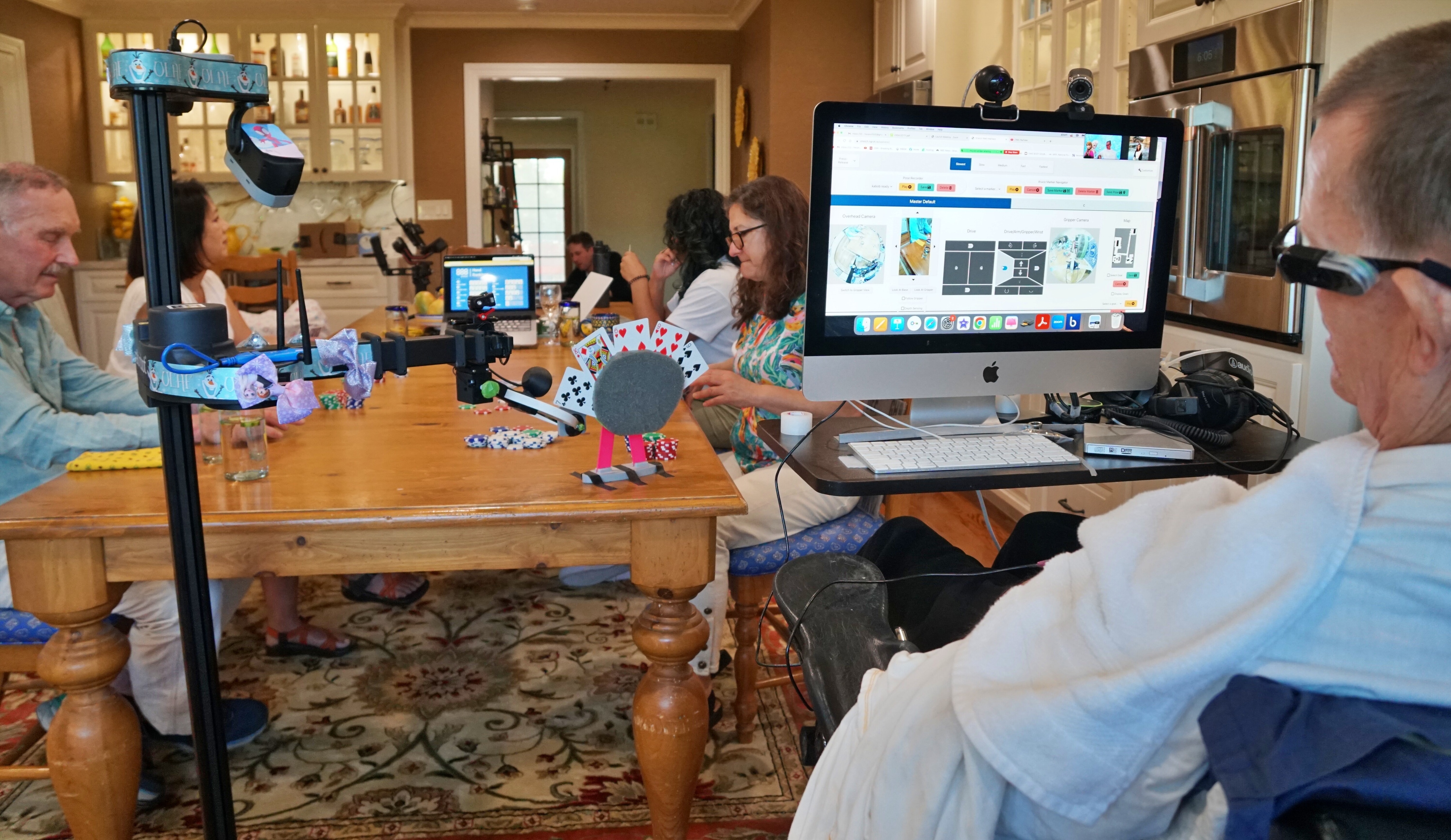
The Evans family turned their home into a proving ground for assistive robotics, showing that a better future is possible. Unlike many digital technologies that isolate us from one another, robots have the potential to strengthen real-world relationships and increase participation in everyday life.
The robotics community has become exceptionally good at measuring benchmark performance, demonstration videos, and hardware specifications. Why not solve for independence, dignity and health?
The real question isn't what robots can do. It's who they help.
Why assistive robotics matters
There’s no shortage of statistics that demonstrate older adult populations are surging while care needs are coming up woefully short – a phenomenon known as the “silver tsunami”.
An estimated 1.3 billion people worldwide live with significant disability – equivalent to 1 in 6 people worldwide, according to the World Health Organization. At the same time, ageing populations are creating unprecedented demand for caregiving, rehabilitation and assistance.
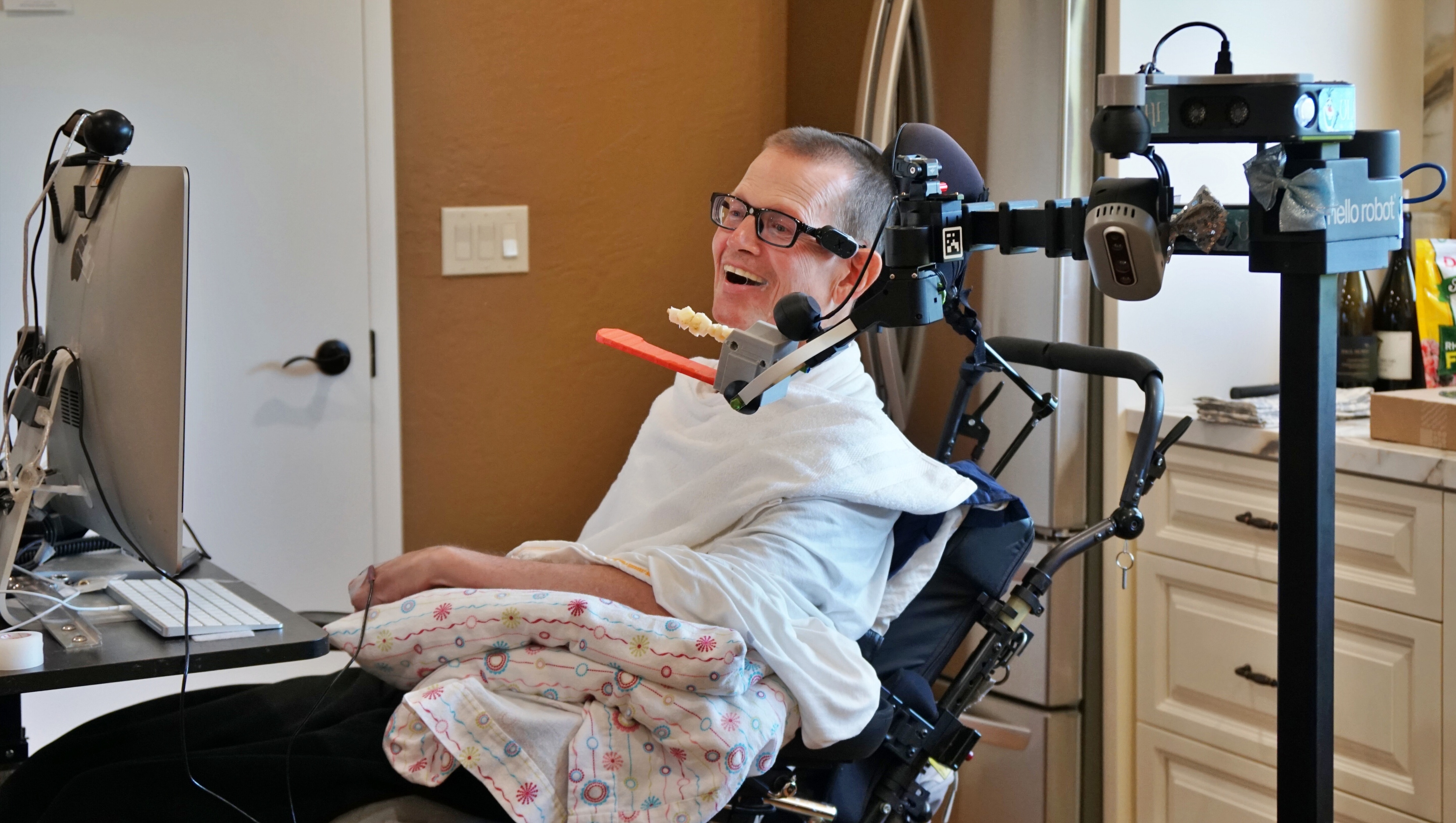
These individuals represent an ideal starting point for physical AI; not because their needs are simple, but because they are urgent, well-defined and deeply meaningful.
Despite misconceptions or ageist assumptions about technology adoption in one’s later years, people seeking to regain independence or age in place have powerful motivation to adopt new technology. They also provide exactly the kind of real-world feedback robotics companies need. Assistive robotics offers an incremental pathway into the home where human oversight, remote assistance and practical economics coexist.
Building robots people trust
One lesson from decades of assistive robotics research is that users should never be treated simply as recipients of technology, but as co-designers.
Henry Evans himself helped shape important aspects of Stretch through years of direct feedback. One example was the adoption of an omnidirectional base, enabling movement that better matched the realities of navigating a home from a wheelchair.
This philosophy reflects participatory design: the people living with a challenge are often the ones best positioned to identify the right solution.
And despite all the attention they’re getting these days, it also suggests that the future of robotics may not belong exclusively to humanoids.
A robot that safely and reliably performs a large majority of useful household activities; all while remaining affordable, trustworthy and easy to use may deliver greater practical value than a far more complex humanoid attempting to replicate every aspect of human motion.
The robots that ultimately succeed may be the ones people quietly welcome into daily life.
Safety cannot be an afterthought
According to an AARP survey, 75% of adults age 50 and older want to age in place, but homes are fundamentally unique.
Unlike factories or warehouses, homes are unpredictable environments filled with children, pets, visitors, clutter and ongoing unpredictability. That kitten underfoot might be cute to a person, but it’s a danger to a robot.
This makes safety far more than an engineering requirement; it becomes the foundation of public trust.
Robots designed for close collaboration with people require inherently safe actuation, sophisticated sensing, reliable perception, intuitive interfaces and predictable behaviour. Every interaction improves confidence, or takes it away.
The industry should also acknowledge an uncomfortable reality: a single high-profile safety failure involving a home robot could slow public adoption for years. Building safety into these systems from the beginning is therefore both an ethical obligation and a strategic necessity.
Seatbelts weren’t required on new passenger cars sold in the US until 60 years after the introduction of the Model T. The robotics industry can’t wait that long to address safety.
The history of robotics is filled with ambitious visions that arrived before the technology or the market was ready.
Physical AI will ultimately succeed not through increasingly impressive demonstrations alone, but through steady deployment, continuous learning and close collaboration with users.
Real progress comes from shipping products, observing how people actually use them, refining designs and repeating that process over years.
This incremental approach isn’t as appealing as the latest robot viral video. It is, however, how transformative technologies become trusted infrastructure.
The future of robotics is human
Henry is not alone. As that gap between care demand and caregiver supply widens, care is rapidly shifting into the home, creating both a crisis and an opportunity for new forms of support.
Brian Marquis relies on a Stretch to help with daily activities. His wife Brenda has identified 27 different tasks that support Brian, reducing demands on her time by nearly nine hours a day. Those hours represent more than efficiency. They represent time together, reduced caregiver burden and greater independence.
These stories remind us that the future of robotics should not be measured solely by machines that look like us or perform choreographed dance moves.
Its greatest achievement will be robots that help humans connect more deeply with their families, participate more fully in their communities, and remain active in the places they call home. The robots that ultimately succeed may not be the most spectacular, or get the most page views. They may be the ones people quietly welcome into daily life.
The success of physical AI won’t be judged by what robots can do, but what people can do because of them.
Don't miss any update on this topic
Create a free account and access your personalized content collection with our latest publications and analyses.
License and Republishing
World Economic Forum articles may be republished in accordance with the Creative Commons Attribution-NonCommercial-NoDerivatives 4.0 International Public License, and in accordance with our Terms of Use.
The views expressed in this article are those of the author alone and not the World Economic Forum.
Stay up to date:
Artificial Intelligence


Forum Stories newsletter
Bringing you weekly curated insights and analysis on the global issues that matter.


