African smallholder farming is facing a succession crisis that threatens the loss of generations of accumulated knowledge.
Research shows that economically aspiring younger generations are seeking an exit route from being trapped in rural poverty and limited prospects.
The challenges faced by smallholders indicate a systemic fragility across many sectors, including education, labour markets and migration, that requires a coordinated response.
When Dédé Rose Gamélé Creppy, one of Togo's last original Nana Benz, died in 2023, she took with her more than a successful business legacy. She represented the disappearance of an entire system of knowledge.
The Nana Benz were legendary cloth traders who dominated West Africa's textile markets during the 1970s. They controlled distribution networks, influenced consumer tastes, cultivated political relationships and accumulated market intelligence. Their success transformed families and shaped a generation of economic opportunity.
But their children pursued other careers. The next generation did not inherit the market. What disappeared was not cloth trading itself. New entrepreneurs emerged, sourcing cheaper products from China and operating differently. What disappeared was the ecosystem of expertise, relationships and tacit knowledge that had made the Nana Benz uniquely influential.
Farming's succession crisis
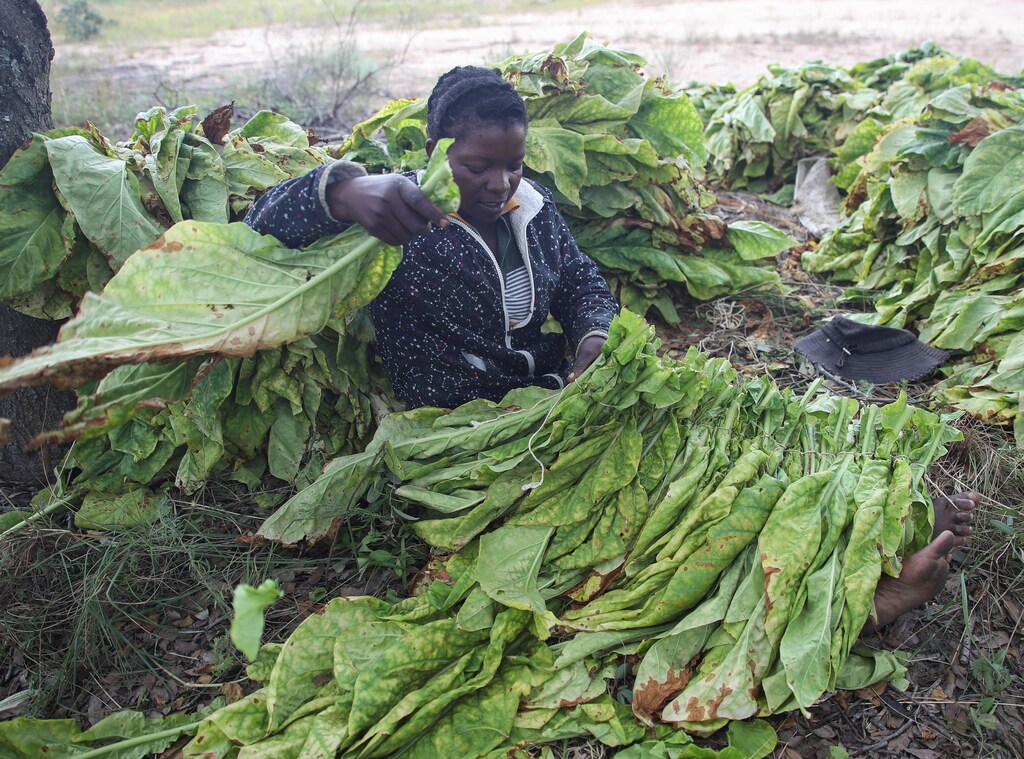
Africa now faces a similar risk in a far more consequential sector: agriculture. Across the world, more than 500 million smallholder farms support the livelihoods of over 2 billion people and produce roughly one-third of global food supplies. Yet in many countries, farming populations are ageing while younger generations seek opportunities elsewhere.
The greatest threat to food systems may not be drought, conflict or disrupted supply chains. It may be the gradual disappearance of the people who know how to farm.
This is not primarily a production crisis. It is a succession crisis. Smallholder farmers possess knowledge that is difficult to replace. They understand local soils, weather patterns, seed varieties, water management systems and ecological relationships built through decades of observation and adaptation. Much of this knowledge is not written in manuals or captured in databases. Like the expertise of the Nana Benz, it is carried in people. When succession fails, entire systems become vulnerable.
The challenge is not unique to Africa. In many parts of the world, farming is becoming less attractive to younger generations. Rural youth often associate agriculture with uncertainty, low income, limited social mobility and vulnerability to climate shocks. Parents who worked hard to provide better opportunities frequently encourage their children to pursue different careers. This is not irrational. It is often the logical outcome of economic aspiration.
Data collected by Farming Out of Poverty, using the Poverty Stoplight methodology with 59 smallholder farming families in Sierra Leone, illustrates this tension with clarity. The surveyed population was predominantly young, concentrated in the 0-24 age group. When asked how they would use a small additional income, most preferred starting a new business over investing in farming inputs. School fees ranked second, chosen by 25% of respondents, followed by purchasing more food.

Fewer than 4% would invest in agricultural inputs or home improvements. Ninety per cent of these families depended on agriculture as their sole source of income, and 59% identified income diversification as an urgent unmet need. The picture that emerges is not of farmers who are resigned to their circumstances, but of people who aspire to something different for themselves and their children, while remaining trapped in the only livelihood currently available to them.
The critical policy question is not why young people leave farming. It is why societies have failed to make farming a viable pathway to prosperity. The consequences extend beyond agricultural output. Modern food systems depend on a human infrastructure. Farmers manage soils, preserve biodiversity, maintain local seed systems and connect rural economies to value chains. When farming communities weaken, the effects cascade across employment, food processing, trade and national food security.
The warning signs are already visible. Across parts of the Sahel, climate stress, conflict and displacement have accelerated the erosion of farming communities. Elsewhere, ageing farmer populations are not being replaced at sufficient rates. In Indonesia, policy-makers have warned that the country could face a dramatic decline in professional farmers within decades if current trends continue.
Systemic undernourishment
These are not isolated demographic trends. They are indicators of systemic fragility. Too often, governments address agriculture, poverty, education, labour markets and migration as separate policy domains. But households do not experience them separately. Decisions about farming are shaped simultaneously by income prospects, educational opportunities, climate risks, social status, access to services and expectations about the future.
The same Poverty Stoplight data from Sierra Leone makes this interconnection concrete. Across the 59 farming families surveyed, 78% of all assessed indicators fell within poverty or extreme poverty, spanning six dimensions simultaneously: income and employment, housing and infrastructure, health and environment, education and culture, community participation, and what the methodology calls interiority and motivation.
More than 90% of households had no savings. Two-thirds experienced food insecurity. All 59 families lacked access to electricity. Nearly 95% struggled to maintain a nutritious diet. Seventy-eight per cent of families showed deprivations in the interiority and motivation dimension, including indicators of self-esteem, entrepreneurship, and autonomy.
These were not isolated deficits. They formed an interlocking system in which low income undermined savings, savings gaps prevented investment in productivity, poor nutrition affected capacity to work, and limited confidence constrained the ability to plan for the future. No single sectoral intervention addresses a system of this kind. And no child growing up inside it receives a straightforward signal that farming is a pathway worth choosing.
The lesson from the Nana Benz is not that every tradition should be preserved unchanged. Economic systems evolve. Technologies change. New actors emerge.
The lesson is that societies ignore succession at their peril. Governments prepare for floods, cyberattacks and financial crises. Yet few are preparing for the possibility that entire generations may abandon critical economic functions before viable successors emerge.
Agricultural resilience is not only about seeds, fertilizers, irrigation systems or finance. It is also about people. Future food sovereignty will depend on whether farming remains a dignified, economically viable and socially respected vocation.
The Nana Benz did not disappear overnight. They faded gradually, until one day their absence became impossible to ignore. The same may be happening in agriculture. The time to act is before the disappearance becomes visible in empty markets, rising food insecurity and lost livelihoods. By then, the knowledge, relationships and capabilities that sustained the system may already be gone.