US, Iran launch strikes as ceasefire collapses, and other geopolitical stories to know this month
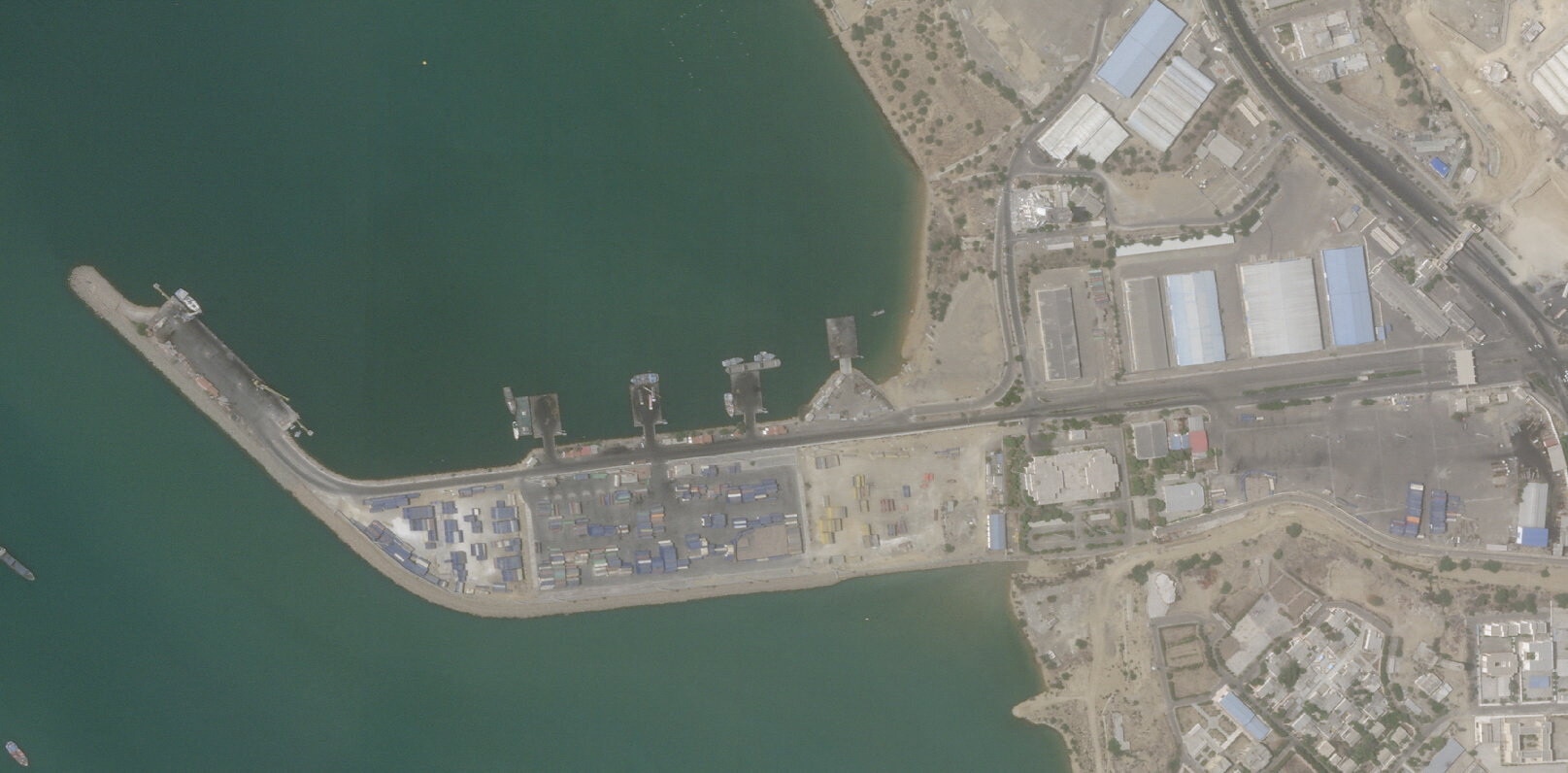
A satellite image shows the Iranian port of Chabahar on 9 July after the US military said it launched strikes to open the Strait of Hormuz. Image: REUTERS via third party
- This monthly round-up brings you a selection of news and updates on the latest geopolitical developments.
- Top stories this month: US, Iran launch strikes as ceasefire collapses; NATO and G7 in a less US-centric world; Access to AI as a geopolitical issue.
1. US, Iran launch strikes as ceasefire collapses
The conflict between the United States and Iran intensified again this week after a fragile ceasefire collapsed.
The US launched a new round of strikes on Iranian military targets, claiming that the attacks were in response to Iranian strikes on commercial shipping in the Strait of Hormuz. Iran responded with missile and drone attacks on US military targets in Bahrain and Kuwait, with both governments accusing the other of violating the ceasefire.
The renewed fighting marks a clear breakdown of the Memorandum of Understanding (MoU) that was signed in June after several months of war. The MoU, which served as an interim framework to halt hostilities and create a path toward a comprehensive agreement, established temporary commitments to reopen the Strait of Hormuz, curb Iran’s nuclear programme and allow for a 60-day sanctions waiver for Iranian oil exports. However, many of its most contentious issues such as enforcement mechanisms and the sequencing of concessions were left unresolved.
On Wednesday, speaking to reporters in Ankara, Türkiye, US President Donald Trump said the ceasefire deal was "over", but added that negotiation could continue.
In response to the MoU collapse and the new round of strikes, oil prices rose and stock markets fell worldwide alongside renewed concerns of a broader regional war.
2. Moving towards a less US-centric world?
As the US celebrates the 250th anniversary of its independence, the country's role on the world stage has changed substantially. While it remains the most powerful global nation, The Economist argues, its comparative dominance over other countries is narrowing. Having long anchored Western security through NATO and driven international development initiatives, the US now faces a shifting landscape as competing powers, most notably China, expand their global influence.
Both the recent G7 summit and this week's NATO summit reflect this ongoing shift.
G7 leaders welcomed the US-Iran deal at their summit, with the meeting’s agenda linking it with other, overlapping crises such as the conflict in Ukraine, energy security and AI governance. The broad approach suggests that the G7 is moving from managing separate crises individually towards a broader framework for stability.
At the NATO summit in Ankara in early July, the rift with the US in the wake of the war is expected to focus on rebuilding the Alliance with much less US involvement and security guarantees. NATO is looking for ways to make up for the shortfall as the US plans to reduce forces and assets, including submarines, fighter jets and drones.
With Europe widely expected to bear the lion’s share of these cuts, members have ramped up their spending, led by Germany, Poland and the Baltic states. Yet the challenge will be to replace the specific capabilities being withdrawn by the US.
3. News in brief: Geopolitical developments from around the world
On the sidelines of the G7 summit last month, the US and Europe discussed a US proposal for a “trusted partner scheme” for cutting-edge AI technology, highlighting how advanced technologies are becoming inextricably linked to national security concerns. The Trump administration had previously blocked foreign customers from accessing Anthropic’s new Mythos and Fable AI models.
SpaceX staged its long-anticipated initial public offering, raising $85.7 billion – the largest IPO ever. The tech giant now consolidates Starlink and the newly rebranded SpaceXAI (formerly xAI) – subsidiaries inextricably linked to geopolitics, from democratizing space access to anchoring drone communications networks in Ukraine.
With the war in Ukraine now in its fourth year, The Economist reports that Ukraine is intensifying pressure on Crimea. Russia has used the peninsula – which it annexed in 2014 – as a key bridgehead, but persistent strikes on critical infrastructure have transformed it into a strategic vulnerability, with no end to the war in sight.
Meanwhile, Russian ally Kim Jong Un welcomed Chinese President Xi Jinping to Pyongyang. A Brookings analysis suggests the summit bolstered the regime’s legitimacy and growing regional importance, while reasserting Beijing's influence as North Korea has drifted closer to Moscow.
Tensions also continued to build in relations between Beijing and Taipei as China announced countermeasures to a new Taiwanese government website encouraging citizens to report intelligence tips.
4. More on geopolitics on Forum Stories
Informal sectors are widespread across the developing world. In sub-Saharan Africa, for instance, nearly nine in ten people work outside the formal system, generating close to half of the region's GDP. Far from being a marginal occurrence on the fringes, this is de facto how these economies function. Rather than try to change them, this article argues that such practices should be recognized.
Globally, 80% of businesses report facing significant geopolitical exposure – a figure that climbs to 93% for companies with turnovers of $20 billion or more. Yet, while many organizations have strengthened their capabilities in this area, relatively few have institutionalized these insights or woven them into core strategic decisions. Read more about why businesses need to flex this strategic muscle.
The impact of the US-Iran war may have led to a short-term hiatus in the energy transition. However, as the Forum's head of energy, Espen Mehlum, and Accenture's transition lead, David Rabley, argue, it likely also reinforced countries' resolve to secure a future beyond oil and gas and become more independent from price shocks. Check out their analysis to see how the definition of energy risk has been remapped, requiring a new playbook for finance and regional alliances.
How the Forum helps leaders make sense of regional, trade and geopolitical shifts
Don't miss any update on this topic
Create a free account and access your personalized content collection with our latest publications and analyses.
License and Republishing
World Economic Forum articles may be republished in accordance with the Creative Commons Attribution-NonCommercial-NoDerivatives 4.0 International Public License, and in accordance with our Terms of Use.
The views expressed in this article are those of the author alone and not the World Economic Forum.
Stay up to date:
Geopolitics


Forum Stories newsletter
Bringing you weekly curated insights and analysis on the global issues that matter.
More on Geo-Economics and PoliticsSee all

Iran conflict risks expanding into hybrid warfare, and other geopolitical stories to know this month
Ariel Kastner and Spencer Feingold
October 6, 2026


