Could a heat pump be the answer to heating your home this winter?

Heat pumps are already cheaper to run than conventional boilers. Image: REUTERS/Lisi Niesner
Listen to the article
This article has been updated.
- Heat pumps are a key way to make heating more sustainable, affordable and secure, say experts.
- They could reduce global CO2 emissions by 500 million tonnes by 2030 – vital when environmental issues dominate the Forum's Global Risks Report 2025.
- But countries will need to subsidize heat pumps if they are to achieve their climate targets, as high installation costs are a barrier for many households.
Heat pumps could make our homes, workplaces and public buildings more sustainable.
The International Energy Agency (IEA) estimates they could reduce CO2 emissions by 500 million tonnes by 2030. With environmental issues featuring in four of the top five risks to the world over the next 10 years, a global switch to heat pumps could be a step in the right direction.
Heat pumps are already cheaper to run than conventional boilers, and research shows they are three to four times more efficient than traditional gas boilers, but their high initial cost is still a considerable deterrent. Countries will need to subsidize installations if they are to achieve their climate targets, the IEA says.
Some people are also concerned they lack the efficiency of conventional boilers when the temperature outside is particularly low. However, research suggests that even at temperatures well below freezing heat pump efficiency is still significantly higher than fossil fuel systems.
So what is the potential of heat pumps? Here are four charts that show how they work and what they can do to warm our indoor spaces, while helping to stop the climate warming even further.
1. How do heat pumps work?

Heat pumps use similar technology to that of a refrigerator or air conditioner. They extract heat from a source – the surrounding air – and amplify this heat.
Heat pumps are much more efficient than boilers, because they transfer heat rather than generate it. Almost all of this heat reaches the space intended to be warmed.
The technology is effective even in cold climates. By extracting latent heat from the outside air, modern heat pumps can operate efficiently at temperatures well below freezing. For added resilience in the coldest conditions, they can be installed as part of a hybrid system, working alongside a conventional gas boiler that provides supplementary heat only when needed.
2. Which region is installing heat pumps fastest?
In 2024, heat pump sales outpaced gas boilers by 30%, the largest gap ever recorded, reports the IEA's Global Energy Review 2025.
The chart above shows that China leads the way in heat pump installations, with the country responsible for 30% of the global total, according to the IEA. The US comes next, followed by the EU – largely led by Norway, which has 632 heat pumps installed for every 1,000 households.
China's dominance is partly due to the fact that it's a leader in heat pump manufacturing; the country's net-zero plans are also helping to increase demand.
3. How much of global heating demand can they cover?
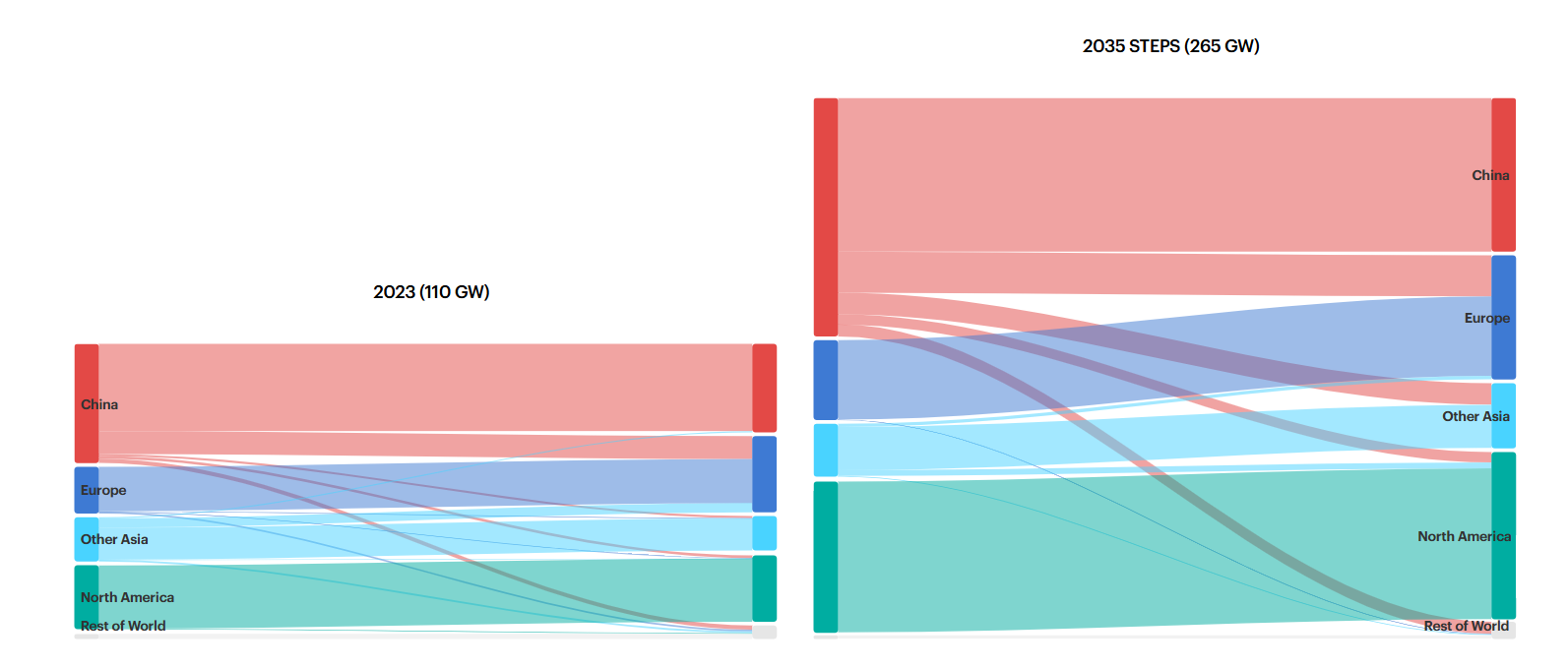
Over one-sixth of global natural gas demand is for heating buildings – so heat pumps could make a significant dent in emissions if widely installed. Currently, they cover about 10% of global space heating demand, but the potential is there for a much greater reach.
The extent to which heat pumps can be rolled out depends on whether nations deliver what they’ve written into their existing policies or climate pledges. In the chart above, STEPS refers to countries’ Stated Policies Scenarios on heat pumps, with demand for them expected to double by 2035.
The IEA reports that trade in heat pumps has grown less rapidly than other clean energy technologies, but that installations are set to increase in the coming decades. Government support for heat pumps – as originally laid out in the US Inflation Reduction Act, for example – is needed for nations to achieve their climate and energy security goals, says the IEA. Bans on new fossil fuel boilers across Europe will also help.
4. Which homes will benefit most?

Insulating buildings is a key component of improving energy efficiency and reducing emissions. The data from Denmark in the chart above demonstrates that heat pumps in the best-insulated homes use 30% less electricity than those with poor insulation.
Improving a home’s energy rating by just two grades (from D to B) can halve energy demand, the IEA says. Making buildings more energy-efficient also means households can use lower-capacity heat pumps, which are cheaper to install.
A recent study in the UK found that heat pumps could cut heating bills for British people by around half – but only if the government takes steps to make electricity cheaper and reins in gas companies' profits.
Don't miss any update on this topic
Create a free account and access your personalized content collection with our latest publications and analyses.
License and Republishing
World Economic Forum articles may be republished in accordance with the Creative Commons Attribution-NonCommercial-NoDerivatives 4.0 International Public License, and in accordance with our Terms of Use.
The views expressed in this article are those of the author alone and not the World Economic Forum.
Stay up to date:
SDG 07: Affordable and Clean Energy


Forum Stories newsletter
Bringing you weekly curated insights and analysis on the global issues that matter.
More on Energy TransitionSee all

Sofia Balestrin
April 2, 2026


