Welcome to the annual World Economic Forum on Latin America, live from Medellin, Colombia.
Latin America has enjoyed almost a decade of continual growth. Now the region has arrived at a crossroads, both in the face of global developments and regional transformations.
There's a guide to the highlights of the programme here, you can join the Twitter conversation online at #LA16, read the highlights as they happen in this liveblog, and see the full programme here.
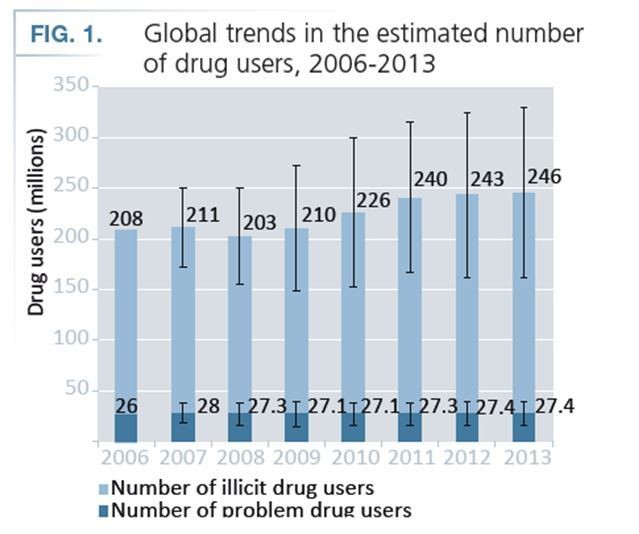
Answering questions from the audience, Ilona notes that as more countries experiment with legalisation (countries that include the US, Canada and Uruguay) contradictions with international treaties are increasing.
The relevant UN treaties are the 1961 Single Convention on Narcotic Drugs, the 1971 Convention on Psychotropic Substances and the 1988 Convention Against Illicit Traffic in Narcotic Drugs and Psychotropic Substances.
15:20 UTC
Transparency International on corruption
Elisabeth Ungar of Transparency International is taking part in the 'Tackling Corruption' panel discussion on Friday and took time out to take questions from Facebook users in this Facebook live interview. Subjects covered included whether there is a gender divide, the role of technology in exposing corruption, and signs that people power is beginning to make a difference in Latin America.
Accept our marketing cookies to access this content.
These cookies are currently disabled in your browser.
The Colombian president stresses that his country is on the up and points to the thriving economy of Medellin, previously a failed city, as an example of what can be achieved through public-private partnerships.
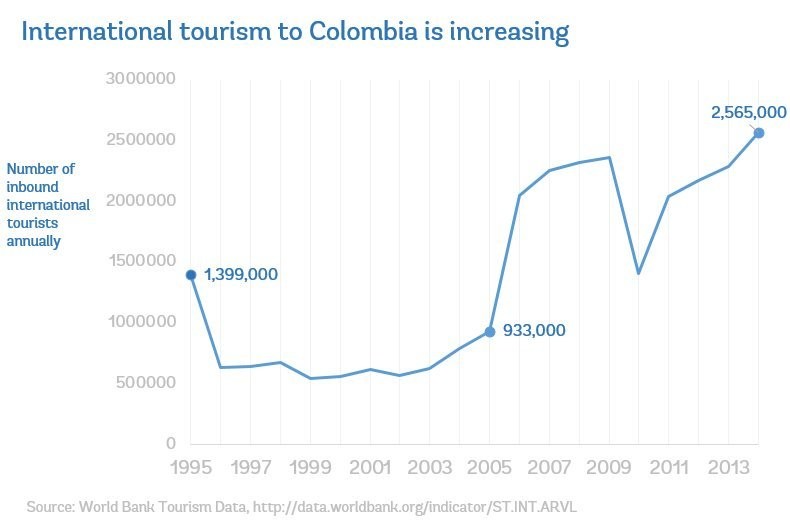
He also talks about the possibilities of tourism and how peace after fifty years of war will be necessary to make the most of the country's appeal.
Accept our marketing cookies to access this content.
These cookies are currently disabled in your browser.
President Macri talks about how small to medium-sized enterprises will be key to reigniting his country's growth and of working to ensure they get the tools they need.
He also stresses the role of education and of how vital it is that children get access to technology to prepare themselves for the future.
Accept our marketing cookies to access this content.
These cookies are currently disabled in your browser.
President Macri adds that he is very concerned about what's going on in Venezuela: "I see it in terrible shape. I'm very concerned. We cannot accept that level of violation of human rights in our region. We have to show solidarity with the Venezuelan people. At this point the Venezuelan people are experiencing a terrible situation and their only solution is that there are elections this year so that the Venezuelan people can choose who is going to rule their country.
19:22 UTC
Securing peace in Colombia
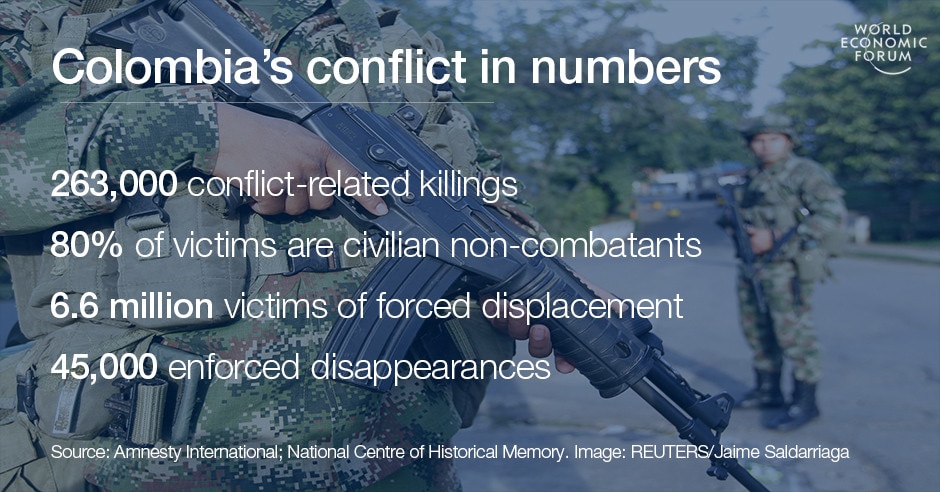
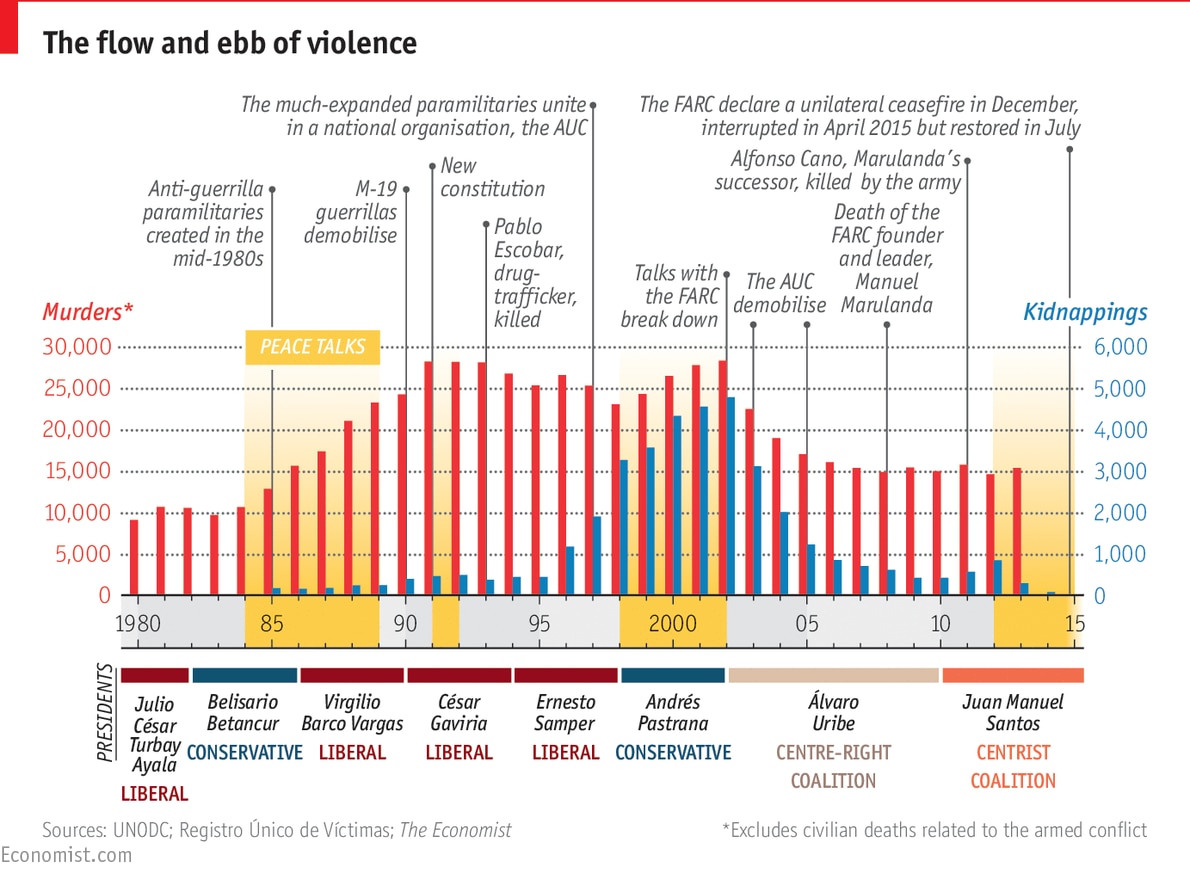
Ahead of our next session, a quick recap of the western hemisphere's last remaining conflict -- one that has been prosecuted for half a century.
Earlier today, Colombian President Santos had this to say about the importance of current peace talks:
Accept our marketing cookies to access this content.
These cookies are currently disabled in your browser.
Peace talks are delicate and one concern is that the victims of years of war are not forgotten in the negotiations.
“The negotiations have been designed around the respect for the rights of these victims – their right to truth, to reparations and to justice.
"We’ve placed the victims at the heart of this conflict-resolution process. If we want lasting peace, we have to recognize that these people have suffered. There is no such thing as peace with impunity.
"The peace deal needs to be totally acceptable to the people of Colombia. This peace deal should – and will be – endorsed by the Colombian people through a referendum."
Some idea of the peace dividend is given by this World Bank graphic of Colombian tourism:
20:43 UTC
Medellin as a model
Medellin is the city that came back from the brink and this session is designed to identify the factors behind its recovery. It features the current mayor Federico Gutierez.
20:44 UTC
6 images that show Medellin is nothing like the place portrayed in 'Narcos'
You may know Medellin as the setting for the violent Netflix series 'Narcos'. The real Medellin couldn't be more different.
The mayor stresses two aspects of the Medellin model:
1. The importance of teamwork, in particular, close relationships between government, universities and entrepreneurs, including monthly meetings.
2. Investment: 162 hectares in the north of the city have been reserved for companies involved in science and technology. The idea isn't simply to attract large companies but to create a mixture of big and small that helps to give major firms what they need while allowing for innovation.
He ends by saying, "You have to cultivate the city like flowers, give it a little water and show it some love."
22:16 UTC
Embracing the fourth industrial revolution in Latin America
One of the principal themes of the World Economic Forum Latin American meeting is the Fourth Industrial Revolution (4IR.) Here's a quick reminder of the technical underpinning of that revolution.
The conversation focuses on the risks that this revolution will exacerbate inequality in a region already suffering from the world's greatest disparities in earnings.
Accept our marketing cookies to access this content.
These cookies are currently disabled in your browser.
Armando Senra is head of Latin America for Blackrock and says that he thinks it's a mistake to look at the region as a single economy. He is looking for countries that have done their homework and are serious about structural reform. He mentions Colombia, Mexico and Paraguay (all are represented on the panel.)
Roberto Quarta, Partner and Chairman, Europe, Clayton, Dubilier & Rice LLP, discussess the impact of 'Brexit' -- the possibility that the British will vote to leave the European Union in a referendum next week. He is based in London and complains that "no-one really knows what's going to happen" given how close opinion polls have been. "It'll be a bit of a mess" he warns if Britain votes to leave.
Colombian finance minister Mauricio Cardenas hopes the UK polls are wrong and worries about what a 'flight to quality' on Brexit would mean for his country's access to capital.
China and the US Federal Reserve's decisions on interest rates are also mentioned as crucial determinants of the region's prospects.
13:22 UTC
Bytes, Payments and the Blockchain: Fintech in Latin America
FinTech -- the digitisation of financial servies -- has been a little slow to take off in Latin America and this session is designed to establish why that might be and what might becoming next.
Participants are: Eric Parrado, Superintendent of Banks and Financial Institutions of Chile, Richard Eldridge, Chief Executive Officer, Lenddo Limited, Matthew Blake, head of Banking at the World Economic Forum and Rob Cox, Editor-in-chief of Breaking Views.
Rob Cox sets the scene by suggesting that the combination of big banks with deep pockets and cautious regulators makes FinTech different from other industries.
He sets up the debate by asking whether new technology will act as an 'enabler' for the big banks -- helping them to improve existing services -- or as a disruptor in the manner of an Airb'n'b or Uber.
Accept our marketing cookies to access this content.
These cookies are currently disabled in your browser.
Matthew Blake has a major report on the potential of FinTech out next week and offers some teasers on estimates of how big the the market for digital financial services could be.
Accept our marketing cookies to access this content.
These cookies are currently disabled in your browser.
Matthew Blake believes that the insurance sector is the place where we are most likely to see FinTech make inroads -- the sector has tended not to make use of new information technology and with data on things like health and personal travel patterns now available the sector is ripe for innovation.
Richard Eldridge takes issue with the notion that technical innovation will only be a back office function for the big banks. He points out that new technology has a powerful role to play in the push for 'financial inclusion' -- bringing the poor into the financial system.
He points out that there are billions of people who have never had credit because they don't have any history. "We can use technology to allow them access," he says. That could lead to new players that might rival the existing big banks.
Eric Parrado good-naturedly takes issue with the idea that regulators are spoiling the party.
Accept our marketing cookies to access this content.
These cookies are currently disabled in your browser.
Regulators are interested in the expansion of the provision of financial services because of the social and economic benefits they potentially carry.
16:40 UTC
Tackling corruption in Latin America
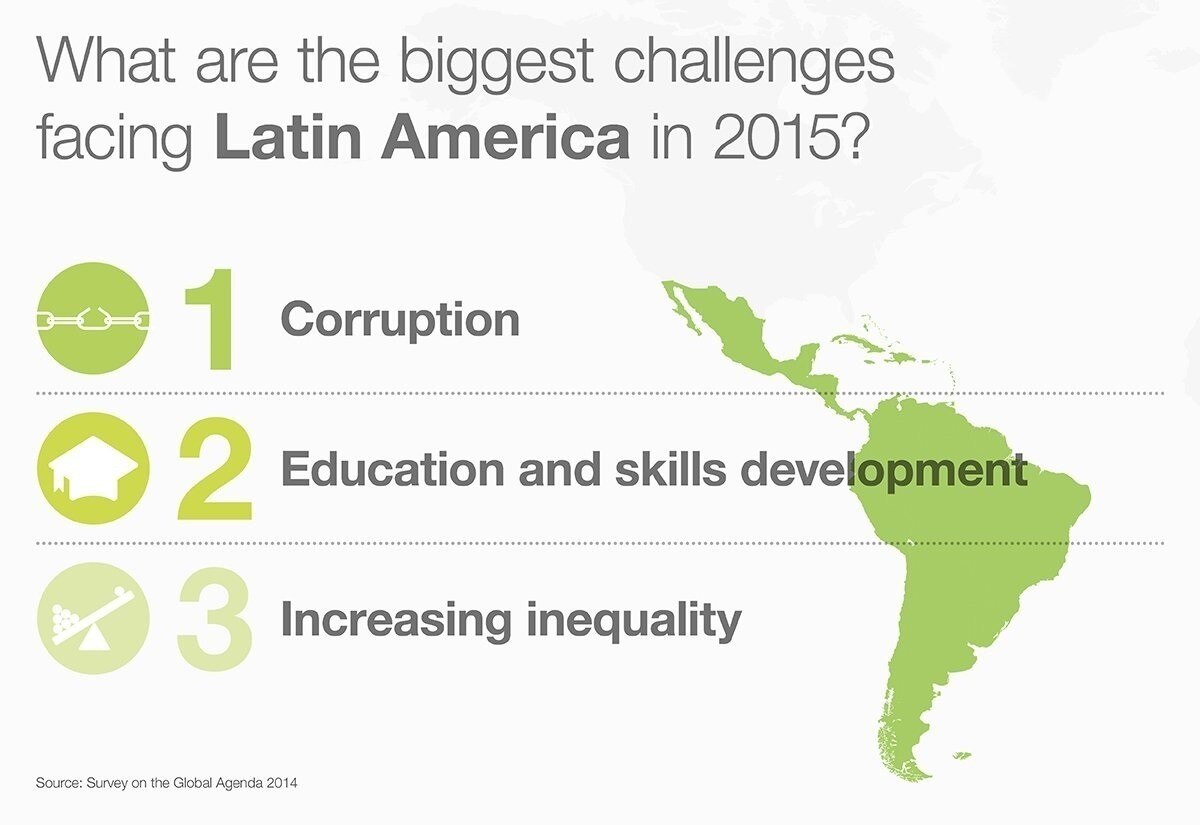
In 2015, Latin American leaders said it was the region’s biggest challenge: corruption.
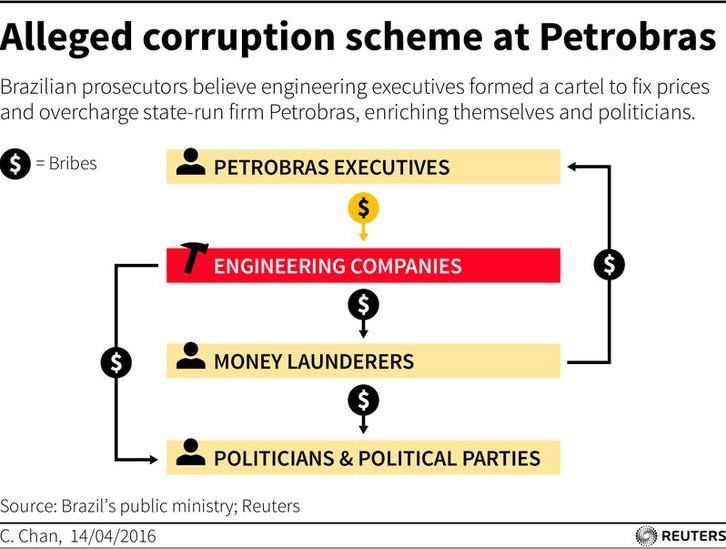
Corruption cases have been making headlines across the region this year – with the most high-profile being the Petrobras case in Brazil. “In Brazil, fraud and corruption is our daily news. It is pervasive,” Sergio Romani, CEO for EY’s South America offices, noted in a session on the topic.
The question Ricardo Avila had for panellists – and one we tackled on the blog this week – is do all these headlines mean corruption is increasing in Latin America?
Accept our marketing cookies to access this content.
These cookies are currently disabled in your browser.
All of the panellists were in agreement. Yes, we might be hearing more about corruption, but if anything, that’s a positive development. It means the institutions meant to deal with the problem are starting to work.
“When people see corrupt leaders being thrown in prison, they think corruption is high,” Juan Carlos Botero of the World Justice Project pointed out. Instead, it suggests the media, the police and the judiciary are doing the job they’re supposed to.
Accept our marketing cookies to access this content.
These cookies are currently disabled in your browser.
For Brian Winter of Americas Quarterly, the change in attitudes towards corruption has been extraordinary. “The electorate is now intolerant of corruption, and has decided it is enemy number one.”
Accept our marketing cookies to access this content.
These cookies are currently disabled in your browser.
What’s behind this shift? Technology, Botero said. “Fifteen years ago, people had very little access to information. Today, we all have computers, or smartphones. Access to information is so generalized that the social pressure in favour of these changes becomes increasingly important.”
So what do all the changes mean for the region? First and foremost, Latin America must make sure it builds on the progress, Thelma Esperanza Aldana Hernández, Guatemala’s attorney general, said. After years of conflict, her country managed to put those responsible for corruption behind bars. But they’re not resting on their laurels.
“It’s a great challenge for Guatemala to prevent the past from repeating itself. We’ve put some people in prison, but we don’t want other corrupt people to just take their place.”
Romani thinks the situation in Brazil shows that a more deep-rooted change is under way. “We are in a bad spot now. But this will make us emerge stronger. It is something we have to go through to have a better country – and I hope it will ripple throughout Latin America.”
20:54 UTC
Public Security in Latin America
Unlike every other region of the world, murder rates in Latin America are still rising. Around 80% of its population lives in cities, which makes Latin America the most urbanized region in the world. Some of these cities are models of innovation. Take the host city of Medellín, which managed to shake off its reputation as one of the most dangerous places in the world to be named City of the Year in 2012.
But the region is still home to some of the world’s most violent, fragile and unequal cities.
What can Latin America more widely learn from these rare but important success stories? For Robert Muggah, who has written about the topic on this blog, and was speaking in a session on public security, the solution is clear: you need strong leadership, a focus on hotspots, and good data.
Accept our marketing cookies to access this content.
These cookies are currently disabled in your browser.
That’s exactly what Colombia has done, the country’s defence minister, Luis Carlos Villegas Echeverri, explained – and it has reaped the benefits. “Colombia is a very big success story in combatting violence.” Just 16 years ago, there were 23,000 violent deaths every year in the country, he said. Today, that’s down to around 12,000. “It continues to be a monumentally large number, but it’s less than half what we had some years ago.”
Accept our marketing cookies to access this content.
These cookies are currently disabled in your browser.