Climate change is already rewriting the job market in the Western Balkans
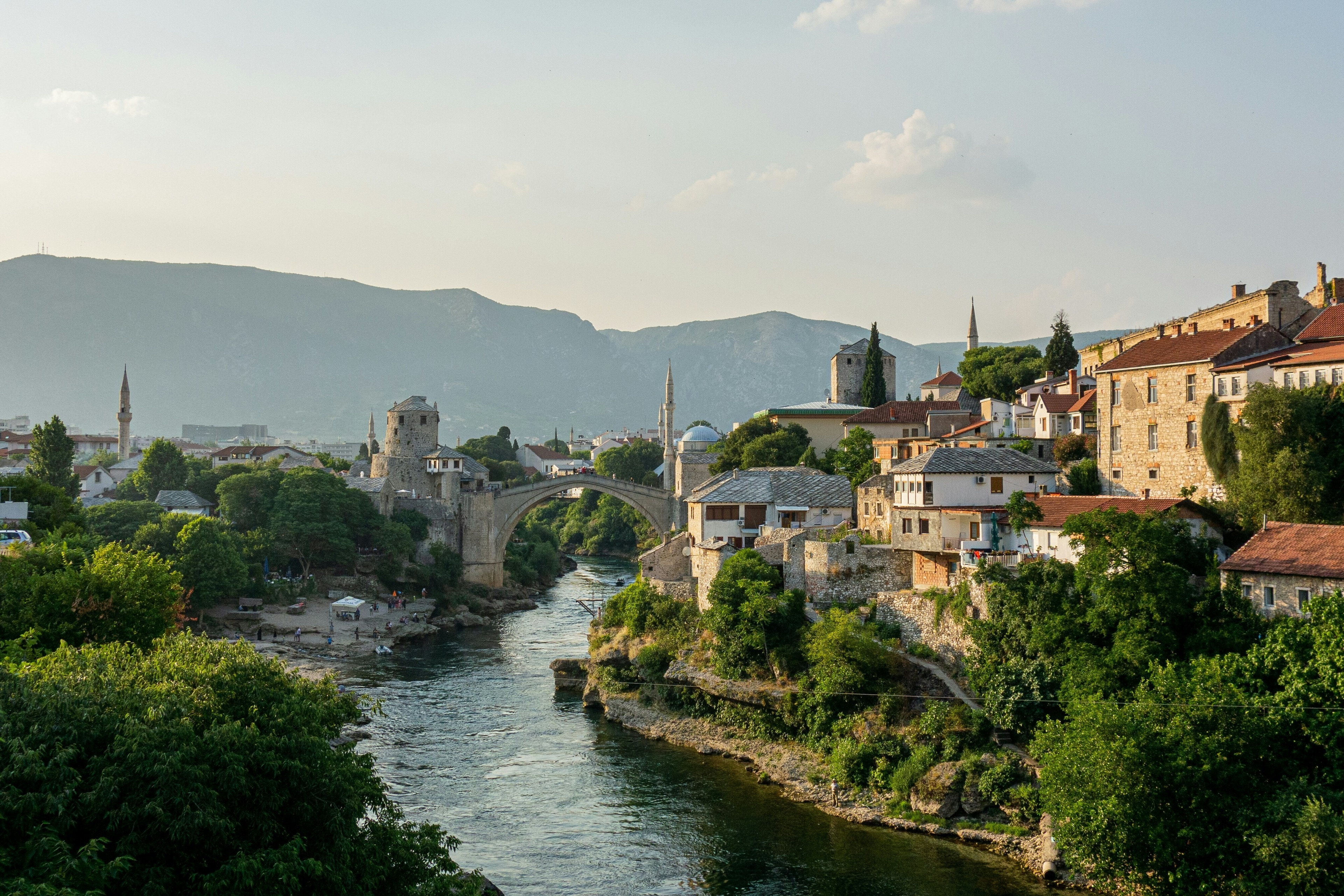
A just green transition requires urgent, inclusive and well-planned action in the Western Balkans. Image: Unsplash/Ilse
- Climate change is already disrupting lives and jobs in the Western Balkans.
- The green transition risks deepening social inequality without proper safeguards.
- A just green transition requires urgent, inclusive and well-planned action.
“What remains of life when illusions are gone? Responsibility.”
Imre Kertész, Hungarian Nobel Laureate, posed this question with haunting precision. Today, it echoes far beyond literature, into politics, economics and the climate crisis now reshaping our lives.
One of the most dangerous illusions about climate change is that it’s someone else’s problem and at some point in the future. That illusion has shattered.
As a Commissioner on WHO’s Pan-European Commission on Health and Sustainable Development, I’ve seen how climate change is not only a health emergency but a profound labour market disruptor.
Across Europe – and acutely in the Western Balkans – the green transition is colliding with fragile employment systems, putting livelihoods at risk while offering too few alternatives.
Increasingly, climate change in the Balkans, as in the rest of Europe, isn’t abstract – it is an everyday disruptor, threatening health, undermining jobs, deepening inequality and straining the resilience of some of Europe’s most vulnerable economies.
”Climate change’s human impact
In the Western Balkans, the climate crisis isn’t about melting glaciers in the polar regions. It is about coal-fired power plants choking the air in Kosovo, where emissions from ageing vehicles contribute to chronic illness and premature death.
It is about workers and farmers in Bosnia and Herzegovina, displaced by floods and left struggling to rebuild their lives and livelihoods in the face of rising economic insecurity.
It is also about the smoke from burning waste and biomass for heating in North Macedonia and the geography that traps that pollution in the valley basin, making Skopje one of the most polluted capitals in Europe.
Increasingly, climate change in the Balkans, as in the rest of Europe, isn’t abstract – it is an everyday disruptor, threatening health, undermining jobs, deepening inequality and straining the resilience of some of Europe’s most vulnerable economies.
This region is already facing the consequences; now it must lead with solutions.
While policy debates often orbit around megawatts and carbon pricing, another emerging fault line is in the labour market. Nearly 3 million jobs in the Western Balkans are either directly exposed to climate shocks or at risk due to the green transition. The numbers are sobering.
Countries in the region are expected to lose up to 16% of their gross domestic product due to the impacts of extreme weather.
These are not just statistics; they are coal miners in Bosnia and Herzegovina, unsure of what comes next; farmers in Albania watching their land being submerged under floodwaters; and young people who haven’t yet entered the labour force but already feel excluded from it.
The price of inaction
In 2014 alone, floods erased more than 51,000 jobs. The 2024 floods in Bosnia displaced over 1,000 households and forced small enterprises, already operating on tight margins, to close.
Montenegro’s coastline, the heart of its tourism economy, faces growing threats from wildfires and erosion. In North Macedonia and Kosovo, more frequent heatwaves are making work in the rural and construction sectors harder and more dangerous. In Albania, where agriculture still employs more than one in three, 15,000 hectares of crops were lost in a single flood in 2017.
When climate shocks strike and people feel abandoned, trust erodes; when transitions are rolled out without clear alternatives, frustration grows; and when only the well-connected reap the benefits of change, inequality deepens and hardens.
”Climate change doesn’t hit everyone equally. It always affects the most vulnerable first and hits them most severely.
We need a green transition but how we design and manage it will determine whether it brings resilience or new instability.
Across the Western Balkans, 16 brown-coal-fired power plants remain operational, outdated and pollute the environment. Closing them down is not just a climate imperative, it’s also a social and political earthquake.
In Serbia and Bosnia and Herzegovina alone, over 29,000 jobs tied to coal are at risk. Many of these communities were built around a single industry. Without a plan, they won’t just lose their jobs, they’ll lose their future too.
And while European Union funds have backed 21 green flagship projects and mobilized €6.8 billion, the cost of transition – financial, institutional and social – still vastly exceeds the region’s capacity.
Moving forward with justice
The average cost of decommissioning a brown coal power plant in the Western Balkans ranges from €2.5 million to €12 million. Sites such as Tuzla in Bosnia, which is 60 years old and among Europe’s top polluters, remain operational without a clear path forward.
Kosovo, where over half the working-age population is inactive, faces the steepest challenge: up to 17% of its workforce will need to change job tasks because of the green transition. These workers don’t need rhetoric, they need training, protections and new pathways.
When climate shocks strike and people feel abandoned, trust erodes; when transitions are rolled out without clear alternatives, frustration grows; and when only the well-connected reap the benefits of change, inequality deepens and hardens.
If the region – and Europe – are to move forward, the green transition must be managed with justice. The real question is not whether we go green but whether we bring everyone with us or leave the most vulnerable behind.
Returning to Kertész: “What remains of life when illusions are gone? Responsibility.” What remains now is the responsibility to act and to do so with fairness, foresight and courage.
Don't miss any update on this topic
Create a free account and access your personalized content collection with our latest publications and analyses.
License and Republishing
World Economic Forum articles may be republished in accordance with the Creative Commons Attribution-NonCommercial-NoDerivatives 4.0 International Public License, and in accordance with our Terms of Use.
The views expressed in this article are those of the author alone and not the World Economic Forum.
Stay up to date:
Climate Indicators


Forum Stories newsletter
Bringing you weekly curated insights and analysis on the global issues that matter.
More on Climate Action and Waste Reduction See all

Moattar Samim
February 21, 2026


