Tackling the energy, food and water nexus – here are the key priorities
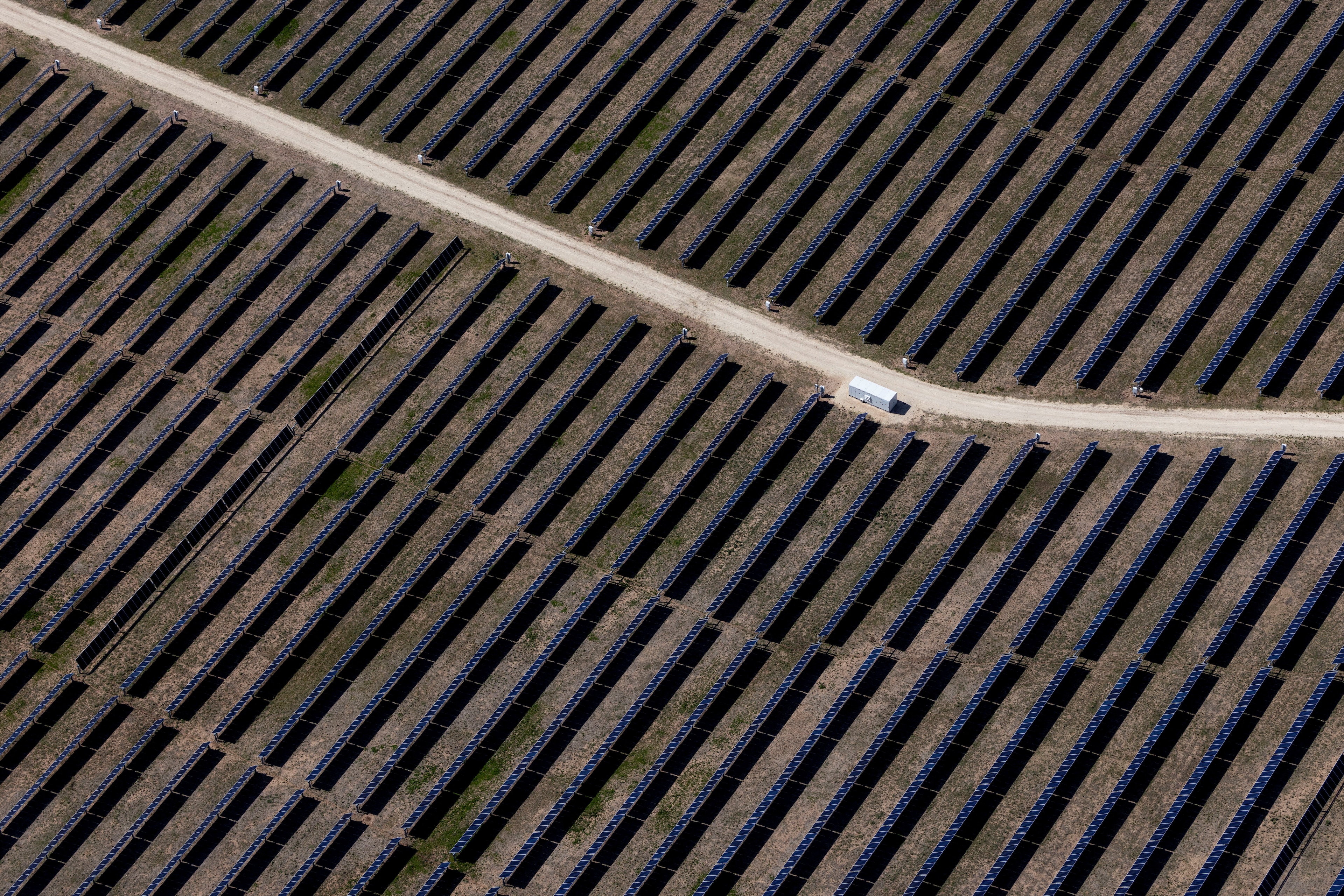
Managing the energy, food and water nexus will require systems-level leadership Image: REUTERS/Daniel Cole
Jane Nelson
Founding Director, Corporate Responsibility Initiative and Senior Research Fellow, Harvard Kennedy School of Government- Demand for food, water and energy is rising rapidly – by 2050, food demand could increase by over 50%, energy by up to 19% and water by up to 30%.
- Climate risks are becoming increasingly non-linear and unpredictable, with extreme weather now becoming routine, increasing human suffering and economic costs.
- The Global Future Council on the Energy Nexus is driving coordinated, systems-level approaches to manage the growing complexity of the energy, food and water nexus.
The nexus of energy, food and water systems is complex, complicated and compounding. Disruption in one amplifies vulnerabilities and trade-offs in others. Such disruptions also create opportunities for sustainable growth, enhanced resilience and more equity.
Tackling the resource nexus is no longer a choice. It is an urgent imperative for policy-makers, business leaders, investors and the research community.
The energy, food and water nexus is inherently complex. Agriculture currently guzzles nearly 70% of global freshwater. By 2050, global food demand is expected to increase by over 50% and water demand by 20-30%
Energy is essential for water management and food supply chains but energy production, particularly clean energy infrastructure, also competes with agriculture – as of 2023, about 80% of US renewable energy infrastructure is on private farmland.
However, croplands offer the highest global median solar potential – around 28 watts per square metre, so agrovoltaics could be one route to resolving the conundrum.
Driven by growth and increasing efficiency, global energy demand is projected to grow modestly by up to 19% by 2050, with the share of electricity in final consumption likely to double.
Water is also critical for energy production, whether for cooling, manufacturing, maintaining solar panels, hydropower generation or the emerging hydrogen economy.
This interdependence has spurred the Global Commission on the Economics of Water to advocate for a “clean-energy and AI-rich era with much lower water intensity.”
Energy, food and water nexus best practice
Energy, food and water systems are dynamic, context-specific and interconnected through complex, cyclical feedback loops that intensify under growing pressure.
Despite the complex interconnections, policy and planning frameworks often adopt a siloed approach, resulting in a systematic underestimation of resource risks and missed synergies. Although some regions are demonstrating integrated approaches.
For instance, Germany’s Nexus Regional Dialogues Programme aims to institutionalize the energy nexus in national and regional governance structures and investment decisions.
In Telangana, India, tank rejuvenation project Mission Kakatiya replenished groundwater supply, reduced agricultural power use, boosted crop and livestock productivity and revitalized the rural economy through a nexus approach.
Economically, recognizing the nexus can also pinpoint more effective investment locations. The Council on Energy, Environment and Water (CEEW) mapped the entire Indian landmass via 5×5-kilometre pixels to identify cropland constraints, water availability, population concentrations, seismic zones and renewables potential.
Prolonged extreme climate events leave developing countries with no fiscal room for climate action, compounding a vicious cycle of environmental and macroeconomic crises.
”Complicated new disruptors
Transformative shifts in technology and geopolitics, and the promise of a green economy are further complicating the energy, food and water nexus.
The International Energy Agency estimates that by 2030, data centres could consume double their current electricity use, reaching approximately 945 terawatt-hours, making them a top-five sector for electricity demand.
This would see their electricity consumption grow around 15% per year, over four times faster than all other sectors together, further straining water systems for their direct cooling needs and land expansion.
In addition, global trade volatility, as it is currently occurring, hinders innovation and the large-scale deployment of clean and more resource-efficient energy technologies.
Critical mineral value chains are geographically concentrated, causing vulnerabilities in supply. According to the World Trade Organization, recent policy shifts are expected to reduce global trade volumes by 0.2% in 2025, nearly three percentage points lower than without these changes.
As markets tighten, switching to cleaner technology remains costly, especially where it’s most needed. A fragmented global economy is also suboptimal when production is misaligned with geographical advantages and natural resources.
However, a reimagined green economy could create new jobs and enterprises beyond renewables and clean energy, including the circular economy, bioeconomy and nature-based solutions.
Creating green jobs
India, for example, could create 35 million green jobs by 2047. CEEW estimates there will be over a million employment opportunities in the green economy in Odisha alone, adding $24 billion to the east Indian state’s gross domestic product.
Almost half of these jobs will exist across bioeconomy and nature-based solution value chains.
In Mexico, the environmental conservation group Pronatura Veracruz leads the restoration of the ecologically important Alvarado Lagoon System through community action, traditional methods such as floating farms and government programmes.
Since 2012, approximately 198 local community members have secured temporary employment through restoration efforts. The initiative aims to restore 2,100 hectares over 20 years, benefitting 7,000 people. Its environmental management units will generate carbon credits, ecosystem payments and jobs.
Equity and inclusivity require government and private sector investment in workforce reskilling, supporting vulnerable communities and nurturing the ecosystem where emerging sectors and startups can thrive.
India’s government-run Suryamitra Skill Development Programme aims to equip young people with the technical expertise needed to work in the solar industry, particularly in construction and maintenance activities, thereby addressing the skills gap.
Powering Livelihoods (promoted by CEEW and social enterprise incubator Villgro) has enabled 34,000 clean energy-powered livelihoods, with almost half of the beneficiaries being women micro-entrepreneurs.
In Europe, Enel Group has delivered 3.2 million hours of training to 98% of its workforce, around 47% focused on upskilling and reskilling to support a just transition. About 10% of the training hours – approximately 325,000 hours – are dedicated to digital skills. These activities touch direct and indirect workers, suppliers, communities and customers.
How the Forum helps leaders navigate the transition of energy and materials systems
Compounding climate risks
Compounding these complexities are non-linear climate risks. Climate risks are no longer predictable – what was extreme yesterday is now routine, as past patterns no longer reflect a rapidly changing future.
The World Meteorological Organization (WMO) recorded 617 extreme weather events in 2024 alone, 152 of them “unprecedented”.
Heatwaves now claim nearly half a million lives annually, 45% (disproportionately) in Asia.
The estimated economic losses from climate disasters vary, often undercounting the real costs; for example, they may ignore or underreport lost productivity and loss and damage. Extreme weather events between 1970 and 2021 caused $4.3 trillion in economic damage worldwide, according to the WMO.
At the same time, the insurance “protection gap” – the shortfall between total losses and what is insured – is growing, leaving economies, businesses and households vulnerable to financial shocks. Swiss Re pegged this at $181 billion in 2024 – a 43% underinsurance.
Most developing countries do not conduct hyperlocal climate risk assessments to understand their disaster exposure, but the gap widens with every extreme event, compounding the debt crises of developing countries.
According to the UN Trade and Development, the external public debt service relative to public revenues increased from 5% in 2010 to 8.8% in 2025 in developing economies. More and more countries are spending higher amounts on interest payments than development efforts, including those aimed at shoring up energy, food and water security.
Prolonged extreme climate events leave developing countries with no fiscal room for climate action, compounding a vicious cycle of environmental and macroeconomic crises.
Climate risks are macroeconomic risks. Disasters lead to crop failures, job losses and reduced productivity across food systems.
The Food and Agriculture Organization estimates $3.8 trillion in crop and livestock losses over the last three decades.
In India, climate-driven water scarcity could cause over $2.5 trillion in losses by 2050 if irrigation and water use aren’t improved, according to CEEW.
Climate risk also has the potential to disrupt infrastructure. The World Bank estimates that India’s transport and power infrastructure will suffer an annual loss of approximately $17 billion due to extreme weather events, such as floods and cyclones.
Our choices today will determine whether the energy, food and water nexus drives crisis or catalyses sustainability and prosperity.
”Priorities for action
System-wide leadership and holistic policy-making and research will be crucial to effectively manage the nexus over the coming decades.
To tackle emerging risks and harness new opportunities, corporate boards and senior management must assess emerging evidence, design integrated strategies, define cross-sector targets and align accountability and incentives through compensation and governance.
Major financial institutions must follow suit, while decision-making must include the interests of communities and marginalized stakeholders. New local, national and global multistakeholder alliances and pre-competitive industry coalitions in key sectors will also be crucial.
What will this look like in practice?
The Global Future Council on Energy Nexus can provide insight on policies, incentives, financing mechanisms, governance, business models, key priorities and best practices. Council members point to the following areas to provide recommendations to leaders:
- Just transition, distributive impacts, resilience and adaptation.
- De-risking pathways to scale investments and technologies.
- Managing trade-offs and enabling systems change.
Over the next two years, the Global Future Council will share ideas and examples through its Energy Nexus Insights series, comprising blogs, articles and infographics; guides for public and private sector decision-makers; and sector analyses for managing the energy, food and water nexus in a politically, economically and socially viable manner.
As the Global Future Council on Energy Nexus co-chairs, we hope to collaborate with other Global Future Council constituents and the broader World Economic Forum community to collectively address our shared challenges. The energy, food and water nexus is not solely a technical or environmental issue; it encompasses policy-making, research, business strategy and investment plans.
The energy-food-water nexus is already complex, increasingly complicated by new stressors and the compounding risks of climate change are here to stay. But so is the opportunity for bold, integrated action.
Our choices today will determine whether the energy, food and water nexus drives crisis or catalyses sustainability and prosperity. Moving forward demands courage, collaboration and getting comfortable with complexity.
Don't miss any update on this topic
Create a free account and access your personalized content collection with our latest publications and analyses.
License and Republishing
World Economic Forum articles may be republished in accordance with the Creative Commons Attribution-NonCommercial-NoDerivatives 4.0 International Public License, and in accordance with our Terms of Use.
The views expressed in this article are those of the author alone and not the World Economic Forum.
Stay up to date:
Energy Transition


Forum Stories newsletter
Bringing you weekly curated insights and analysis on the global issues that matter.
More on Energy TransitionSee all

Roberto Bocca
February 24, 2026


