Drought: What you need to know about this growing global risk
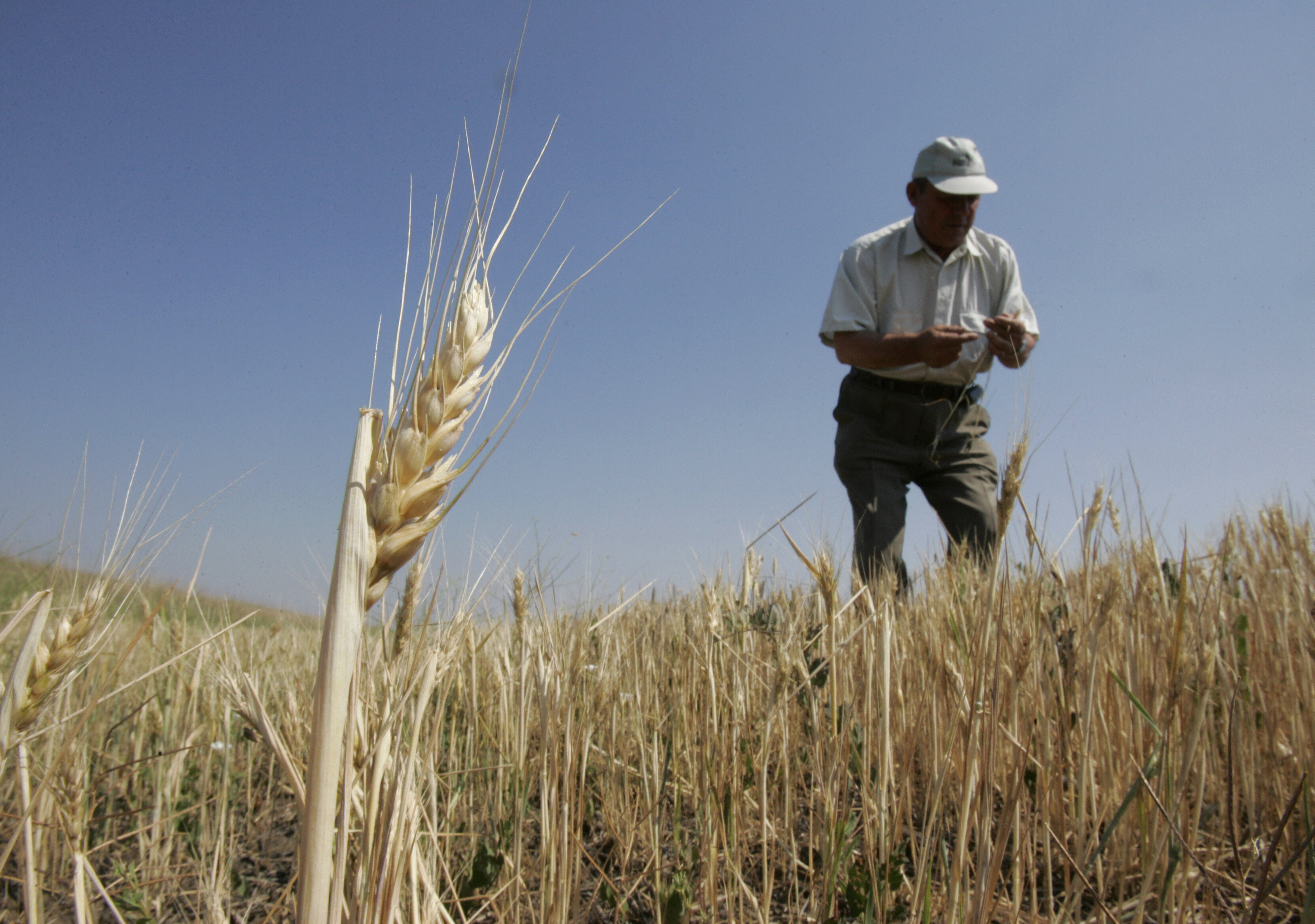
"Drought is no longer a distant threat," says Dr. Mark Svoboda, Director of the National Drought Mitigation Center. Image: REUTERS/Gleb Garanich
- Recent years have witnessed some of the most widespread and damaging droughts in recorded history.
- The impacts are wide-ranging, from devastating crops to slowing down global trade, no country is immune to the consequences.
- Building water resilience requires coordinated public-private investment in technology, nature and policy. Fostering these solutions is a key priority for the World Economic Forum’s Centre for Nature and Climate.
Cracked earth, barren farmland, empty reservoirs.
Every year, we see these stories play out across the globe as droughts threaten food security, ecosystems and livelihoods.
It’s easy to become desensitized to these surreal images, but the impacts are very real. The numbers tell a stark story.
The global land area affected by dry conditions has more than doubled since 1900, according to the OECD, as the chart below shows.
The impacts are felt most keenly in Africa, where extreme drought conditions left 23 million people in severe hunger in 2023.
The silent nature of droughts makes this weather event particularly dangerous, as it creeps across landscapes and threatens livelihoods in ways that often go unnoticed until the damage is done.
"Drought is no longer a distant threat. It is here, escalating, and demands urgent global cooperation", says Dr. Mark Svoboda, Director of the National Drought Mitigation Center.
The current state of global drought severity
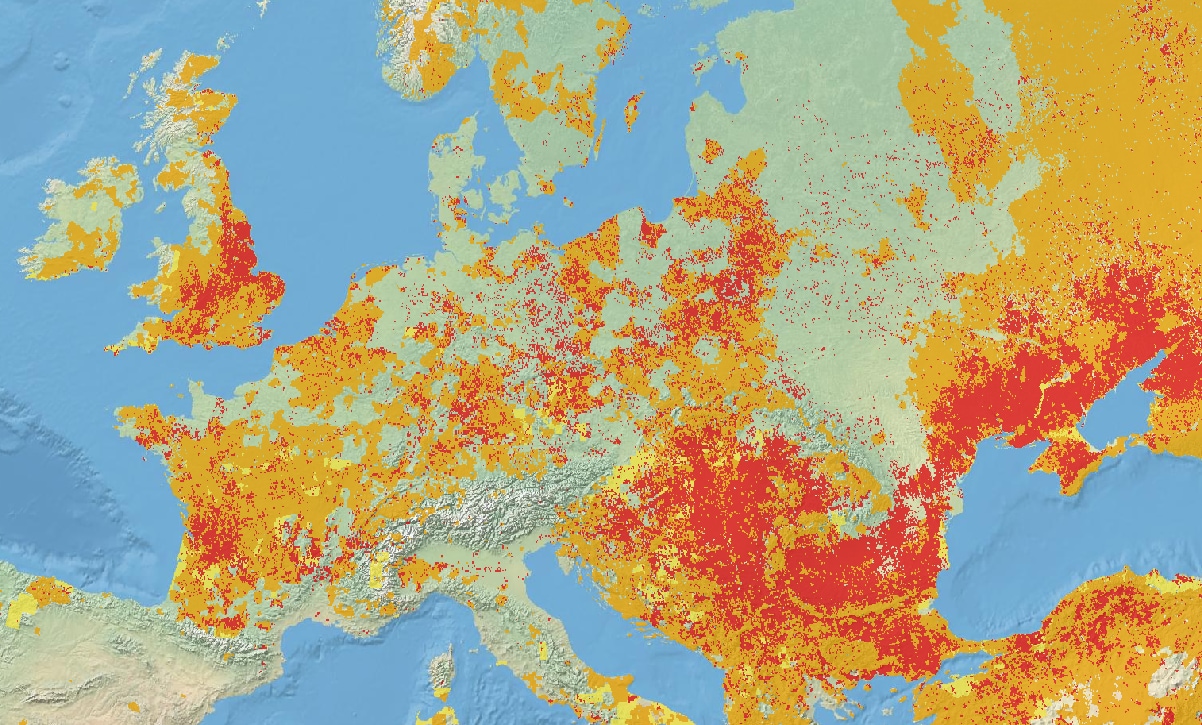
The years 2023-2025 have witnessed some of the most widespread and damaging droughts in recorded history, OECD data shows. This isn't a random occurrence, but the culmination of long-term trends.
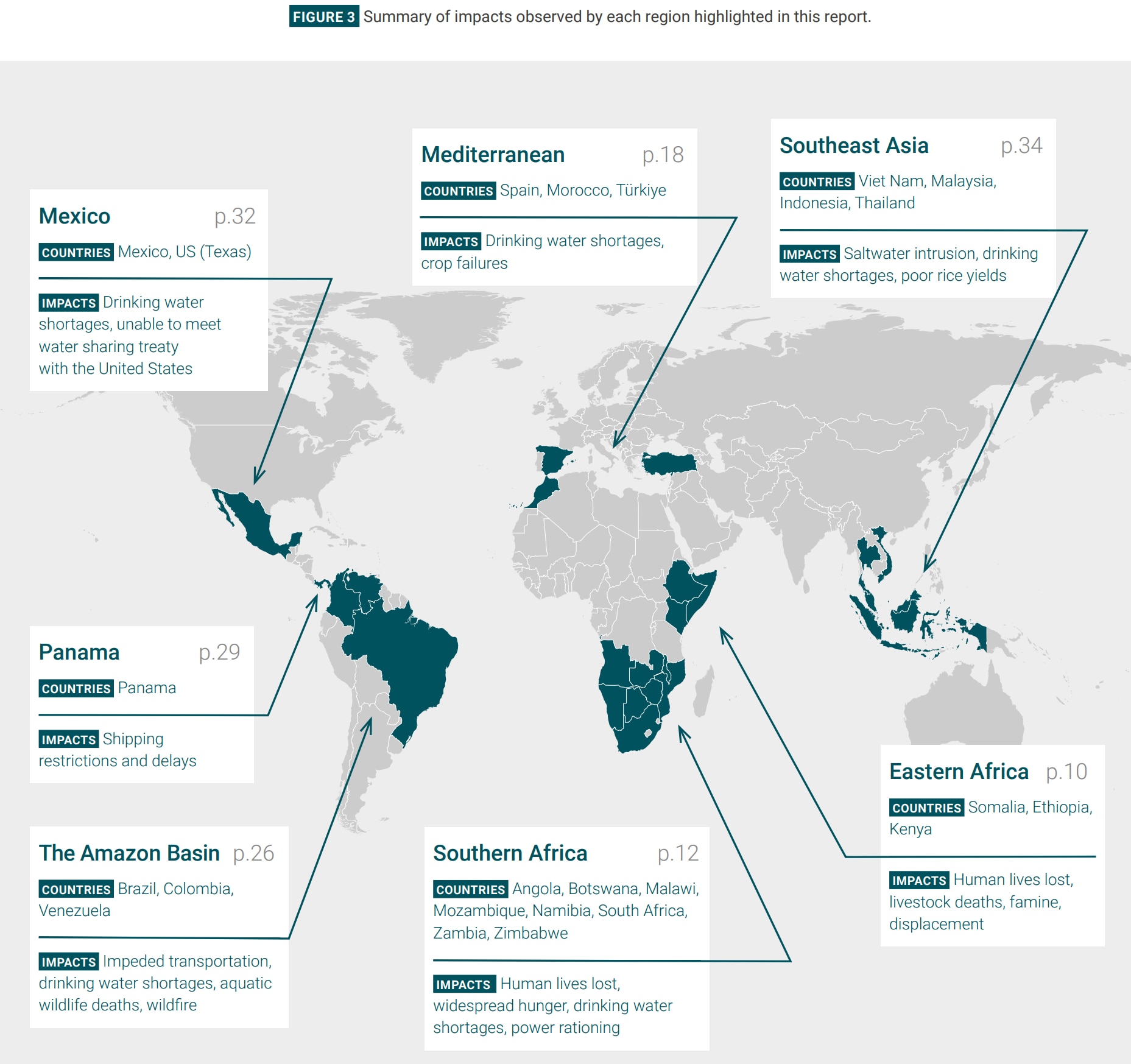
A report from the United Nations Convention to Combat Desertification (UNCCD) has identified drought hotspots. These are regions where the convergence of climate change, human activities (like land mismanagement and water overuse), and environmental vulnerabilities has created a critical feedback loop, fuelling and intensifying water scarcity.
The Horn of Africa is one such hotspot. Five consecutive years of failed rainy seasons in Ethiopia, Somalia and Kenya brought the worst drought in 70 years to the region by January 2023.
In Somalia alone, an estimated 43,000 excess deaths may have occurred in 2022 due to the severe drought, and over one million Somalis were displaced.
The situation has only deteriorated, as the UN warned earlier this year that 4.4 million people – nearly a quarter of the population – could face “crisis” levels of food insecurity between April and June 2025.
The Intergovernmental Panel on Climate Change has stated: "Human-induced climate change has contributed to increases in agricultural and ecological droughts in multiple regions due to enhanced atmospheric evaporative demand (AED)".
One study has found that AED has increased drought severity by an average of 40% globally since 1901. Researchers warn that if emissions continue at current levels, such events could become more frequent and severe.
The human cost of drought
By 2050, climate change will place immense strain on global healthcare systems, causing 14.5 million deaths and $12.5 trillion in economic losses, according to a World Economic Forum report.
When compared with other extreme weather events, droughts are expected to be the second-highest cause of mortality, with an anticipated 3.2 million deaths by 2050.

Malnutrition is one of the most severe direct health impacts of drought, with children under five and pregnant women being the most vulnerable populations.
Water scarcity causes food production to dip, forcing many families to rely on processed, calorie-dense but nutrient-poor foods. They may also be forced to turn to unsafe water supplies. The World Health Organization estimates that one million people die each year from diarrhoea as a result of unsafe drinking-water, sanitation and hand hygiene.
These problems are not isolated issues for individual families to handle; water scarcity threatens the functioning of institutions and society as a whole.
- Healthcare infrastructure becomes strained: Hospitals try to get by without running water, meaning that basic hygiene practices are no longer so easy, putting patients and workers at risk.
- Societal cohesion is threatened: Competition for water resources can exacerbate social tensions and inequalities.
- Mental health suffers: Farming communities in particular struggle with this, as the loss of livelihoods can result in anxiety, stress and depression.
Ecosystem impacts
The impacts of drought can persist long after rainfall returns. Dubbed a "drought legacy", this extreme weather event can reshape landscapes by altering soil systems and the ecosystem services its inhabitants rely upon.
Forests are particularly affected. Drought-induced tree mortality creates a cascade of effects, from reducing canopy cover and changing the forest floor microclimate to diminishing the diversity of forest plant communities.
Soil moisture retention declines, the concentration of pollutants in rivers rises and species richness is reduced.
All of these changes have a lasting effect on ecosystems, yet the impact we often feel most keenly is on food security.
Food security
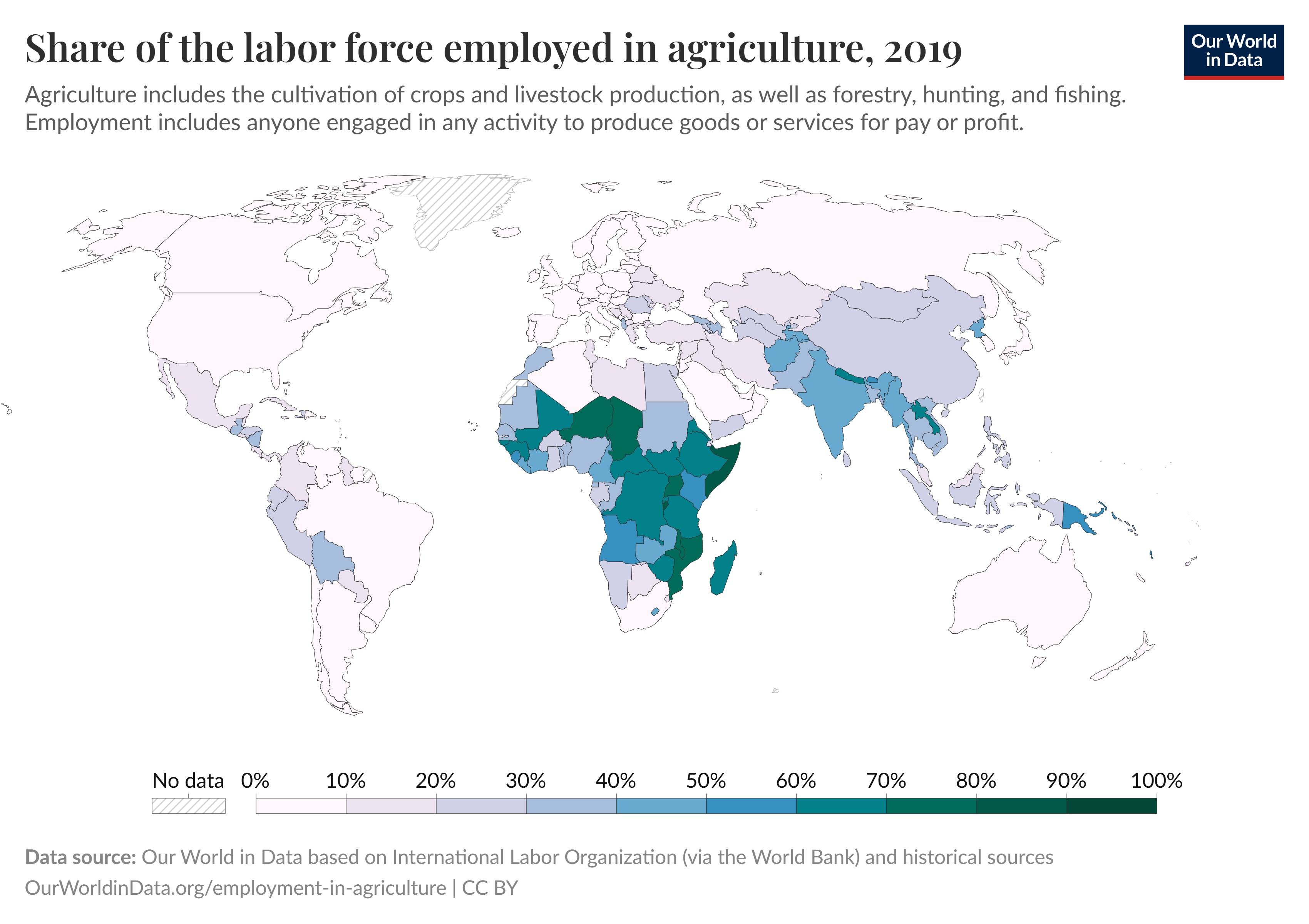
In developing countries, agriculture is the sector most affected by drought, absorbing up to 80% of all direct impacts. With one-quarter of the world's workforce employed in this industry, livelihoods are placed at risk when drought hits arable land.
The UNCCD's recent report on drought hotspots highlights some of the most vulnerable regions in recent years:
- Eastern and Southern Africa: Over 90 million people face acute hunger.
- Zimbabwe: The 2024 corn crop was down 70% year on year, and maize prices doubled.
- Somalia: As of early 2025, 4.4 million people – a quarter of the population – faced crisis-level food insecurity.
- Spain: By September 2023, two years of drought and record heat caused a 50% drop in Spain’s olive crop.
- Southeast Asia: Drought disrupted production and supply chains of key crops such as rice, coffee, and sugar.
- Globally: 85.8% of livestock deaths are attributable to drought.
Global systems under threat
Modern society depends upon key infrastructure such as energy systems and global trade – both of which can dry up.
Hydropower systems are particularly vulnerable to drought. A study from the University of Alabama found that the industry lost an estimated $28 billion between 2003 and 2020 due to drought-related reductions in generation.
One of the worst recent examples of this is in Zambia.
In April 2024, the Zambezi River plummeted to 20% of its long-term average. As a result, the country’s largest hydroelectric plant, the Kariba Dam, fell to 7% generation capacity, causing blackouts of up to 21 hours per day and closing hospitals, bakeries, and factories.
Global trade is considerably reliant on a number of vital waterways that, during times of drought, can place strain on trade flows, as the video below shows.
When we combine the impacts of drought across all of the sectors we've looked at, from trade to healthcare, the combined global cost of drought is estimated at $307 billion annually.
Building drought resilience
Currently, 88% of weather-related disaster funding is spent on reactive post-event responses – mobilizing emergency aid and relief only after a crisis has already unfolded. While this humanitarian support is essential for saving lives, it does little to prevent the next disaster or reduce a region's long-term vulnerability.
Building true resilience demands a proactive approach. This involves strategic, forward-looking investments into the systems, technologies and policies that can secure water access, stabilize food production, and protect economies before a drought takes hold.
Here's what those investments might look like.
New technologies
Given the gradual nature of drought, its impacts often go unnoticed, but drought early warning systems (DEWS) are helping to change that.
DEWS provide "accurate, timely, and integrated information on drought conditions. This can help governments and communities make proactive decisions to minimize the economic, social, and ecosystem losses associated with drought," according to the US National Integrated Drought Information System.
These systems combine data from satellites, ground sensors and climate models, using AI to analyze the results and provide timely warnings to affected communities.
The Forum's innovation ecosystem, UpLink, is demonstrating the power of entrepreneurship in tackling global issues. HCL Group's $15 million partnership with UpLink has created a comprehensive freshwater innovation ecosystem focused on supporting "aquapreneurs" – water-focused innovators.
Watch the video below to hear about its success:
Leaning on nature
But it doesn't all have to be hi-tech.
Nature-based solutions can be both cost-effective and sustainable. One of the most effective is focusing on the restoration of watersheds, which act as transport networks for water.
This can range from establishing protected areas to removing barriers facing watersheds, such as weirs or dams.
The way we farm also has a significant impact on building drought resilience. Regenerative agriculture practices such as tree planting, climate-smart agriculture and agro-silvopastoral approaches (the combination of trees and grazing animals) reduce land erosion, enhance water retention and improve soil quality.
Agricultural innovation
Precision agriculture, drought-resistant crops, and smart irrigation systems are transforming how farmers adapt to water scarcity.
With 70% of global freshwater being consumed by agricultural practices, our systems must be efficient in their use of this precious resource.
The Forum's report Harnessing Digital Technologies for Smarter Water Management in Agriculture explores how digital technologies can advance agricultural water management, from efficient crop selection to effective rainwater distribution, as the graphic below shows.

A water-secure future
Recent crop failures and subsequent famines around the world are evidence enough of the urgency of the situation facing us.
But no company or government can build water resilience alone. The interconnected nature of this challenge means coordinated action is essential across governments, institutions and societies.
The World Economic Forum is committed to fostering the collaboration needed to address these systemic risks. The Forum's Centre for Nature and Climate serves as a crucial platform for this work, bringing together leaders from business, government and civil society. By accelerating action and mobilizing investment into the solutions outlined in this article, the Centre works to build the partnerships necessary for a resilient and water-secure world.
License and Republishing
World Economic Forum articles may be republished in accordance with the Creative Commons Attribution-NonCommercial-NoDerivatives 4.0 International Public License, and in accordance with our Terms of Use.
The views expressed in this article are those of the author alone and not the World Economic Forum.

Forum Stories newsletter
Bringing you weekly curated insights and analysis on the global issues that matter.
More on Climate Action and Waste Reduction See all

Jean Chrysostome Ngabitsinze
March 30, 2026


