Great Barrier Reef suffers largest annual coral decline, and other nature and climate news
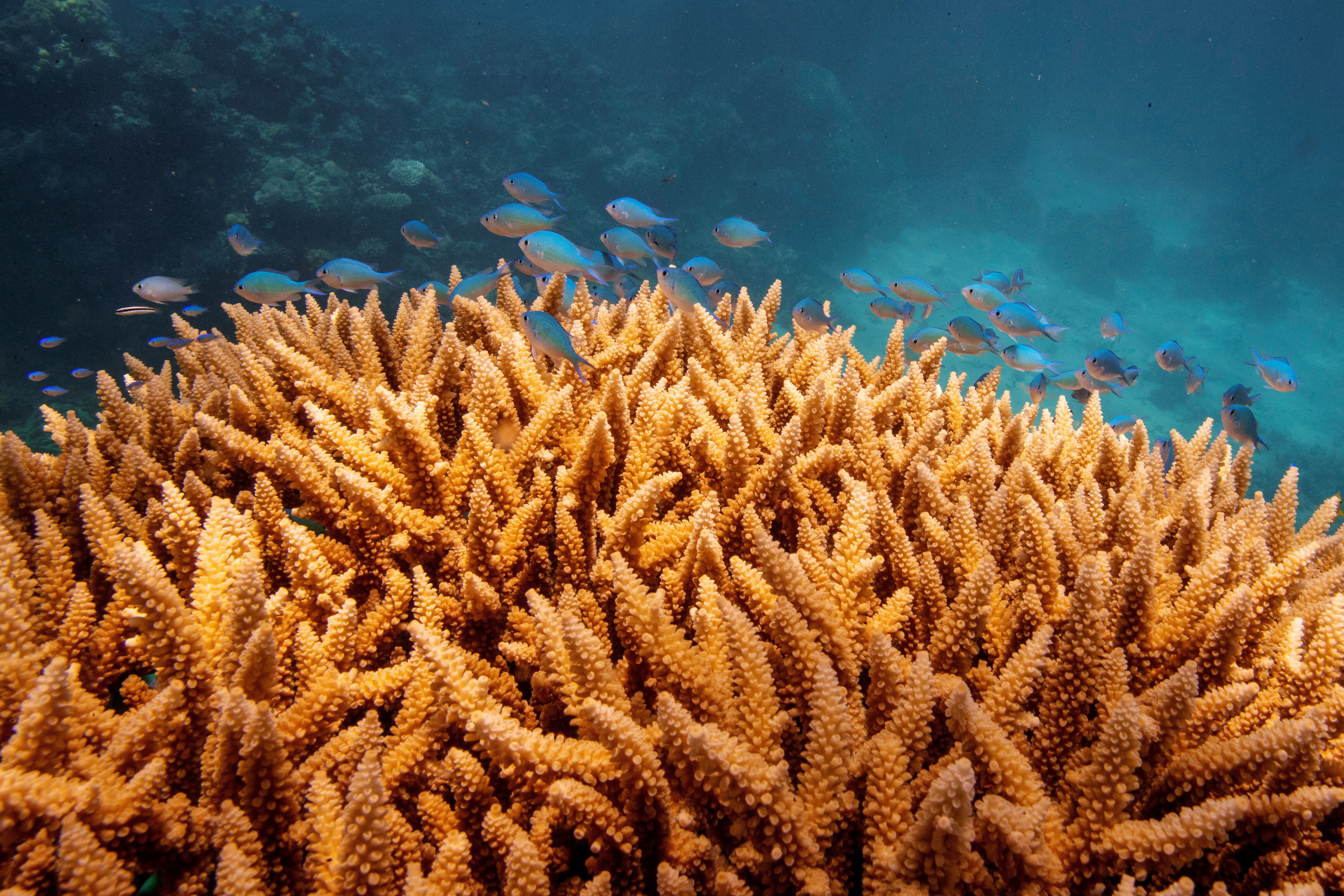
Just under half of reefs have experienced a decline in coral health from 2024 to 2025. Image: REUTERS/Lucas Jackson/File Photo
- This weekly round-up contains the key nature and climate news from the past week.
- Top nature and climate news: Great Barrier Reef faces huge coral decline; Global insured losses for H1 2025 reach $80 billion; Massive wildfires in France now contained.
1. Great Barrier Reef experiences largest annual coral decline
Coral cover across the Great Barrier Reef has experienced its largest annual decline since records began, a report from the Australian Institute of Marine Science (AIMS) has found.
AIMS surveyed the health of 124 coral reefs between August 2024 and May 2025, finding that 48% of reefs underwent a decline in percentage coral cover.
The primary reason for this is heat-stress driven by climate change, though tropical cyclones and crown-of-thorns starfish that eat coral also play a role in this signficant decline.
It is these compounding factors that make it so difficult for coral reefs to recover from mass bleaching events. As the report authors state: "An elevated disturbance environment means that the intervals for recovery are becoming shorter."
"Enabling coral reefs to survive these conditions requires a combination of global greenhouse gas reductions to stabilise temperatures, best-practice management of local pressures and the development of interventions that support reef adaptation and recovery in response to a changing climate."
2. First-half of the year insured losses hit $80 billion
Global insured catastrophe losses reached $80 billion in the first half of 2025, Swiss Re Institute has revealed.
This is above trend, and makes the first half of 2025 the second costliest first half ever, after the earthquakes of Japan and New Zealand in 2011, as the chart below shows.
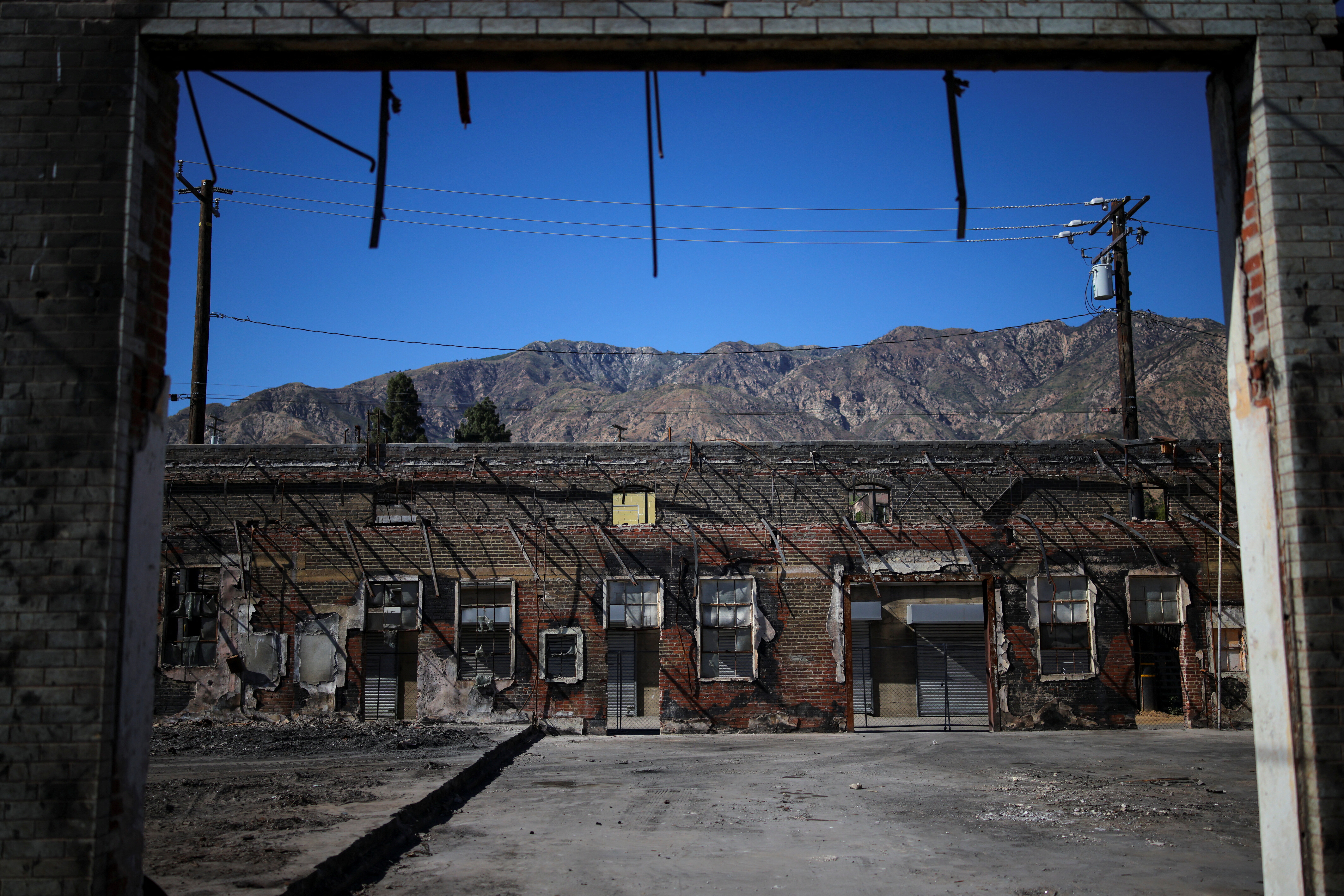
The main drivers were the wildfires that swept through parts of Los Angeles in January, which alone accounted for close to 70% of the global insured losses in the first quarter. In total, Swiss Re estimates the combined insured losses for these wildfires at $40 billion, making this the most costly wildfire event ever.
The second half of 2025 doesn't look any less expensive either. With the Atlantic hurricane season approaching its peak, the insurer suggests that year-end figures for insured losses could reach $150 billion.
3. News in brief: Other top nature and climate stories this week
Last month was Earth's third-warmest July since records began, coming in at an average of 16.68°C, which is 0.45°C above the 1991-2020 average for the month.
"Two years after the hottest July on record, the recent streak of global temperature records is over – for now. But this doesn’t mean climate change has stopped", said Carlo Buontempo, Director of the European Union's Climate Change Service, Copernicus.
In France, this heat resulted in a massive wildfire, which, although now contained, has affected an estimated 16,000 hectares of forest and villages, Reuters reports. This is equivalent to an area one-and-a-half times the size of Paris, and makes this France's largest wildfire since 1949, which burnt 50,000 hectares.
The video below depicts some of the damage.
Despite China's significant renewable energy generation capacity, the nation's utilisation – how much of the energy is being used – is lagging. The curtailment rate – how much grid managers have to limit the amount of power coming into the grid – for solar power rose to 6.6% in the first half of 2025 from 3.9% in the same period a year earlier, while the rate for wind rose to 5.7% from 3%, Reuters reports. This is in part due to transmission of power from where it is produced to where it is most in demand, as well as storage capacity to help balance out supply and demand.
An EU official has confirmed that its upcoming methane emissions regulations for importers of oil and gas will not change: "We stand firmly by this regulation, it is the first of its kind", though they mentioned that "we can be flexible in its implementation for instance in reporting". Methane, which can leak from gas infrastructure, is a significant contributor to climate change.
In England, the number of serious water pollution incidents rose 60% in 2024 from the year before, a new report by the Environment Agency (EA) has found. It blames persistent underinvestment in new infrastructure, poor maintenance, and reduced resilience because of climate change. All nine water and sewerage companies are consistently performing poorly, the EA says, with over 2,800 water pollution incidents last year.
4. More on the nature and climate crisis from Forum Stories
The world is currently convening for the second part of the fifth session of the Intergovernmental Negotiating Committee (known as INC-5.2) to conclude a historic global treaty to end plastic pollution. But solving plastic pollution requires not only skilled negotiators, but also robust partnerships to translate commitments into impact, write Pedro Gomez and Clemence Schmid of the World Economic Forum.
The Global Plastic Action Partnership (GPAP), hosted by the Forum since 2018, exemplifies this approach. As the world’s largest initiative tackling plastic pollution, it operates across 25 countries, convening governments, industry leaders, civil society and technical experts to turn ambition into national action. Read on here to discover how GPAP is driving real-world solutions.
Climate adaptation is an under-realised economic opportunity, write De Rui Wong and Keebum Kim of GIC. Their research finds that the investment opportunity for certain climate adaptation solutions could increase from $2 trillion today to $9 trillion by 2050. Read up on this rapidly evolving field and how connecting climate science with industry fundamentals can provide private investors with deeper insights into the climate adaptation solutions that are likely to be the most successful.
License and Republishing
World Economic Forum articles may be republished in accordance with the Creative Commons Attribution-NonCommercial-NoDerivatives 4.0 International Public License, and in accordance with our Terms of Use.
The views expressed in this article are those of the author alone and not the World Economic Forum.
Related topics:

Forum Stories newsletter
Bringing you weekly curated insights and analysis on the global issues that matter.
More on Climate Action and Waste Reduction See all

Temidayo Akenroye and Hushneara Begum
April 10, 2026


