Human-first AI: What decisions today will impact AI for humanity tomorrow?
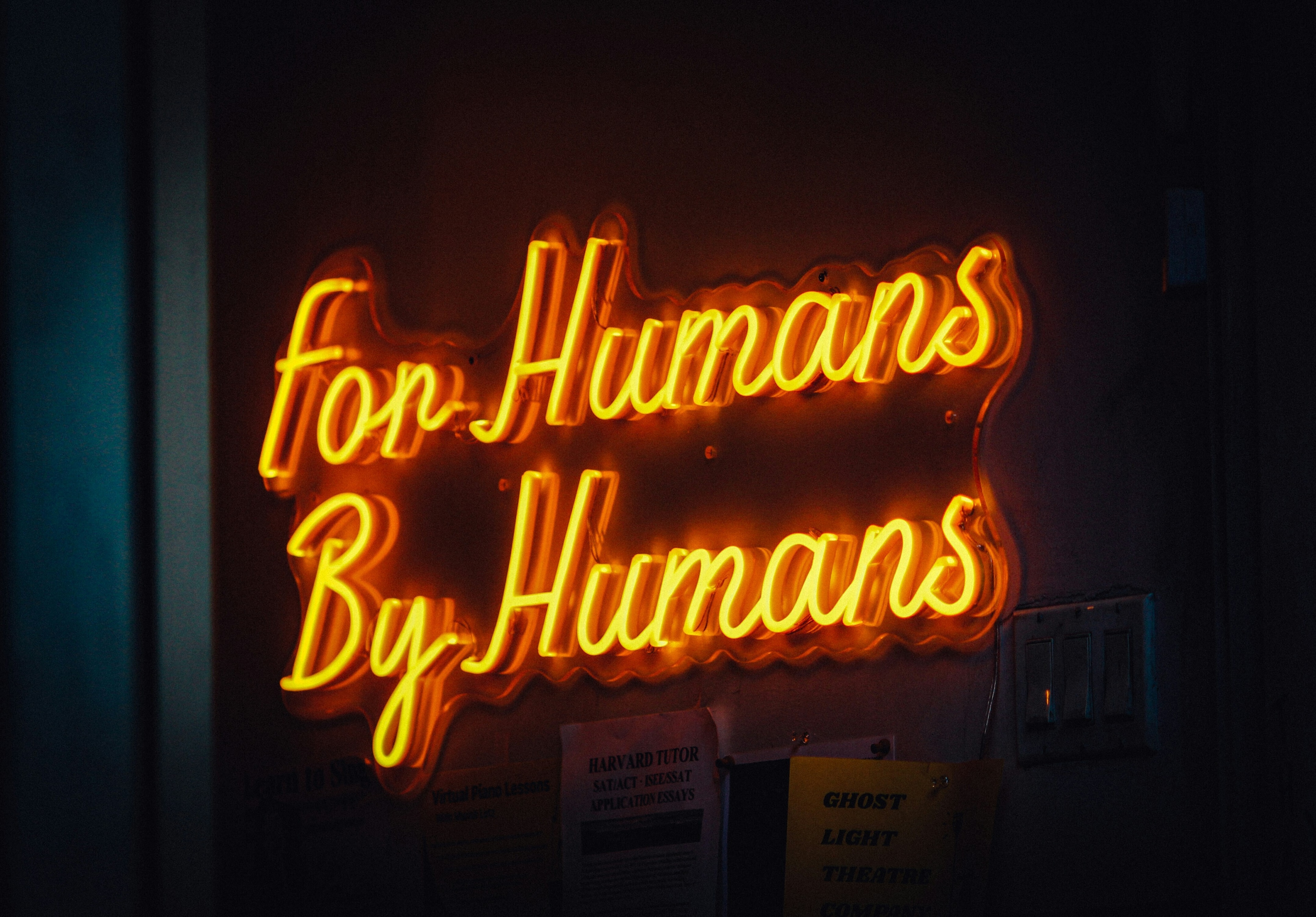
Human-first AI must come from a whole of society approach. Image: Unsplash/Jon Tyson
- AI represents a transformative phase akin to the Renaissance or Industrial Revolution, with opportunities and risks across various industries.
- Ultimately, humans must decide how AI unfolds in the best way that benefits humans first.
- A collective effort across society is essential to harness the best use cases of human-first AI, enabling it to reach its full potential.
Artificial intelligence (AI) stands at the intersection of the Renaissance and the Industrial Revolution, merging human creativity with transformative technology.
Just as the Renaissance ignited an intellectual and artistic awakening, and the Industrial Revolution redefined how we work and live, AI is automating cognitive tasks, reshaping jobs and redefining productivity.
Algorithmic innovation is already driving breakthroughs in real-time, from facilitating autonomous enterprises, rebooting the future of work, to unleashing endless creative possibilities.
Like past eras, this moment brings disruption and opportunity across society. The choices we make now, however, regarding skills, ethics, governance and so on, will determine how AI unfolds in our future. Ensuring a human-AI first approach will take a collective approach.
Revolutionizing industries
From healthcare to humanitarian aid, AI is revolutionizing industries, increasing scale and efficiency and enhancing impact.
For example, AI-powered predictive analytics have been shown to help reduce ICU admissions by 30% by detecting early warning signs of critical illnesses. Meanwhile, automating administrative tasks has freed up educators to focus more on students with special needs.
AI is not just a technological shift; it is a societal transformation.
”In hiring, AI is streamlining recruitment, enabling deeper candidate engagement and strategic decision-making. And in banking, AI is delivering personalized financial advice, detecting fraudulent activities and streamlining processes.
Here are some other ways AI has had a real-world impact across sectors.
1. Humanitarian response
Shifting from reactive to proactive, the United Nations Development Programme leverages AI-powered geographic information system tools to conduct real-time digital impact assessments.
In Sri Lanka, the Crisis Risk Dashboard analyzes historical and live data to monitor hate speech, religious violence and macroeconomic issues, while in Ecuador, it tracks displacement and migration.
In aid delivery, with aid organization Step with Hope, Automation Anywhere created Telegram for Humanity. The customized digital worker automates aid intake requests to help internally displaced people, saving the organization nearly 200 hours of weekly manual processing and increasing aid request processing by 400%, allowing more time to deliver critical direct services.
2. Education and welfare
Non-government organizations and governments are facing surging demand, turning to technology to scale services efficiently. The Akshaya Patra Foundation, which provides 2.25 million daily meals to children, is automating document processing and supply chain logistics to expand to 3 million meals this year.
Meanwhile, ed-tech leaders from refugee agencies and the Global South highlighted progress in making learning more accessible and customizable.
3. Crime and disaster prevention
AI is driving real-time, actionable insights in public safety. Law enforcement and policymakers now leverage AI-driven data for better decision-making.
Wildlife agencies use AI to analyze satellite data and predict wildfire hotspots, enabling proactive resource deployment. In ocean conservation, AI-powered automation is identifying plastic accumulation zones off India’s coast, aiding cleanup efforts.
4. Healthcare and life sciences
Whether AI diagnostics or robotic-assisted surgeries and drug discovery, this industry is transforming itself to provide better patient care and reduce doctor and nurse burnout with agentic process automation. Used intelligently and responsibly, the potential here is endless.
Like the visionaries of the past, we must steer this revolution with wisdom, ensuring AI remains humanity-first
”Beyond cost savings, automation fosters innovation and optimizes resources. Our work with the UK’s National Health Service improved operational efficiency, boosted staff morale and delivered better patient outcomes, while establishing a scalable framework to measure financial and human impact.
By automating repetitive tasks, AI help healthcare professionals to focus on what only humans can do: care with empathy and expertise.
5. Everyday AI
Just as the Renaissance unlocked human potential and the Industrial Revolution mechanized labour, AI is redefining productivity. From app builders to personalized financial tools, AI is already enhancing efficiency at scale, but personal AI agents will soon amplify individual productivity and organizations will be enabled to do more with less.
The need for caution
While AI can be transformative, there is a need for caution. The Center for AI Safety cites malicious use, such as large-scale disinformation campaigns, competition leading to a rushed AI development, organizational risks and rogue AIs as primary drivers that could undermine human-first AI.
Here's how we can avoid some of those risks:
1. Data sovereignty and responsible AI
The ethical use of AI and responsible data governance are essential for a fair, sustainable and human-centric society. Protecting privacy, eliminating biases and maintaining transparency in AI-driven decision-making are crucial to fostering trust in the technology and building a world where AI serves humanity first.
Prioritizing AI responsibility can strengthen guardrails against outputs of malicious use, including bias, disinformation and discrimination, and instead strengthen human rights.
2. Economic mobility for all
The wealth gap is a deeply entrenched challenge that has persisted for generations, but AI presents a powerful opportunity to drive real progress.
By intentionally leveraging AI to reskill and upskill workers, we can create pathways to economic mobility, ensuring that technological progress benefits everyone, not just the privileged few. The key is to use AI as a force for inclusion rather than division.
3. The ageing workforce challenge
A workforce gap is looming as skilled analogue-era workers retire. By 2030, people over 50 will outnumber younger workers in most regions, with some exceptions, for example, India, Singapore and some African countries. With fewer young professionals to fill these roles, technology must bridge the gap.
AI can enhance the productivity of older workers while reducing workloads for younger generations through intelligent automation, thereby ensuring a more sustainable workforce.
The future is collaborative
AI is not just a technological shift; it is a societal transformation. We’re living in a time of both disruption and possibility. To realize AI’s full potential, with cognizance of its risks, collective effort is essential. Adopting an adaptive mindset is key to realizing the art of the possible through AI.
Whether it’s saving time and maximizing productivity through automation, or saving lives by expediting humanitarian aid during crisis, AI has the potential to bridge the human-technology gap to do well and do good.
Like the visionaries of the past, we must steer this revolution with wisdom, ensuring AI remains humanity-first – this is our Renaissance. The choices we make today will define the world of tomorrow.
Don't miss any update on this topic
Create a free account and access your personalized content collection with our latest publications and analyses.
License and Republishing
World Economic Forum articles may be republished in accordance with the Creative Commons Attribution-NonCommercial-NoDerivatives 4.0 International Public License, and in accordance with our Terms of Use.
The views expressed in this article are those of the author alone and not the World Economic Forum.
Stay up to date:
Artificial Intelligence


Forum Stories newsletter
Bringing you weekly curated insights and analysis on the global issues that matter.
More on Technological InnovationSee all

Tejpreet S Chopra and Ayushi Sarna
February 27, 2026


