5 things business leaders need to know about climate resilience
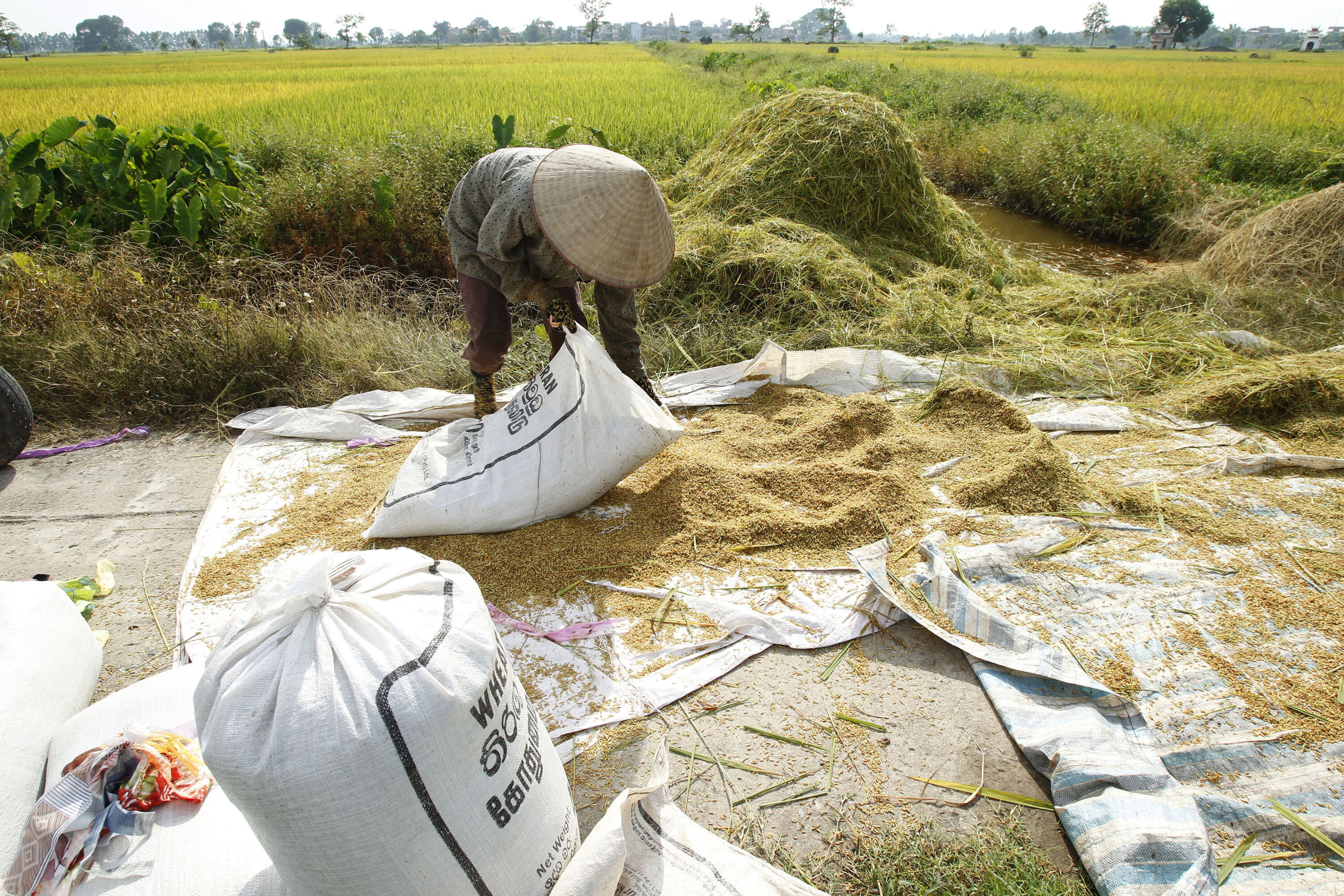
Climate resilience solutions are a trillion-dollar market. Image: REUTERS/Kham
- The costs of climate change are a present reality for business, with impacts ranging from increased insurance prices all the way to bankruptcy.
- Climate resilience is profitable; every dollar invested yields more than one in return, either in avoided losses or economic gains. As demand for solutions grows, climate resilience will become a trillion-dollar market.
- Resilience and mitigation are both distinct and complementary. Firms can spread responsibility across the leadership team, while also capturing co-benefits that strengthen operational and sustainability goals.
In 2019, California’s largest utility, Pacific Gas and Electric (PG&E), suffered the world’s first “climate-change bankruptcy.” It faced legal liabilities of tens of billions of dollars due to its alleged role in sparking massive wildfires, made significantly more likely and severe because of prolonged drought linked to climate change.
Though PG&E’s new leadership has course-corrected, its case demonstrates that climate change is already having a material impact.
In the following five years, climate change effects became even clearer, as they contributed significantly to the submerging of one-third of Pakistan in 2022, the destruction of an African city in 2023 and unprecedented European heatwaves that killed tens of thousands the same year.
Investors are finding that companies specialized in adaptation solutions make strong contributions to their portfolios.
”We therefore must consider climate change as a present reality addressed through adaptation as much as a future concern minimized via emissions reductions.
Historically, business leaders have veered away from adaptation, viewed as uninvestible, too distant or inapplicable to their core markets, while their role vis-à-vis the government’s can be unclear.
However, many business leaders are now finding that a resilience framing can provide perspective on business continuity and revenue growth, creating a positive social impact that aids preparedness.
Thus, private investment in climate resilience is growing upwards of 30% annually in Europe – according to available data, with more and more companies taking part. As businesses consider starting their own resilience journey, here are five things they should keep in mind.
1. Physical climate changes already cost businesses
The World Meteorological Organization found that long-term global warming is currently estimated to be between 1.34 and 1.41 degrees Celsius, with global average temperatures increasing exponentially over the last 50 years. Simultaneously, the frequency of natural disasters increased fivefold and total global wildlife populations, across all species, declined by 73%. Such effects, more so than rising sea levels or melting ice sheets, are the principal impact vectors of climate change now.
Businesses are already suffering from these effects, sometimes without realizing it. Costs arise from supply shocks, loss of ecosystem services, physical asset degradation, the cost of capital and insurance and labour productivity losses. For example:
- The decline in ecosystem functionality already costs more than $5 trillion a year in lost natural services.
- Heat-related labour productivity losses cost an estimated $280–311 billion annually.
- Natural disasters caused $320 billion in losses in 2024 and over $100 billion in insured losses, in turn, driving up property insurance premiums by 10-20% per year.
Over the next few decades, these costs will be undeniable. A recent Nature study suggests current emissions will lower global gross domestic product (GDP) per capita by 11% to 29% by 2040.
2. Climate resilience impacts advanced economies too
We know that low and middle-income countries are bearing the brunt of climate impacts but this narrative has overshadowed the extent to which advanced economies will be affected.
Companies in the S&P Global 1200 index will face $1.2 trillion in annual costs from physical climate impacts by 2050. Most of the index’s market value lies in the United States, with most losses stemming from extreme heat, manifesting as lost labour productivity, accelerated asset depreciation and higher energy costs, among others.
Flooding, drought and water stress will have important consequences. The World Economic Forum’s conservative analysis of S&P data shows that telecoms and utilities will be particularly hard hit, confronting an in excess of 20% profitability reduction.
According to new research from the Forum and Boston Consulting Group (BCG), with heat, changing disease patterns linked to climate change will particularly affect agriculture, healthcare and built environment sectors globally, while supply chain spillovers will also be seen.
For example, economic losses to China and the United States from extreme heat in third countries cascading through supply chains could amount to a minimum 2% and 1.3% of national GDP, respectively, by 2060.
3. Investing in climate resilience yields high returns
Climate resilience is becoming profitable partly due to avoided loss. Several recent studies confirm this with remarkable consistency, given the diverse interpretation of “returns” (from private to socio-economic).
The Forum's own research, conducted with the Alliance of CEO Climate Leaders and BCG, found that companies reported a $2-19 yield for every dollar invested in adaptation and resilience, as did others.
Standard Chartered found that, on average, every dollar spent on climate adaptation this decade – such as flood defences, natural disaster early warning systems and agriculture technology – would generate $12 of economic benefit (in 10 emerging markets studied).
The US Chamber of Commerce notes that every dollar invested in resilience and preparedness saves $13 in economic impact, damage and cleanup.
High returns are not restricted to direct investments. Investors are finding that companies specialized in adaptation solutions make strong contributions to their portfolios.
USAID, the Global Resilience Partnership, and BCG report that venture capital and private equity valuation multiples in adaptation have more than doubled in advanced economies since 2012, surpassing the broader market since 2018.
4. Climate resilience will be a multi-trillion-dollar market
While thinking of climate change’s economic opportunity may seem tone deaf, the fact is that prosperity will come from different means in a warming world.
Increased demand will be seen for climate information services, desalination solutions, heat-resistant building materials, drought-resistant seed varieties and weather-related insurance, for example. Innovation and scaling in these areas also serve to ensure access and affordability.
Companies that act first stand to capture a very large market. In May, Singapore-based Temasek sized the potential as $1.3 trillion, while fellow investors GIC noted that revenues from a select set of climate resilience solutions will grow from around $1 trillion to $4 trillion by 2050.
Business leaders can make sense of this by treating climate change like digital transformation – both manifesting as exogenous shocks, compelling change to minimize risk and capitalize on new opportunities.
5. Resilience investment still means fighting climate change
Climate adaptation and mitigation are often seen as being in tension. However, for business, they are distinct and complementary.
Dr Sarah Kapnick, Global Head of Climate Advisory at JPMorgan, describes their independence: “Mitigation can drive innovation and reduce long-term costs, climate adaptation can help ensure operational continuity and opens new market opportunities."
Given this distinction, companies are broadening responsibility for resilience across leadership teams – the World Business Council on Sustainable Development highlights these varied responsibilities – sometimes creating new chief risk and resilience officer positions.
Co-benefits – complementarities between resilience and mitigation – have long been recognized in policy and are evident across sectors – particularly agriculture, including soil moisture conservation and more efficient irrigation; or nature restoration that both buffers climate impacts and advances net-zero goals.
Unsurprisingly, firms with stronger environmental scores also show greater financial resilience.
Businesses, therefore, don’t just have to look at the impact they’re having on the climate but also see how global warming is impacting them. Climate resilience can serve as risk management and also a growth strategy for businesses that want to thrive in a warming world.
Don't miss any update on this topic
Create a free account and access your personalized content collection with our latest publications and analyses.
License and Republishing
World Economic Forum articles may be republished in accordance with the Creative Commons Attribution-NonCommercial-NoDerivatives 4.0 International Public License, and in accordance with our Terms of Use.
The views expressed in this article are those of the author alone and not the World Economic Forum.
Stay up to date:
The Net Zero Transition
Related topics:


Forum Stories newsletter
Bringing you weekly curated insights and analysis on the global issues that matter.
More on Climate Action and Waste Reduction See all

Lin O’Grady and Alice Charles
April 7, 2026


