Rising global gas demand, and more top energy stories
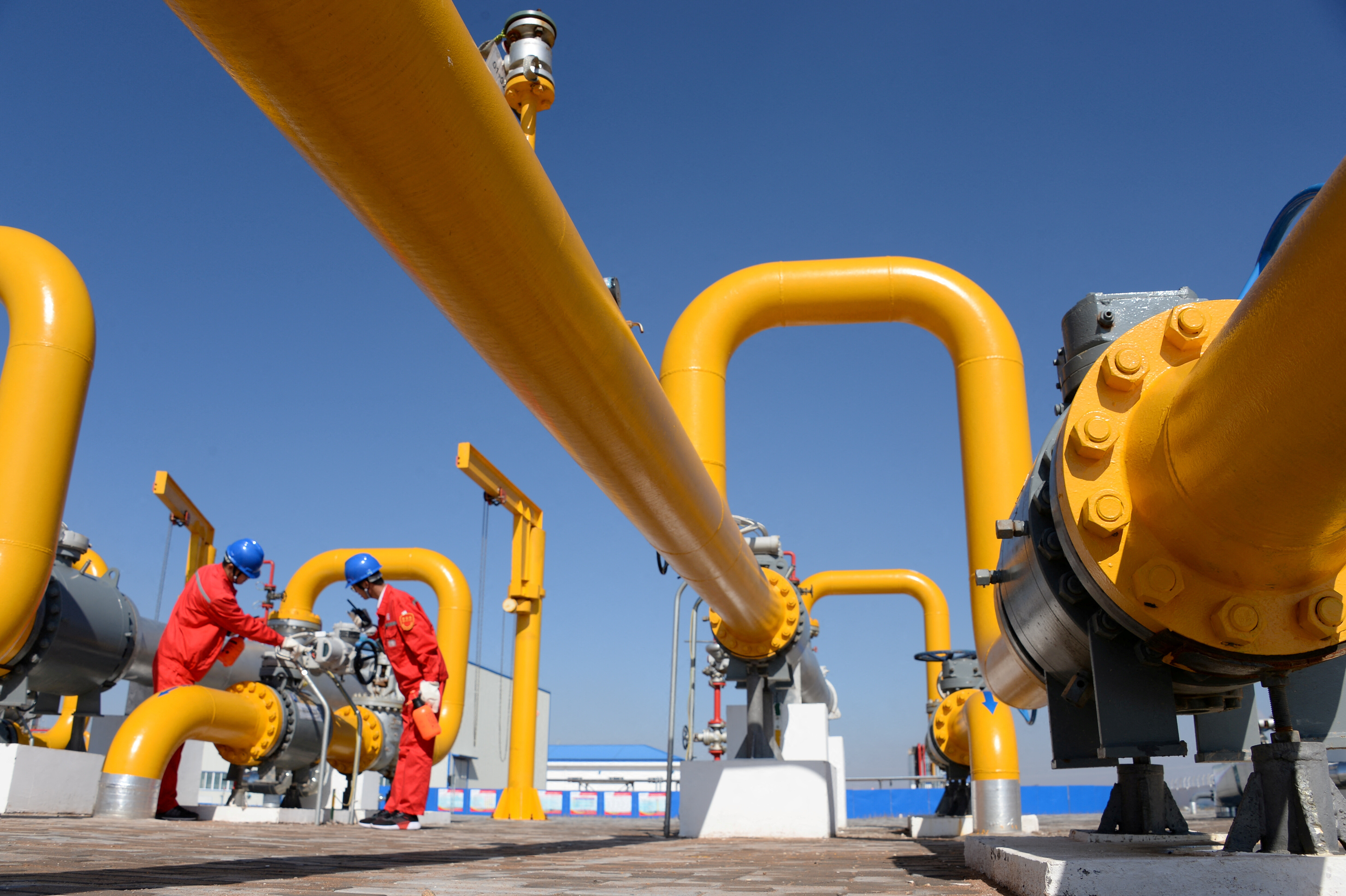
Natural gas is still a key transitional asset and central to today’s energy mix. Image: REUTERS/Stringer/File Photo
Roberto Bocca
Head, Centre for Energy and Materials; Member of the Executive Committee, World Economic Forum- This round-up brings you the key stories from the energy sector over recent weeks.
- Top energy news: Gas demand soars amid heat and AI boom; major Africa energy programmes launched; huge mining deal signed.
- For more on the World Economic Forum’s work in the energy space, visit the Centre for Energy and Materials.
1. Gas demand continues to rise
Global gas demand rose by 78 billion cubic metres in 2024, driven by extreme heat, industrial demand and artificial intelligence-powered data centres, according to a new report.
Demand could grow by a similar amount in 2025, predicts the latest edition of the Global Gas Report by the International Gas Union and energy infrastructure operator Snam.
Heatwaves and technological drivers, including AI, are straining global power systems, the report says and countries are turning to natural gas to meet power needs and stabilize grids.
In the first half of 2025, growth has been mainly seen in Europe and North America, increasing by 6.1% and 1.5% respectively. Over the next five years, expected surges in power consumption in China and India will continue to drive an increase in natural gas demand, the report adds.
As more intermittent renewable power sources are integrated into grids, natural gas – which has a significant share of the electricity generation mix in many regions and emits less carbon than most other fossil fuels – is still a key transitional asset and central to today's energy mix, according to the Fostering Effective Energy Transition 2025 report from the World Economic Forum.
“When paired with carbon capture, it offers a pragmatic path towards near-term security and decarbonization – particularly in regions with established infrastructure,” the report adds.
AI growth, meanwhile, might be adding to the pressures on grids but the technology is also enabling the energy transition, according to the Forum white paper Artificial Intelligence’s Energy Paradox: Balancing Challenges and Opportunities. AI is helping to increase energy efficiency across sectors – reducing consumption by up to 60% in some use cases – as well as enabling smarter grids and accelerating the integration of clean energy into existing infrastructure, it says.
2. Major energy programmes launched at Africa Climate Summit
Leaders from across Africa gathered in Addis Ababa, Ethiopia, last week for the second Africa Climate Summit, at which the African Union (AU) and the European Union (EU) launched two programmes to accelerate the continent’s energy access.
The Continental Energy Programme in Africa (CEPA), funded by the EU, and the German ministry for economic development-funded ENGAGE, are designed to accelerate efforts to create a cross-border electricity market across all AU member states.
“Fostering one integrated electricity market across Africa represents a transformative step towards uniting the continent’s diverse resources and empowering communities,” Teresa Ribera, European Commission Executive Vice-President for a Clean, Just and Competitive Transition, said in a press announcement.
Over 600 million people in Africa remain without reliable access to electricity, accounting for more than 80% of the global electricity access gap.
At the same time, electricity demand on the continent is expected to nearly double by 2040, reflecting global trends of rapidly increasing demand. The continent has "enormous potential" to address these challenges, according to the EU, which says Africa's generating capacity could rise from 266 GW in 2023 to more than 1,200 GW by 2040. Renewables are projected to grow from 25% to nearly 64% of the mix.
CEPA and ENGAGE – part of the Africa–EU Green Energy Initiative, which is a flagship of the EU’s $177 billion Global Gateway Africa–Europe Investment Package – will aim to create a favourable environment for public and private investment in cross-border transmission, as well as renewable energy and energy efficiency.
3. News in brief: More energy stories from around the world
UK-listed mining company Anglo American and Canadian copper producer Teck Resources have agreed to combine to create a $50 billion firm called Anglo Teck. The agreement is one of the largest-ever mining deals.
Oman has outlined a $97.48 billion investment programme across its energy system through to 2032, according to a report by the Energy Industries Council. Green hydrogen makes up the largest share of the investment.
Global investment in clean hydrogen projects has risen $35 billion in the past year to reach $110 billion, according to a study commissioned by the hydrogen council. China and the US account for more than half of the amount invested.
Australia’s Woodside Energy has signed a 15-year deal with Malaysia state-owned firm Petronas to supply 1 million tonnes of liquefied natural gas a year. The agreement will start in 2028.
China’s transition to renewables is reshaping the global energy landscape and could cut global fossil fuel use by 2030, according to a report from energy think tank Ember. Clean generation growth led by solar and wind met 84% of China’s electricity demand growth in 2024.
Amid a surge in power demand from data centres, energy industry executives in Asia have warned that the region’s clean energy transition will stall unless governments stop subsidising fossil fuels, create stable policies and invest in grids.
How the Forum helps leaders navigate the transition of energy and materials systems
4. More on energy from Forum Stories
Electricity grids are under pressure across the globe as demand rises and renewable generation is accommodated. Reimagining consumers as more than end users, but as producers, flexible participants, and partners in grid stability and resilience, can enable a more resilient and future-ready grid.
Unlocking this 'flexumer' revolution will require:
- Clear and attractive value propositions for participants
- Seamless digital experiences that make flexibility easy for users
- Awareness and education to build support and trust
Read more about how flexumers can help transform energy markets.
Innovation in energy is uniquely complex because it needs to consider three often conflicting goals. Balancing security, equity and sustainability is key to ensuring the energy sector continues to play a key role in the progress of both industry and society, writes Rosa Kariger, Member, Board of Directors, DeNexus.
Several energy technology trends are dominating in 2025 – areas including security, costs and jobs, decarbonization and AI all need to be carefully monitored. Read more about the top 5 energy technology trends and how the Forum’s Advanced Energy Solutions community is helping the energy technology community cooperate and accelerate the deployment of new energy technologies.
To learn more about the work of the Energy, Materials, Infrastructure Platform, contact Ella Yutong Lin: ellayutong.lin@weforum.org
License and Republishing
World Economic Forum articles may be republished in accordance with the Creative Commons Attribution-NonCommercial-NoDerivatives 4.0 International Public License, and in accordance with our Terms of Use.
The views expressed in this article are those of the author alone and not the World Economic Forum.

Forum Stories newsletter
Bringing you weekly curated insights and analysis on the global issues that matter.
More on Energy TransitionSee all

Stefan Koch, Renée van Heusden and Margi Van Gogh
July 21, 2026


