Charting Asia’s agri-food transformation
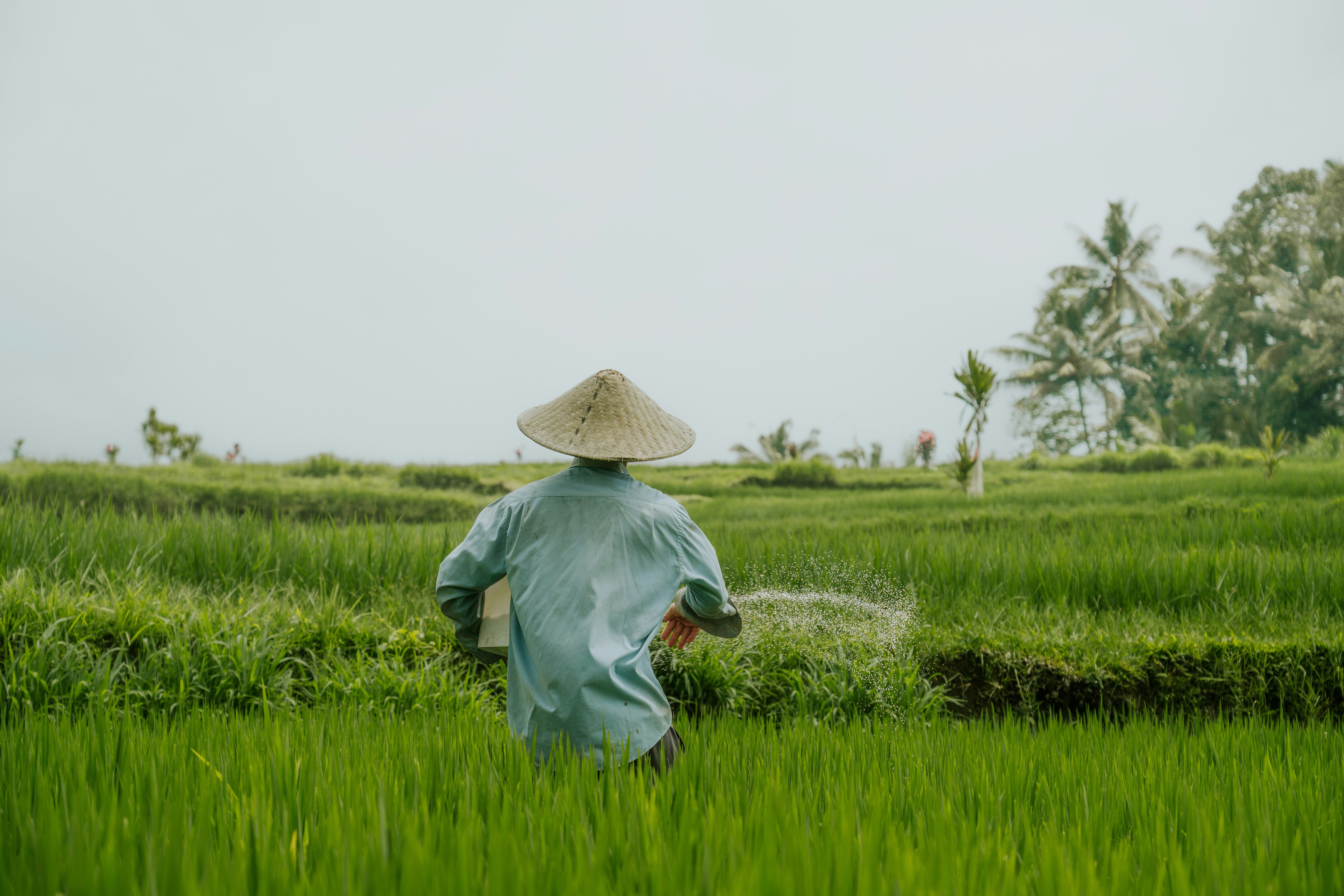
Food systems should nourish people, empower farmers and protect the planet. Image: Unsplash/MatthewStephenson
Tania Strauss
Head of Sustainable Growth and People Agenda, Member of the Executive Committee, World Economic Forum- Food systems comprise the network of people, organizations and infrastructure that farm, sell and prepare the food we all eat.
- Biodiversity loss, changing global market dynamics and rising inequality are affecting food systems all over the world, but especially in Asia.
- Asia's agri-food future will depend on its food systems becoming less fragmented and fragile, and more inclusive, resilient and sustainable.
The networks of activities, organizations and infrastructure that bring food from the fields to our tables provide much more than nutrition, these food systems also secure the livelihoods of families and communities around the world.
In Asia, 40% of the workforce is employed in a food-related job, according to the Asian Development Bank. But food systems are becoming increasingly strained by biodiversity loss, changing global market dynamics and rising inequality.
Progress on developing more robust sustainable food systems to mitigate the effects of these issues in places like Asia depends on deep regional expertise and farmer-focused networks. Combined with global insights and multi-sector partnerships, this can catalyze innovative food system solutions and help them to scale.
Efforts to mobilize capital and technology, and to shape inclusive policies and standards, must reach millions of smallholders (farmers of less than 10 hectares, who often work with family members) to create measurable, lasting environmental, social and economic impact across Asia. Multi-stakeholder collaboration can play a crucial role in such efforts, becoming a transformative force for the future of food.
That’s why, 10 years ago, the World Economic Forum, in partnership with the Association of Southeast Asian Nations (ASEAN), launched Grow Asia. Its work addresses the pressing challenge of how to feed a growing population while ensuring food systems are inclusive, resilient and sustainable.
Since then, the Grow Asia network has become a vibrant ecosystem of more than 775 partners – governments, companies, civil society, academia and farmer organizations – all working together to create scalable solutions. Its supports five countries – Cambodia, Indonesia, Papua New Guinea, the Philippines and Vietnam – and 44 value chains, providing more than 3.7 million smallholders and rural enterprises with technology, financial services and training. This has increased farm incomes by more than $81 million annually in selected agri-food value chains.
A strategic food system partnership
These results have been achieved by bringing together uncommon partners – investors, policy-makers, agri-food companies, philanthropies and producer organizations. The annual Grow Asia Investment Forum, for example, helps to unlock capital for sustainable and inclusive food systems by creating space for dialogue and forging new pathways for blended finance.
One of the key highlights at this year’s Grow Asia event will be the World Economic Forum’s First Movers Coalition (FMC) for Food. Launched at COP28, FMC for Food brings together more than 50 partner organizations with a combined $900 billion in annual revenues to use their collective purchasing power to de-risk the net-zero transition and scale resilient, low-emission food commodities.
This model has already unlocked opportunities in other industries, opening new markets for clean steel, sustainable aviation fuel and shipping. The coalition is now focusing on beef, dairy, rice and row crops – commodities that are critical for food security, farmer livelihoods and climate action.
Connecting global demand commitments with local innovation and farmer adoption will ensure that sustainable practices are not only piloted but scaled. By linking smallholder farmers to the markets, new capital and innovation will define the future of agriculture.
4 strategies to strengthen Asia’s food systems
The urgency of the climate crisis, shifting global markets and rising inequality means going further and faster to make food systems more robust and sustainable. The next decade will be critical in defining and leading transboundary efforts to build food systems that nourish people, empower farmers and protect the planet.
It will take a four-pronged approach to strengthen Asia's food systems during the decade ahead:
1. Expanding access to finance and markets for smallholders
Around 80% of Southeast Asia’s farmers are smallholders. But most remain excluded from formal financial systems. Unlocking $1 billion in sustainable funding by 2030 through blended finance, impact investment and inclusive business models, will give these farmers the resources and market connections to thrive. The GrowBeyond programme will accelerate this shift, advancing responsible investment aligned with regenerative agriculture.
2. Building sustainable supply chains and restoring soil health
Action on regenerative agriculture can help to improve soil health, restoring biodiversity, nutrient density and water retention. The GrowRight programme aims to enable millions of smallholder farmers to transition to regenerative practices, improving their livelihoods while meeting growing demand for sustainable sourcing and safeguarding Asia’s natural capital. Meanwhile, the GrowHer programmes will continue to ensure that women, who make up a significant share of Southeast Asia’s agricultural workforce, are empowered as equal participants in this transformation.
3. Driving digital transformation for inclusive agri-tech
Connecting the millions of smallholders in Southeast Asia to data-driven tools – from AI-powered advisory services to blockchain-enabled supply chain platforms – can help to reduce post-harvest losses, strengthen market access and ensure small farmers are not left behind in the digital economy. The GrowVentures programme is a catalyst for digital transformation, investing in initiatives that drive technological innovation and help to scale agri-food start-ups across the region.
4. Accelerating climate-resilient farming
Adaptive practices can help farmers withstand extreme weather, shifting rainfall patterns and rising sea levels. Such practices include using drought-resistant crops, precision irrigation and agroforestry to boost yields in the most vulnerable areas while reducing environmental risk. The work of the GrowBeyond Fund focuses on adaptation strategies that build resilience at both the farm and landscape level.
Delivering more for Asia’s farmers
Choices made today and actions taken over the next decade and beyond will determine whether Asia’s food systems become more fragmented and fragile, or more inclusive, resilient and sustainable.
Empowering smallholders through innovation, finance and markets will enable small farm businesses to become the engine and architects of Asia’s agri-food future. This will deliver system-wide transformation for farmers, communities and the planet.
Don't miss any update on this topic
Create a free account and access your personalized content collection with our latest publications and analyses.
License and Republishing
World Economic Forum articles may be republished in accordance with the Creative Commons Attribution-NonCommercial-NoDerivatives 4.0 International Public License, and in accordance with our Terms of Use.
The views expressed in this article are those of the author alone and not the World Economic Forum.
Stay up to date:
Food Systems
Related topics:


Forum Stories newsletter
Bringing you weekly curated insights and analysis on the global issues that matter.
More on Food, Water and Clean AirSee all

Michael Colarossi
April 7, 2026


