Global energy transition shows resilience despite headwinds, and more top energy stories
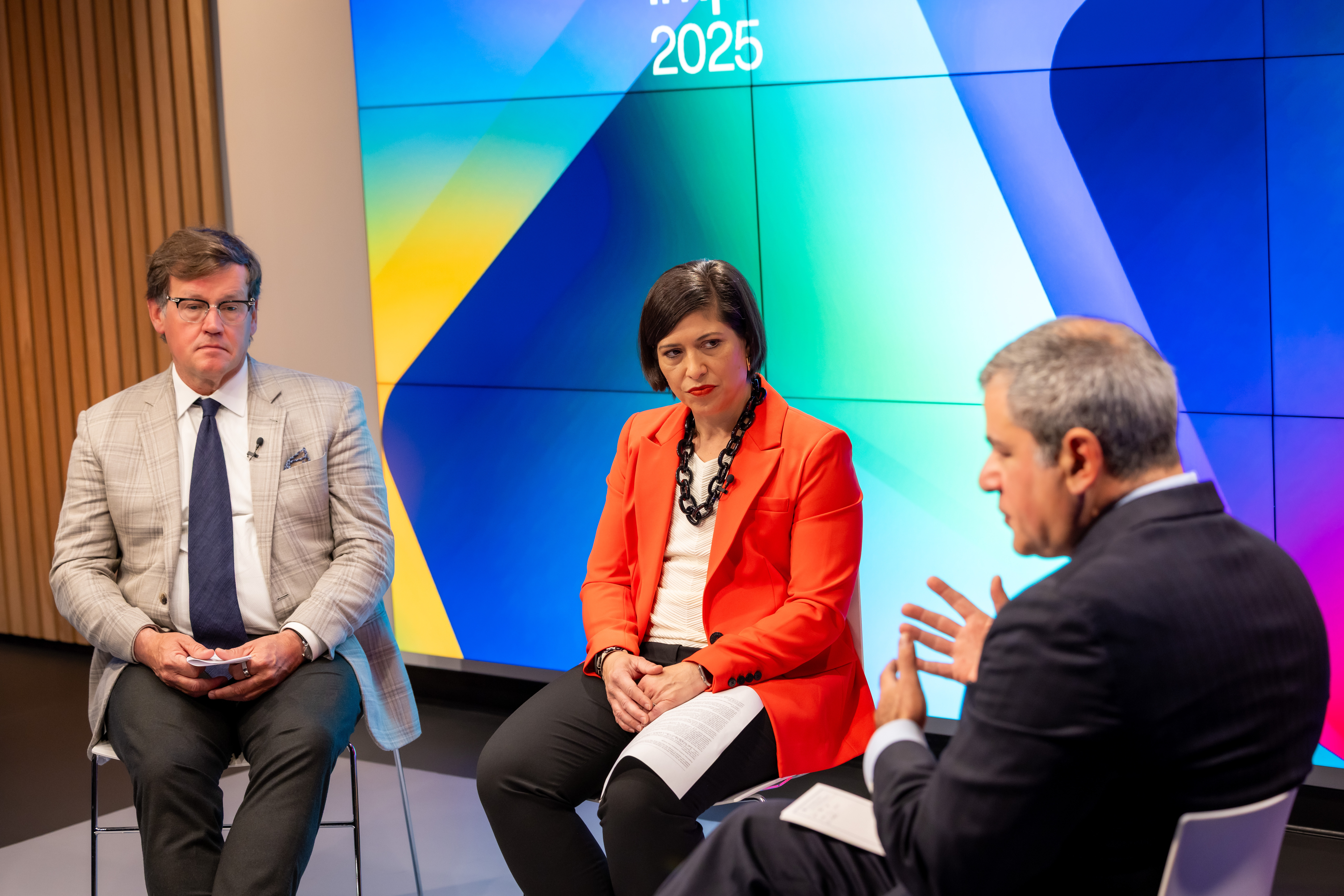
The energy transition was discussed at the World Economic Forum’s Sustainable Development Impact Meetings 2025 in New York alongside the 80th United Nations General Assembly. Image: World Economic Forum
Roberto Bocca
Head, Centre for Energy and Materials; Member of the Executive Committee, World Economic Forum- This round-up brings you the key stories from the energy sector over recent weeks.
- Top energy news: Global energy transition shows resilience; ‘A new energy security age is here’, report says; Researchers develop coating to turn any window into a solar panel.
- For more on the World Economic Forum’s work in the energy space, visit the Centre for Energy and Materials.
1. Global energy transition shows resilience despite headwinds
Global energy transition progress is resilient despite headwinds, according to experts speaking on a panel exploring shifts in global energy markets.
While factors including geopolitics and US policy shifts are creating uncertainty, the fundamental drivers for clean energy remain robust worldwide, said academics and private sector leaders who took part in the session, Energy Transition: Amping Up or Powering Down?, at the World Economic Forum Sustainable Development Impact Meetings 2025.
David G. Victor, a Professor at the University of California, San Diego, dismissed reports of the “death” of the clean energy transition as “exaggerated”. He said deployment is expected to drop temporarily in the US but will continue to rise globally, with Europe and China – which is the world’s largest electricity producer and also leading the charge in renewables and related low-carbon technologies – continuing rapid progress.
What’s driving the energy transition, however, is shifting, the panel noted. Where once sustainability considerations were the primary concern, today energy security and affordability are informing decision-making – but panellists predicted that this will still push the transition forward and could even accelerate it.
"For the most part, security has gone up when we've had more diversity in supply and demand, and more flexibility," Victor said.
Sumant Sinha, Chair and CEO of India-based renewable energy company ReNew, added that it doesn’t matter what the focus is on as long as we get to the same end goal – the energy transition. “If anything, I see ambition being scaled up because the issue of affordability has become even stronger; the issue of energy security in these volatile geopolitical times has become even stronger,” he said.
Panellist Rebecca Boudreaux, President and CEO of carbon-neutral fuel company Oberon Fuels, agreed, saying that a focus on security is helping to broaden mindsets on what countries consider to be their natural resources, with technology helping to put the sun, wind, waste and more to use.
“Clean fuels are absolutely essential to energy security,” she added.
The Forum’s Sustainable Development Impact Meetings 2025 were held in New York last week alongside the 80th United Nations General Assembly.
2. ‘A new energy security age is here’: report
Energy security is also the focus of a report from the JPMorganChase Center for Geopolitics that says that nations’ economic futures “hinge on how they play the natural resources hand they have been dealt”.
Amid spikes in electricity demand, geopolitical shocks and more, seeking energy resilience is a strategic imperative, Power Rewired: The New Map of Energy and Geopolitics says. Countries will need to navigate this via policy, investment and alliances.
While oil and gas are traditional geopolitical levers, the report says, critical minerals and technological know-how are becoming increasingly important as a means of shaping trade deals and strategic alliances.
Alongside, the global energy order is fragmenting into blocs defined as much by infrastructure as ideology, with rising grid diplomacy and cross-border energy links bringing neighbours closer together. This is creating both resilience and shared weaknesses, the report says.
Companies, whether energy producers or consumers, must include these new realities into their business plans, it concludes.
3. News in brief: More energy stories from around the world
Scientists in China have invented a coating that could turn any window into a solar panel. The clear coating, which the researchers say exceeds existing options in terms of transparency, scalability and efficiency, directs sunlight protons to the sides of the window panel, where photovoltaic cells convert them into electricity.
Leaders from Europe, Africa, Latin America and the Caribbean are to call for a multibillion-dollar green energy boost for developing countries, Politico reports. Without new funding instruments, countries most affected by climate change will be left behind in the green energy transition, a statement from 16 world leaders says.
A subsidiary of Italian gas-grid manager Snam SpA has proposed building a $1 billion natural gas storage site off the coast of the UK. The country has some of the lowest gas storage capacity in Europe – with the ability to cover just 12 days of average winter needs.
How the Forum helps leaders navigate the transition of energy and materials systems
Energy company Eni has signed a more than $1 billion agreement to purchase power from US fusion company Commonwealth. The companies hope that by the early 2030s, the plant, based in Virginia, US, will generate electricity through fusion – a process in which two light atomic nuclei are combined to form a single heavier one, releasing massive amounts of energy.
The world’s biggest producer of cobalt, the Democratic Republic of Congo, is ending a seven-month ban on exports of the metal, which is vital to electric vehicles. It is instead introducing a quota system to limit exports, which analysts think could cause a further rise in prices.
Qatar’s sovereign wealth fund, the Qatar Investment Authority, is to take a $500 million stake in Canada’s Ivanhoe Mines as it continues to diversify beyond oil and gas. The investment will be used to fund new exploration and mining of critical minerals.
4. More on energy from Forum Stories
The new era of global competition will be over who finances and controls the grid and digital backbones of the economy. Financial and policy leaders must confront four fundamental questions in response. Read more here.
Repurposing existing energy infrastructure offers enormous potential to anchor a new era of clean energy production, safeguarding skilled employment while leveraging decades of industrial expertise and world-class infrastructure. Principles employed in the reuse of an oil and gas site in the North Sea, off the coast of the UK, could be applied to other industrial heartlands in which communities face similar transition challenges.
The industrial sector faces pressure to decarbonize while sustaining growth and meeting rising energy demands. A new report from Accenture examines how a shift from treating infrastructure builds in isolation to a multigenerational, AI-powered approach can make projects repeatable, scalable and cost-efficient. Read more from one of the report’s authors, Stephanie Jamison.
To learn more about the work of the Energy, Materials, Infrastructure Platform, contact Ella Yutong Lin: ellayutong.lin@weforum.org
License and Republishing
World Economic Forum articles may be republished in accordance with the Creative Commons Attribution-NonCommercial-NoDerivatives 4.0 International Public License, and in accordance with our Terms of Use.
The views expressed in this article are those of the author alone and not the World Economic Forum.

Forum Stories newsletter
Bringing you weekly curated insights and analysis on the global issues that matter.
More on Energy TransitionSee all

Namit Agarwal
February 25, 2026


