The state of play in industrial decarbonization for the age of AI
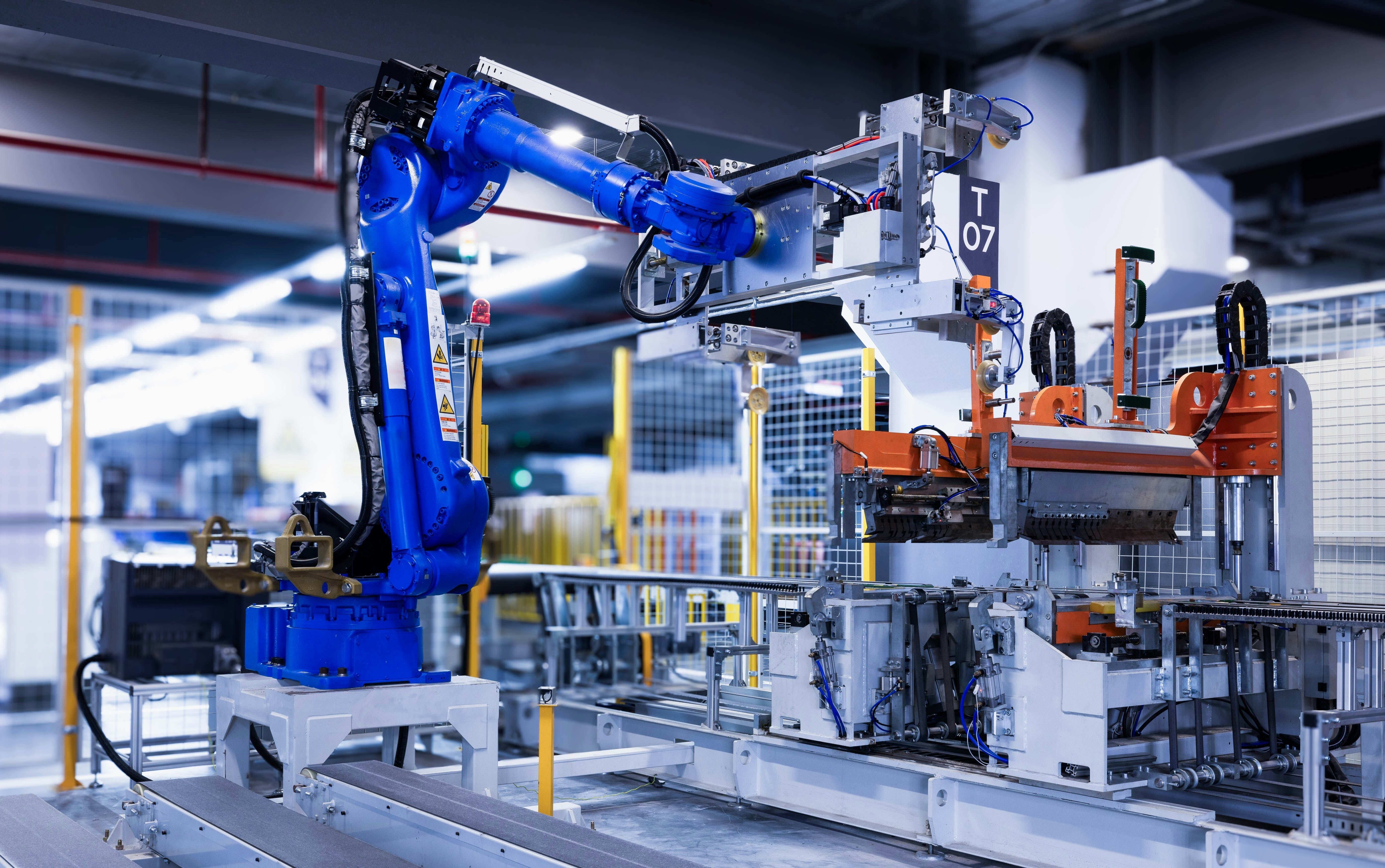
Early movers on AI can unlock billions in value through scaled low-carbon infrastructure. Image: Homa/Unsplash
- The industrial sector faces pressure to decarbonize while sustaining growth and meeting rising energy demands.
- A multigenerational, AI-powered approach makes projects repeatable, scalable and cost-efficient.
- Accenture’s Powered for Change 2025 report finds that early movers can unlock billions in value through scaled low-carbon infrastructure.
The industrial sector faces a daunting challenge: decarbonizing operations while meeting growing energy demands and sustaining profitable growth. Accenture's latest Powered for Change 2025 report highlights the need for significant reductions across oil, gas, power and heavy industries to achieve net zero emissions by 2050.
It offers a solution to accelerate decarbonization through capital project builds: a multigenerational approach, which shifts from bespoke projects to repeatable systems that can drive down costs and accelerate the deployment and scaling of net zero infrastructure.
A multigenerational approach to embedding AI
Traditionally, infrastructure projects have been treated as one-off efforts, planned, financed and executed in isolation. This approach has resulted in high costs, prolonged timelines and minimal learning across projects. And it won’t decarbonize industry fast enough. A multigenerational, portfolio-driven approach offers a more effective strategy by formalizing learnings, standardizing and modularizing components and encouraging innovation. When AI is embedded in this approach, it can drive compounding efficiencies. Beyond accelerating projects, AI preserves institutional knowledge and ensures every initiative builds on past insights to drive sustained cost reductions.
And yet, Accenture research found that 90% of projects are currently delivered as bespoke efforts, with only 10% benefiting from repeatable teams or supply chains. Furthermore, 75% of decarbonization project plans run by heavy industries and energy providers focus on short-term projects.
It's clear that while a change is needed to accelerate decarbonization, there are also financial benefits and upsides to doing so. Billions in value, steep cost reductions and AI-driven gains await early movers ready to scale low-carbon innovation:
- Accenture modeled this method using green hydrogen production and found that costs decrease 30% faster than average when applying a multigenerational approach. In fact, cost savings could reach 35% by 2035 and price parity with grey hydrogen can be reached by 2037 — six years earlier than a project-by-project approach.
- A structured, multigenerational strategy for green hydrogen could generate more than $60 billion in net present value (NPV) by 2050, based on capturing just 5% of global green hydrogen demand. The financial upside to scaling clean energy across heavy industry is not to be underestimated.
How the Forum helps leaders make sense of AI and collaborate on responsible innovation
Four levers for a multigenerational approach
1. Scale efficient, resilient supply chains: Building resilient supply chains is foundational to industrial decarbonization. Yet Accenture research found that 74% of heavy industry executives expect supply chain volatility to negatively impact large capital projects. Combatting volatility involves cultivating long-term partnerships, driving standardization and modularization and strengthening regional supply chains. By doing this, companies can achieve unit cost reductions of 30–50% over successive projects through economies of scale and continuous improvement.
2. Foster community support and customer demand: The research shows that 52% of heavy industry executives expect a lack of stakeholder engagement to negatively impact capital projects by 2028. Using AI-powered, hyper-local communication strategies, such as digital storytelling and interactive tools, companies can personalize messaging and better explain project benefits. It’s about building demand-side momentum.
3. Reinvent talent, skilling and workflows: Only 30% of companies in the report expressed confidence in their ability to manage change related to workforce reinvention. The transition to low-carbon infrastructure and operations requires new skills and decision-making structures across all parts of the workforce. Adapting workforce skills needs cross-functional, simulation-based learning with real-time feedback. And centralized knowledge hubs, digital playbooks and AI-driven analytics will enable teams to codify learnings and share insights from every project. Finally, more agile collaboration means a shift from top-down decision-making to empowering local teams with real-time, context-specific authority.
4. Establish a strong digital core to power AI learnings: AI is poised to play a transformative role in industrial decarbonization by embedding continuous learning across entire portfolios. Yet most companies say it will take them between 1–3 years to establish a strong digital core. In the context of capital projects, the integration of AI with a strong digital core maintains institutional knowledge and can extract insights from that project data, bringing forward the learning curve. It can also unify operations, enabling automated decision making and predictive insights such as pattern detection.
The journey to industrial decarbonization is complex, but a multigenerational approach offers a viable path forward. Companies that embed a multigenerational strategy into their net zero infrastructure efforts will unlock compounding cost efficiencies, secure competitive advantage and drive industrial transformation. The defining challenge of the next 25 years will be execution: scaling learnings from fragmented initiatives into a portfolio-driven, self-sustaining and economically viable transformation.
The shift is already happening. Leading companies are leveraging AI-driven supply chains, standardizing learnings and creating market demand, proving that industrial decarbonization is not only a sustainability initiative, but a growth driver. Early movers will capture the financial potential of the next industrial era.
Don't miss any update on this topic
Create a free account and access your personalized content collection with our latest publications and analyses.
License and Republishing
World Economic Forum articles may be republished in accordance with the Creative Commons Attribution-NonCommercial-NoDerivatives 4.0 International Public License, and in accordance with our Terms of Use.
The views expressed in this article are those of the author alone and not the World Economic Forum.
Stay up to date:
Generative Artificial Intelligence


Forum Stories newsletter
Bringing you weekly curated insights and analysis on the global issues that matter.
More on Energy TransitionSee all

Cheukai Makari
September 16, 2026


