Explainer: What manmade biospheres can tell us about climate change
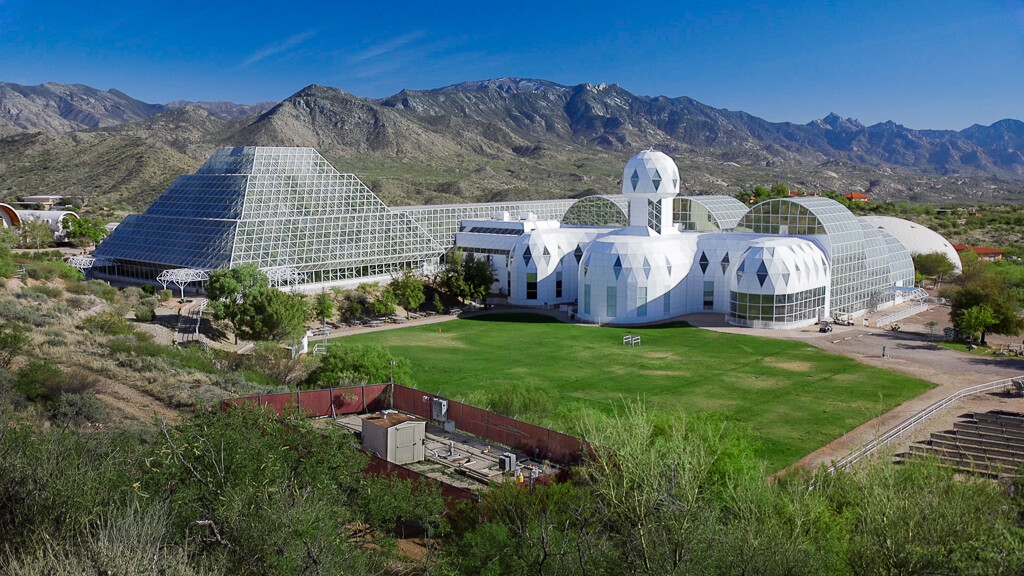
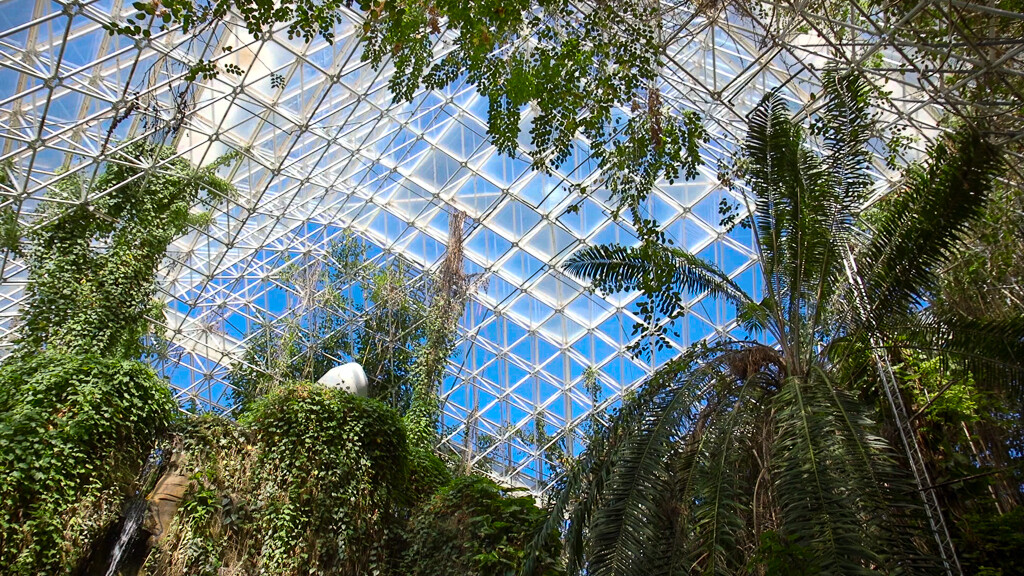
Biosphere 2 is an ecosystem experiment in the Arizona desert. Image: Arizona Board of Regents
- Biosphere 2, situated in the Arizona desert, is the largest, boldest manmade experiment in learning how ecosystems develop.
- Once deemed a failure, such facilities are providing scientists with a real-world, often super-charged laboratory into climate change.
- In an era of planetary tipping points, questions about the health of planetary systems and their interrelationship with humans are key.
Over 30 years ago, a group of eight hippy-turned theatre troupe-turned sustainability enthusiasts voluntarily entered a manmade biosphere for a two-year period.
What was once deemed a failed experiment is one of humankind’s most famous attempts to recreate an Earth-like environment, but one that is now providing research opportunities to better study planetary health.
Biosphere 2 was designed to mimic what its creators described as Biosphere 1 – the Earth. A biosphere is essentially a collection of Earth’s ecosystems and, accordingly, Biosphere 2 had its own ocean, rainforest, mangrove swamp, farm and savanna. It remains the world’s largest mesocosm – an outdoor experimental system simulating the natural environment under controlled conditions.
Biosphere 2 and the space race
Biosphere 2 is located in Arizona, but the roots of this type of research belong to Russian geochemist and mineralogist, Vladimir I. Vernadsky, whose pioneering work helped shape his country’s space programme in the 1950-60s.
The first sealed experiment took place in 1965 in Siberia when algae was used to recycle air humans had breathed. By the 1970s, the Russians were sending two to three people at a time to man the Bios-3 facility (a 315 cubic metre-sized ‘controlled ecological life support system’) for up to six months.
By contrast, Biosphere 2 was a mammoth undertaking, and perhaps its size (standing at more than 3 acres), along with the fact that those living in it were not trained scientists, explains the media’s derision.
That the biospherians were self-educated in sustainability is true, but this doesn’t detract from the legacy of knowledge that their two-year experiment in modelling life systems and subsequent research at the facility have bequeathed planetary science.
What Biosphere 2 and its successors have in common is a visionary element, charismatic characters and wealthy supporters. Biosphere 2 was the brainchild of metallurgist and former Harvard MBA graduate, John P Allen, who turned his hand to many things before creating a theatre group with the aim of changing the world.
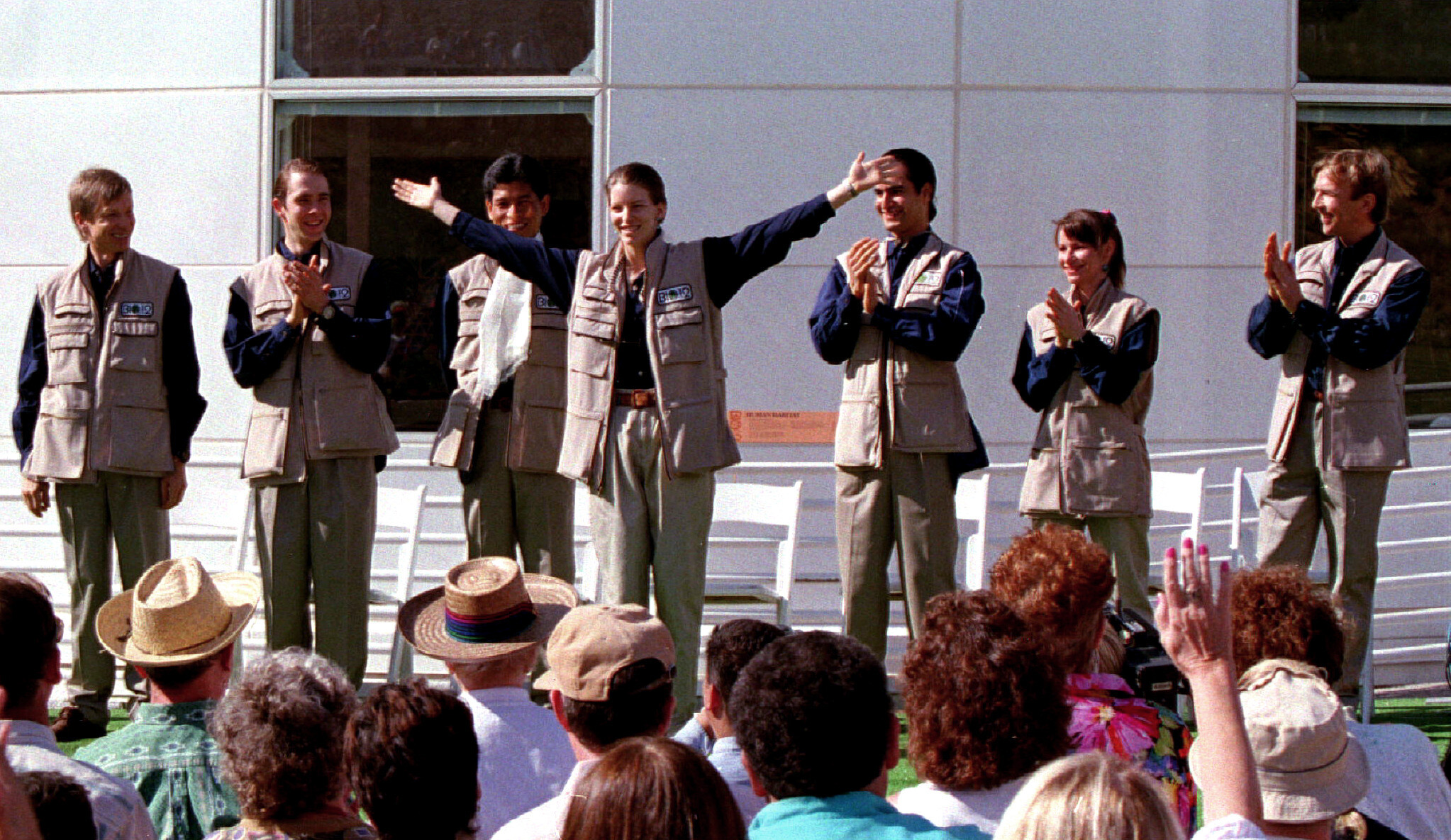
As part of this, the troupe built a boat, using it to visit and study different types of ecosystems before returning to the US, where billionaire businessman and philanthropist Ed Bass bankrolled a project to replicate these under a series of vast domes in the desert.
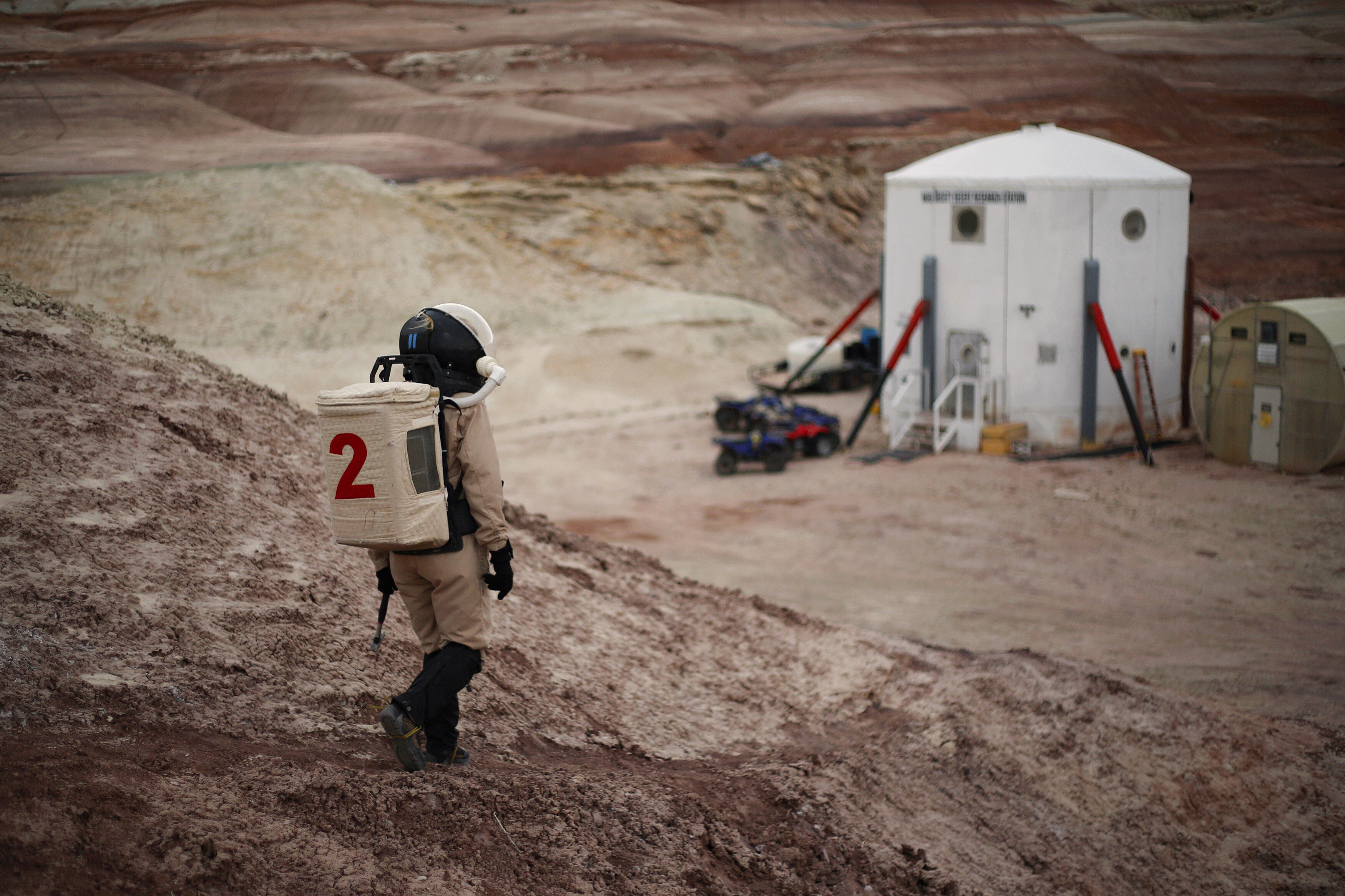
Meanwhile in Utah, struck by the idea of life on the red planet, the Mars Desert Research Station (MDRS) attracts individuals from throughout the world, who live, work and conduct experiments under Mars-like conditions, in a donation-supported project whose backers include Elon Musk.
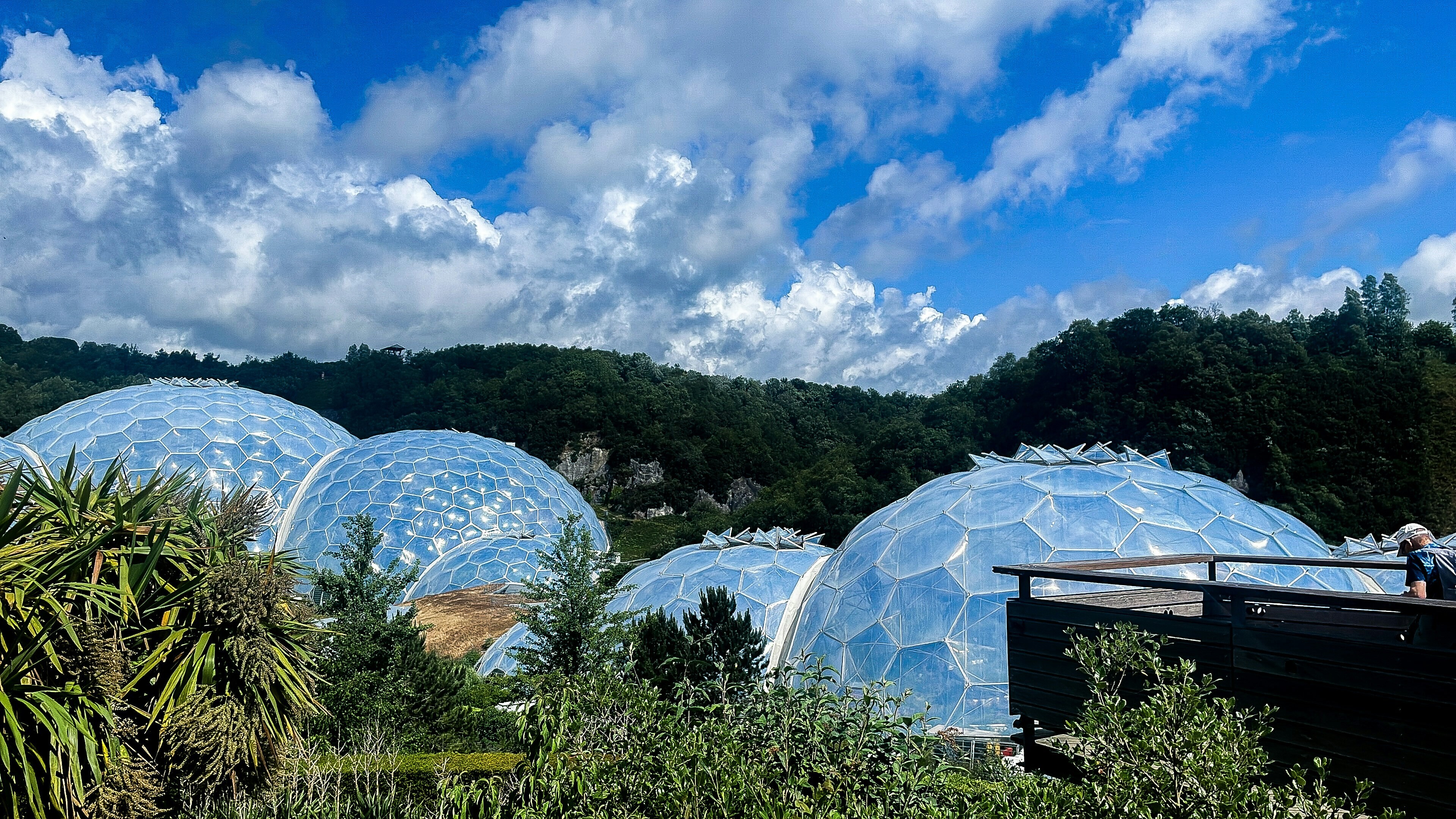
Elsewhere ‘habitats’ have been created in a disused clay pit at the UK’s Eden Project (although not a closed system it offers a unique research facility as well as visitor attraction), in a Hawaiian volcano (the Hawaii Space Exploration Analog and Simulation) with the support of the University of Hawaii and NASA, and the Astroland Interplanetary Agency based in a Spanish cave. Alongside this, specific habitats have been recreated to support scientific research, including Australia’s National Sea Simulator.
Typically, space, the desire and, in some cases, belief in the necessity to colonize other worlds has spurred on research, but Biosphere 2, and to a lesser extent, Bios-3 and the Eden Project, provide the opportunity to research the ecosystems of our existing planet.
Learning from the ecosystem experiments
Manmade ecosystems highlight many things, including how difficult it is to replicate what we have on Earth. Another key aspect is the symbiotic relationship between everything within an ecosystem.
As one of the original eight biospherians, Mark Nelson, said: “Every time you breathe, these plants are waiting for your CO2. They are your third lung. I thought, ‘My God, this is keeping me alive! I am absolutely, metabolically connected to the life here.’”
Findings from these attempts to marshal bioregenerative systems include:
- It’s hard to maintain a sufficient and interesting diet: The biospherians grew 80% of their food, while the Russians operating from Bios-3 grew approximately half. Ultimately, life for the former became one of subsistence farming, with their diet becoming heavily reliant on sweet potatoes and beetroot, after many of their original crops were found to be too slow growing or labour-intensive to be worthwhile to cultivate.
- It’s difficult to maintain a balance of animals: The animals housed in Biosphere 2 were chosen for their ecological role and, in some cases, for food. Some thrived (notably cockroaches and ants), while others dwindled or died out (notably the pollinators). In the case of the pollinators, this may have been due to Biosphere 2 effectively being a large greenhouse – which blocks UV light (bees require the UV spectrum to find flowers). Subsequent experiments with different kinds of light have provided information about what types of light corals need to live in captivity.
- Earth’s management of gases is finely tuned: Oxygen levels quickly fell in Biosphere 2. Although this was anticipated, the speed and severity of the problem took the biospherians by surprise. Oxygen makes up approximately 21% of Earth’s atmosphere, but this fell to 14.2%. It was discovered that soil bacteria and its overactive respiration of CO2 altered the balance of gases.
- This has wider effects on the other planetary systems: With an atmosphere heavy with CO2, Biosphere 2’s ocean quickly turned acidic, a phenomenon in which scientists had previously taken little interest. This led to further research during the 1990s and 2000s at Biosphere 2 to illustrate the effects of rising carbon dioxide levels on ocean species, particularly calcium carbonate-shelled marine life.
- And also impacts humans: Unsurprisingly, biospherians quickly became lethargic and noted impaired functioning as CO2 levels increased. Interestingly, a Russian study from 2013, which saw six men confined to simulated Mars-like conditions for 520 days, noted higher levels of lethargy, even though the subjects slept more.
- It’s impossible to achieve equilibrium: Human interaction has been critical to the health and maintenance of these systems. None of the experiments has achieved anything close to the autonomy we take for granted on Earth.
- It would be costly to replicate life on Earth elsewhere: It’s been estimated that it would cost $82,500 per person per month to live in a ‘colony’ like Biosphere 2, underscoring the non-monetized ‘value’ that Earth’s ecosystems provide free.
The legacy of Biosphere 2
Biosphere 2's lofty ideals now seem prescient; the goal was to study how its ecosystems developed, and to learn how humans and their technologies can harmonize with the rest of nature.
This is vital in an era of planetary tipping points. As these are met, exceeded and, in rare instances, receded from, questions about the role of these planetary systems, as well as interrelationship between humans and different ecosystems come to the fore.
For several years, Biosphere 2 fell from favour, its management taken on by Steve Bannon, former chief strategist to President Donald Trump, who closed it, swiftly ending a hoped-for 100-year lifespan. From 1996 to 2003, Columbia University served as the managing institution for Biosphere 2. In 2007, the University of Arizona assumed management and in 2011, the facility was formally donated to the University of Arizona.
As a closed system, it provides something of a super-charged environment, enabling scientists to make radical and swift changes to an ecosystem to see how species and plants fare. As Biosphere 2’s deputy director and chief operating officer, John Adams, states: “The facility’s design enables measurement of processes ranging from seconds to decades and from microscopic scales to whole-ecosystem dynamics.”
Scientists have planted different types of trees to see how crops like cacao and coffee fare in a changing environment. They’re also using the facility to study water, specifically rain, run-off, absorption and evaporation and, separately, as a means to map ocean viruses to better understand ocean microbial photosynthesis.
Research findings have been wide-ranging; those related to trees reveal that they are surprisingly tolerant of physical heat, and under drought conditions release greater amounts of the compounds needed to seed rain clouds. Some species become brittle, revealing that wind helps strengthen tree branches, much like weight bearing exercises strengthen human bones.
Adams suggests that “capability to disentangle drivers of ecosystem change makes [Biosphere 2] uniquely suited to advancing predictive models of Earth system responses under future climate scenarios".
In this respect, Biosphere 2 was ahead of its time, and it is only in recent years that from this bold – and, depending on your outlook, either visionary or deranged – experiment we’ve come to more fully appreciate the value of mesocosm research on this scale.
Don't miss any update on this topic
Create a free account and access your personalized content collection with our latest publications and analyses.
License and Republishing
World Economic Forum articles may be republished in accordance with the Creative Commons Attribution-NonCommercial-NoDerivatives 4.0 International Public License, and in accordance with our Terms of Use.
The views expressed in this article are those of the author alone and not the World Economic Forum.
Stay up to date:
Nature and Biodiversity
Related topics:


Forum Stories newsletter
Bringing you weekly curated insights and analysis on the global issues that matter.
More on Climate Action and Waste Reduction See all

Jean Chrysostome Ngabitsinze
March 30, 2026


