Serendipity in manufacturing: How unexpected connections drive resilience and innovation
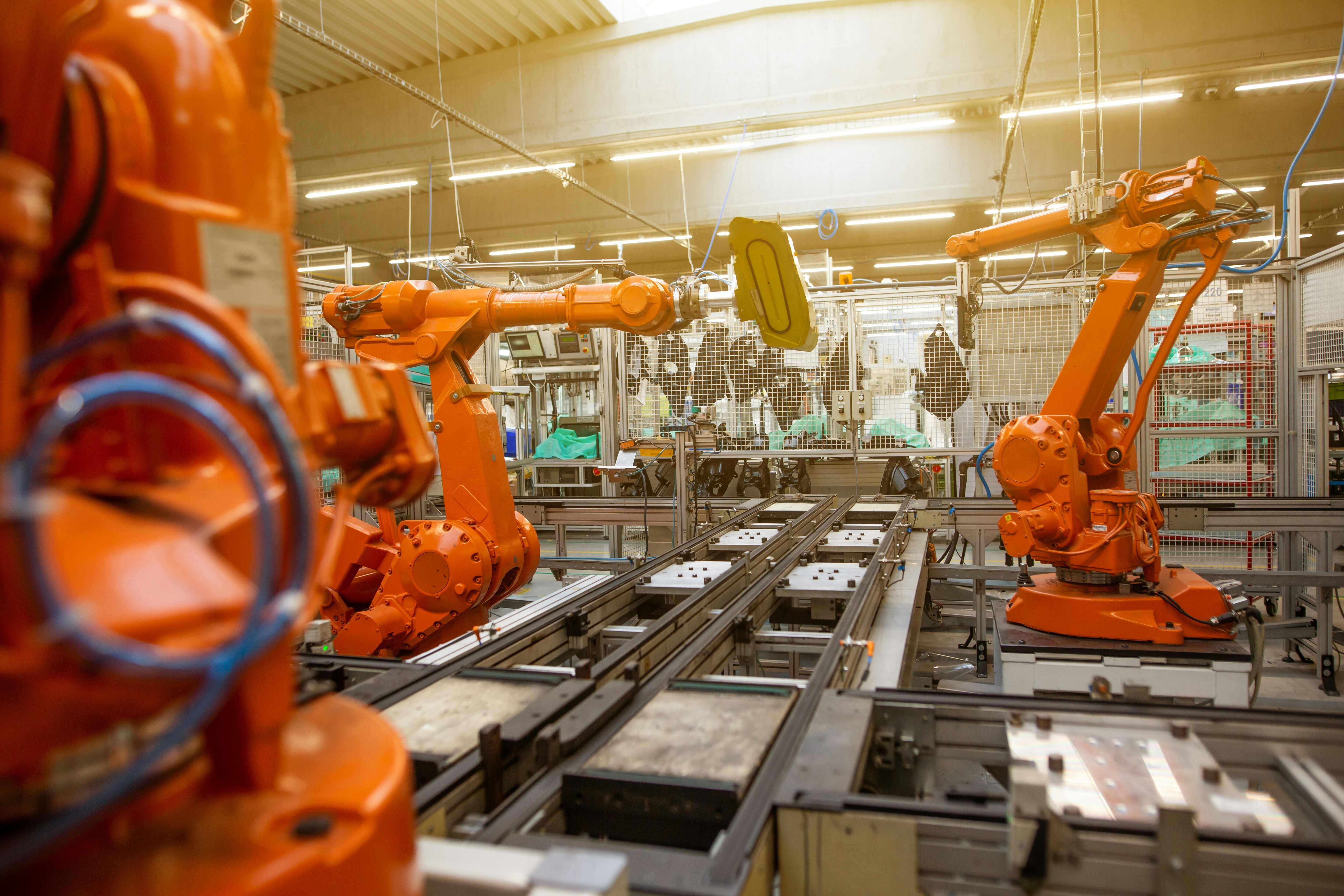
Resilience in manufacturing now depends on adaptability. Image: Unsplash/Simon Kadula
- Whereas efficiency has traditionally been the marker of success in manufacturing, now resilience depends on adaptability amid unexpected events.
- Serendipity and turning disruption into opportunity can be cultivated by fostering an environment of trust, autonomy and collaboration.
- Workforce empowerment and workplace design matter as much as technology to embed serendipity and drive lasting innovation.
Manufacturing is under intense pressure as digital transformation, climate imperatives and geopolitical instability converge to disrupt even the most resilient operations. In this context, efficiency alone is no longer enough.
While competitive edge in manufacturing has traditionally come from perfecting precision, predictability and scale, such strengths can become vulnerabilities in volatile conditions, locking organizations into rigid patterns that make adaptation relatively slow and costly.
Leaders often cite artificial intelligence (AI), automation and analytics as innovation engines but our research and conversations with leaders suggest that their capacity to recognize and act on the unexpected can allow them to survive disruption or use it to leap ahead i.e. being able to “cultivate serendipity.”
Why serendipity matters in manufacturing
In early 2020, biotechnology company BioNTech made history by producing the COVID-19 mRNA vaccine with pharmaceuticals manufacturer Pfizer. For years, the company focused its mRNA research on cancer treatments. However, when the pandemic unexpectedly emerged, BioNTech’s co-founder quickly saw that the same technology could be adapted to fight the virus.
What appeared to be rapid reaction was, in reality, the meeting point of sustained preparation, contextual alertness and decisive action in the face of the unexpected, the essence of serendipity.
Too often dismissed as luck or mere coincidence, serendipity is the unexpected discovery of valuable opportunities, insights or innovations that occur by chance, often while pursuing unrelated goals. It’s the intersection of preparation, openness and unforeseen events that allows organizations to turn surprise into a strategic advantage.
Why organizations miss the moment
In fast-paced, efficiency-driven environments like manufacturing, organizations often try to “engineer” collaboration and creativity to save costs, time and resources. Yet when processes become overly rigid or top-down, they can unintentionally suppress the very conditions that spark (serendipitous) innovation: trust, autonomy and informal connection.
Our joint research with Nele Terveen (University of Auckland & Stanford University) on the “serendipity paradox” shows that alignment between leadership, autonomy and shared purpose enables serendipity to flourish; misalignment fosters disengagement, resistance and missed opportunities.
Stanford’s Serendipity Venture Lab further finds that emotional alignment in serendipitous problem-solving fuels creativity and connection, while emotional misalignment can prompt critical pivots and refinements. When supported by reflective practices, such as AI-assisted journaling, these dynamics help to navigate uncertainty by enhancing memory recall.
For manufacturing leaders, the takeaway is clear: serendipity is not about passively waiting for luck but about designing environments, cultural, relational and physical, where the unexpected can thrive.
When leaders make serendipity part of the organizational culture, they not only spark innovation but also strengthen resilience in the face of disruption.
Left unattended, the absence of such dynamics can give rise to what we call the “zemblanity field” – an environment where small oversights and rigid routines quietly compound, hardwiring fragility into the system until failure becomes almost inevitable.
3 ways manufacturers can cultivate serendipity
Our research with Nele Terveen highlights three high-impact approaches to nurturing an organizational culture of serendipity:
1. Design workspaces for agency and connection
Think beyond production; create adaptable, value-aligned spaces that balance structure with autonomy. Pair physical design with honest narratives that respect diverse working styles and weave in opportunities for informal, cross-functional exchanges that make idea collisions more likely.
One US leading company we encountered, for example, uses the “neighbourhood” model: teams are seated close together, supported by shared spaces such as micro-kitchens and break areas that encourage informal conversations. Each neighbourhood is anchored by a cultural liaison or “space captain” who understands the team’s subculture and helps foster connection, making serendipity more likely to emerge than through proximity alone.
2. Empower culture carriers, don’t enforce culture
Shift from controlling interaction to enabling it. Equip middle managers to lead by example, by being vulnerable, authentic and piloting inclusive practices.
Some companies have formalized informal communication through structured environments and digital tools (e.g. collaborative whiteboards or async platforms) that work for extroverts and introverts. Asynchronous communication and shared documents flatten hierarchies.
By empowering middle managers as culture carriers, organizations rebuild trust and loyalty, turning engagement from obligation into genuine connection, which is the foundation where serendipity can thrive.
3. Measure human-centric impact
Move beyond efficiency metrics to track trust, creative input and mutual support. In one organization we studied, employees were empowered to opt into meetings that genuinely added value and decline those that did not. This shift led to fewer but more impactful collaborations, initiated organically by employees rather than mandated from above.
Serendipity is ultimately subjective: it flourishes in environments of trust, where employees feel valued and have autonomy.
Interestingly, we found that when employees felt recognized not only for their work but also for their contributions outside the company, such as community engagement during work hours, they developed a deeper sense of appreciation and belonging. In turn, this increased their openness to engage creatively and lean into serendipitous opportunities.
From efficiency to dynamic resilience
For manufacturing’s next leap forward, it will take people as well as technology. AI, automation and smart factories are essential but the real breakthrough lies in unlocking the full cognitive and emotional potential of the workforce.
By designing systems where the unexpected can thrive, leaders can foster resilient organizations and innovations capable of reshaping entire industries.
In today’s unpredictable world, the ultimate competitive advantage is making sure the unexpected works in your favour.
Don't miss any update on this topic
Create a free account and access your personalized content collection with our latest publications and analyses.
License and Republishing
World Economic Forum articles may be republished in accordance with the Creative Commons Attribution-NonCommercial-NoDerivatives 4.0 International Public License, and in accordance with our Terms of Use.
The views expressed in this article are those of the author alone and not the World Economic Forum.
Stay up to date:
Innovation
Related topics:


Forum Stories newsletter
Bringing you weekly curated insights and analysis on the global issues that matter.
More on Manufacturing and Value ChainsSee all

Nicholas Leeder and Brad Parsons
February 11, 2026


